Character Cards
Collect and learn about the heroes, gods, and legends of Indian mythology. Tap any card to flip it and discover their story.
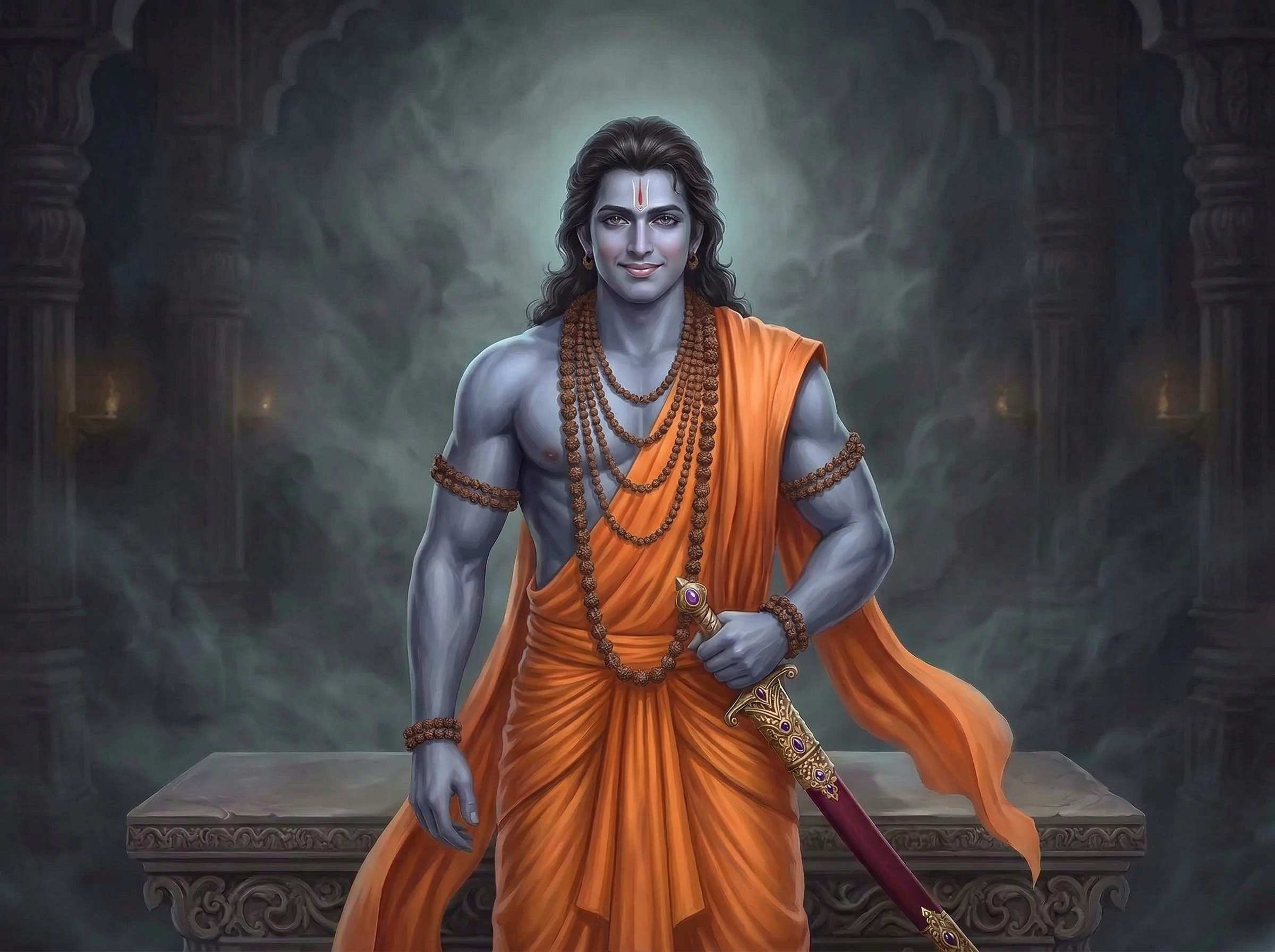
Rama
रामरामचन्द्रThe Ideal King“The prince who chose duty over a throne.”
Rama
The Ideal KingBorn as the eldest prince of Ayodhya, Rama was exiled to the forest for fourteen years to honour his father's promise. Instead of anger, he walked into the wilderness with grace — and became the greatest king who never sat on a throne.
Rama's bow Kodanda was so heavy that no other warrior in the world could even lift it. He strung it as a teenager at Sita's swayamvar.
The arrow that never misses — guided by dharma itself
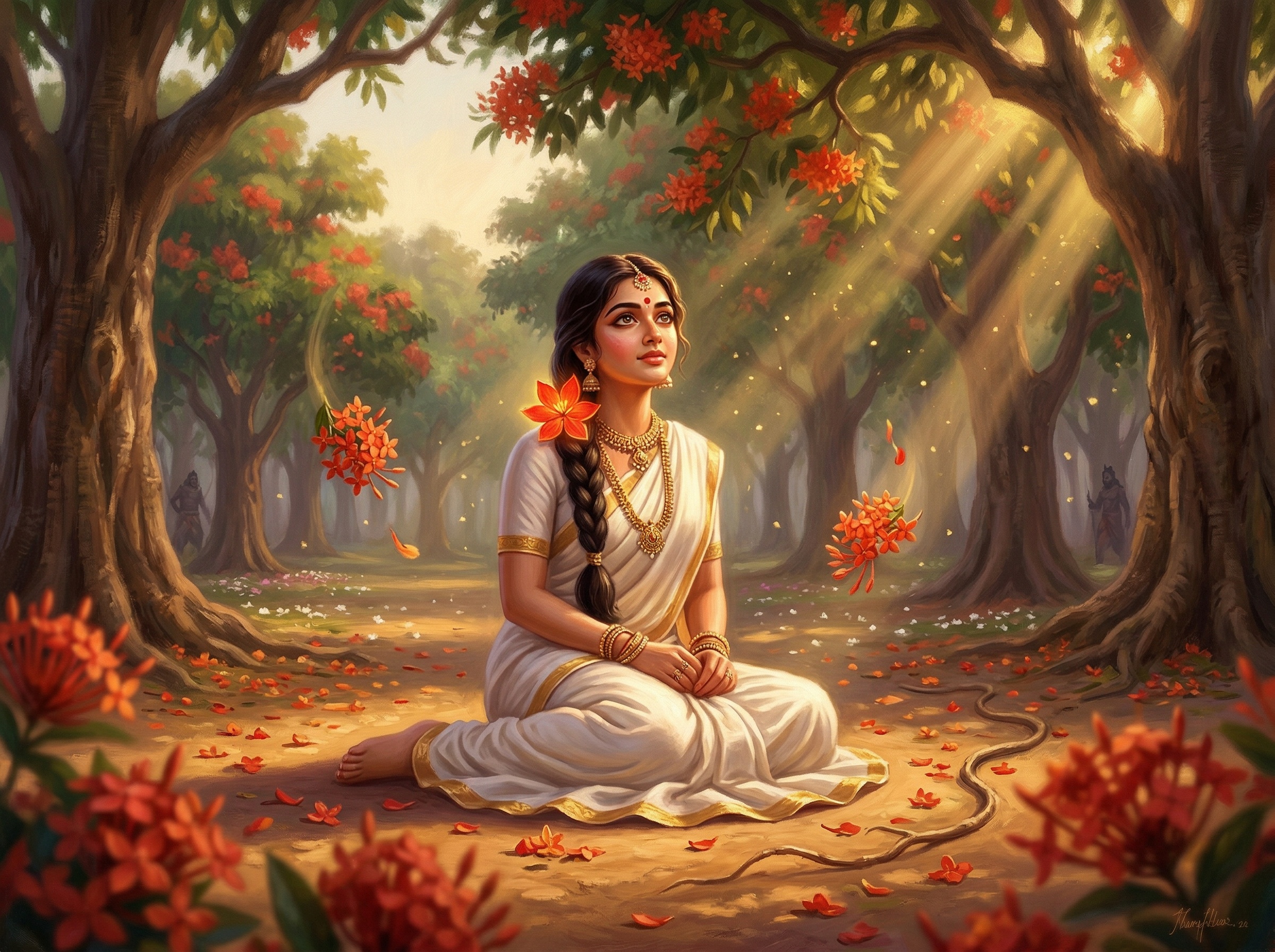
Sita
सीताजानकीThe Steadfast Queen“The queen whose courage was quieter than any war.”
Sita
The Steadfast QueenDaughter of the Earth herself, Sita was discovered in a furrow by King Janaka. She married Rama by lifting a bow that armies couldn't move. When imprisoned in Lanka, she refused to lose hope — her faith became the fire that burned a kingdom.
Sita is called "Janaki" (daughter of Janaka) and "Bhumija" (born of the earth). The ground literally parted to reveal her as a baby.
Unwavering faith — her prayers protected Hanuman from fire
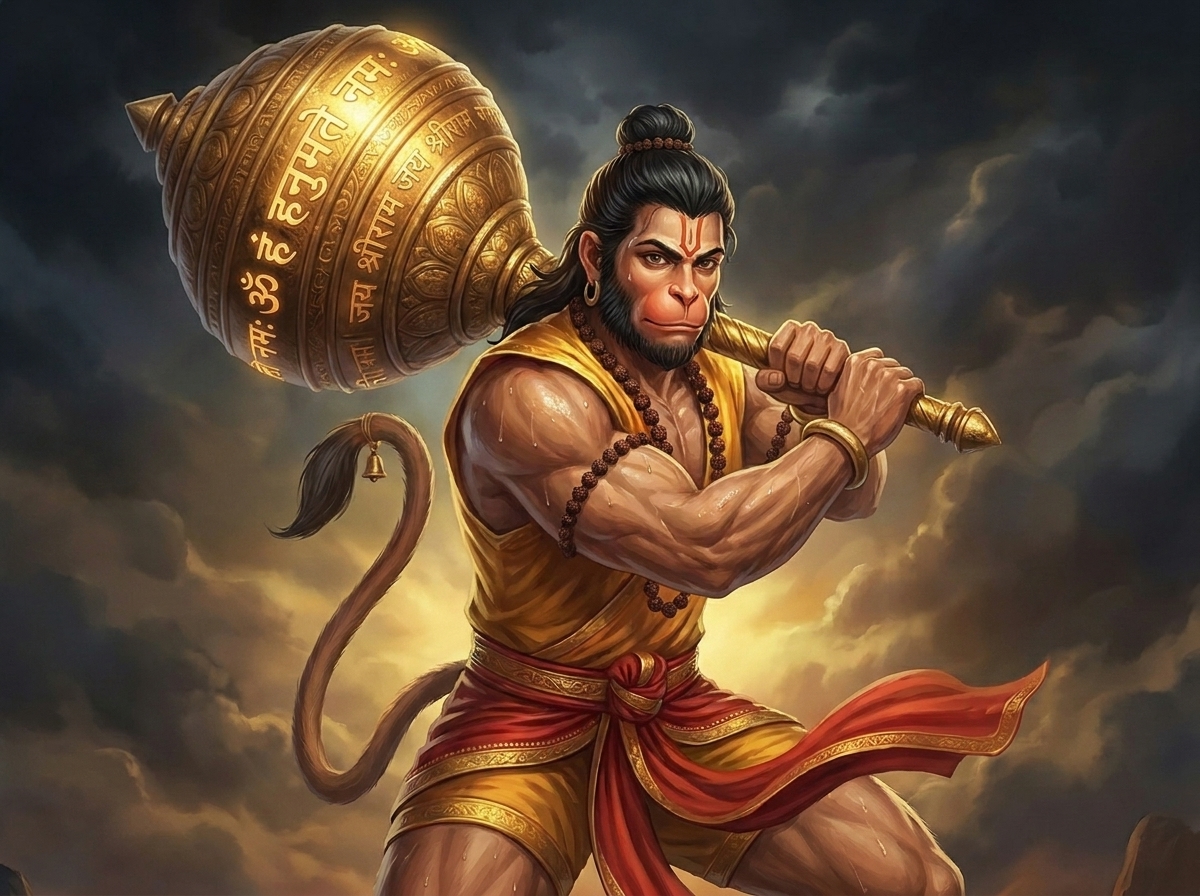
Hanuman
हनुमानमारुतिनन्दनThe Devoted Warrior“The one who carried a mountain because giving up wasn't an option.”
Hanuman
The Devoted WarriorSon of Vayu, the wind god, Hanuman forgot his own powers as a child. When Rama needed him, those powers woke up all at once. He leapt across the ocean, burned Lanka with his own tail, and carried an entire mountain of healing herbs — all for love.
As a baby, Hanuman tried to eat the sun because he thought it was a ripe mango. The king of the gods had to intervene.
Growing to mountain-size and leaping across the ocean in a single bound
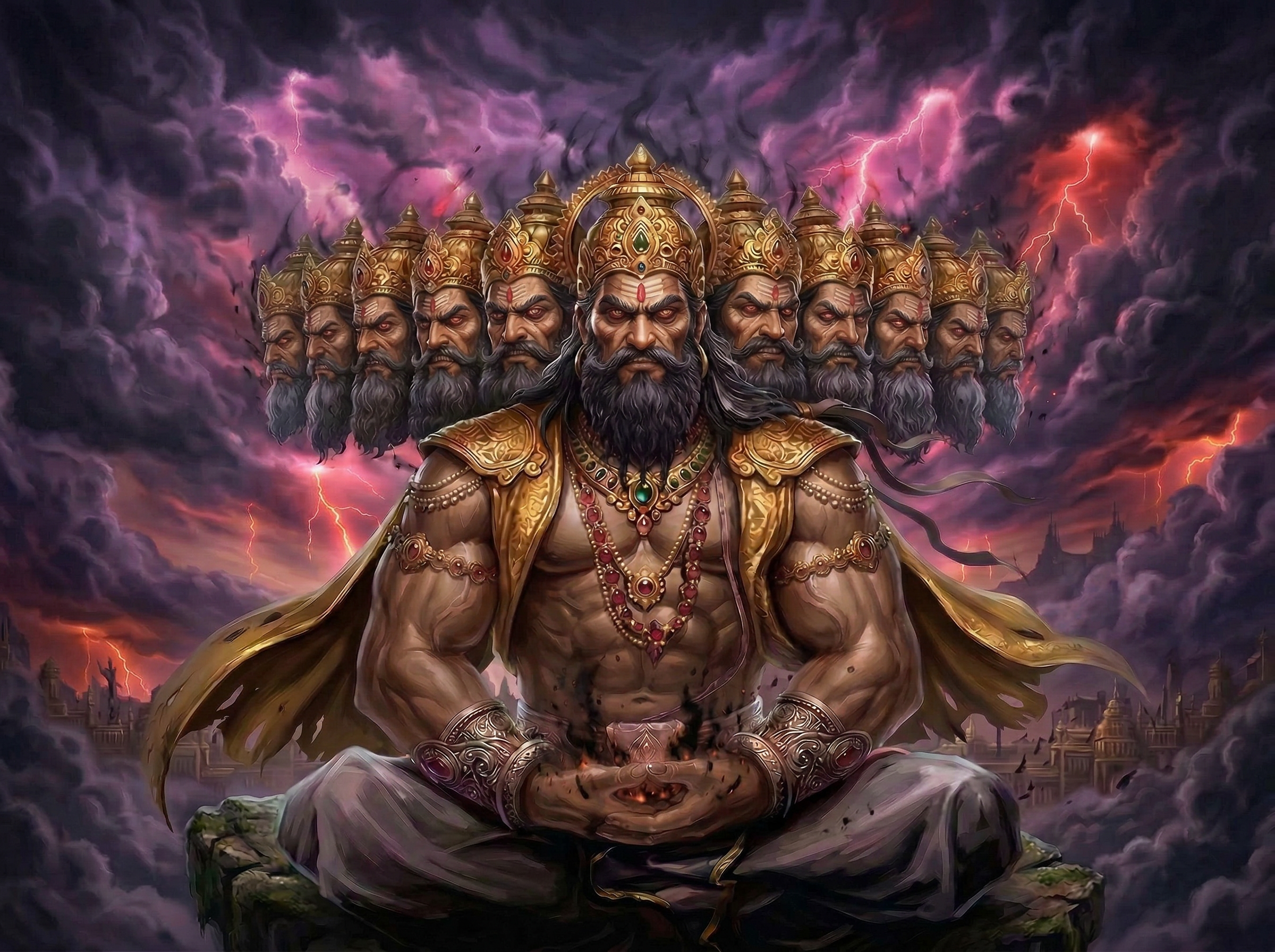
Ravana
रावणदशाननThe Ten-Headed King“The most brilliant king who was destroyed by his own pride.”
Ravana
The Ten-Headed KingRavana was no ordinary villain. He was a master of all four Vedas, a gifted musician who could make the gods weep, and a king who made Lanka the richest city on earth. But he kidnapped Sita — and that single act of arrogance undid everything.
Ravana was such a devoted scholar of Shiva that Lord Shiva himself gave him the name "Ravana" (meaning "one who makes the universe scream") after he lifted Mount Kailash.
Summoning celestial weapons with all twenty arms simultaneously
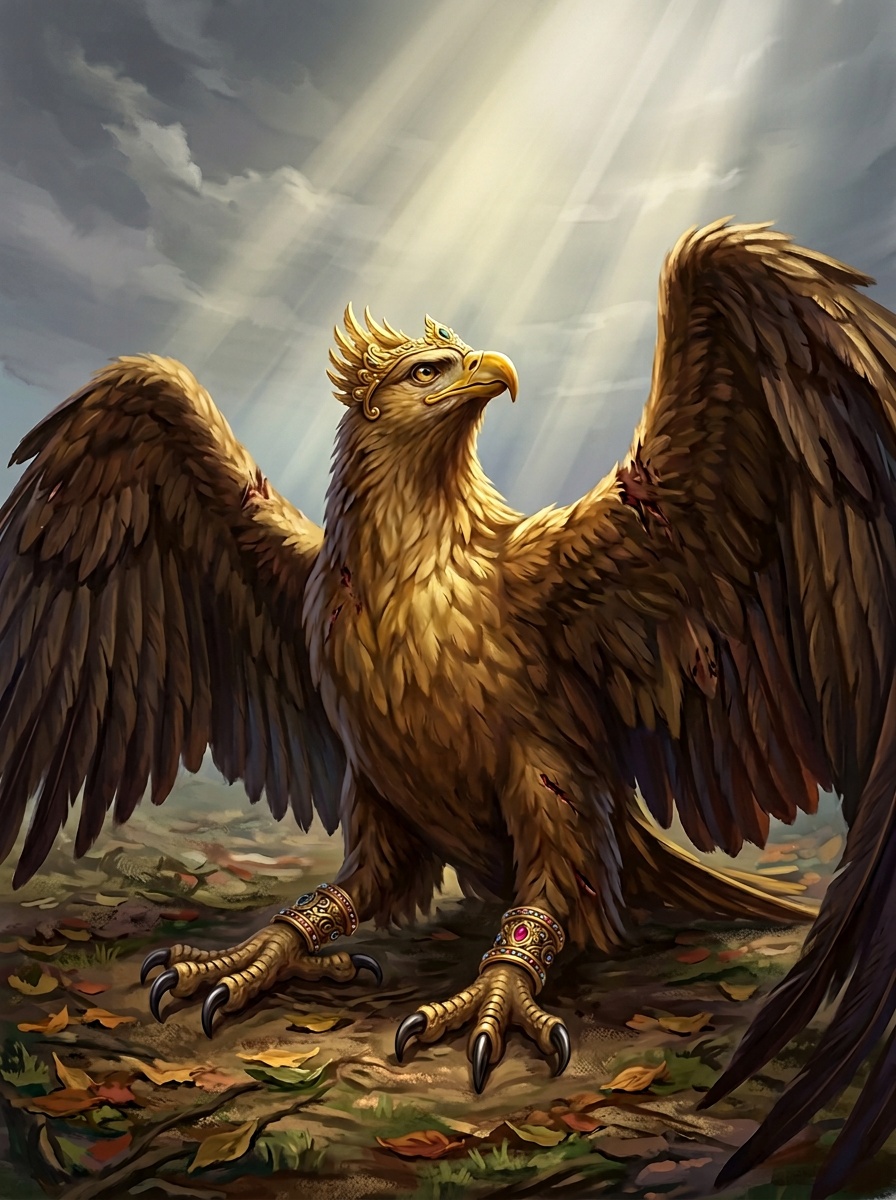
Jatayu
जटायुThe Noble Eagle“The old eagle who fought a demon king to protect a friend.”
Jatayu
The Noble EagleJatayu was ancient — older than most mountains. He was a friend of King Dasharatha, Rama's father. When Ravana kidnapped Sita and carried her through the sky, Jatayu attacked despite knowing he couldn't win. He fought with everything he had, and fell.
Jatayu is one of the most honoured characters in the Ramayana. Rama performed his last rites personally — a ritual usually reserved for one's own parents.
Diving attack from the sky against impossible odds
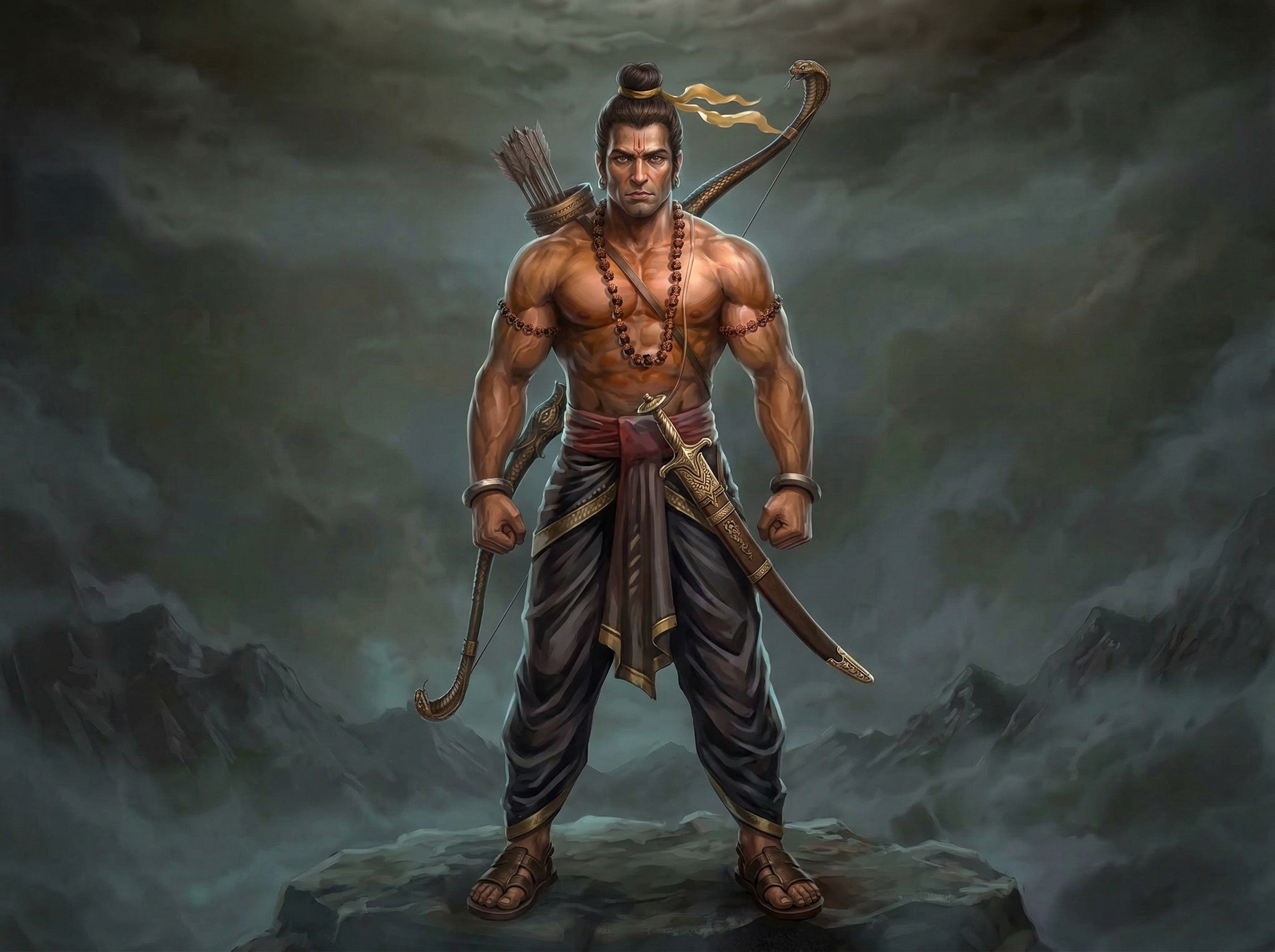
Lakshmana
लक्ष्मणThe Loyal Brother“He chose exile because his brother did — and never once complained.”
Lakshmana
The Loyal BrotherWhen Rama was banished to the forest, nobody asked Lakshmana to follow. He simply packed his things and walked beside his brother for fourteen years. He guarded Rama and Sita through every danger, staying awake entire nights so they could sleep safely.
According to tradition, Lakshmana did not sleep for the entire 14 years of exile. His wife Urmila slept for both of them — she is said to have slept continuously for 14 years so he could stay awake.
Cutting off the noses of demons who threaten Sita
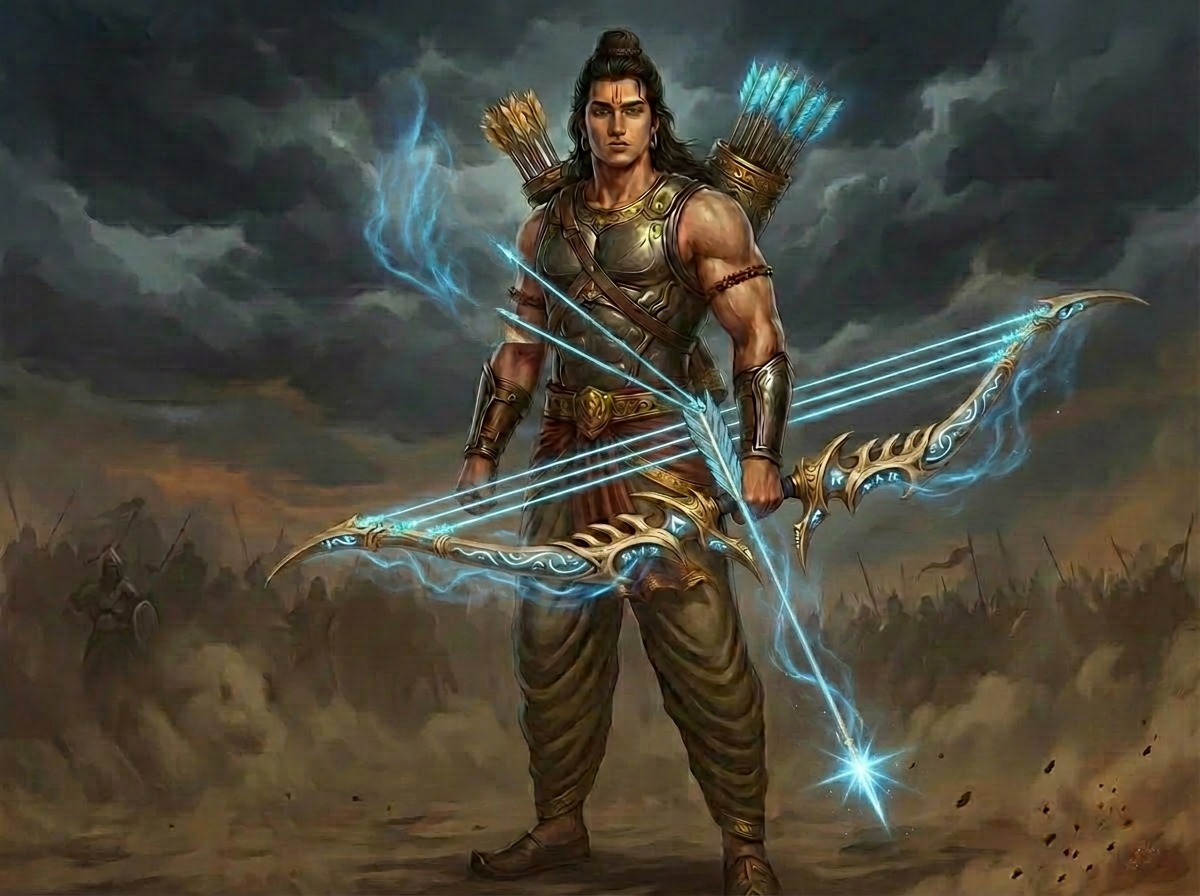
Arjuna
अर्जुनपार्थThe Master Archer“The archer who could hit a fish's eye by looking at its reflection.”
Arjuna
The Master ArcherThird of the five Pandava brothers, Arjuna trained under Drona until he became the greatest archer the world had ever seen. But his greatest battle wasn't against an enemy — it was against his own doubt, standing on the battlefield of Kurukshetra.
Arjuna once won a contest by shooting an arrow through a revolving fish's eye while looking only at its reflection in water below. None of the other princes could even come close.
Pashupatastra — the weapon of Shiva himself, obtained through years of penance
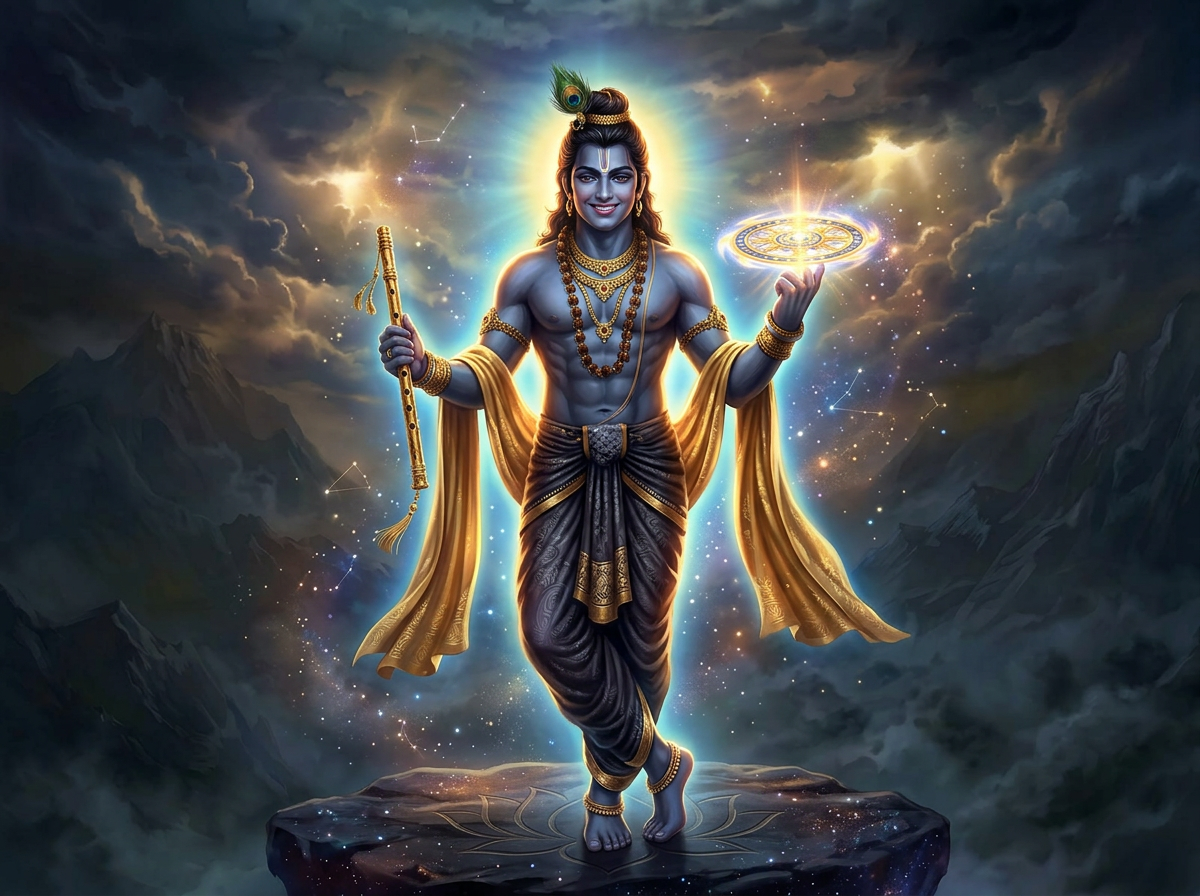
Krishna
कृष्णवासुदेवThe Divine Guide“The god who chose to be a charioteer instead of a warrior.”
Krishna
The Divine GuideKrishna could have fought the war himself — he was God incarnate. Instead, he picked up no weapon and drove Arjuna's chariot. When Arjuna froze with doubt, Krishna spoke the Bhagavad Gita — 700 verses that changed philosophy forever.
As a child, Krishna once ate dirt. When his mother forced his mouth open to check, she saw the entire universe inside — stars, galaxies, and all of creation.
Revealing the Vishvarupa — his cosmic universal form with infinite faces and arms

Draupadi
द्रौपदीपाञ्चालीThe Fire-Born Queen“Born from fire, and fire is exactly what she brought.”
Draupadi
The Fire-Born QueenDraupadi emerged from a sacred fire, prophesied to change the world. When she was humiliated in the Kaurava court, her anger became the spark that ignited the greatest war in history. She never forgot, never forgave — and history proved her right.
Draupadi's sari during the vastraharan (disrobing) is said to have become infinite — it could not be unwound. Krishna's divine protection made it endless.
Her oath of vengeance — she vowed not to tie her hair until it was washed with Dushasana's blood
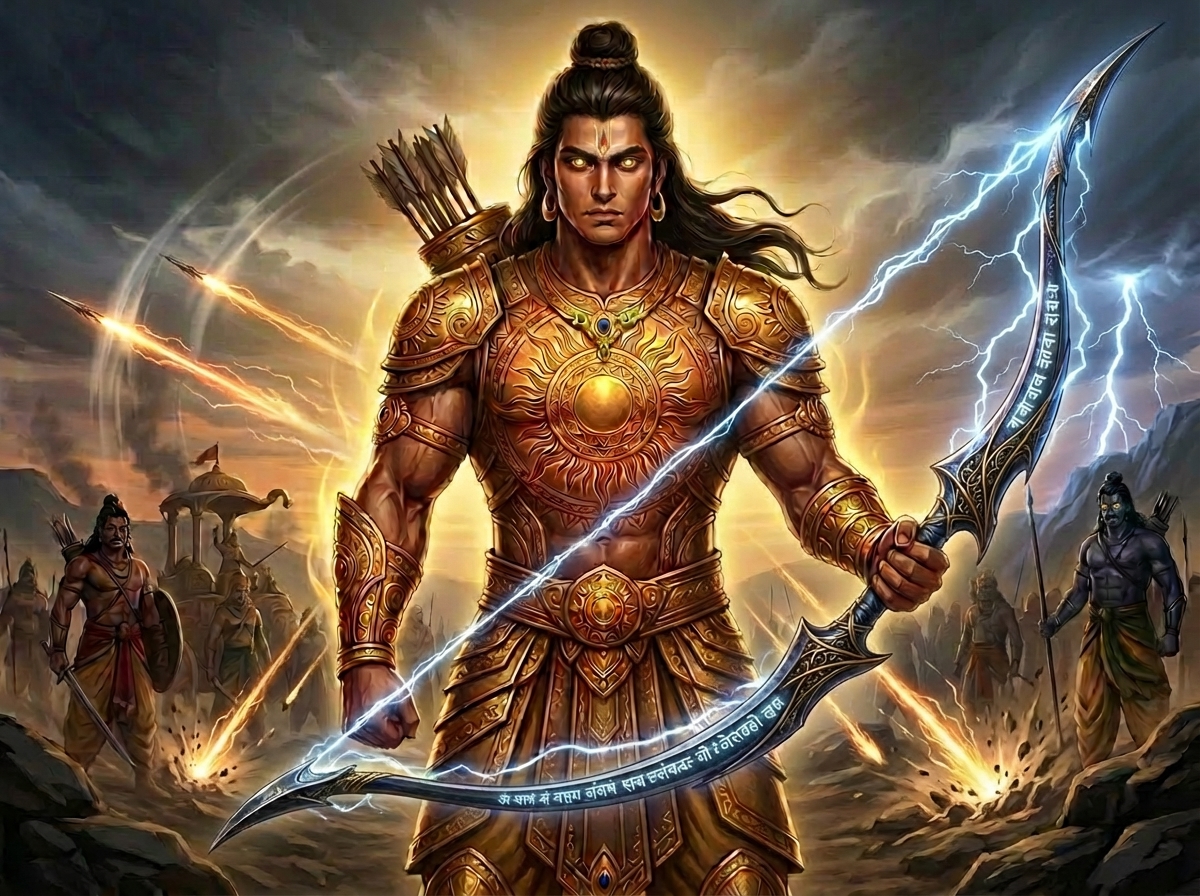
Karna
कर्णराधेयThe Generous Warrior“He gave away his armor — his own skin — because someone asked.”
Karna
The Generous WarriorBorn with divine golden armor fused to his body, Karna was abandoned as a baby and raised by a charioteer. Despite being mocked as low-born, he became the greatest warrior alive. He was so generous that when Indra asked for his invincible armor, Karna peeled it off his own body and gave it away.
Karna's golden armor (Kavach and Kundal) was literally part of his body — born with it. Removing it was like removing his own skin. He did it anyway, with a smile.
Giving away anything asked of him — even his own invincibility
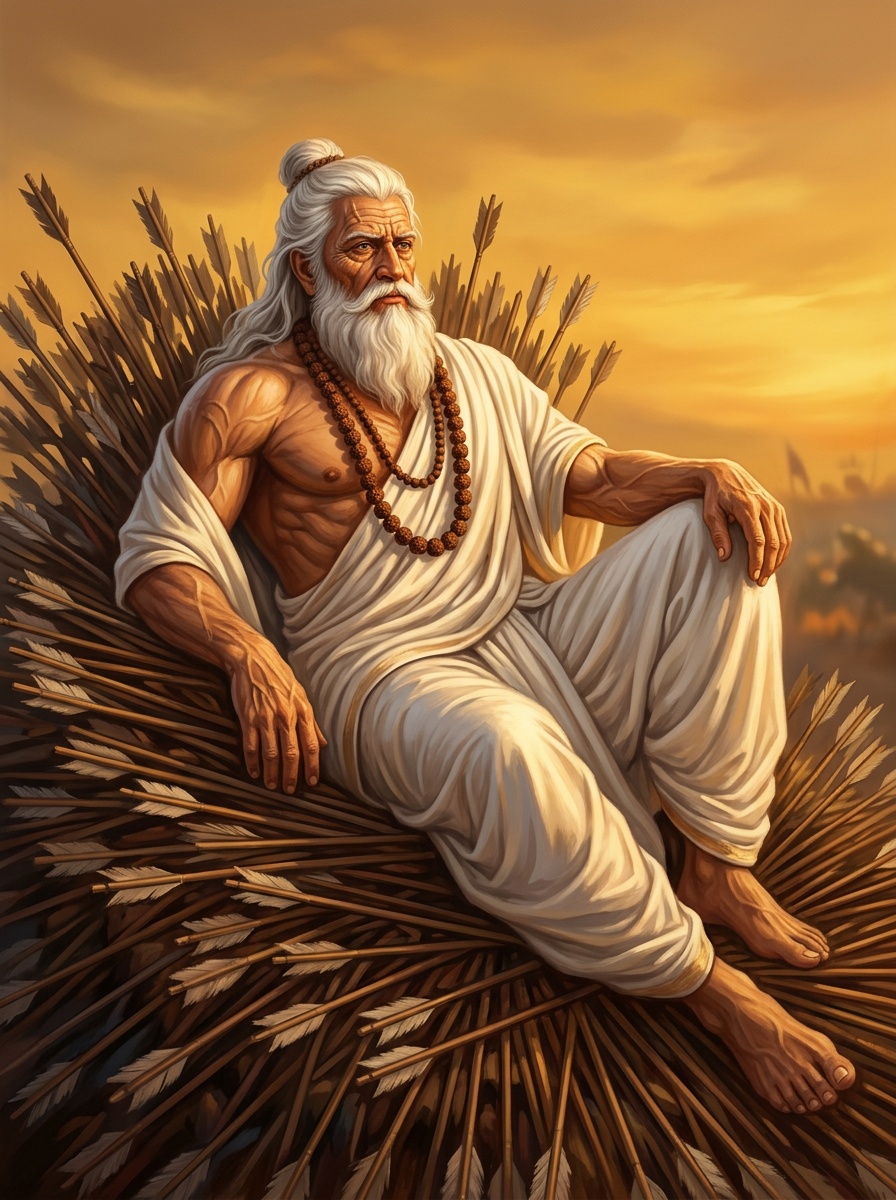
Bhishma
भीष्मगांगेयThe Grandsire“He took the most terrifying vow in history — and kept it for a lifetime.”
Bhishma
The GrandsireBorn as Devavrata, he took a vow of lifelong celibacy so his father could marry a fisherwoman. This vow was so fearsome that the gods renamed him "Bhishma" (the terrible oath). He became the most powerful warrior alive but could never be king — and watched helplessly as the family he protected tore itself apart.
Bhishma had the boon of choosing the moment of his own death. He lay on a bed of arrows for 58 days on the battlefield, waiting for an auspicious moment to die.
His bhishma pratigya — the vow so powerful it echoed through time
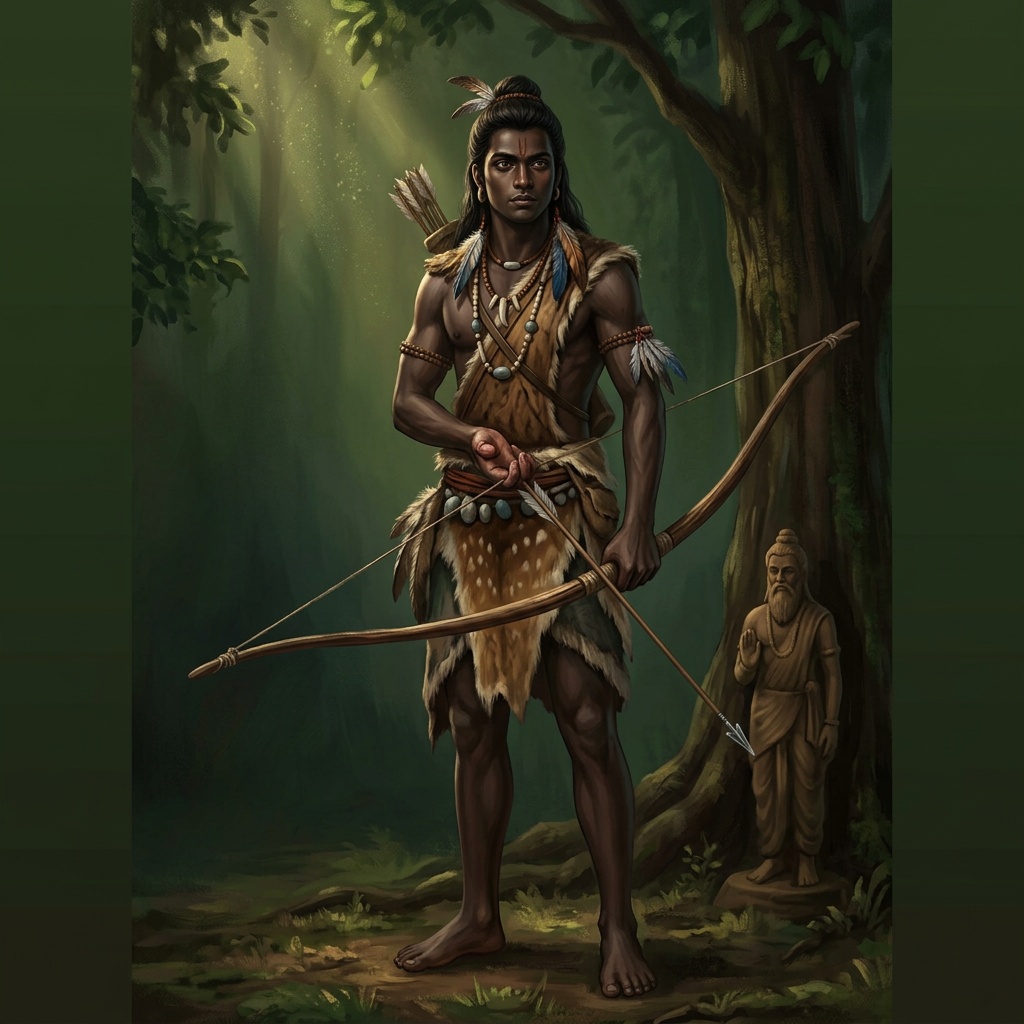
Eklavya
एकलव्यThe Self-Taught Archer“He built a clay guru and taught himself to outshoot everyone.”
Eklavya
The Self-Taught ArcherWhen the great teacher Drona refused to teach him because of his caste, Eklavya made a clay statue of Drona and practiced archery in front of it every single day. He became so skilled that he surpassed even Arjuna. When Drona demanded his thumb as guru-dakshina, Eklavya cut it off without hesitation.
Even after losing his thumb, Eklavya learned to shoot with four fingers and remained one of the most skilled archers in the world.
Shooting seven arrows into a dog's mouth to silence it — without harming it
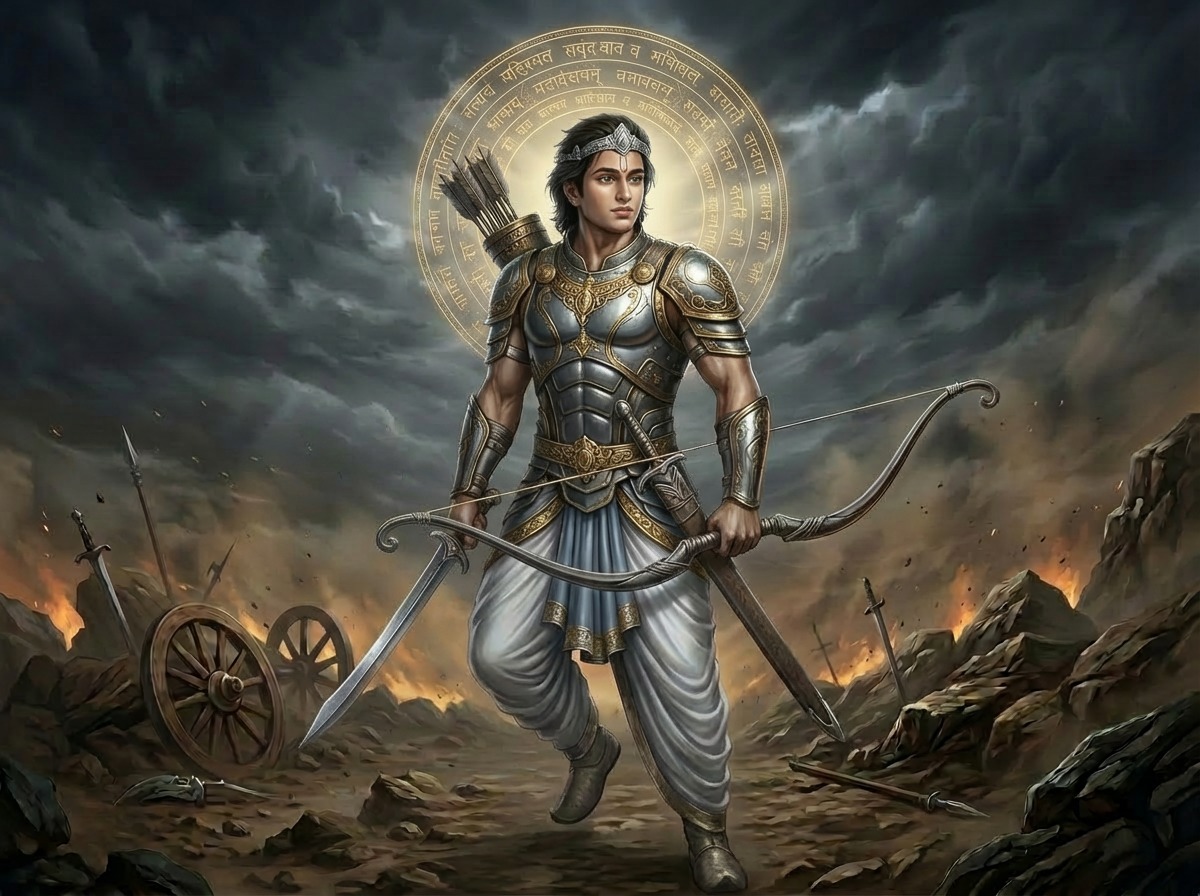
Abhimanyu
अभिमन्युThe Fearless Youth“He entered a trap he couldn't escape — and fought like a lion anyway.”
Abhimanyu
The Fearless YouthSon of Arjuna, Abhimanyu learned the secret of the Chakravyuha (spinning battle formation) while still in his mother's womb. He heard his father explain how to enter it — but fell asleep before hearing how to get out. At sixteen, he entered anyway.
Abhimanyu fought alone against the seven greatest warriors of the Kaurava army simultaneously — and held them off for hours using a broken chariot wheel as a shield.
Breaking into the Chakravyuha — a formation that no single warrior was supposed to penetrate
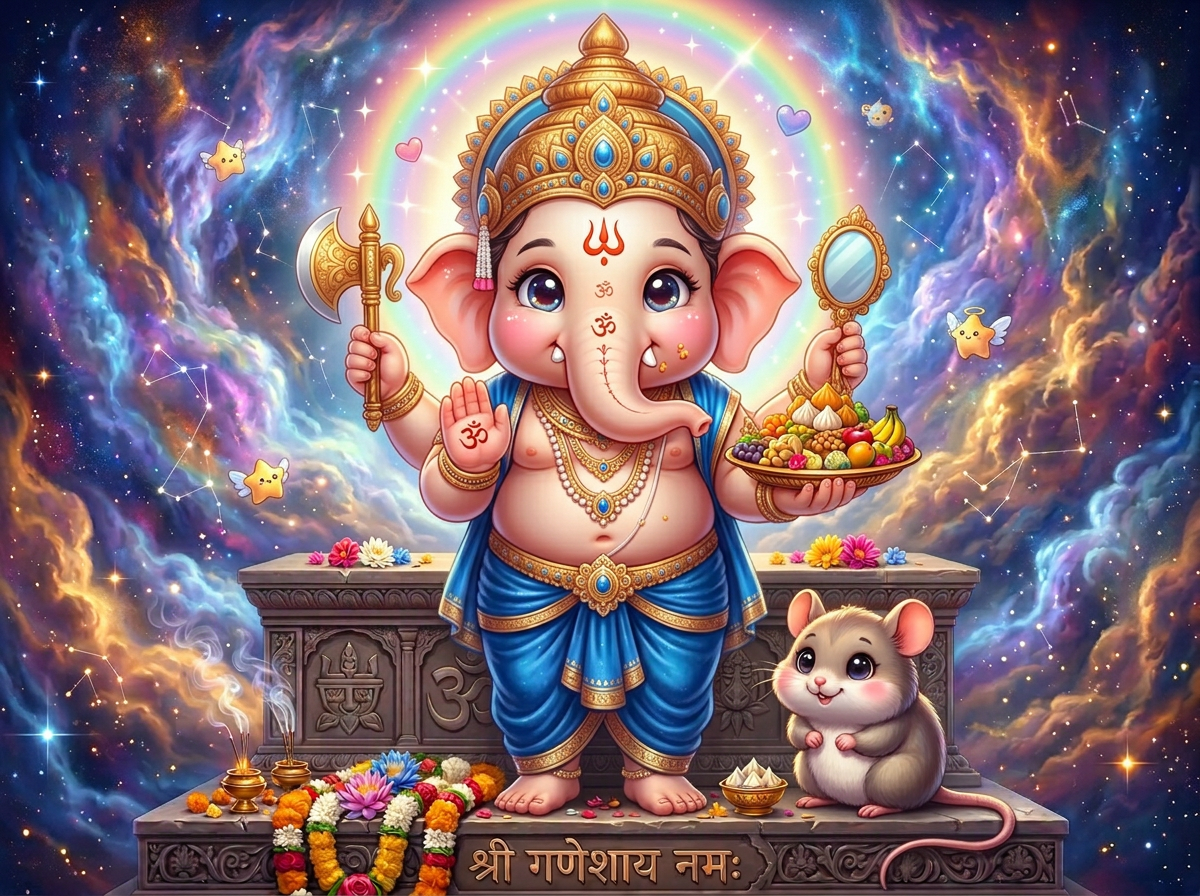
Ganesha
गणेशविघ्नहर्ताThe Remover of Obstacles“The elephant-headed god who was too clever to fight and too kind to refuse anyone.”
Ganesha
The Remover of ObstaclesCreated by Parvati from sandalwood paste, Ganesha guarded his mother's door so fiercely that even Shiva couldn't pass. When Shiva cut off his head in anger, Parvati's grief shook the universe — so Shiva replaced it with the first head they found: an elephant's.
Ganesha is always worshipped FIRST before any other god — even before Shiva or Vishnu. Every new beginning, every exam, every business starts with a prayer to Ganesha.
Removing any obstacle by simply being present
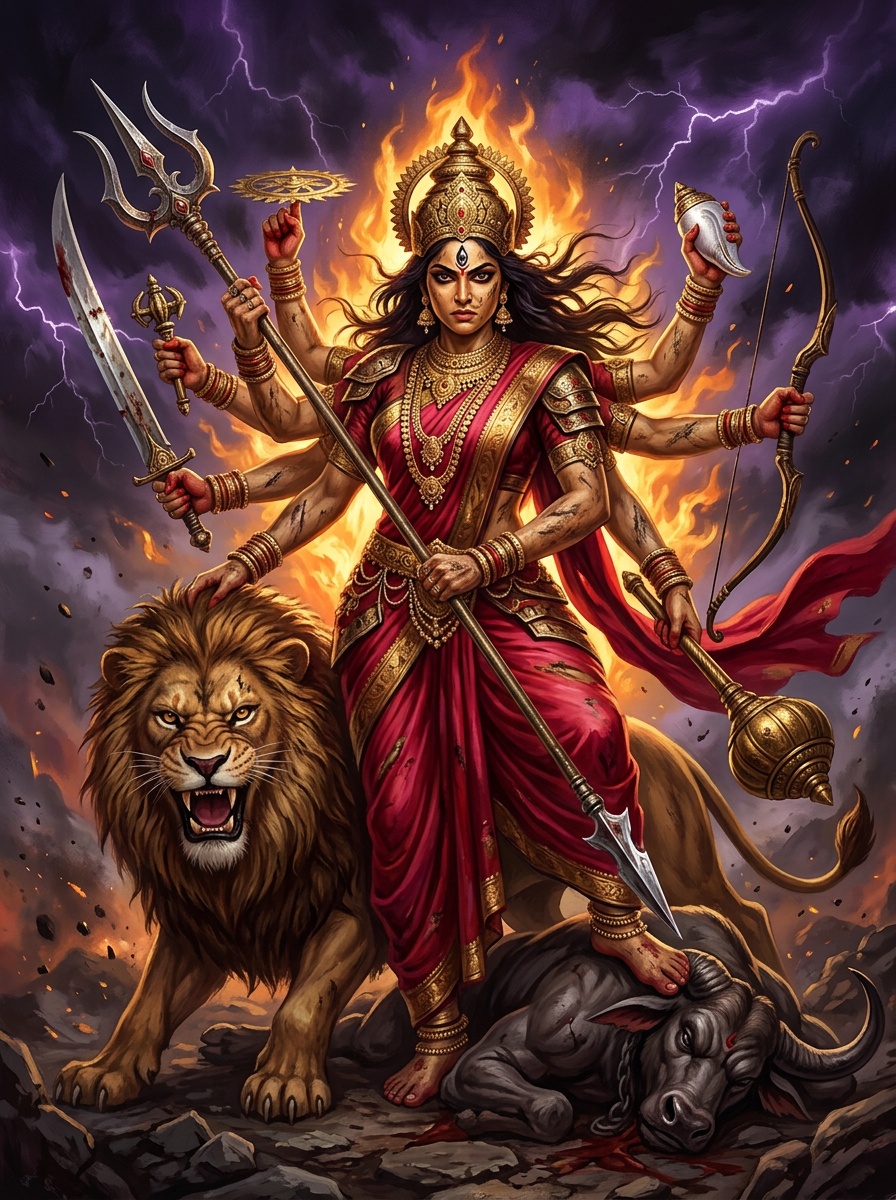
Durga
दुर्गामहिषासुरमर्दिनीThe Invincible Goddess“When all the gods failed, they created her — and she didn't fail.”
Durga
The Invincible GoddessThe demon Mahishasura had a boon that no man or god could kill him. So all the gods combined their power and created Durga — a warrior goddess with eight arms, each holding a different divine weapon. She rode into battle on a lion and ended what no one else could.
Each of Durga's weapons was given by a different god: Shiva's trident, Vishnu's discus, Indra's thunderbolt, Vayu's bow, and more. She is literally the combined power of every god in existence.
Defeating Mahishasura — the demon who could not be killed by any god
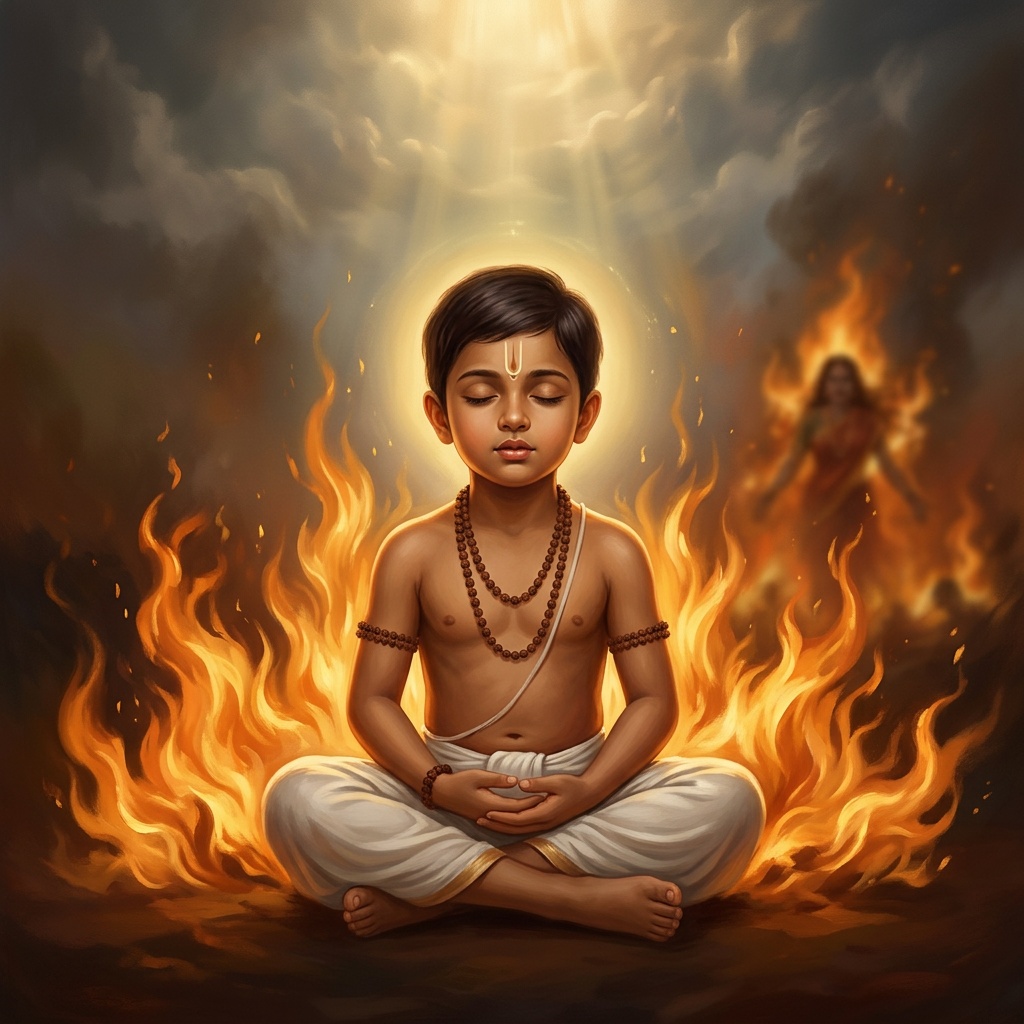
Prahlad
प्रह्लादThe Unwavering Devotee“A five-year-old who stood up to the most terrifying father in the universe.”
Prahlad
The Unwavering DevoteePrahlad's father Hiranyakashipu was a demon king who demanded the entire world worship him. But little Prahlad loved only Vishnu. His father tried to kill him with fire, poison, elephants, and cliff drops — and every single time, Vishnu protected him.
The festival of Holi celebrates Prahlad's survival. His aunt Holika had a fireproof cloak and sat with him in fire to burn him — but the cloak flew off her and protected Prahlad instead.
Simply saying Vishnu's name — it was enough to make the universe protect him
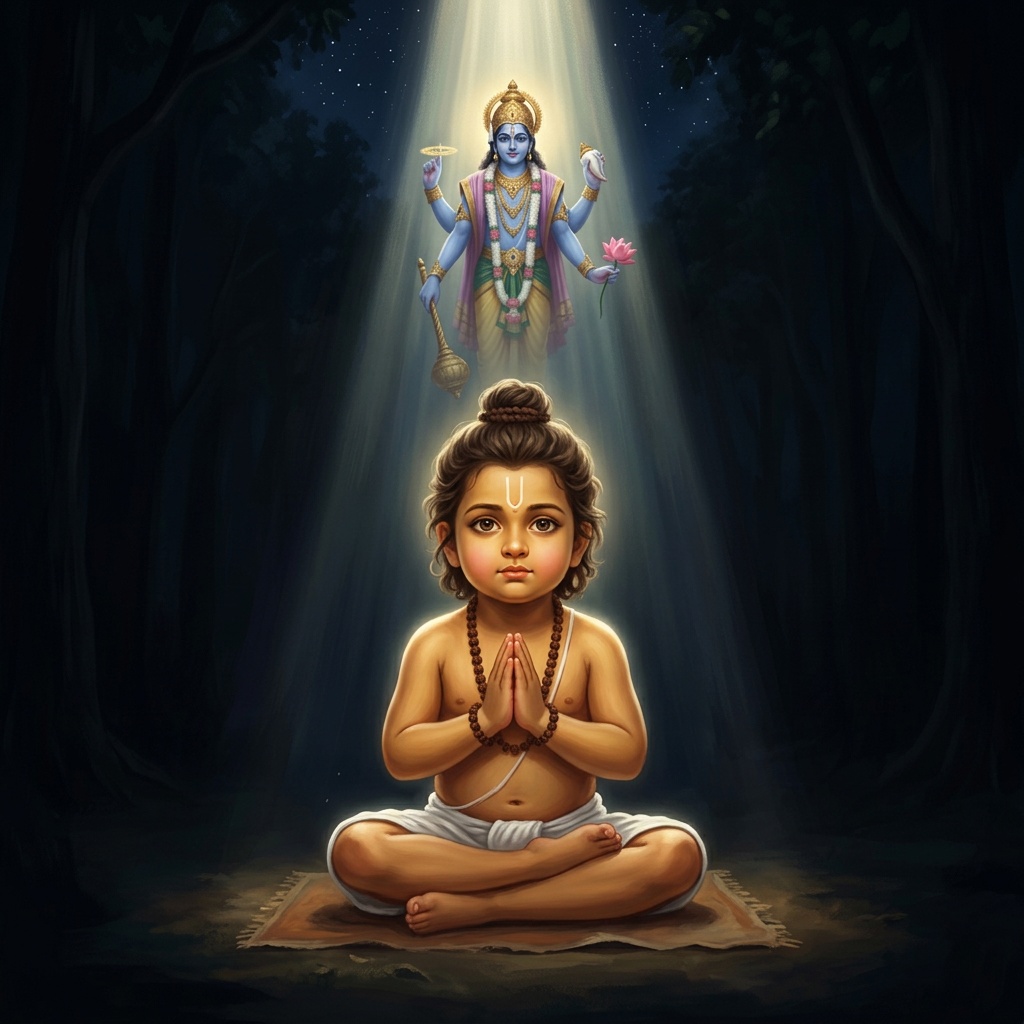
Dhruva
ध्रुवThe Pole Star Prince“A child who meditated so hard that the gods had to come to him.”
Dhruva
The Pole Star PrinceRejected by his own father for sitting on his lap, five-year-old Dhruva walked alone into the forest to find God. He meditated without food, without water, without moving — until Vishnu himself appeared before him. Dhruva was placed in the sky as the Pole Star.
The North Star is called "Dhruva Tara" (Dhruva's Star) in Indian astronomy. It never moves — just like Dhruva's resolve.
Standing on one foot in meditation until the universe itself took notice
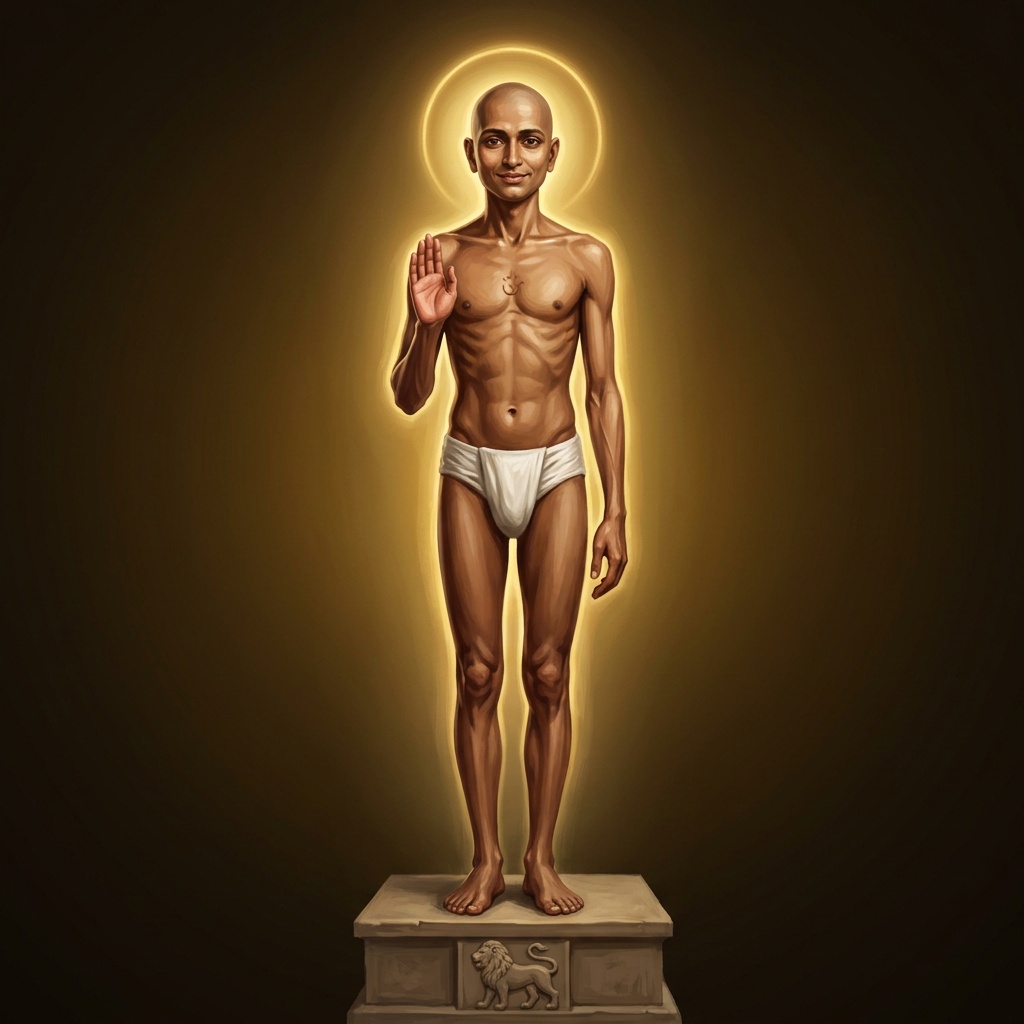
Mahavira
महावीरवर्धमानThe Great Conqueror“He conquered not kingdoms, but himself.”
Mahavira
The Great ConquerorBorn as Prince Vardhamana, he gave up his palace, his wealth, even his clothes — and walked barefoot for twelve years without speaking, enduring every hardship with perfect calm. He didn't fight anyone. He conquered the only enemy that matters: his own desires.
After achieving enlightenment, Mahavira's first sermon was attended by thousands — including animals. Jain tradition says even lions sat peacefully beside deer to hear him speak.
Kesh-lochan — pulling out his own hair by hand as an act of renunciation
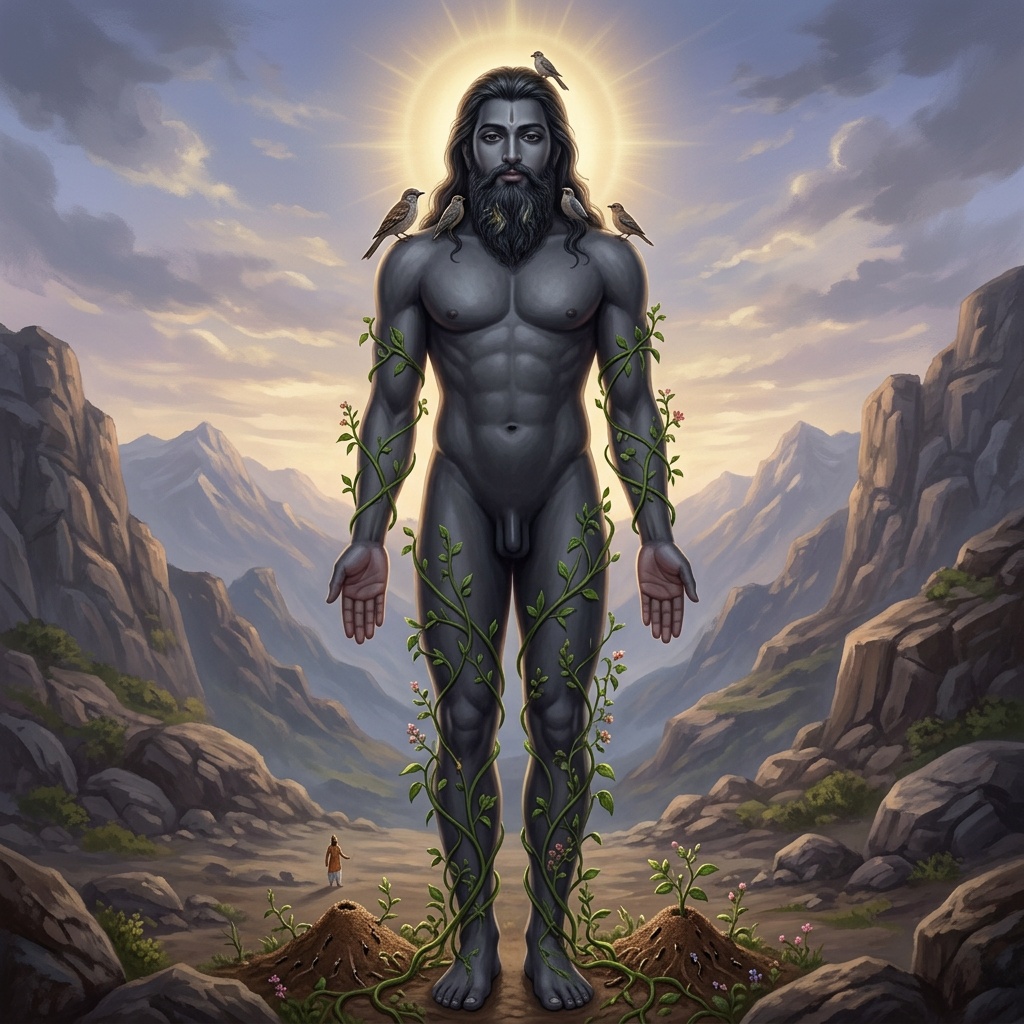
Bahubali
बाहुबलीThe Renunciant Prince“He won the war, then gave away the kingdom.”
Bahubali
The Renunciant PrinceBahubali defeated his own brother Bharata in combat for the throne. But at the moment of victory, standing over his defeated brother, he felt only emptiness. He gave away the crown, walked into the forest, and stood in meditation so long that vines grew up his legs.
The statue of Bahubali at Shravanabelagola (Karnataka) is 57 feet tall — one of the largest free-standing statues in the world. Every 12 years, millions gather to bathe it in milk and saffron.
Kayotsarga — standing perfectly still in meditation for so long that vines and anthills grew around him
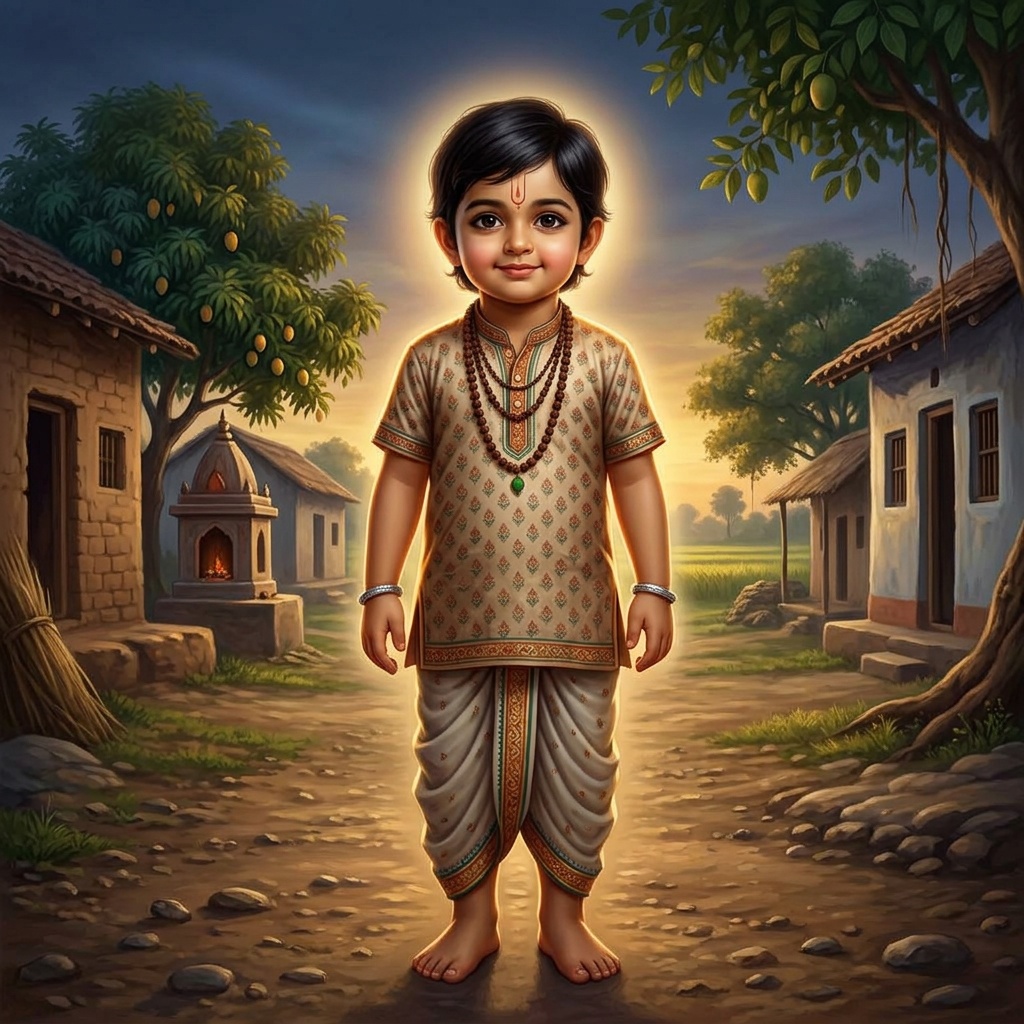
Ghanshyam
घनश्यामThe Divine Child“The seven-year-old who silenced a hall of scholars with a single question.”
Ghanshyam
The Divine ChildBorn in Chhapaiya during a thunderstorm, Ghanshyam showed divine powers from infancy. By age seven, he was debating scholars three times his age. He left home at eleven, walked barefoot across India for seven years, and became Swaminarayan — a reformer who changed millions of lives.
As a toddler, Ghanshyam once made a barren mango tree burst into fruit by simply touching it. The villagers were so amazed they started calling him "the miracle child."
Asking questions that unravel centuries of wrong thinking
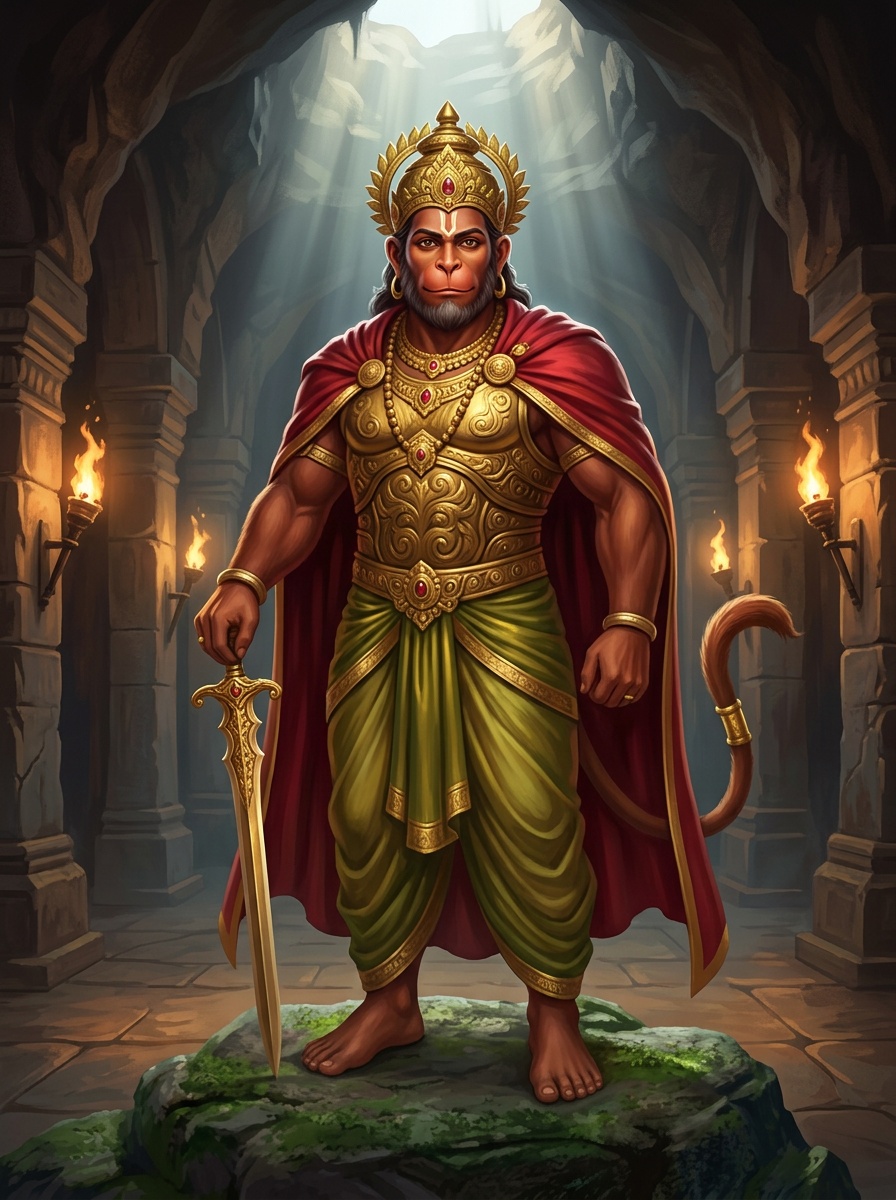
Sugriva
सुग्रीवThe Vanara King“The exiled king who found an ally and found his throne.”
Sugriva
The Vanara KingSugriva was overthrown by his own brother Vali and lived in hiding on Mount Rishyamukha. When Rama arrived, they made a pact — Rama helped him defeat Vali, and Sugriva pledged his entire vanara army for the rescue of Sita.
Sugriva's skin is described as having a distinct reddish-copper hue, which sets him apart from all other vanaras. His golden crown has a massive ruby at its center.
Rallying the entire vanara army across the world to search for Sita
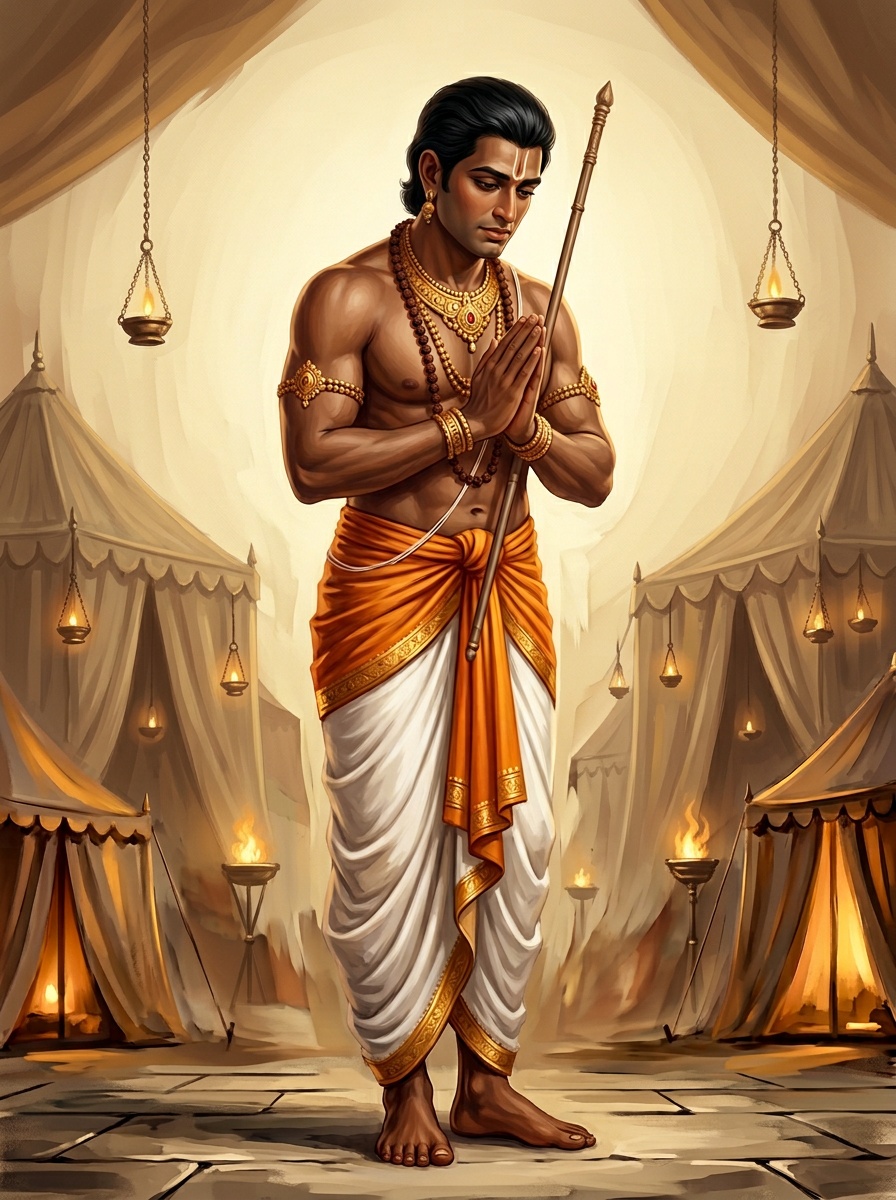
Vibhishana
विभीषणThe Righteous Brother“He chose dharma over his own blood.”
Vibhishana
The Righteous BrotherRavana's youngest brother, Vibhishana pleaded with the demon king to return Sita peacefully. When Ravana refused and humiliated him, Vibhishana crossed the ocean and joined Rama — knowing he might never see his homeland again.
After the war, Rama crowned Vibhishana as the new king of Lanka. He is one of the few characters who chose righteousness over family loyalty — and was rewarded for it.
Revealing Ravana's secret vulnerabilities to Rama
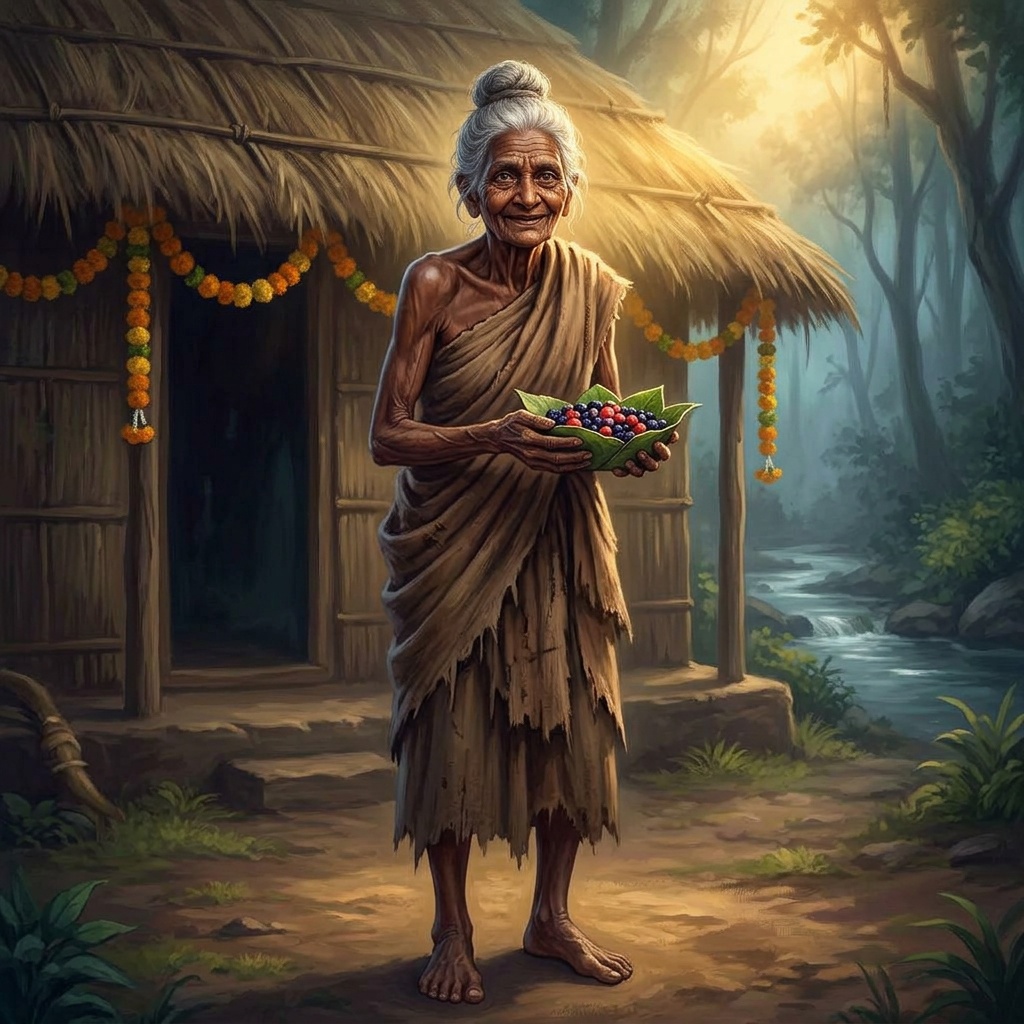
Shabari
शबरीThe Devoted Hermit“She tasted every berry to make sure only the sweetest reached her Lord.”
Shabari
The Devoted HermitAn elderly tribal woman who spent decades waiting for Rama to visit her ashram. When he finally arrived, she offered him berries — but first tasted each one herself, discarding the sour ones. Rama ate the half-bitten berries with love.
Rama's acceptance of Shabari's half-eaten berries is one of the most celebrated moments in the Ramayana. It shows that devotion matters more than ritual purity.
Decades of unwavering faith — waiting without knowing when or if Rama would come
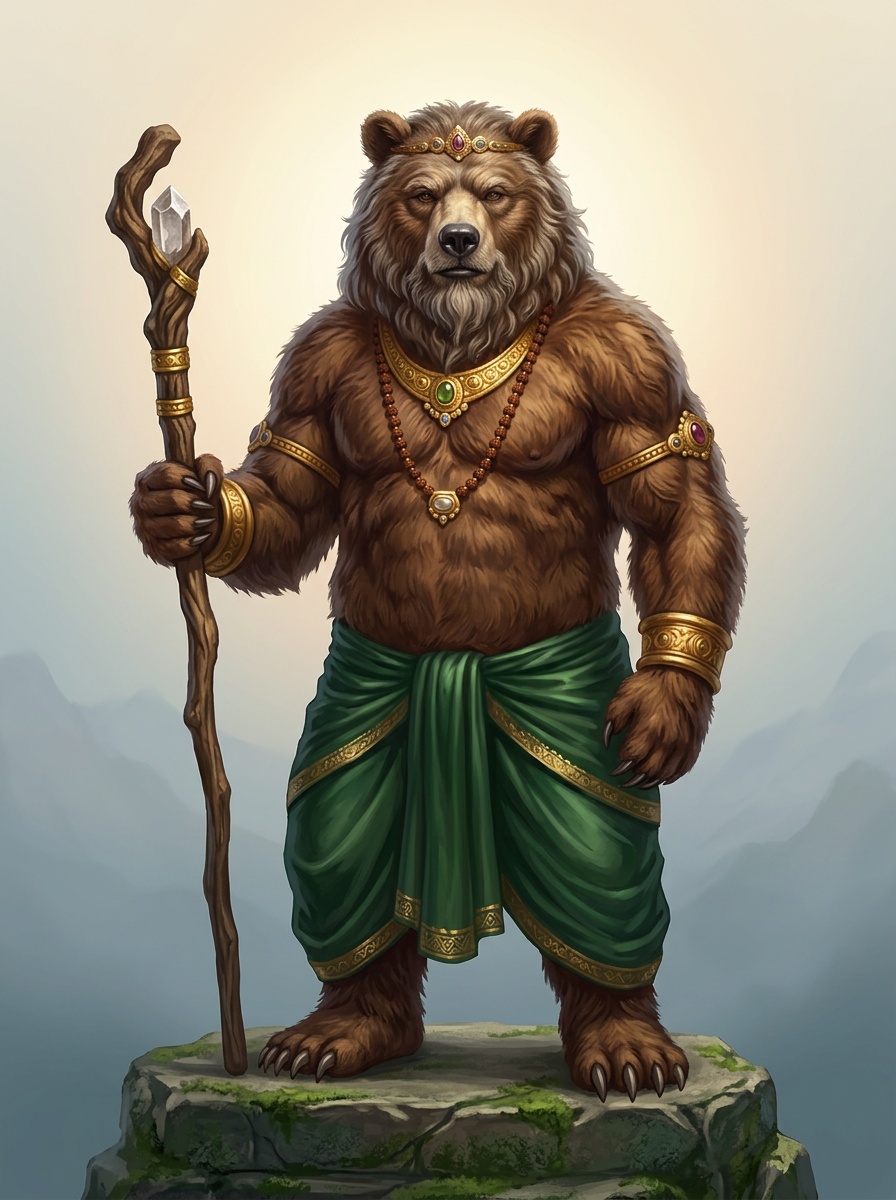
Jambavan
जाम्बवन्तThe Ancient Bear King“The bear who remembered what Hanuman had forgotten.”
Jambavan
The Ancient Bear KingJambavan was a bear king old enough to have witnessed the churning of the ocean. When the vanara army stood helpless at the shore, unable to leap across to Lanka, it was Jambavan who reminded Hanuman of his forgotten divine powers — unlocking the leap that changed everything.
Jambavan is said to be millions of years old. He participated in the churning of the cosmic ocean and circled the earth 21 times during Vamana's three steps.
Reminding Hanuman of his forgotten powers with a single speech
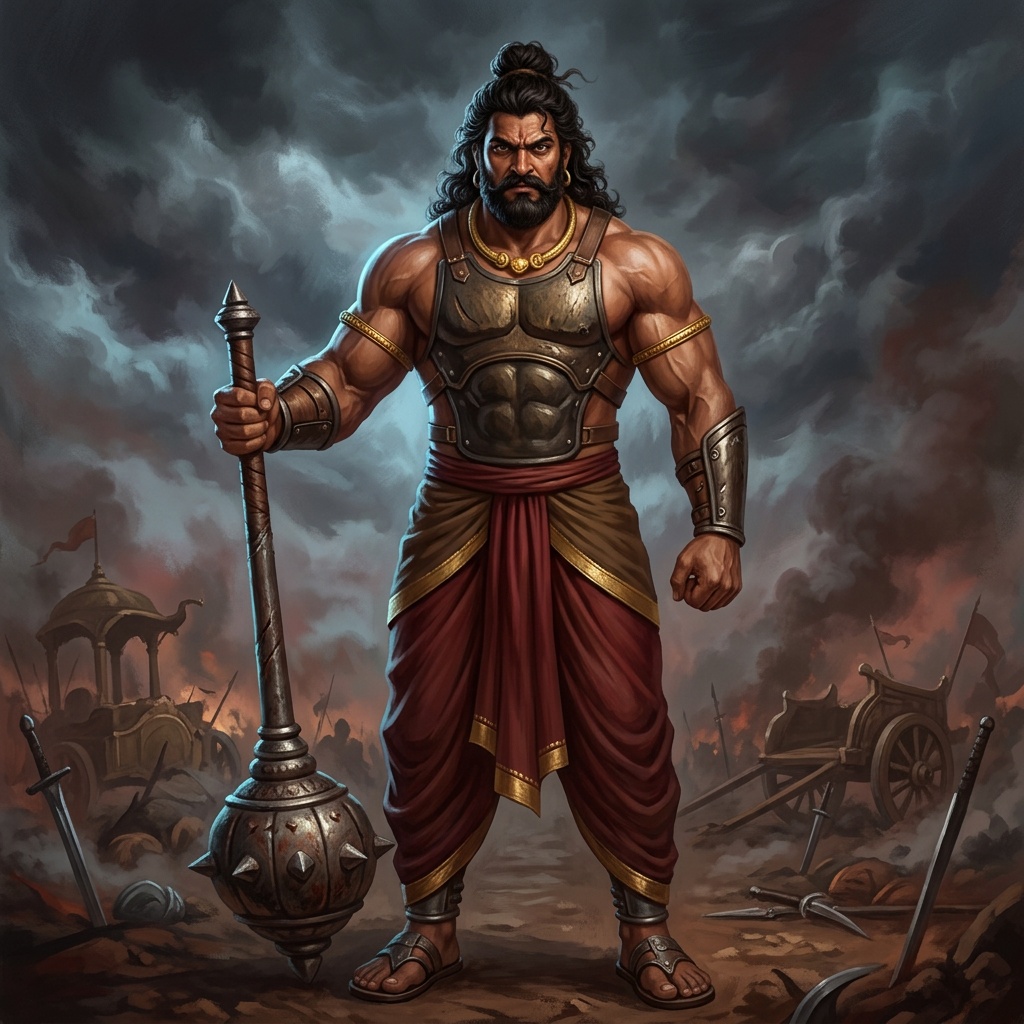
Bhima
भीमThe Strongest Pandava“His mace was heavy but his love for his family was heavier.”
Bhima
The Strongest PandavaThe second Pandava brother and son of Vayu (the wind god), Bhima had the strength of ten thousand elephants. He was fierce in battle but gentle with those he loved — he carried his mother and brothers on his shoulders through the forest of exile.
Bhima could eat enough food for a hundred men. His appetite was so legendary that one of his names is "Vrikodara" — wolf-belly.
Breaking Duryodhana's thigh with a single mace blow
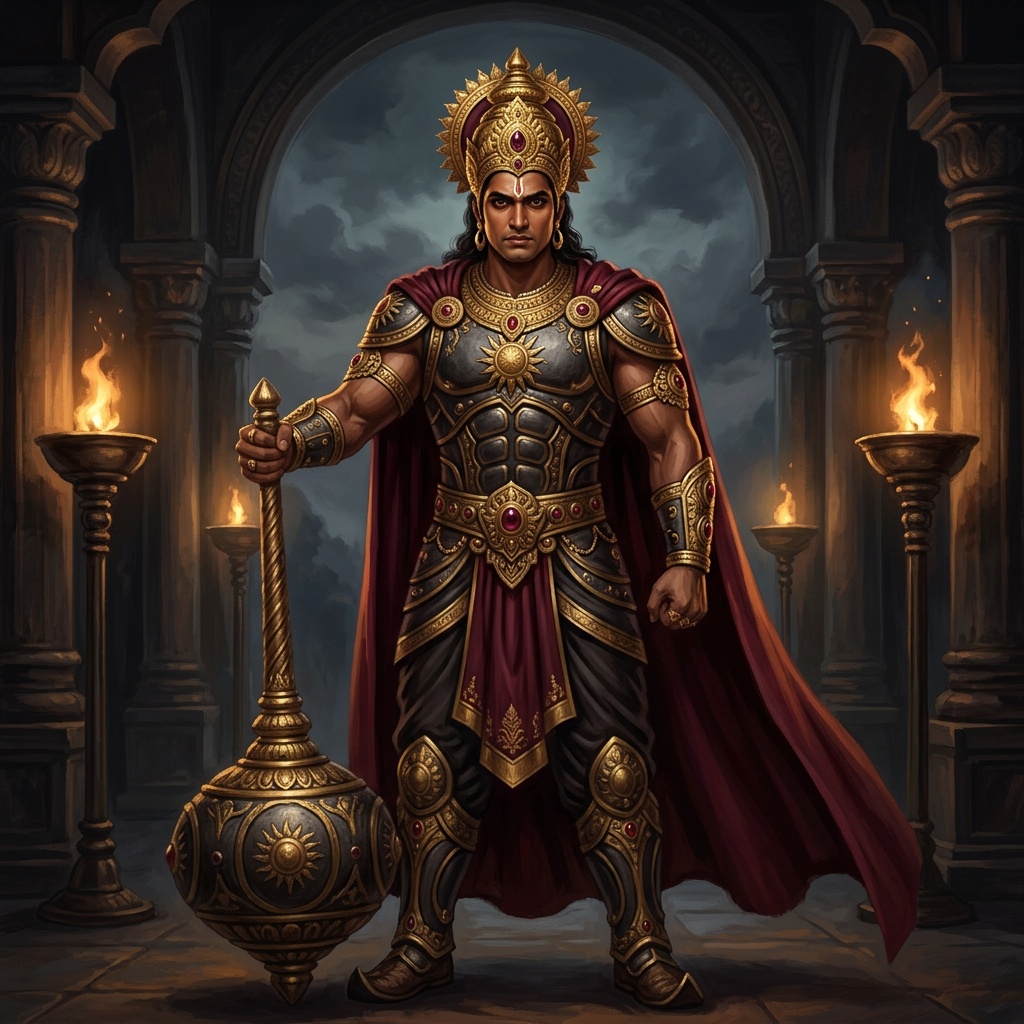
Duryodhana
दुर्योधनThe Jealous Prince“He had everything — except the ability to share.”
Duryodhana
The Jealous PrinceEldest of the hundred Kaurava brothers, Duryodhana was born with tremendous power and privilege. But jealousy of his Pandava cousins consumed him. He cheated in a dice game, humiliated Draupadi, and denied the Pandavas even five villages of land — triggering the greatest war in history.
Duryodhana was actually a skilled warrior and a generous king to his own people. His fatal flaw wasn't stupidity — it was an inability to accept that others could be worthy too.
The rigged dice game that stole a kingdom
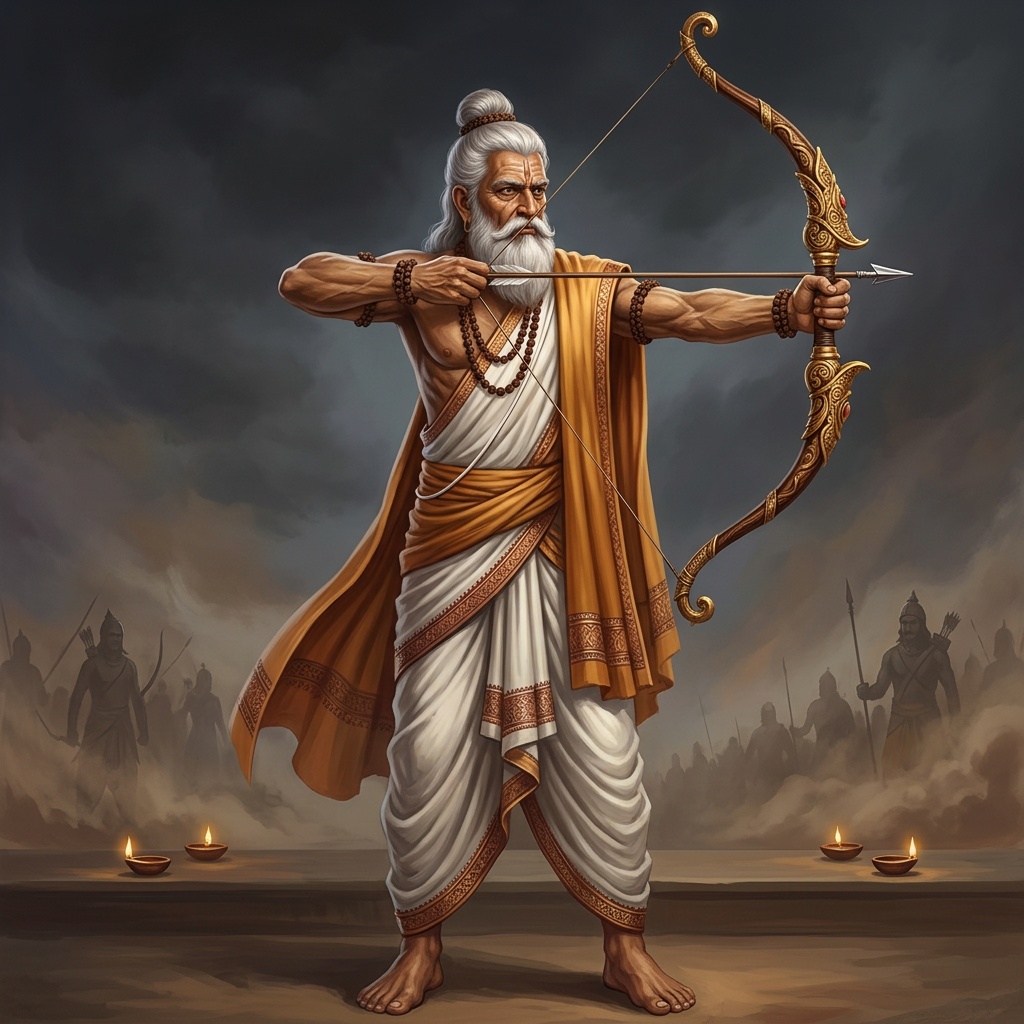
Drona
द्रोणThe Supreme Teacher“The teacher who made legends — and was destroyed by his own favouritism.”
Drona
The Supreme TeacherDronacharya was the greatest martial arts teacher of his age. He trained both the Pandavas and Kauravas. But his favouritism toward Arjuna and his rejection of Eklavya remain among the most debated moral questions in Indian literature.
Drona was born from a pot (drona = pot), not from a womb. His father, the sage Bharadwaja, placed his life-force in a clay vessel, and Drona emerged from it fully formed.
Teaching the Brahmastra — the most devastating weapon in existence
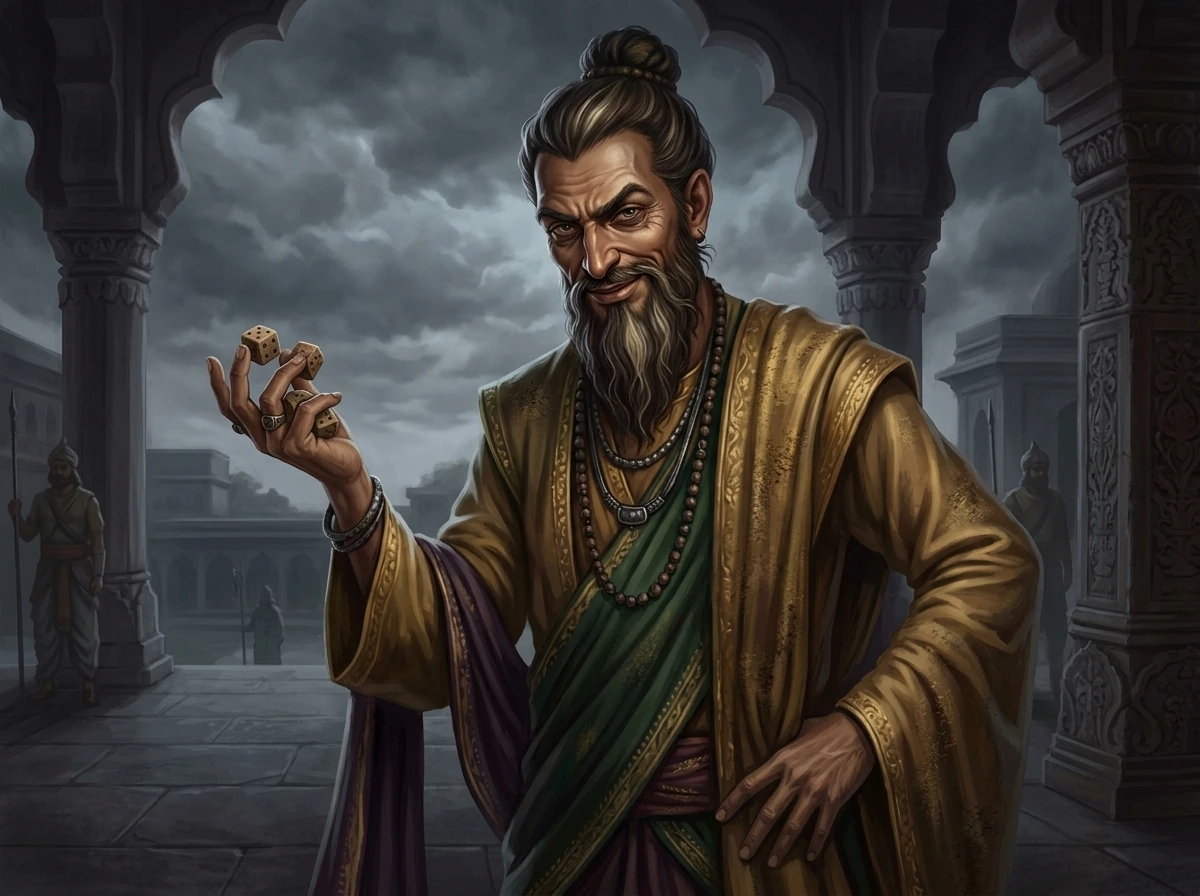
Shakuni
शकुनिThe Master Manipulator“His dice were carved from his father's bones — and they never lost.”
Shakuni
The Master ManipulatorDuryodhana's uncle Shakuni was the mastermind behind the dice game that destroyed the Pandavas. He carried a grudge against the Kuru dynasty and used Duryodhana's jealousy as his weapon. His magical dice always rolled in his favour.
According to legend, Shakuni's dice were made from the bones of his own father — who died in a Kuru dungeon. The dice carried his father's desire for revenge and could never roll wrong.
The rigged dice roll that won an empire
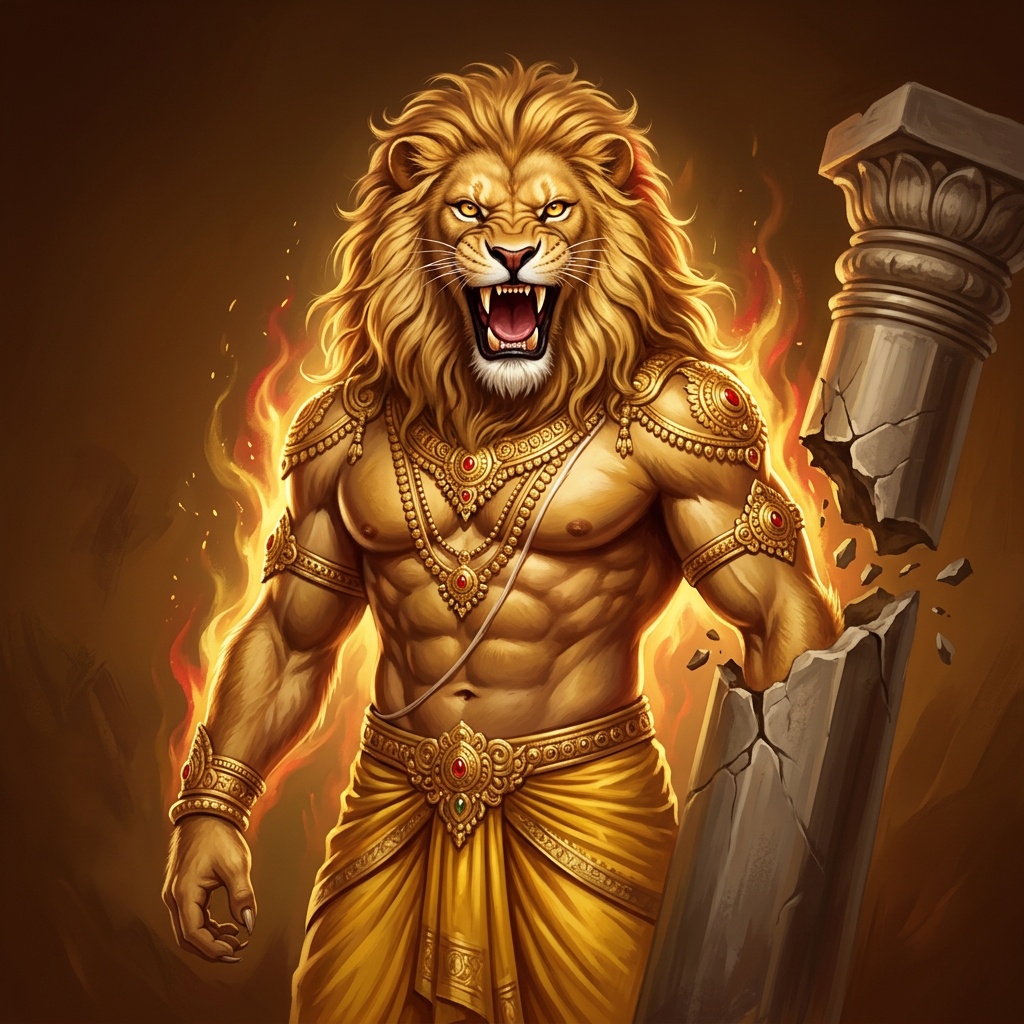
Narasimha
नरसिंहThe Man-Lion Avatar“Neither man nor beast. Neither inside nor outside. Neither day nor night.”
Narasimha
The Man-Lion AvatarWhen the demon Hiranyakashipu got a boon that he could not be killed by man or animal, indoors or outdoors, by day or night — Vishnu became Narasimha: half-man, half-lion. He appeared at twilight, on a doorstep threshold, and placed the demon on his lap.
Narasimha found the loophole in every single condition of Hiranyakashipu's boon. Each condition was technically honoured while being completely bypassed. The ultimate divine lawyer.
Appearing from a stone pillar when Prahlad was in danger
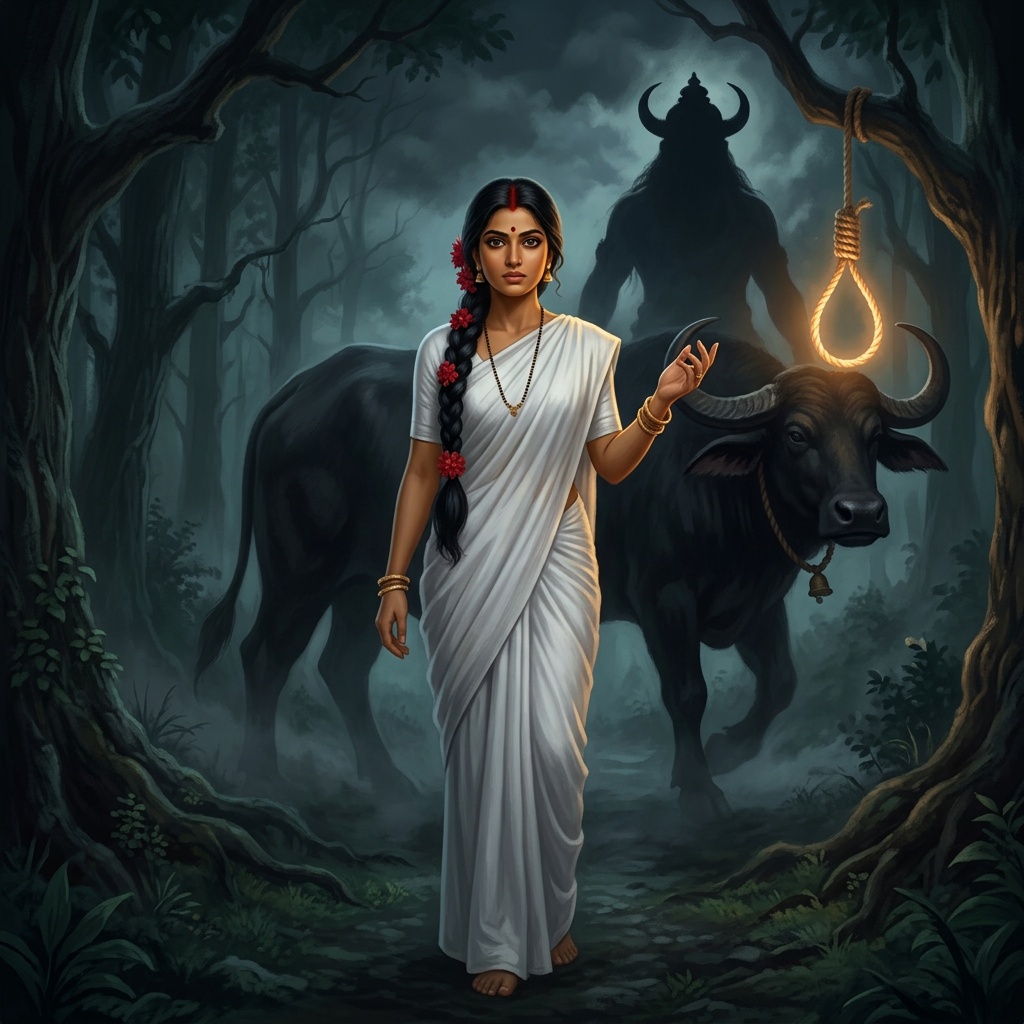
Savitri
सावित्रीWho Conquered Death“She argued with Death himself — and won.”
Savitri
Who Conquered DeathSavitri married Satyavan knowing he was destined to die within a year. When Yama, the god of death, came to take his soul, Savitri followed them and debated Yama with such intelligence and devotion that he was forced to return Satyavan's life.
Savitri outsmarted Yama by asking for boons that logically required her husband to be alive. Yama granted "sons" — but she couldn't have sons without a living husband. Checkmate.
Following Death across the underworld and debating him into submission
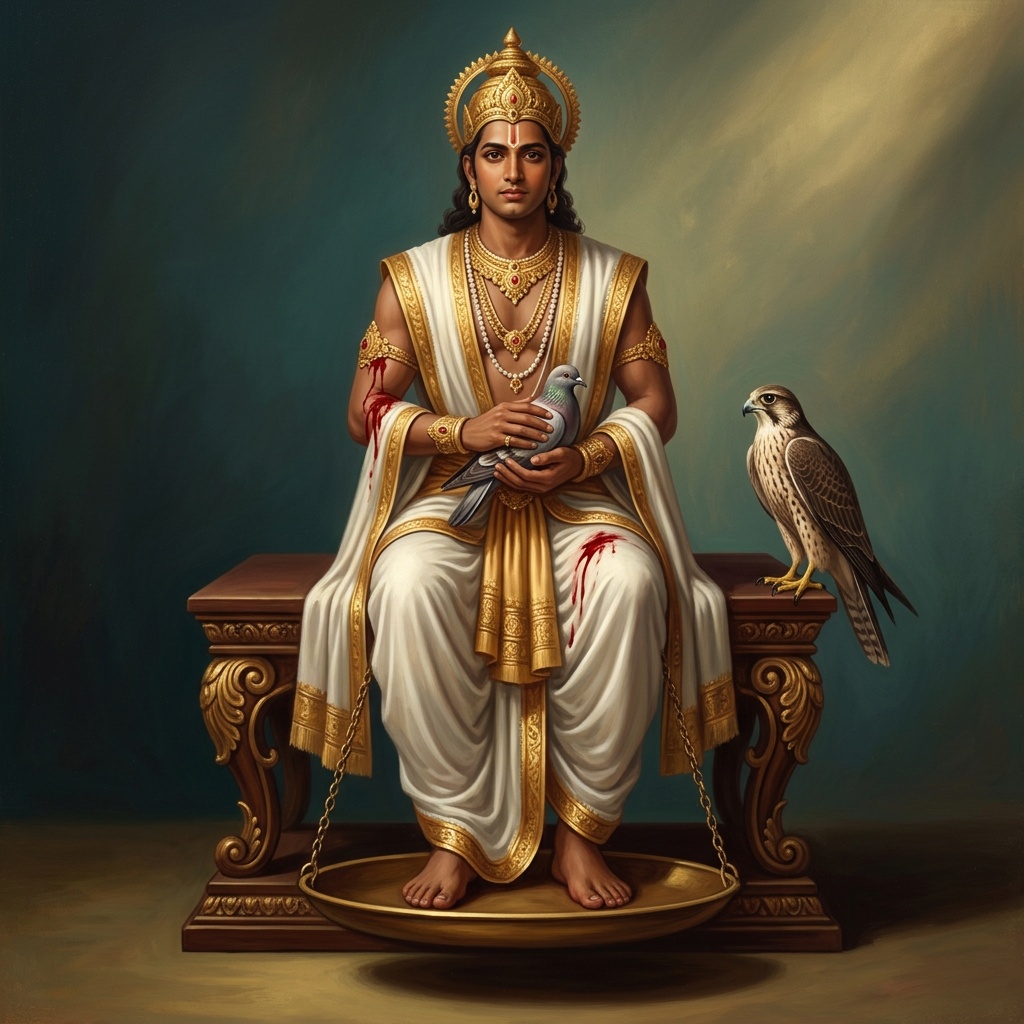
King Shibi
शिबिThe Selfless King“He cut his own flesh to save a pigeon from an eagle.”
King Shibi
The Selfless KingWhen a pigeon sought refuge in King Shibi's court, pursued by an eagle, Shibi offered his own flesh as a substitute — cutting pieces from his own body to match the pigeon's weight. The scales would not balance until he climbed onto them entirely.
The eagle and pigeon were actually Indra and Agni in disguise, testing Shibi's compassion. When Shibi offered his entire body, the gods revealed themselves and healed him completely.
Offering his own body weight in flesh to balance the scales of justice
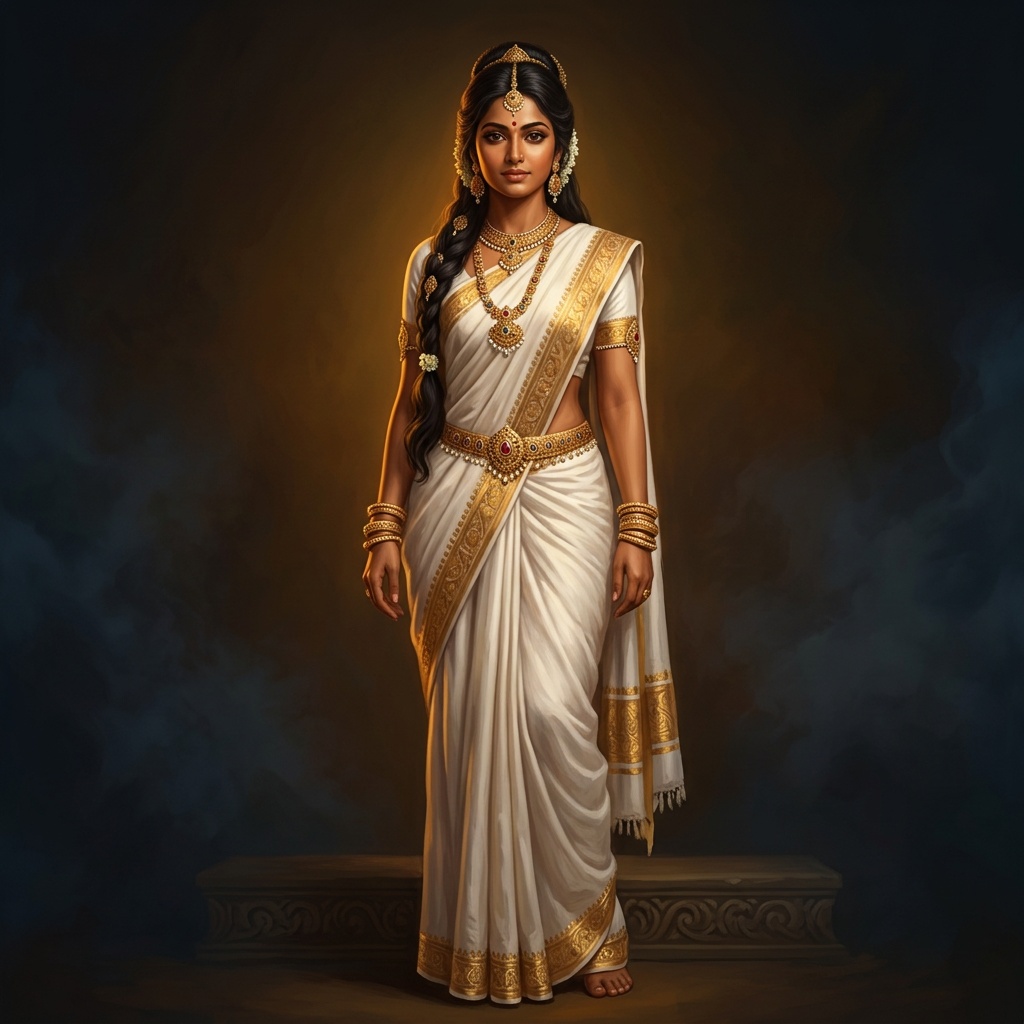
Ahalya
अहल्याThe Stone Redeemed“Turned to stone by a curse, freed by Rama's footstep.”
Ahalya
The Stone RedeemedAhalya was cursed by her husband, the sage Gautama, and turned into a stone for centuries. She lay forgotten in the forest until Rama's feet touched the rock — and she returned to life, her curse lifted by grace.
Ahalya is one of the Panchakanya — the five most celebrated women in Indian tradition, whose very names are said to destroy sin when remembered.
Enduring centuries as stone with patience and faith
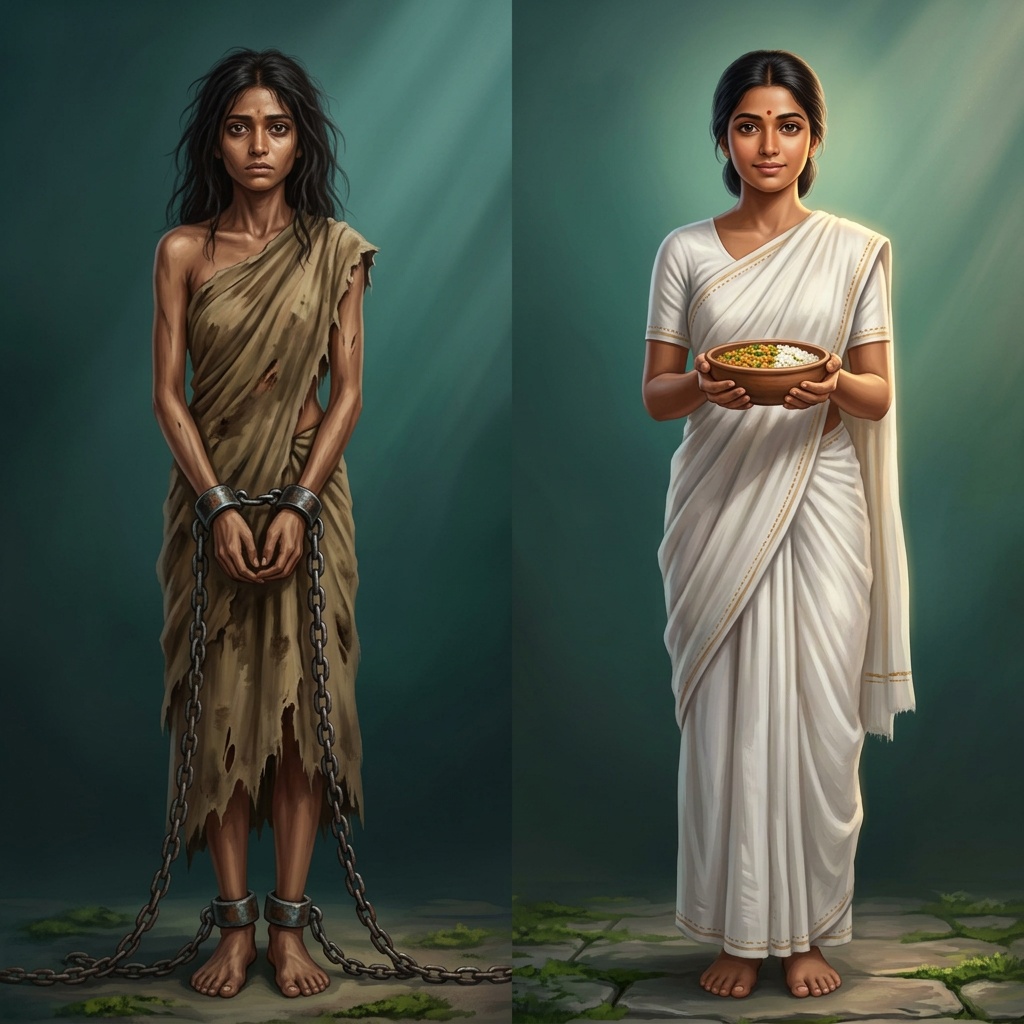
Chandanbala
चंदनबालाThe Girl of Courage“Chained and enslaved, she still found the strength to give.”
Chandanbala
The Girl of CourageA princess sold into slavery, Chandanbala was chained and had her hair shaved. Despite her own suffering, when Mahavira came begging for food during his years of austerity, she offered him lentils through her tears. Her generosity finally broke his fast.
Mahavira had taken a vow to only eat if his food was offered by a princess, in chains, with shaved head, weeping, offering lentils in a winnowing basket. Chandanbala unknowingly fulfilled every impossible condition.
Giving her last food to a stranger despite having nothing herself
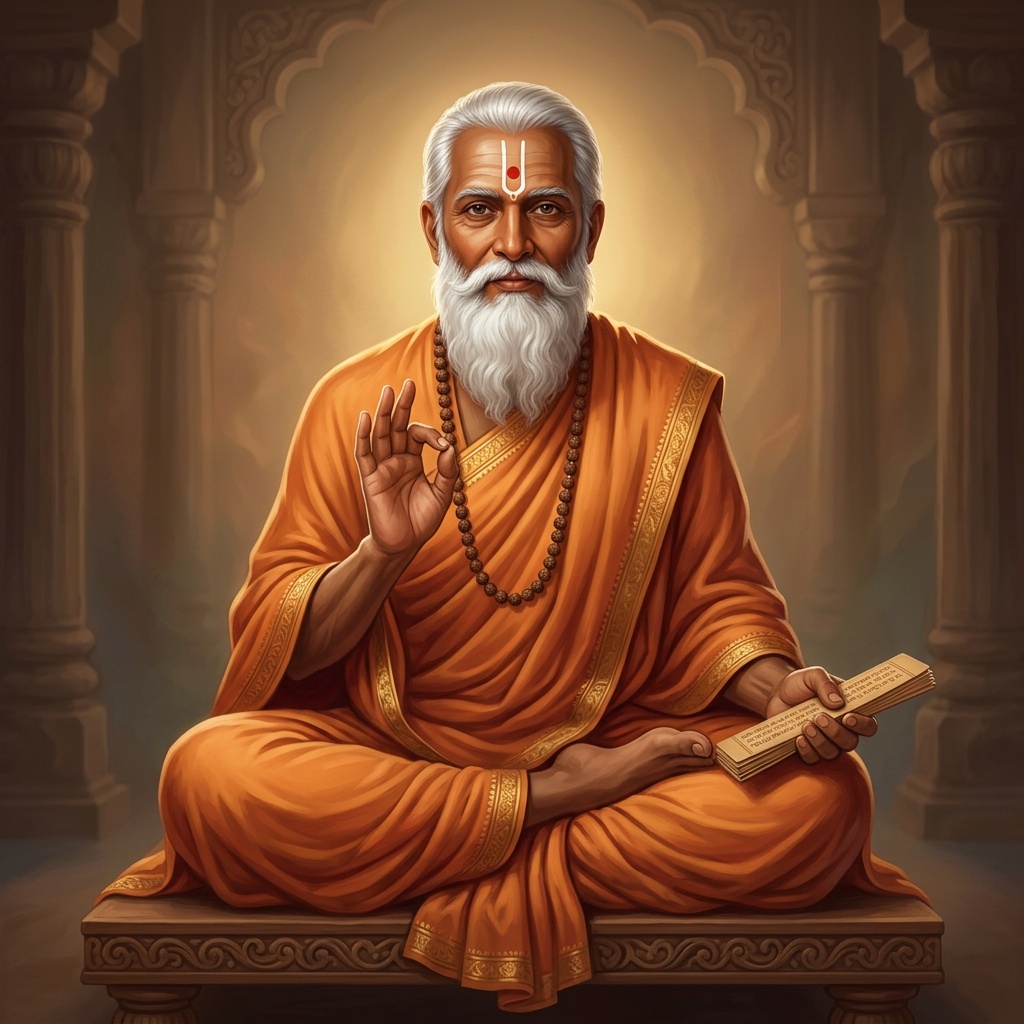
Ramanand Swami
रामानन्द स्वामीThe Spiritual Guide“The guru who recognized a wandering boy as the future of his entire order.”
Ramanand Swami
The Spiritual GuideRamanand Swami was an established spiritual leader in Gujarat when a young ascetic named Neelkanth arrived at his ashram. He immediately recognized the boy's divine nature and, despite having thousands of followers, named Neelkanth as his successor — an act of extraordinary humility.
Ramanand Swami was already in his 70s when he met the teenage Neelkanth. Despite the age gap, he bowed to the young boy and declared him the leader of the entire Swaminarayan Sampraday.
Recognizing divine potential in a dusty wandering teenager
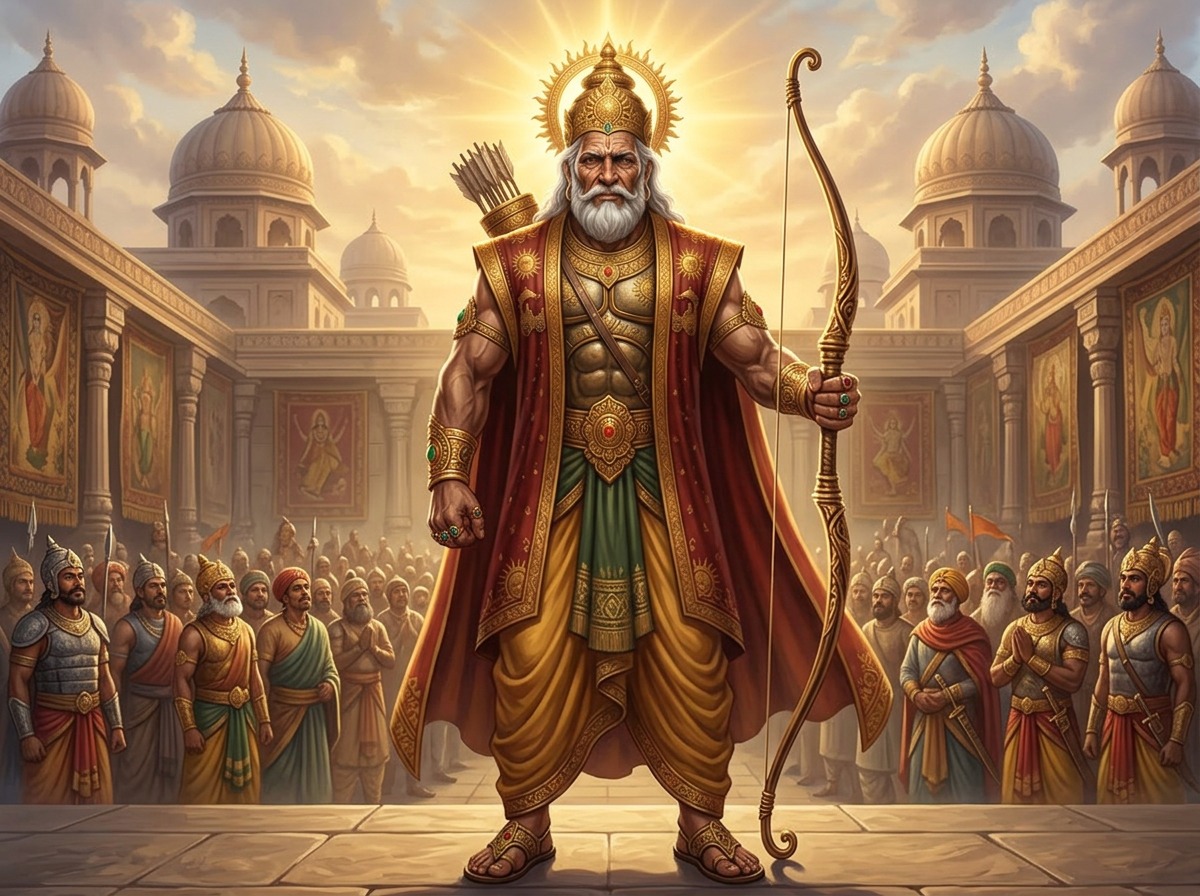
Dasharatha
दशरथThe Heartbroken King“A king whose love for his sons was only matched by his loyalty to his word.”
Dasharatha
The Heartbroken KingKing Dasharatha of Ayodhya was a legendary warrior who could fight while steering his chariot by sound alone. But his greatest battle was against his own heart — when a promise to Queen Kaikeyi forced him to exile his beloved son Rama. He died of grief, proving that even kings can break.
Dasharatha's name literally means "ten chariots" — he could command ten chariots simultaneously in battle, fighting in all directions at once.
Shabdabhedi — shooting arrows guided by sound alone, even in complete darkness
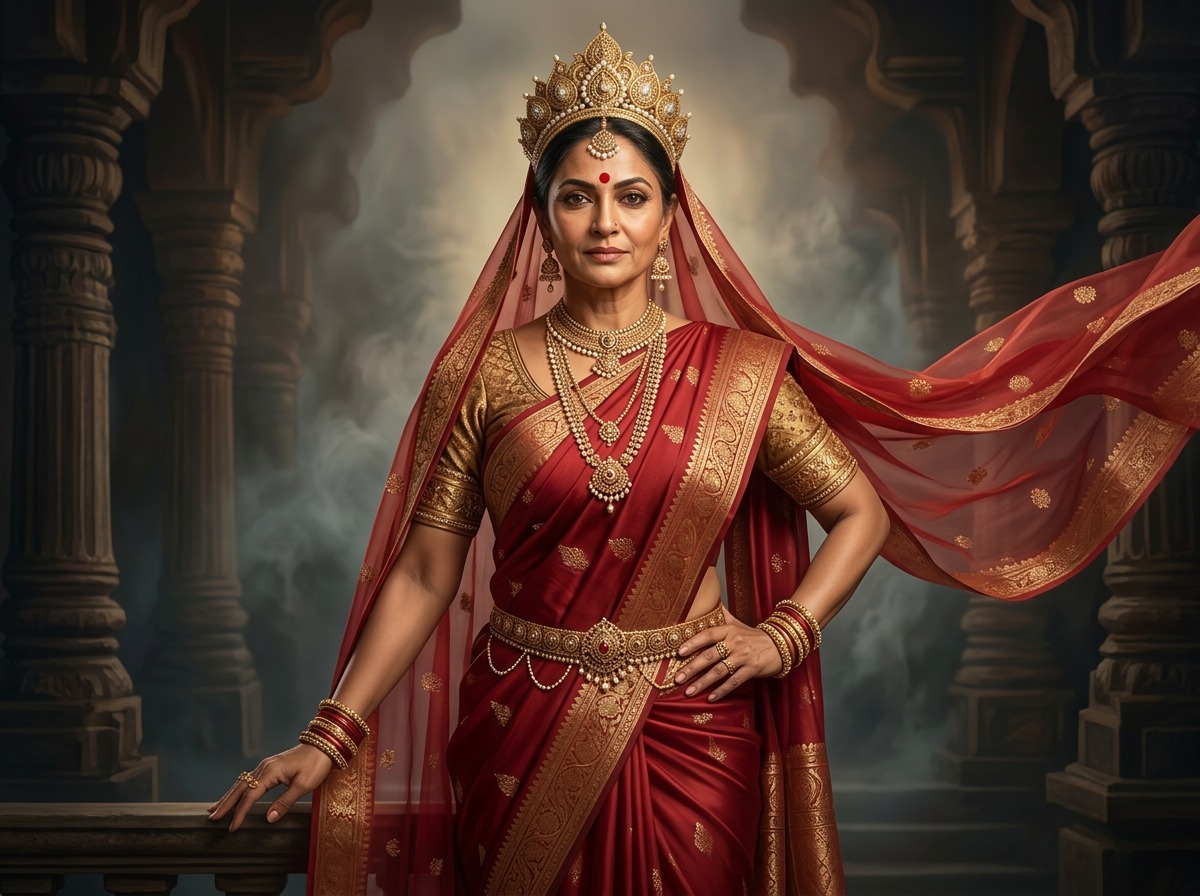
Kaikeyi
कैकेयीThe Queen of Two Boons“She saved her husband in war — then broke his heart in peace.”
Kaikeyi
The Queen of Two BoonsKaikeyi was a fearless warrior-queen who once saved Dasharatha's life on the battlefield, earning two boons. Years later, poisoned by her servant Manthara's whispers, she used those boons to exile Rama and crown her own son Bharata. She got what she asked for — and lost everything that mattered.
Before Manthara's influence, Kaikeyi loved Rama more than her own son Bharata. Rama considered her his favourite mother among all three queens.
Claiming two ancient boons at the worst possible moment
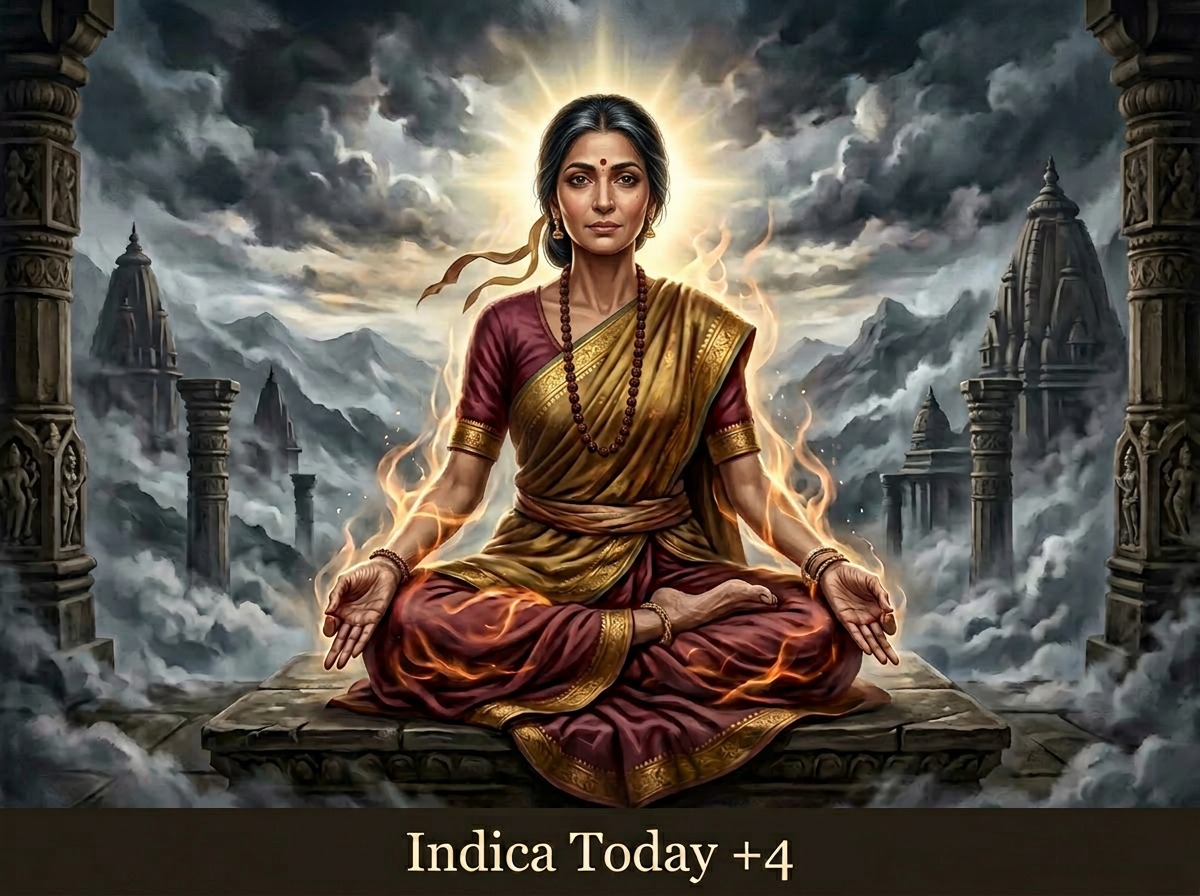
Kausalya
कौसल्याThe Mother Who Let Go“She blessed her son to leave, even as her heart shattered.”
Kausalya
The Mother Who Let GoKausalya was Dasharatha's first queen and Rama's mother. When Rama was exiled, she could have cursed the world — instead she blessed him, prayed for his safety, and held her grief in silence. Her strength wasn't in fighting; it was in letting go with grace.
Kausalya performed a special fire ceremony (putrakameshti yagna) that lasted months, just to have a son. When Rama was finally born, the entire city of Ayodhya celebrated for days.
Blessing Rama for his exile instead of cursing those who caused it
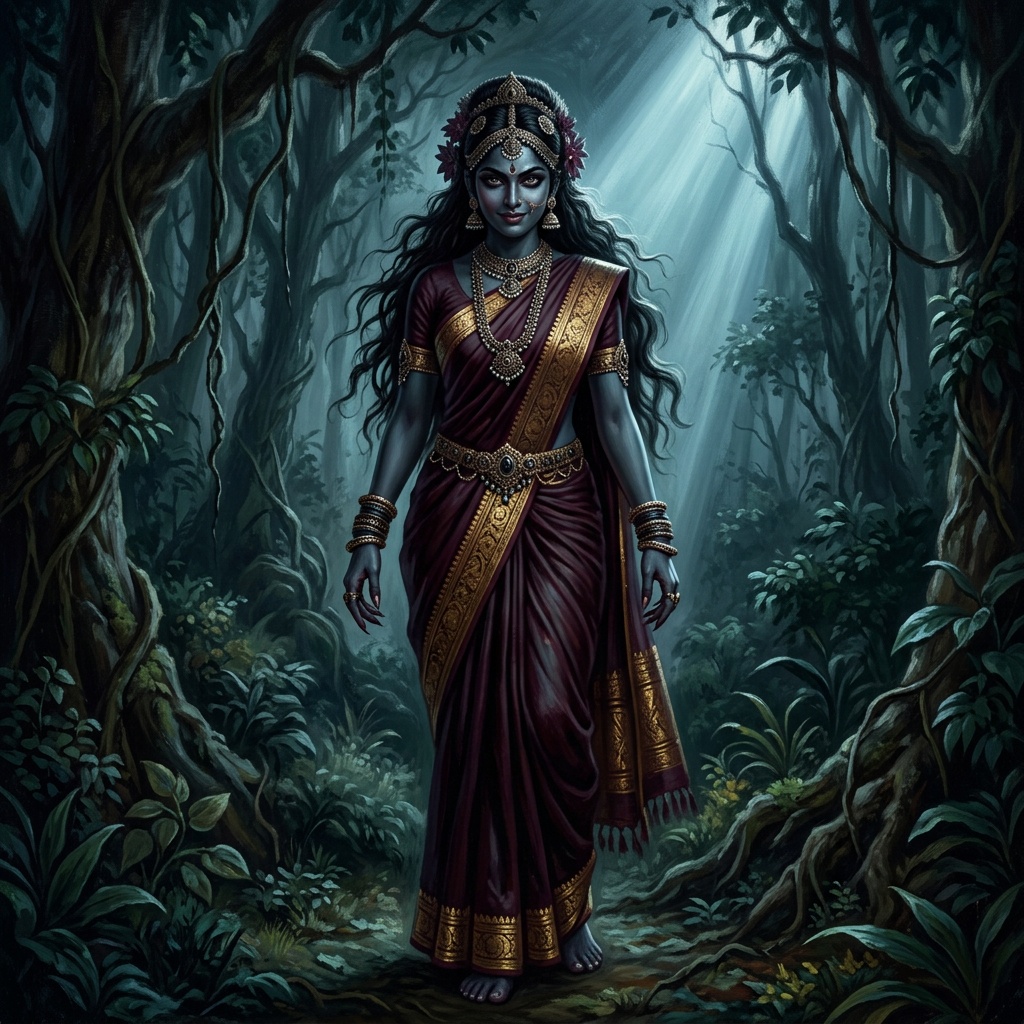
Surpanakha
शूर्पणखाThe Scorned Demoness“Her humiliation lit the fuse that burned two kingdoms.”
Surpanakha
The Scorned DemonessSurpanakha was Ravana's sister who fell in love with Rama in the forest. When she was rejected and attacked Sita in jealousy, Lakshmana cut off her nose. She ran to Ravana, and her rage became the spark that led to Sita's kidnapping and the great war.
Surpanakha's name means "she whose nails are like winnowing fans." Before her humiliation, she could shapeshift into any beautiful form she wished.
Shapeshifting into a beautiful woman to deceive others
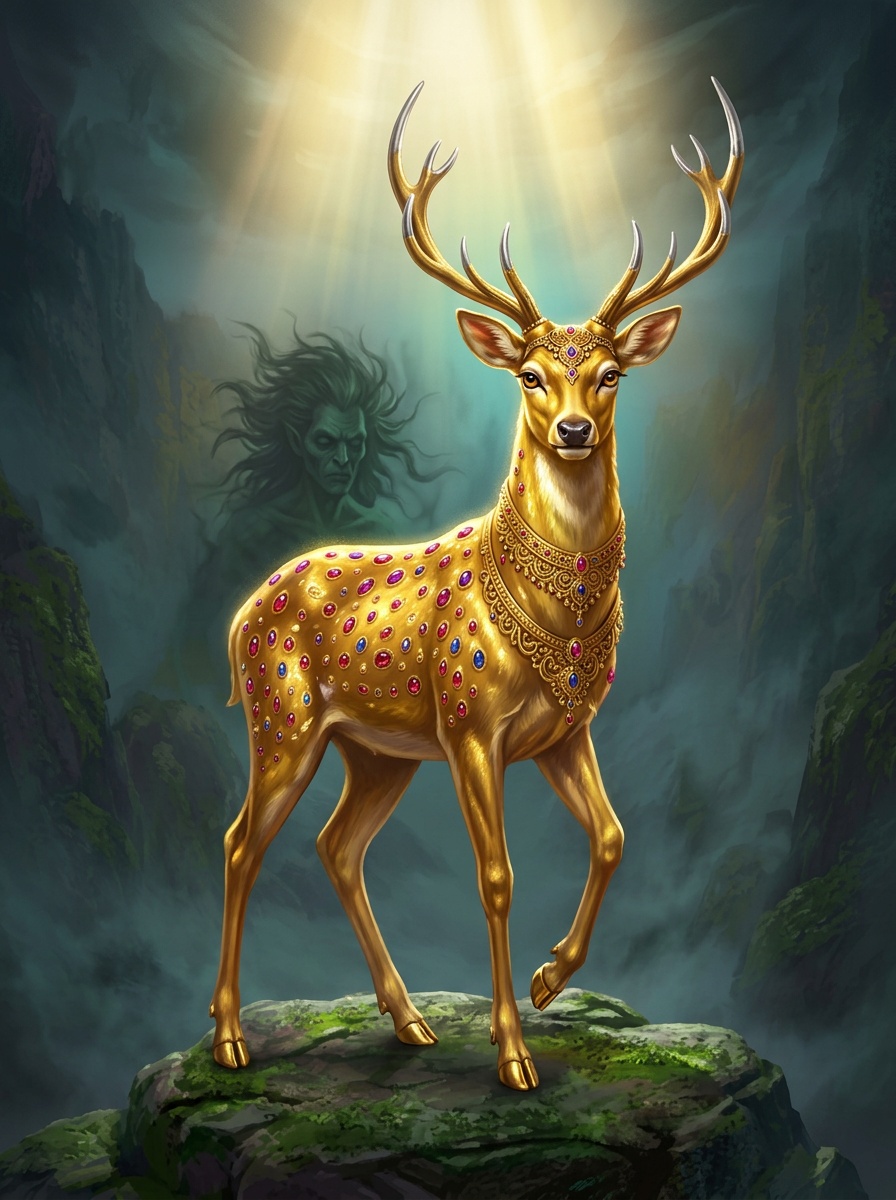
Maricha
मारीचThe Golden Deer“The most beautiful trap ever set.”
Maricha
The Golden DeerMaricha was a rakshasa who Ravana forced to take the form of a magical golden deer. This enchanting creature lured Rama away from Sita, creating the opening for Ravana to kidnap her. Maricha knew the plan would fail, but feared Ravana more than death.
As the golden deer, Maricha's spots shimmered like rubies and sapphires. Even Rama, who knew it couldn't be real, was captivated enough to chase it.
Transforming into the irresistible golden deer that changed the course of the Ramayana
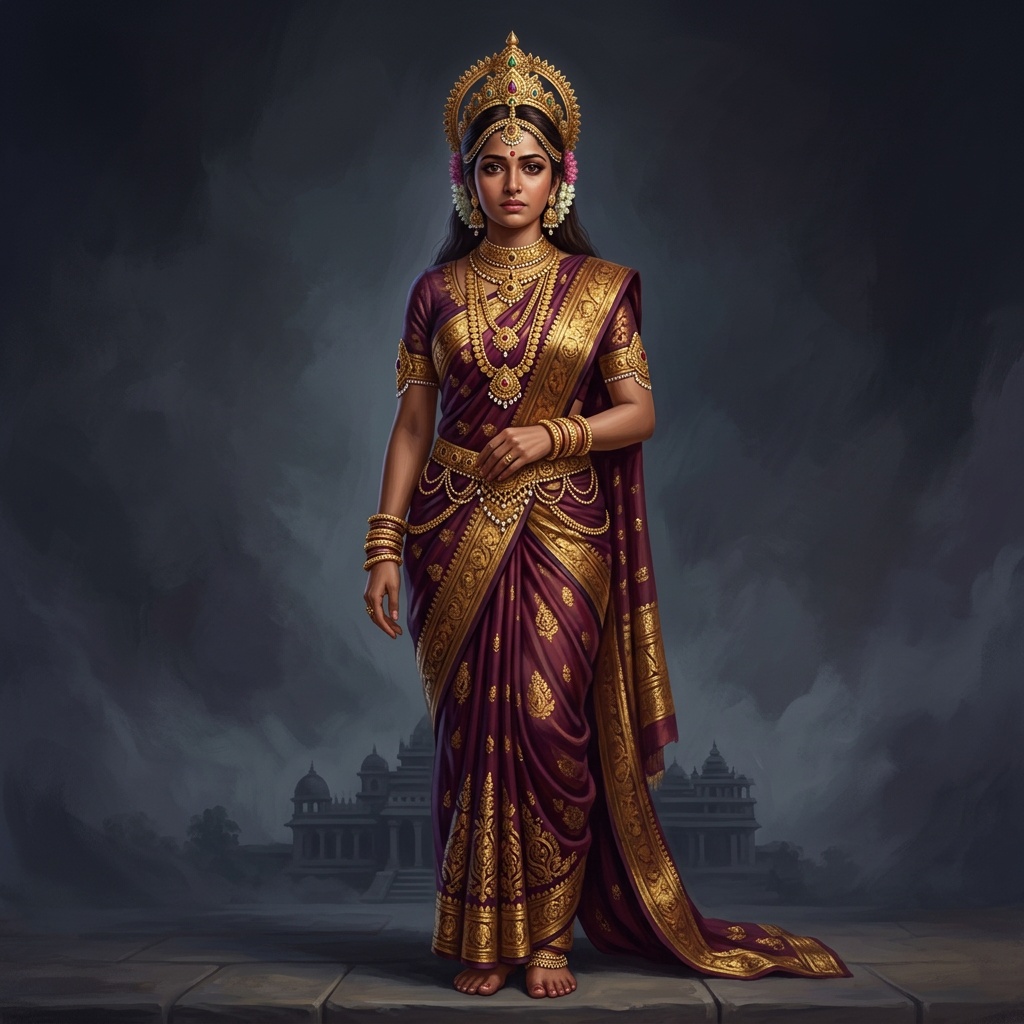
Mandodari
मंदोदरीThe Wise Queen of Lanka“She warned the most powerful king on earth — and he refused to listen.”
Mandodari
The Wise Queen of LankaMandodari was Ravana's queen, considered one of the five great women of Indian mythology. She repeatedly begged Ravana to return Sita and avoid war with Rama. She saw the destruction coming when no one else would, but her wisdom fell on deaf ears.
Mandodari is counted among the Panchakanya — five ideal women whose names destroy sin. She is praised for her virtue despite being married to a villain.
Pleading with Ravana to choose peace — the bravest act in Lanka
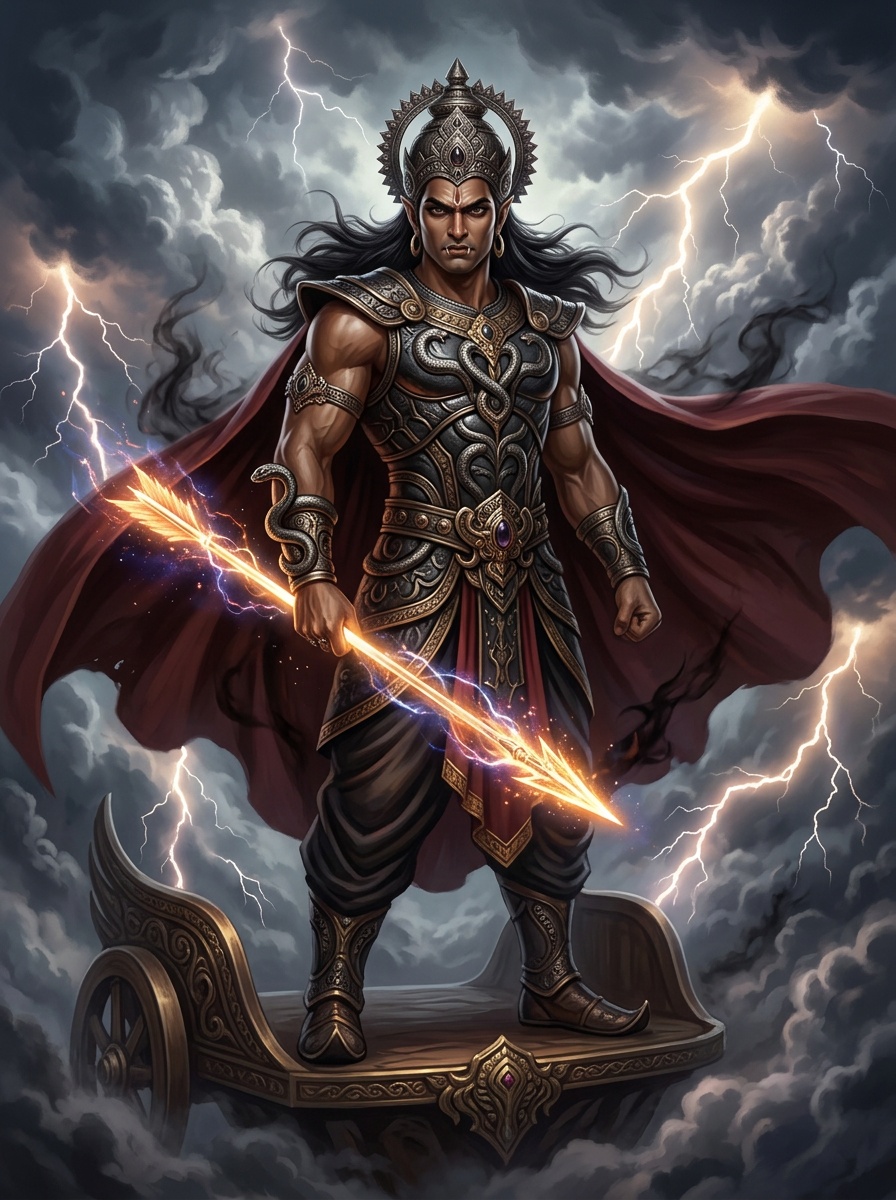
Indrajit
इन्द्रजितThe Conqueror of Indra“He defeated the king of the gods before breakfast.”
Indrajit
The Conqueror of IndraRavana's eldest son earned the name "Indrajit" (Conqueror of Indra) by literally defeating and capturing Indra, king of the gods. He wielded divine weapons that could make him invisible, bind enemies in serpent coils, and rain destruction from the sky. It took Lakshmana's mightiest effort to finally stop him.
Indrajit could become completely invisible in battle using the Nagapasha weapon. He bound Rama and Lakshmana in serpent coils while they couldn't even see him.
Becoming invisible and raining divine weapons on helpless enemies
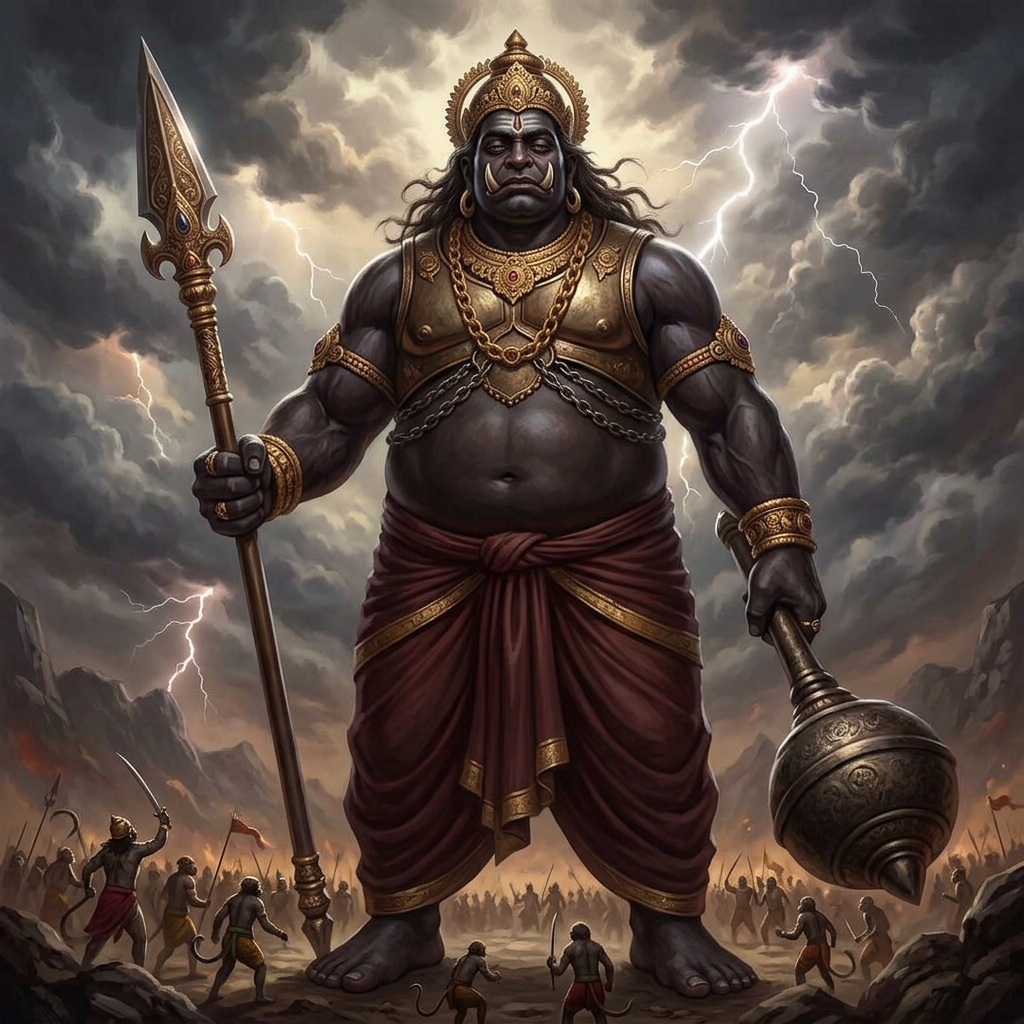
Kumbhakarna
कुम्भकर्णThe Sleeping Giant“He slept for six months at a time — but when he woke up, armies trembled.”
Kumbhakarna
The Sleeping GiantRavana's brother Kumbhakarna was cursed to sleep for six months and wake for only one day. Despite being a giant who could crush armies, he was wise enough to tell Ravana that kidnapping Sita was wrong. He fought for Lanka out of loyalty to his brother, not because he believed in the cause.
It took thousands of elephants walking over him, drums, and buckets of blood to wake Kumbhakarna from his enchanted sleep. When he finally opened his eyes, the ground shook.
Waking from six months of sleep and immediately devastating entire armies
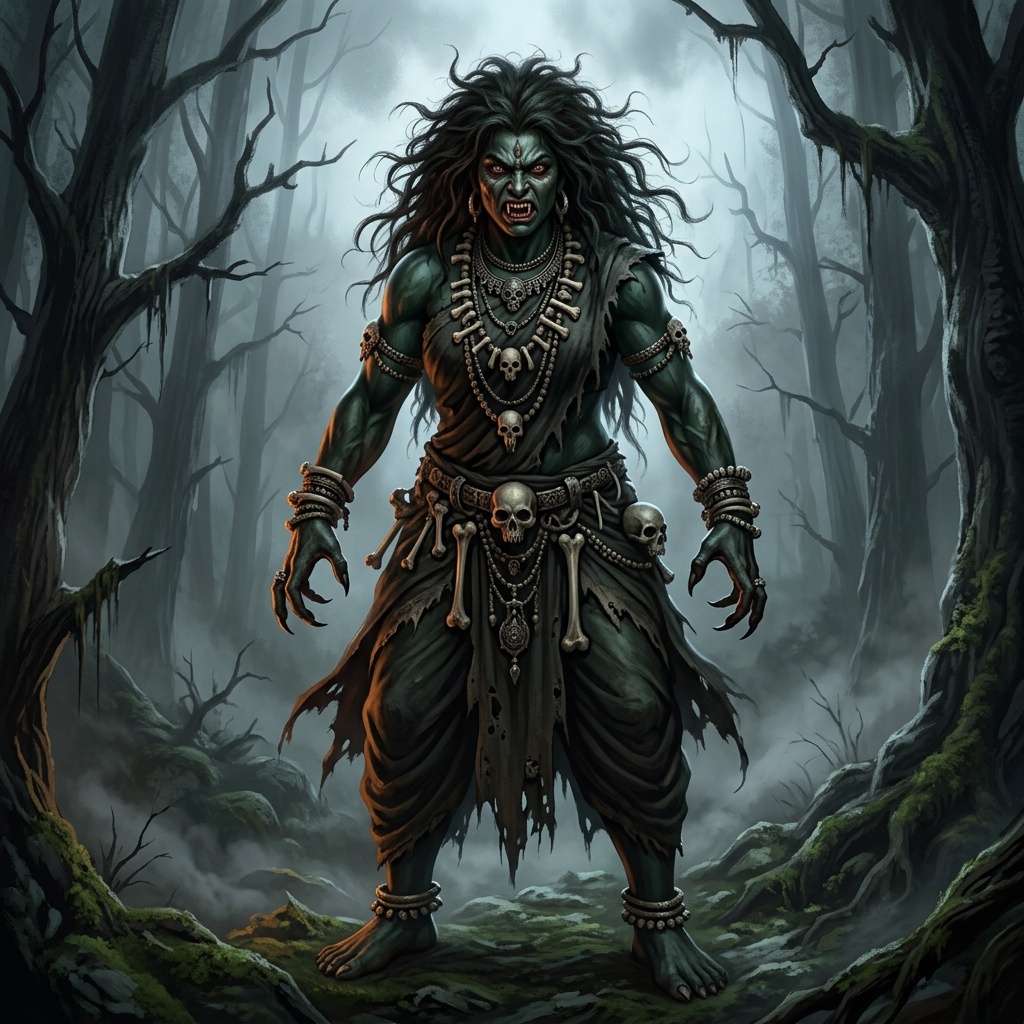
Tataka
ताटकाThe Cursed Demoness“Once a beautiful woman, now a terror of the forest.”
Tataka
The Cursed DemonessTataka was originally a beautiful yaksha woman who was cursed into becoming a fearsome demoness. She terrorized an entire forest, making it impossible for sages to perform their rituals. Young Rama, guided by sage Vishwamitra, defeated her in his very first battle — proving that duty sometimes requires difficult choices.
Tataka's forest was so terrifying that even experienced warriors refused to enter it. Rama was just a teenager when Vishwamitra asked him to face her.
Raining boulders and trees on enemies while hiding in darkness
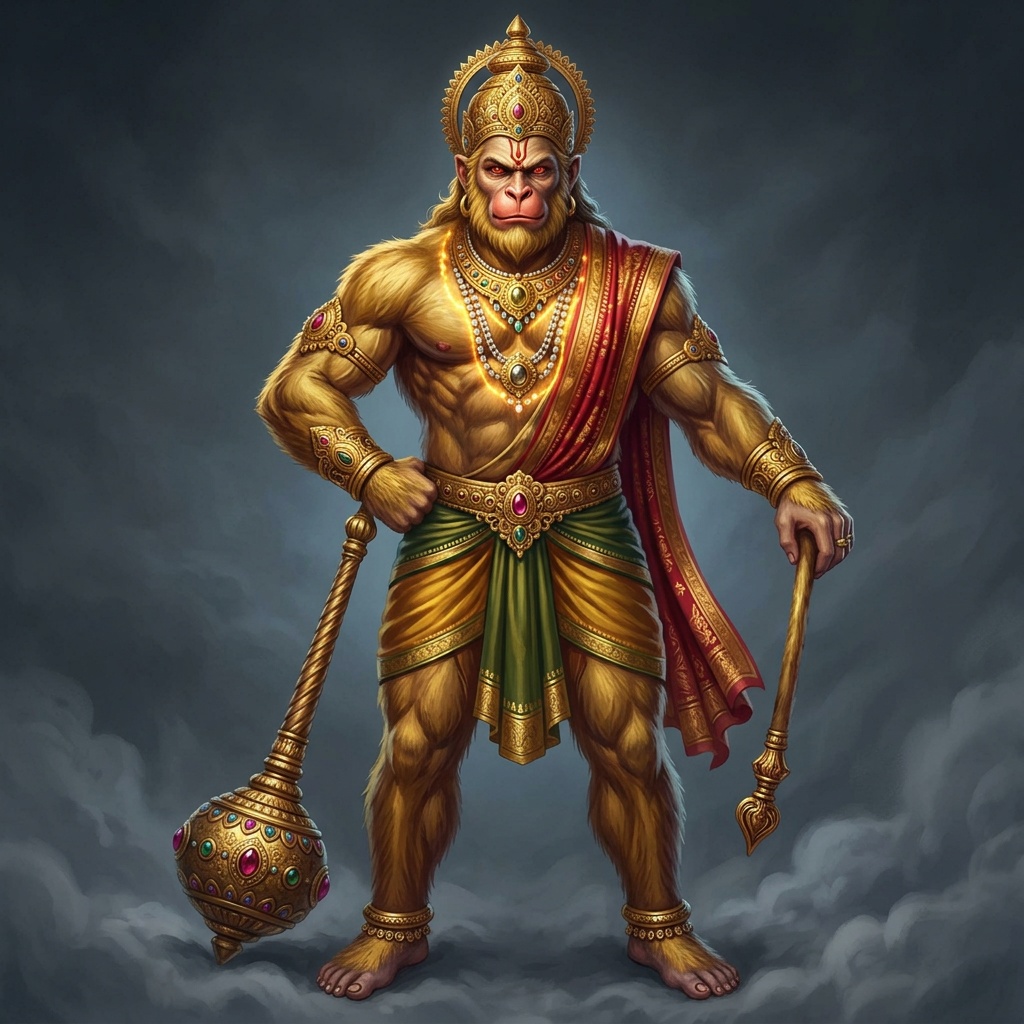
Vali
वालीThe Invincible Vanara“He could steal half the strength of anyone who faced him.”
Vali
The Invincible VanaraVali was the vanara king of Kishkindha and Sugriva's elder brother. He had a divine boon — anyone who fought him face-to-face would lose half their strength to him. He exiled Sugriva and took his wife. Only Rama's arrow, shot from behind a tree, could end his reign.
Vali once wrapped the demon Ravana in his tail and dragged him around Kishkindha. Even the great demon king was helpless against Vali's divine power.
Absorbing half the strength of any opponent who faces him in combat
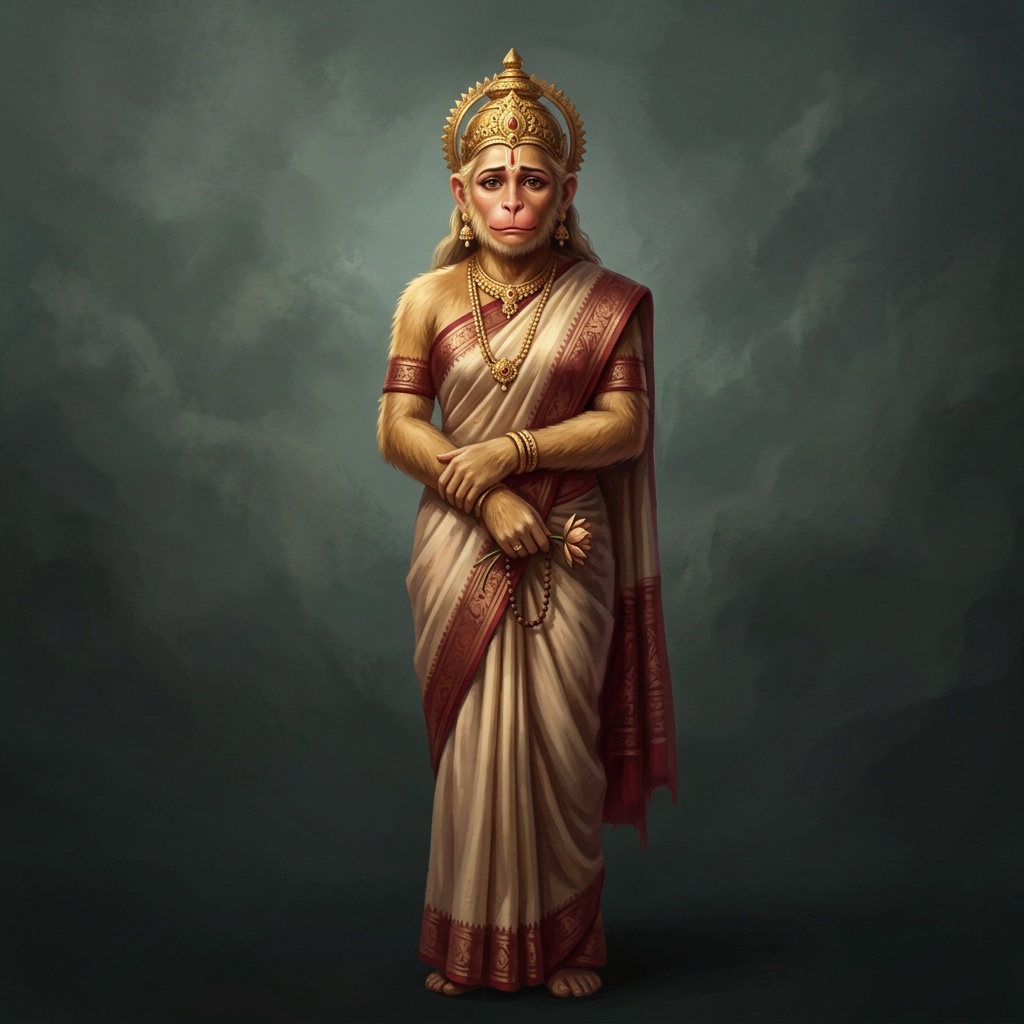
Tara
ताराThe Wisest Queen“The queen whose wisdom even Rama himself respected.”
Tara
The Wisest QueenTara was the queen of Kishkindha and considered the wisest woman in the vanara kingdom. She warned Vali not to fight Sugriva the second time, sensing Rama's presence. After Vali's death, her grief was so profound that even Rama paused to console her.
Tara is one of the Panchakanya — five ideal women whose names are recited to remove sin. She is praised for her extraordinary intelligence and courage.
Speaking truth to power — warning kings of consequences they refused to see
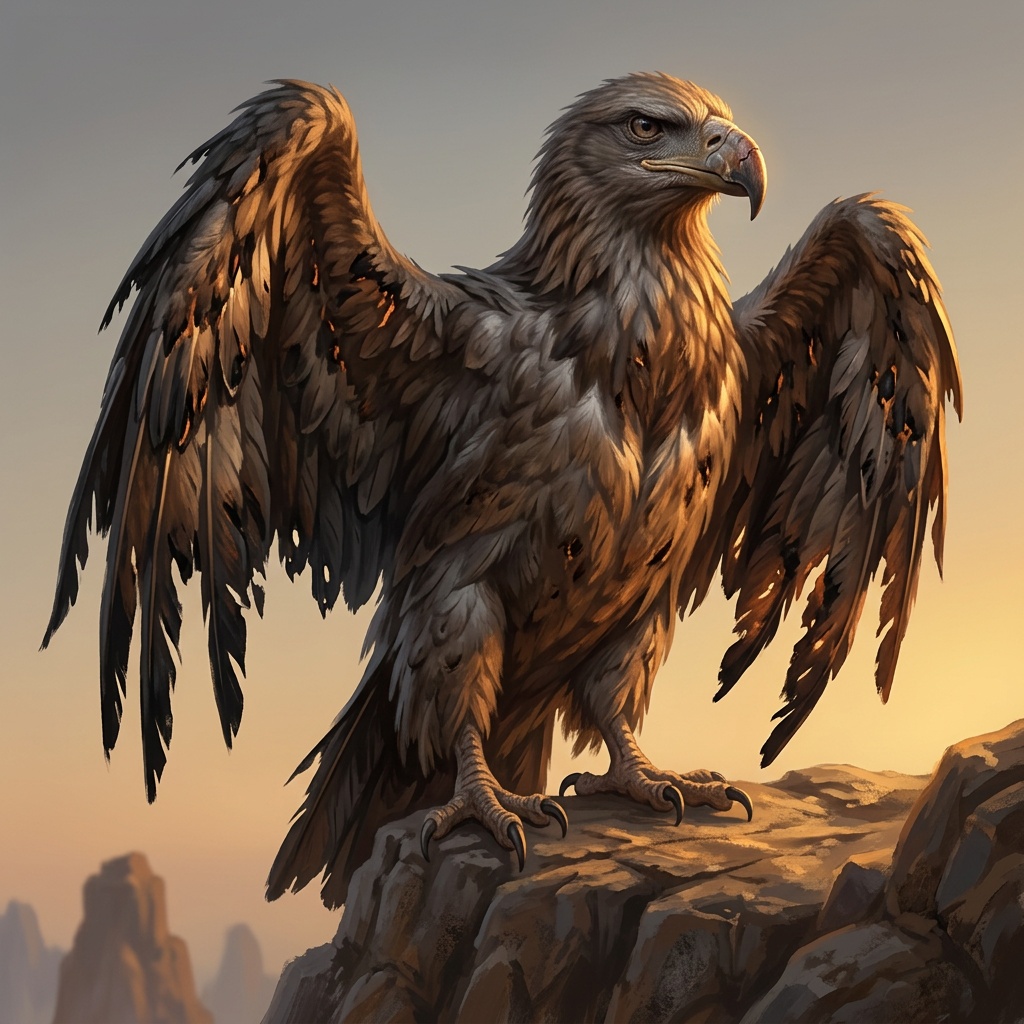
Sampati
सम्पातिThe Wingless Eagle“He lost his wings saving his brother — and saved Rama's mission with his eyes.”
Sampati
The Wingless EagleSampati was Jatayu's elder brother. When they were young, Jatayu flew too close to the sun and Sampati shielded him with his own wings, which were burned off. Decades later, wingless and grounded, Sampati spotted Lanka across the ocean with his eagle vision — guiding Hanuman to Sita.
Sampati's eyesight was so powerful that even from a mountaintop in India, he could see the island of Lanka across the ocean and describe Sita sitting in Ravana's garden.
Seeing Lanka across the ocean with extraordinary eagle vision
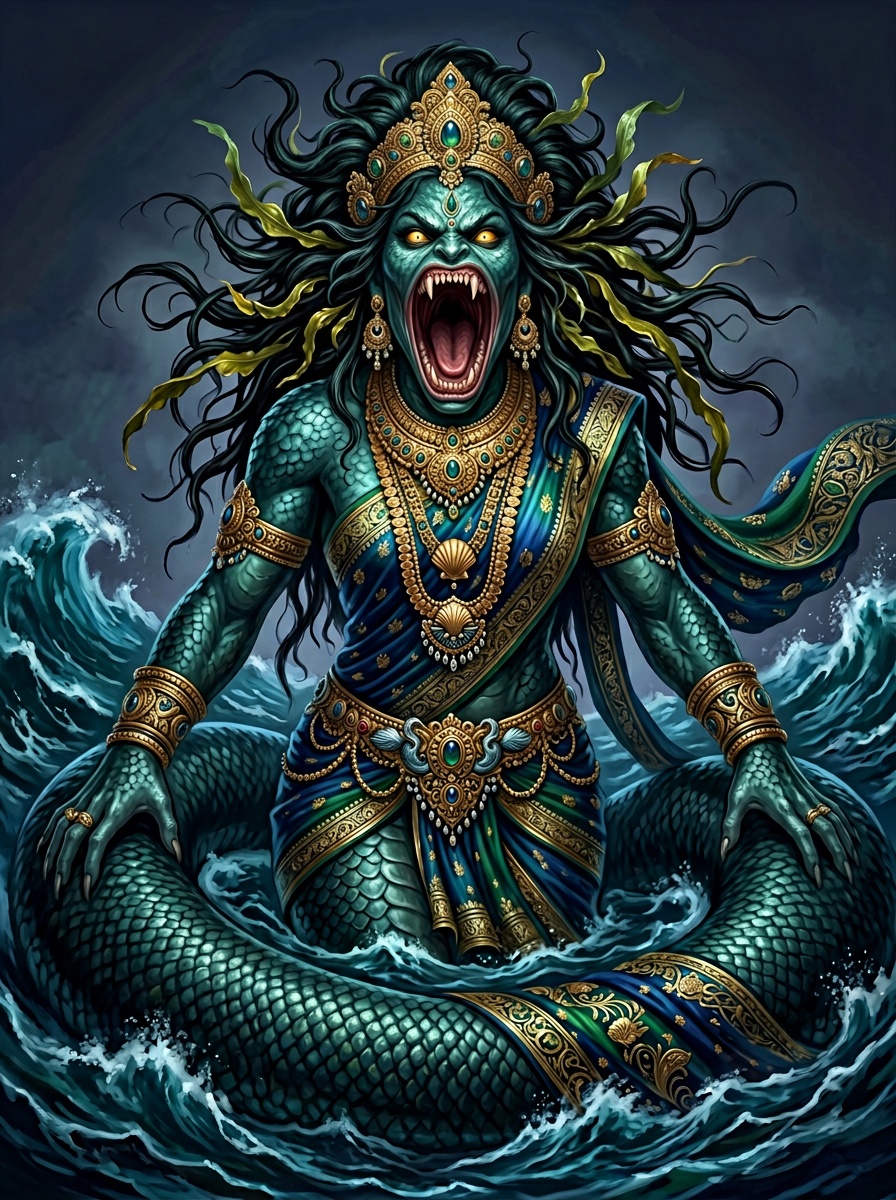
Surasa
सुरसाThe Ocean's Test“The mother of serpents who tested Hanuman's wits, not his strength.”
Surasa
The Ocean's TestWhen Hanuman leapt across the ocean to Lanka, the gods sent Surasa to test him. She opened her mouth wide enough to swallow mountains. Instead of fighting, Hanuman shrank to the size of a thumb, flew in and out of her mouth in an instant, and passed the test with cleverness.
Surasa was not actually trying to stop Hanuman — she was a divine test sent by the gods to check if he had both strength AND intelligence for the mission ahead.
Expanding her mouth to swallow anything that tries to pass
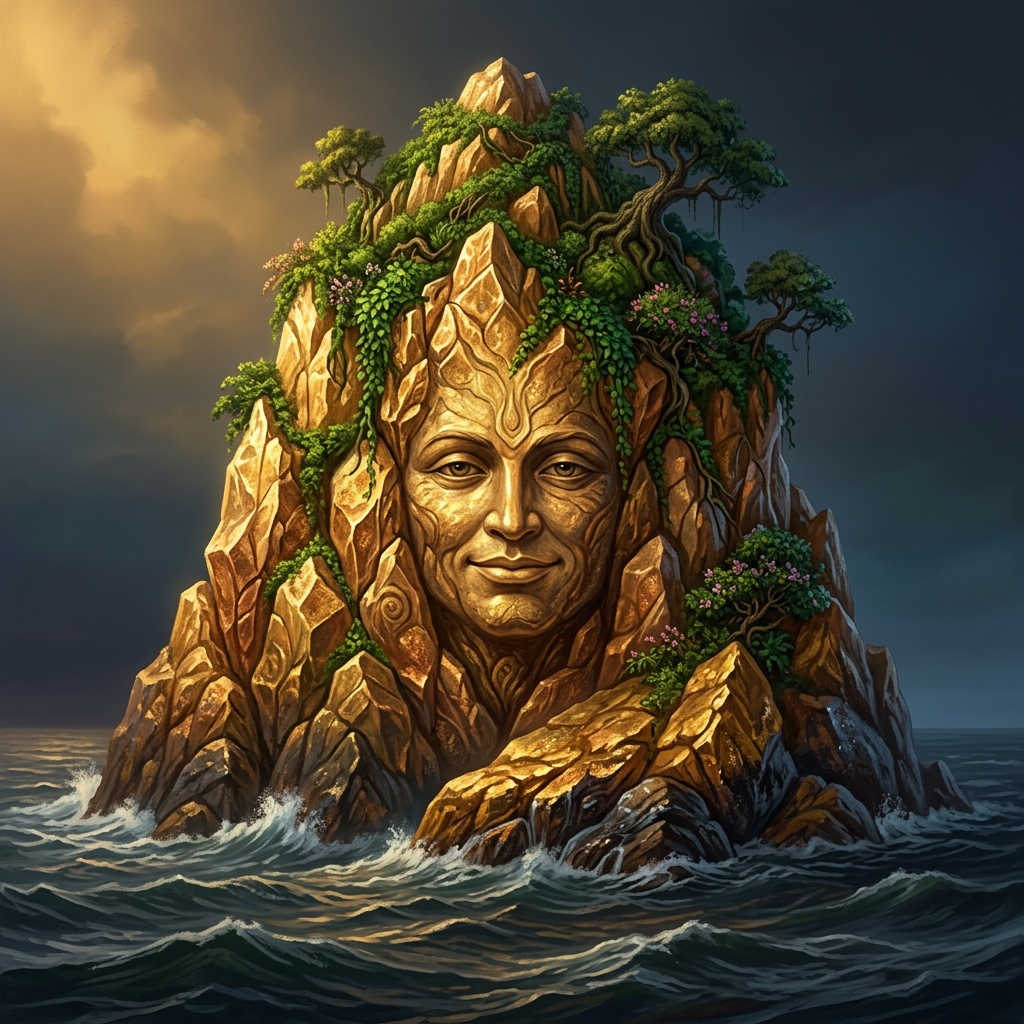
Mainaka
मैनाकThe Golden Mountain“A mountain that rose from the sea to offer rest to a hero.”
Mainaka
The Golden MountainWhen Hanuman leapt across the ocean, Mount Mainaka rose from the seabed to offer him a resting place. The mountain owed a debt to Hanuman's father Vayu, the wind god, who had once protected him. But Hanuman politely declined — he wouldn't rest until Sita was found.
Mainaka had been hiding underwater ever since Indra cut the wings off all mountains. He was one of the few mountains that survived by submerging in the ocean.
Rising from the ocean floor to help those in need
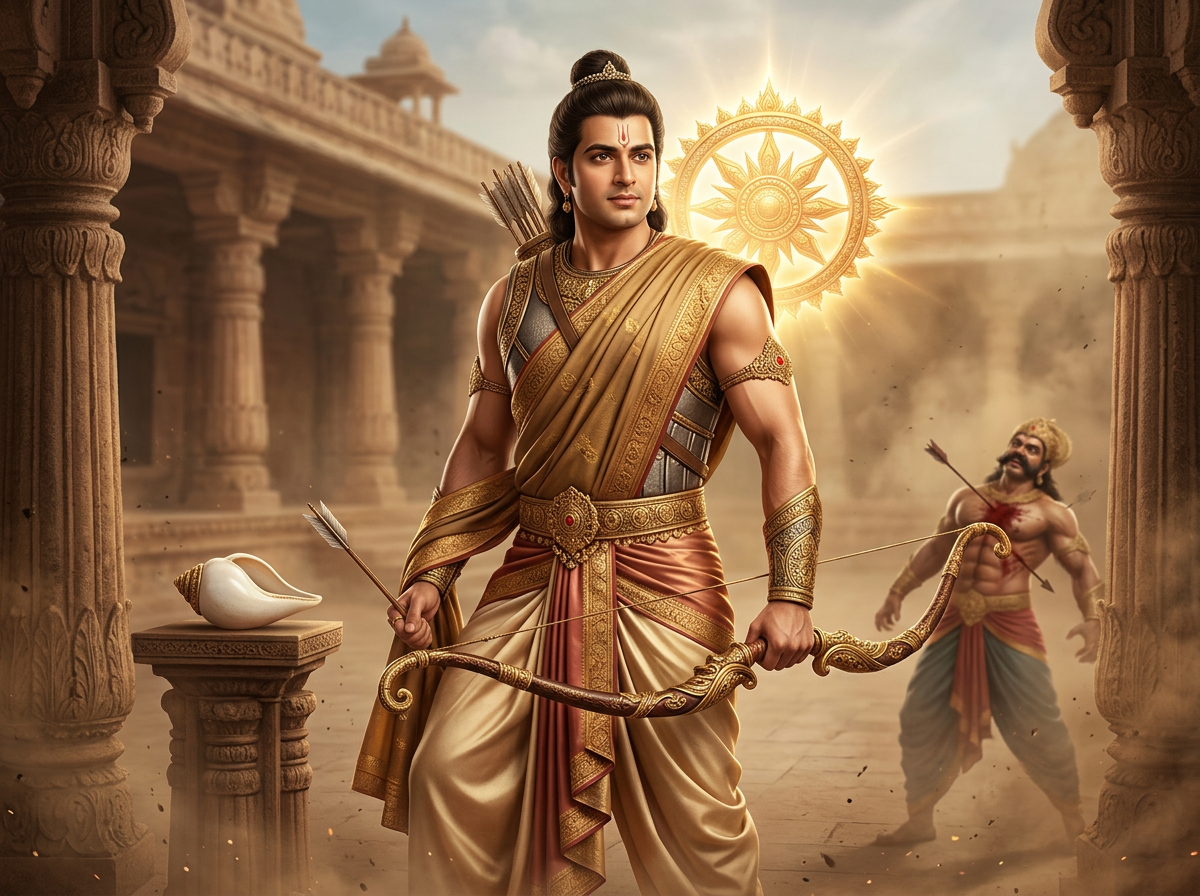
Shatrughna
शत्रुघ्नThe Silent Guardian“The brother who needed no spotlight to serve.”
Shatrughna
The Silent GuardianThe youngest of the four princes of Ayodhya, Shatrughna was devoted to his brother Bharata just as Lakshmana was to Rama. He served quietly, governed wisely, and defeated the demon Lavanasura single-handedly. He proved that you don't need fame to be a hero.
Shatrughna's name means "destroyer of enemies." Despite being the least famous of the four brothers, he single-handedly conquered the demon city of Mathura.
Defeating the demon Lavanasura and establishing a new kingdom

Bharata
भरतThe Regent Who Refused the Throne“He was handed a kingdom and placed his brother's sandals on the throne instead.”
Bharata
The Regent Who Refused the ThroneWhen Bharata returned to Ayodhya to find his brother exiled and his father dead because of his mother's boons, he was devastated. He marched to the forest to beg Rama to return. When Rama refused, Bharata took Rama's sandals, placed them on the throne, and ruled as a servant for fourteen years.
Bharata lived like an ascetic in Nandigram for the entire fourteen years of Rama's exile, wearing bark clothes and sleeping on the ground — even though he could have lived as king.
Placing Rama's sandals on the throne and governing as a regent, never as king
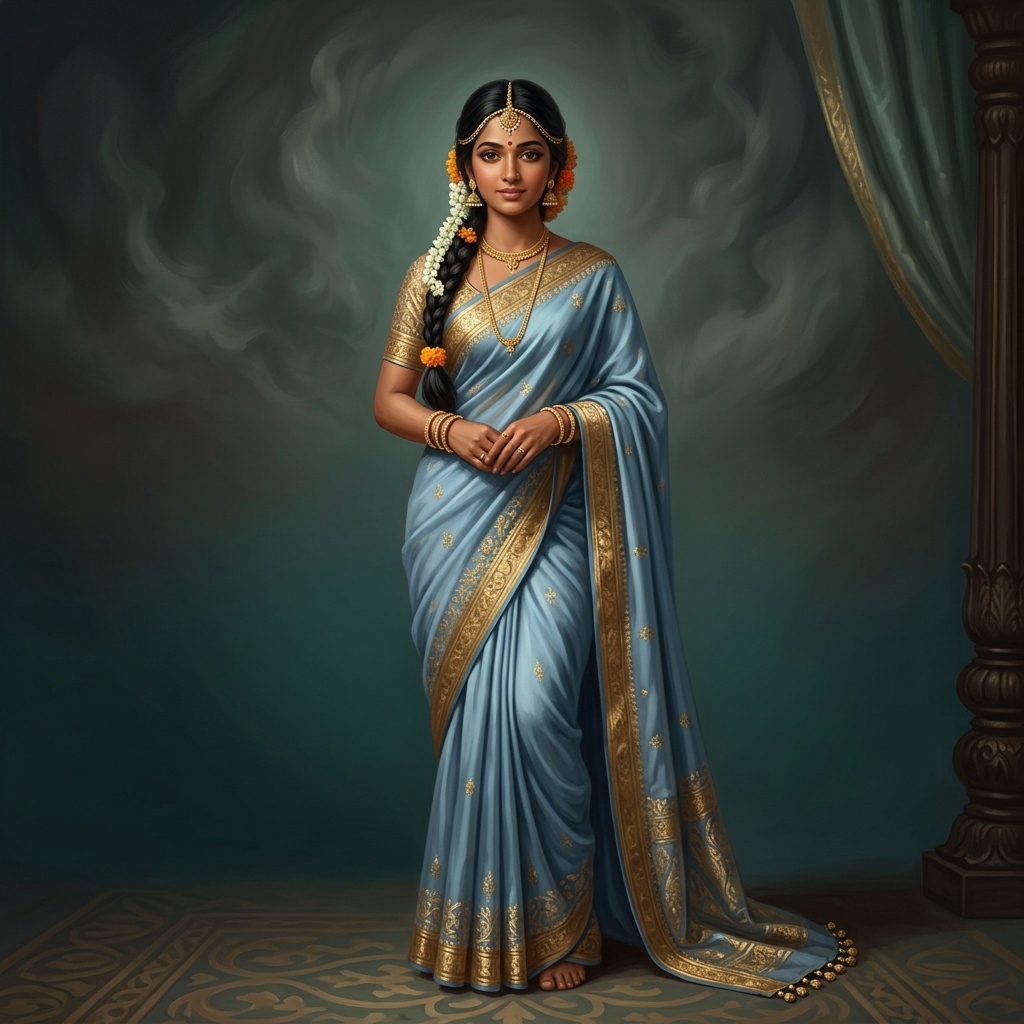
Urmila
ऊर्मिलाThe Princess Who Slept“She slept for fourteen years so her husband could stay awake.”
Urmila
The Princess Who SleptUrmila was Lakshmana's wife and Sita's sister. When Lakshmana left for exile with Rama, he needed to stay awake for fourteen years to guard them. The goddess of sleep, Nidra, transferred all of Lakshmana's sleep to Urmila — who slept continuously for fourteen years. Her sacrifice is one of the most overlooked in the Ramayana.
Urmila is often called the "forgotten heroine" of the Ramayana. Her sacrifice was just as great as Lakshmana's — she gave up fourteen years of her life in unconscious sleep.
Accepting fourteen years of magical sleep so Lakshmana could protect Rama
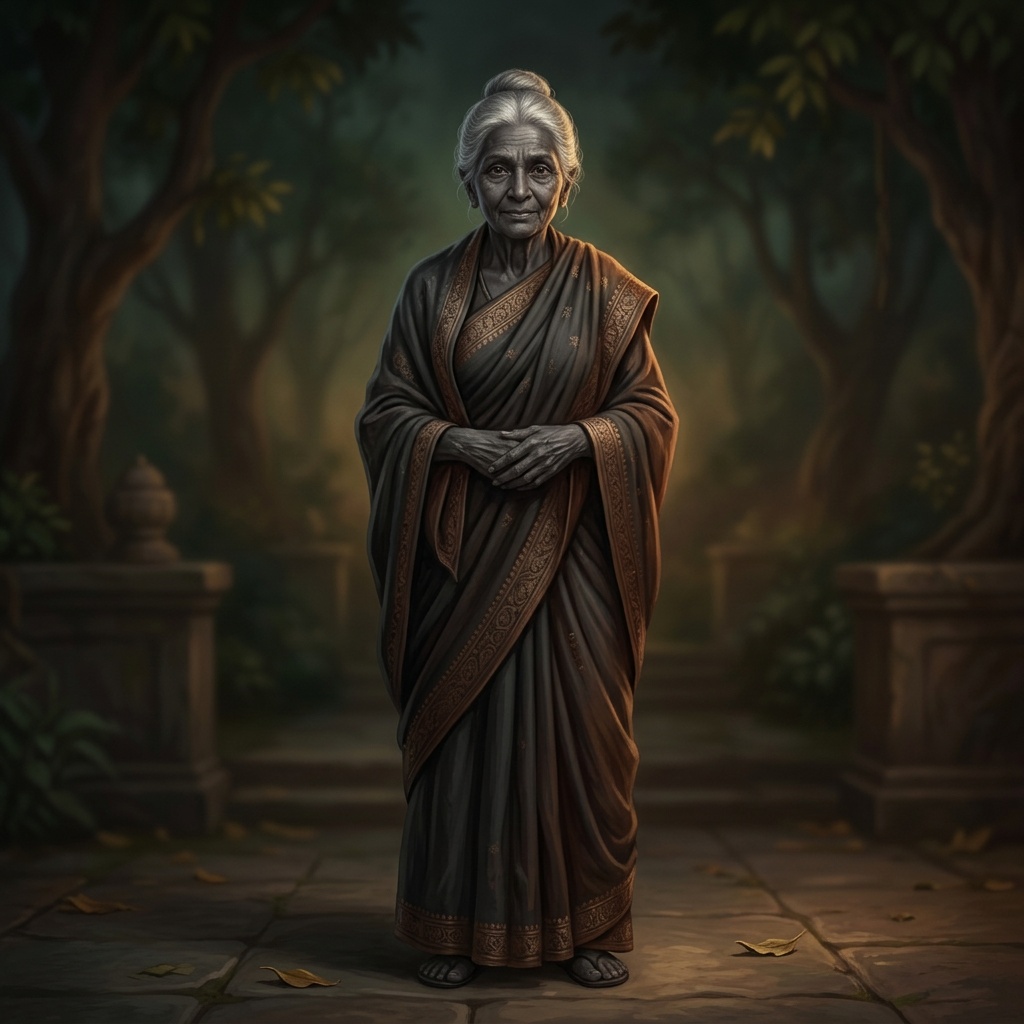
Trijata
त्रिजटाThe Kind Demoness“A rakshasi with more humanity than most humans.”
Trijata
The Kind DemonessTrijata was a rakshasi assigned to guard Sita in the Ashoka Vatika garden. Unlike the other demonesses who tormented Sita, Trijata protected her, comforted her, and even had prophetic dreams of Rama's victory. She proved that kindness lives in the most unexpected hearts.
Trijata dreamed of Lanka burning and Rama's victory long before it happened. She told Sita about the dream, giving the captive queen hope during her darkest days.
Protecting Sita with kindness while surrounded by cruelty
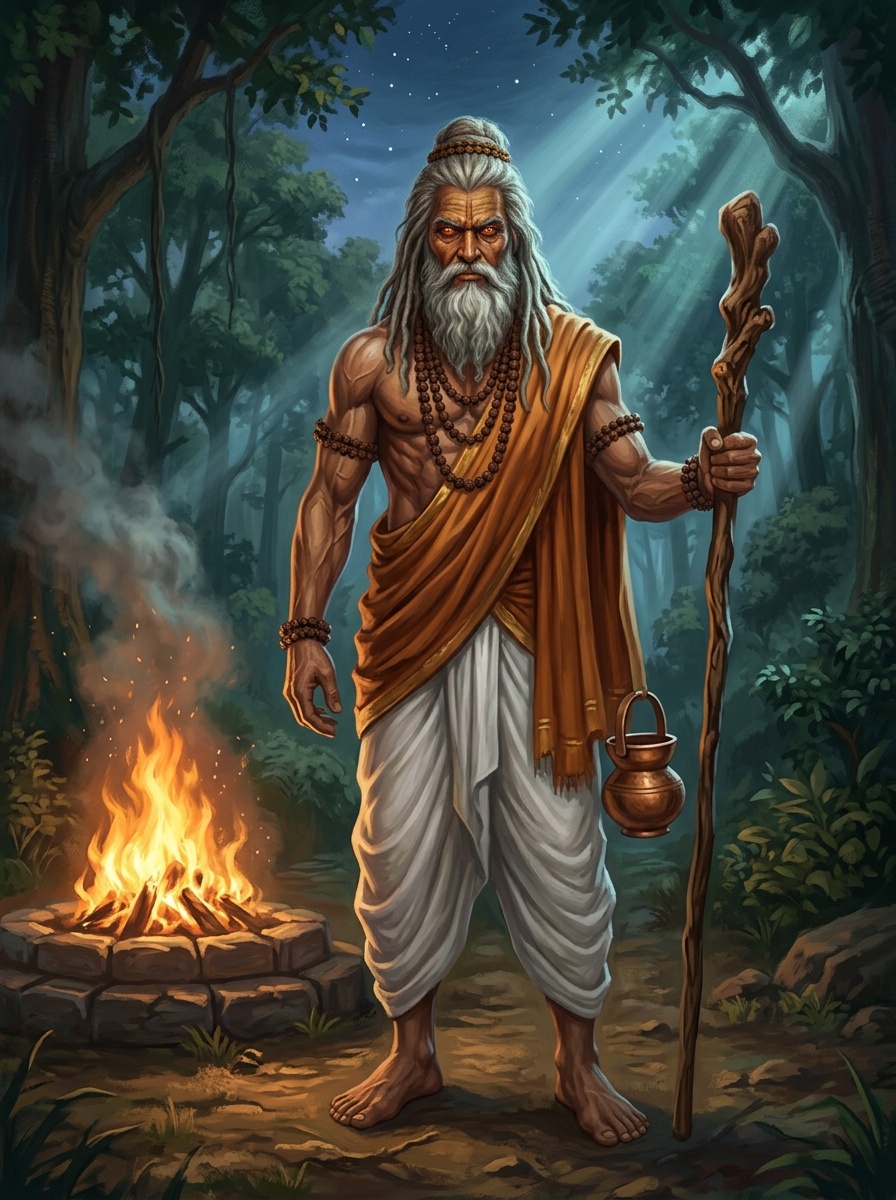
Vishwamitra
विश्वामित्रThe King Who Became a Sage“He was born a warrior king and willed himself into becoming a Brahmarishi.”
Vishwamitra
The King Who Became a SageVishwamitra started as a powerful king who challenged the sage Vashishtha and lost. Instead of accepting defeat, he spent thousands of years in penance, overcoming every temptation, until he earned the highest spiritual rank through sheer determination. He was the one who took young Rama on his first adventure.
Vishwamitra created an entirely new constellation of stars called "Trishanku's Heaven" when the gods refused to let King Trishanku enter the existing one. He literally built a backup heaven.
Achieving Brahmarishi status through thousands of years of unstoppable determination
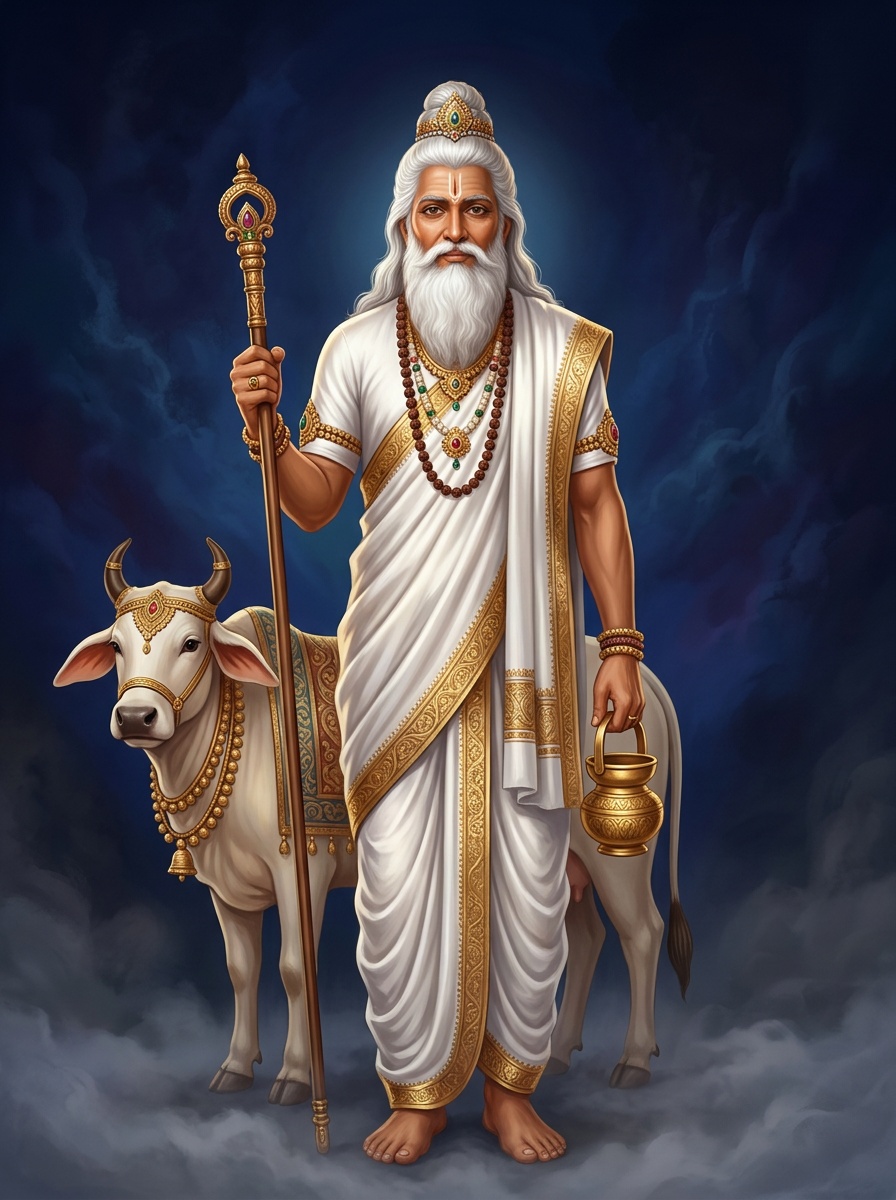
Vashishtha
वशिष्ठThe Royal Guru“The sage whose cow was worth more than an army.”
Vashishtha
The Royal GuruVashishtha was the family guru of the Ikshvaku dynasty and one of the seven great sages. He possessed Kamadhenu, the wish-fulfilling cow, which Vishwamitra once tried to seize with his entire army. Vashishtha's spiritual power defeated the king's military might — proving that wisdom outweighs force.
Vashishtha's Kamadhenu could produce an army of warriors from thin air. A single cow defended the sage against thousands of soldiers.
Deflecting all divine weapons with a single wooden staff
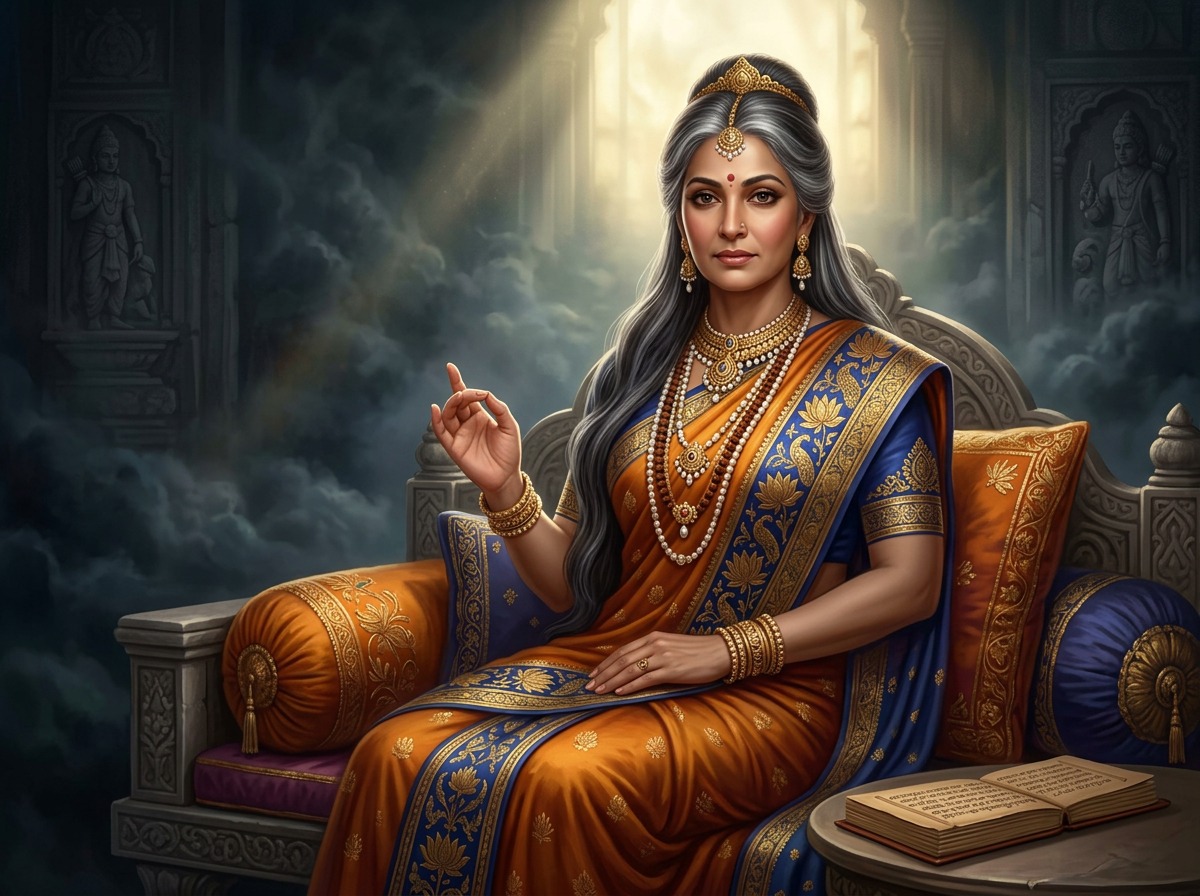
Sumitra
सुमित्राThe Selfless Queen“The mother who sent both her sons into exile and called it their duty.”
Sumitra
The Selfless QueenSumitra was Dasharatha's third queen and the mother of twins Lakshmana and Shatrughna. When Lakshmana chose to follow Rama into exile, Sumitra didn't weep — she armed him, blessed him, and told him to serve Rama as his shadow. Her courage gave her sons the strength to be heroes.
Sumitra is the only queen in the Ramayana who didn't shed tears when her sons left. She told Lakshmana: "Rama is your father, Sita is your mother — go protect them."
Blessing Lakshmana's exile with courage instead of tears
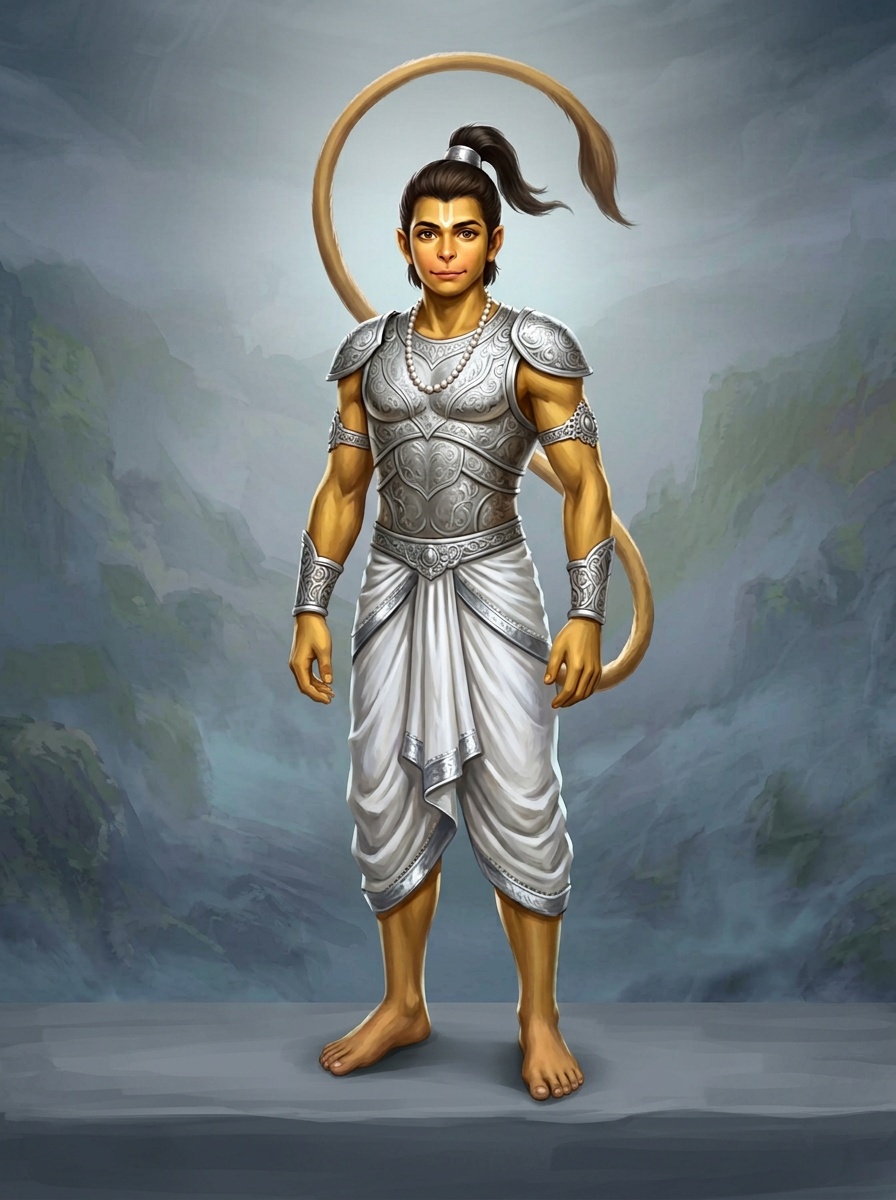
Angada
अंगदअङ्गदThe Vanara Diplomat“The young prince who planted his foot in Ravana's court — and nothing could move him.”
Angada
The Vanara DiplomatSon of Vali and nephew of Sugriva, Angada joined Rama's vanara army after his father's death. Sent as the final envoy to Lanka, he planted his foot in the rakshasa court and challenged anyone to lift it. None could — and the war began.
In Ravana's court the young vanara dared every rakshasa general to move his foot from the ground. Even Indrajit and Kumbhakarna could not budge it.
Angada-Pada — the foot that nothing could move
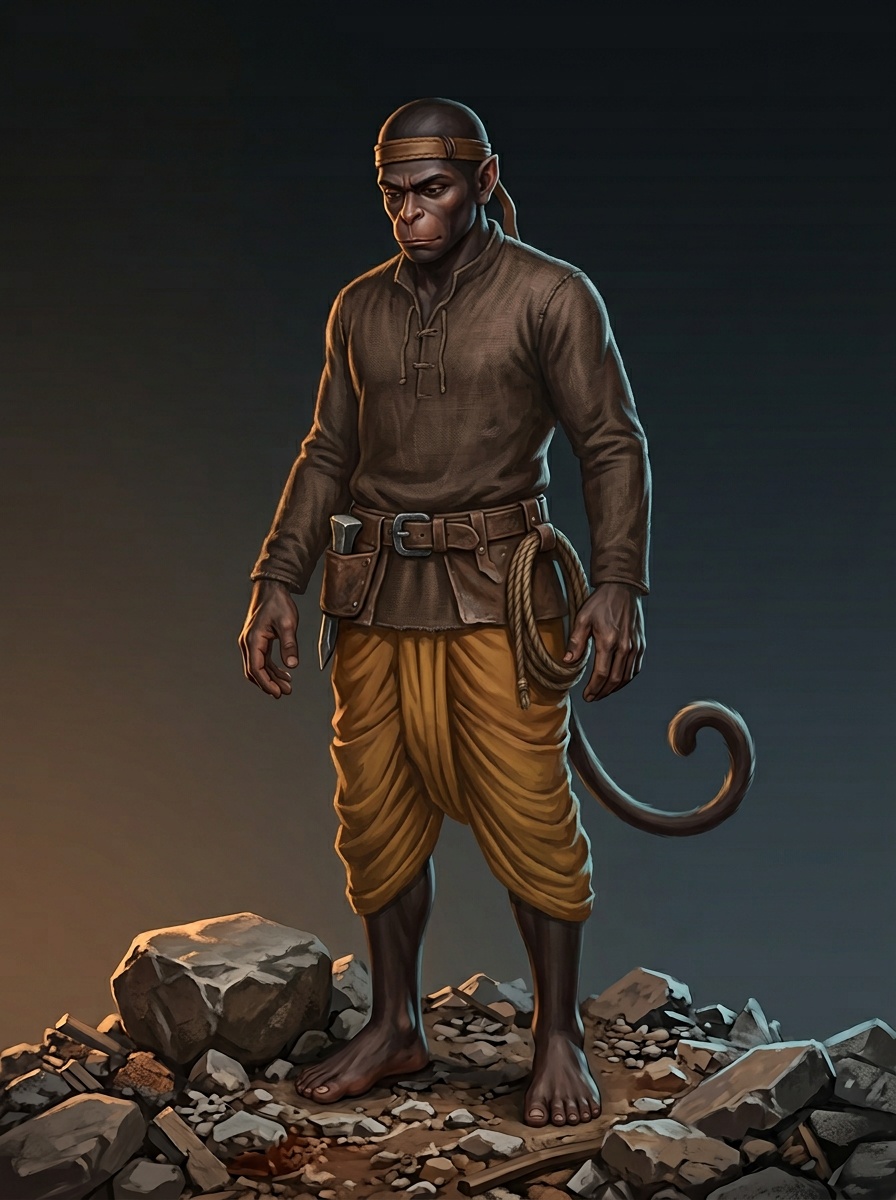
Nala
नलThe Bridge Architect“The vanara whose hands could make stones float.”
Nala
The Bridge ArchitectSon of the divine architect Vishwakarma, Nala was granted a boon that any stone he touched and placed in water would float. With his counterpart Nila, he built the hundred-yojana bridge across the ocean to Lanka in five days — and let Rama's army cross.
Every stone the vanaras hurled into the sea sank — until Nala touched it. Tradition says Rama's name written on each stone also kept them afloat.
Setu-bandhana — the floating-stone touch
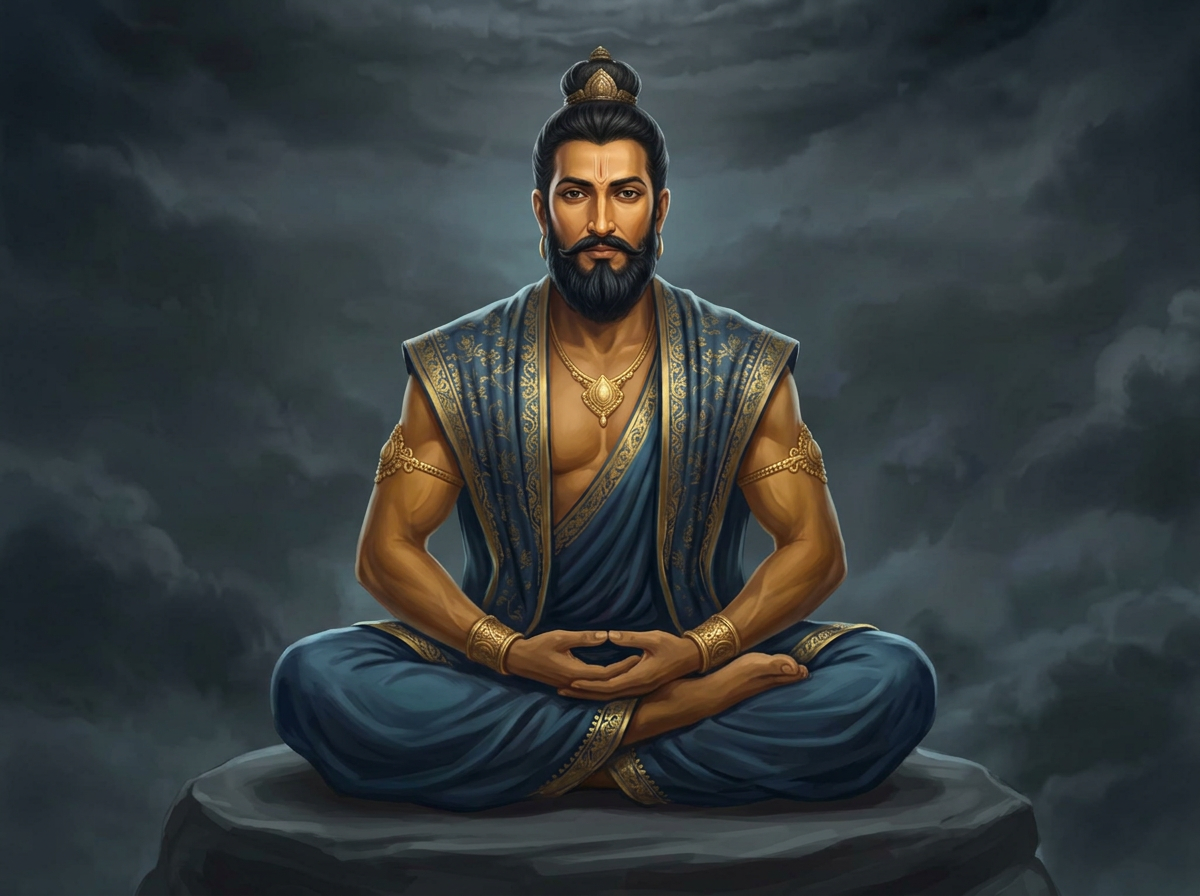
Yudhishthira
युधिष्ठिरधर्मराजThe Dharma King“He never told a lie — until the one time the world needed him to.”
Yudhishthira
The Dharma KingEldest of the Pandavas, Yudhishthira was the son of Dharma himself. He was so truthful that his chariot hovered above the ground. But his one weakness was gambling — he lost his kingdom, his brothers, and even Draupadi in a rigged dice game. His greatest test came when he had to speak a half-truth to win the war.
Yudhishthira's chariot literally floated a few inches above the ground because of his perfect truthfulness. After he spoke his one half-lie in the war, the chariot touched the earth for the first time.
Answering the Yaksha's impossible riddles to save his brothers' lives
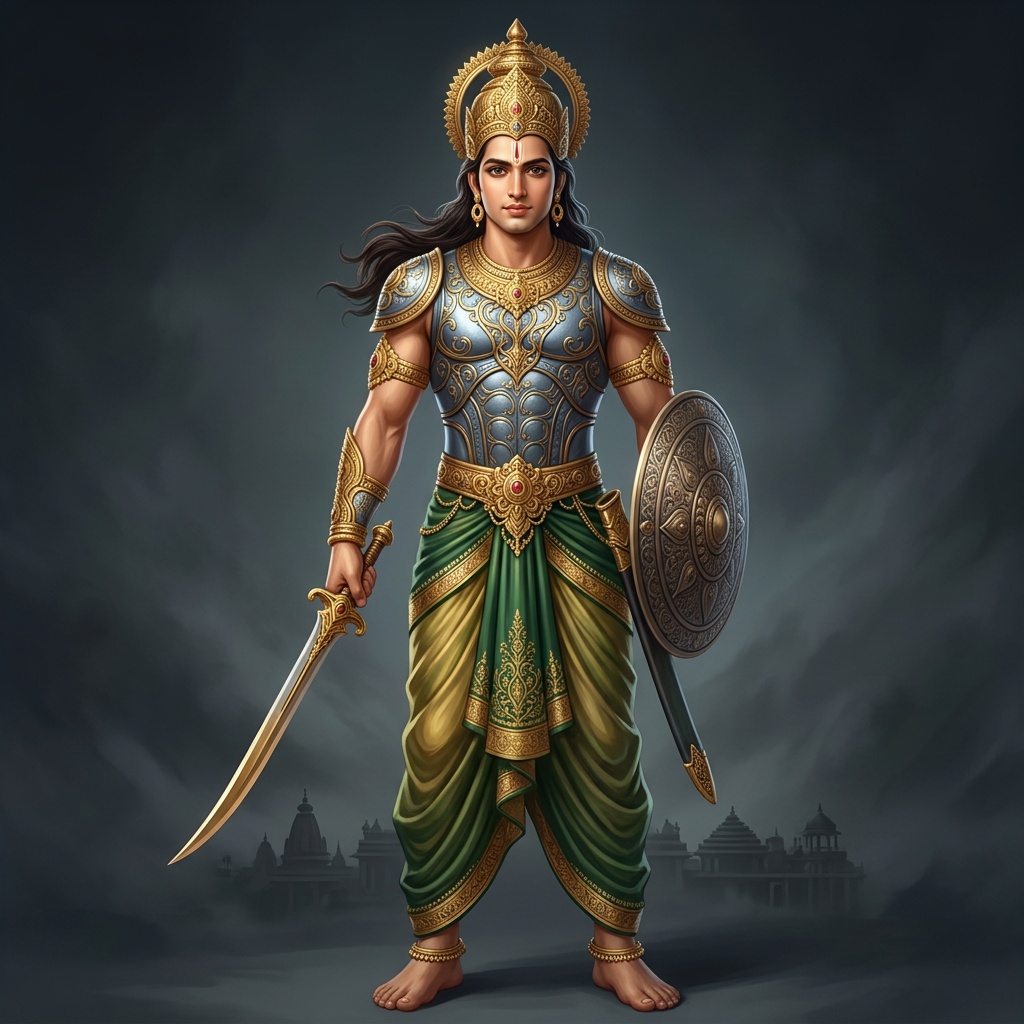
Nakula
नकुलThe Handsome Horseman“The most beautiful warrior in the world — and he knew how to use a sword too.”
Nakula
The Handsome HorsemanFourth of the Pandavas and twin of Sahadeva, Nakula was said to be the most handsome man alive. But he was far more than a pretty face — a master swordsman, an expert horse trainer, and fiercely loyal. During exile, he disguised himself as a horse-keeper in King Virata's court.
Nakula could heal any sick horse and was considered the greatest equestrian in the world. He knew the language of horses and could calm the wildest stallion with a whisper.
Taming and healing horses that no one else could approach
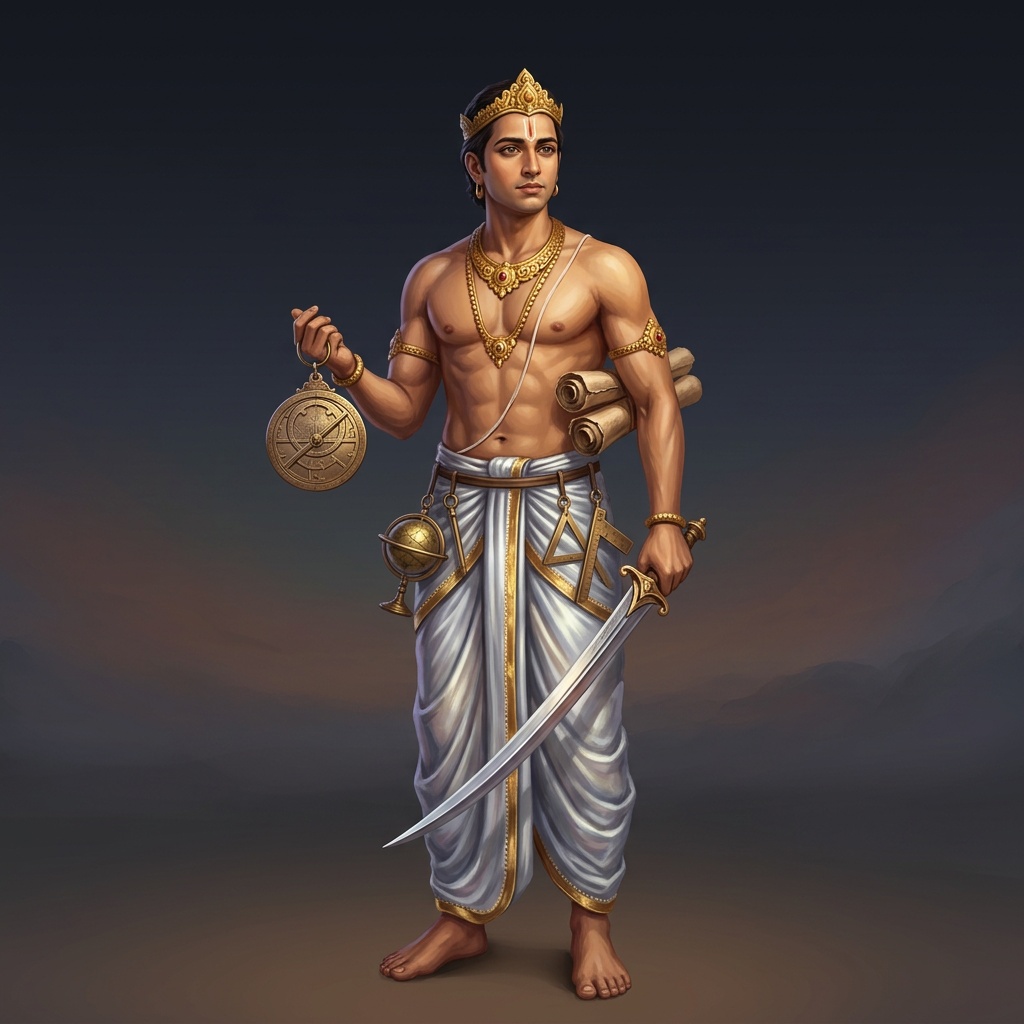
Sahadeva
सहदेवThe Star-Reader“He knew the future — but was cursed never to speak it.”
Sahadeva
The Star-ReaderYoungest of the Pandavas and Nakula's twin, Sahadeva was the wisest brother. He could read the stars and knew the outcome of the Kurukshetra war before it began. But a curse prevented him from ever revealing the future unprompted — the heaviest burden of all.
Sahadeva knew everything that would happen in the war but could never volunteer the information. If anyone had simply asked him, he would have told them everything.
Reading the stars to predict events that no one else could foresee
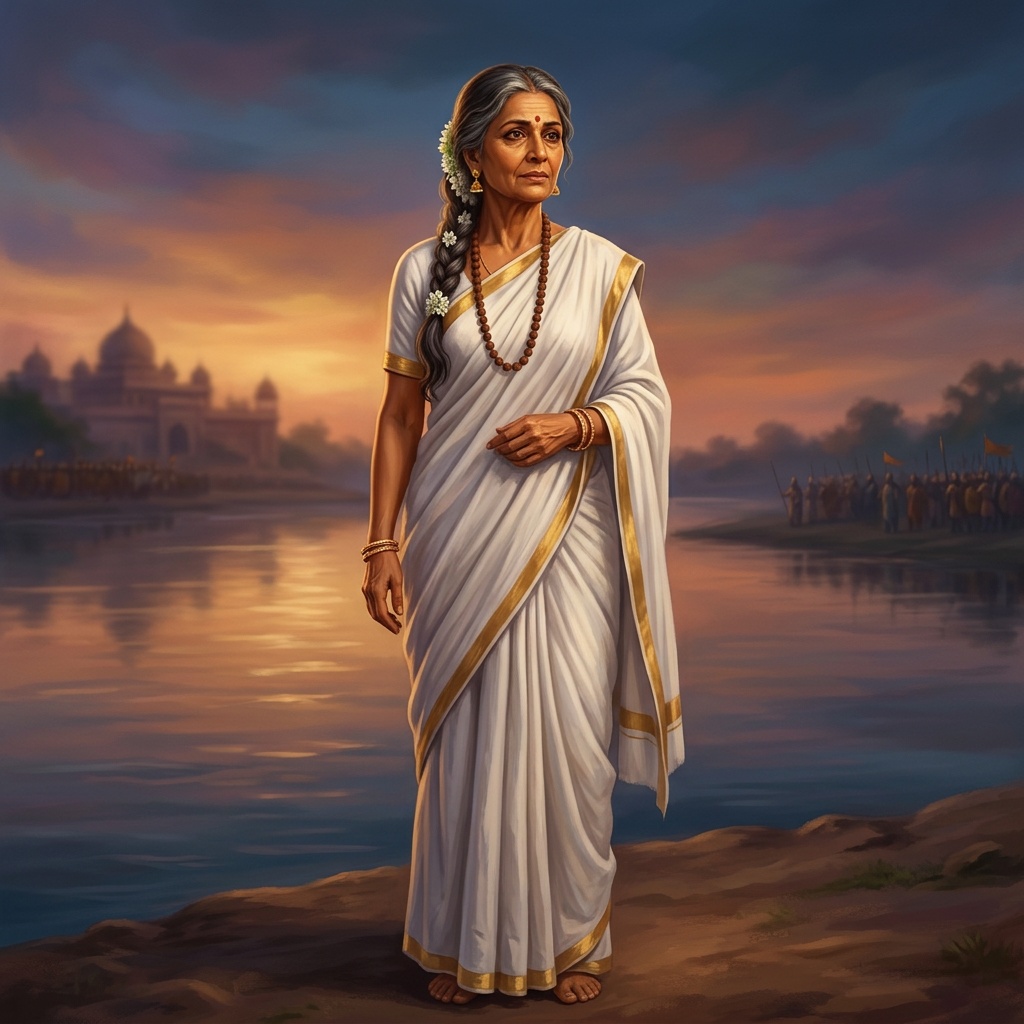
Kunti
कुन्तीपृथाThe Mother of Heroes“She carried secrets heavier than any weapon on the battlefield.”
Kunti
The Mother of HeroesKunti carried the heaviest secret in the Mahabharata — that Karna, the greatest warrior fighting against her sons, was actually her firstborn, whom she had abandoned as a baby. She watched her sons fight her own child, unable to tell anyone the truth until it was too late.
As a young princess, Kunti received a mantra that could summon any god. She tested it by calling the Sun god — and baby Karna was born. Terrified and unwed, she placed him in a basket on the river.
Invoking the gods with her divine mantra to give birth to legendary warriors
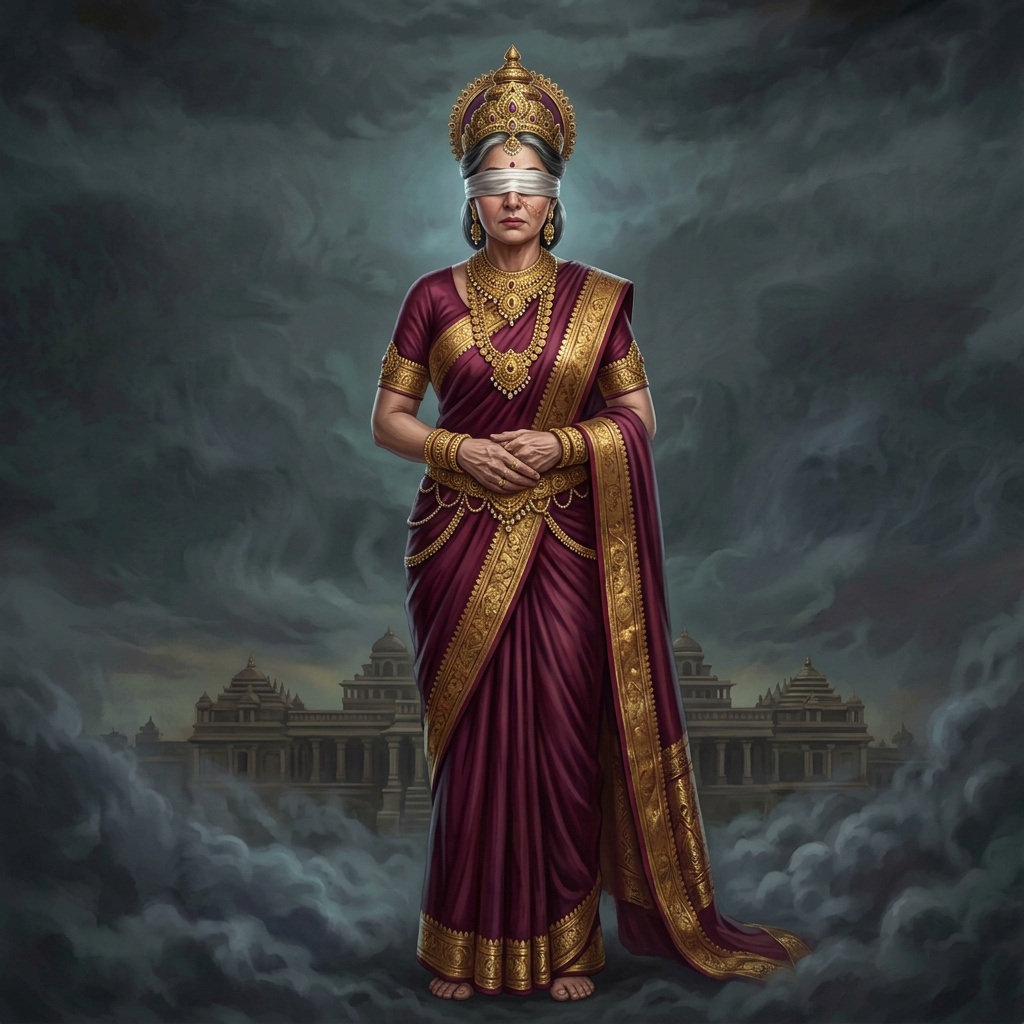
Gandhari
गांधारीThe Blindfolded Queen“She blindfolded herself forever — because if her husband couldn't see, neither would she.”
Gandhari
The Blindfolded QueenWhen Gandhari learned she would marry the blind King Dhritarashtra, she tied a silk cloth over her own eyes and never removed it. She was mother to a hundred sons, yet couldn't stop them from choosing the path of destruction. Her final curse on Krishna after the war shook the universe.
Gandhari's blindfold was so permanently worn that her gaze gained supernatural destructive power. When she briefly looked at Duryodhana's body, every part her eyes touched became as hard as diamond.
Cursing Krishna himself — and the curse actually came true
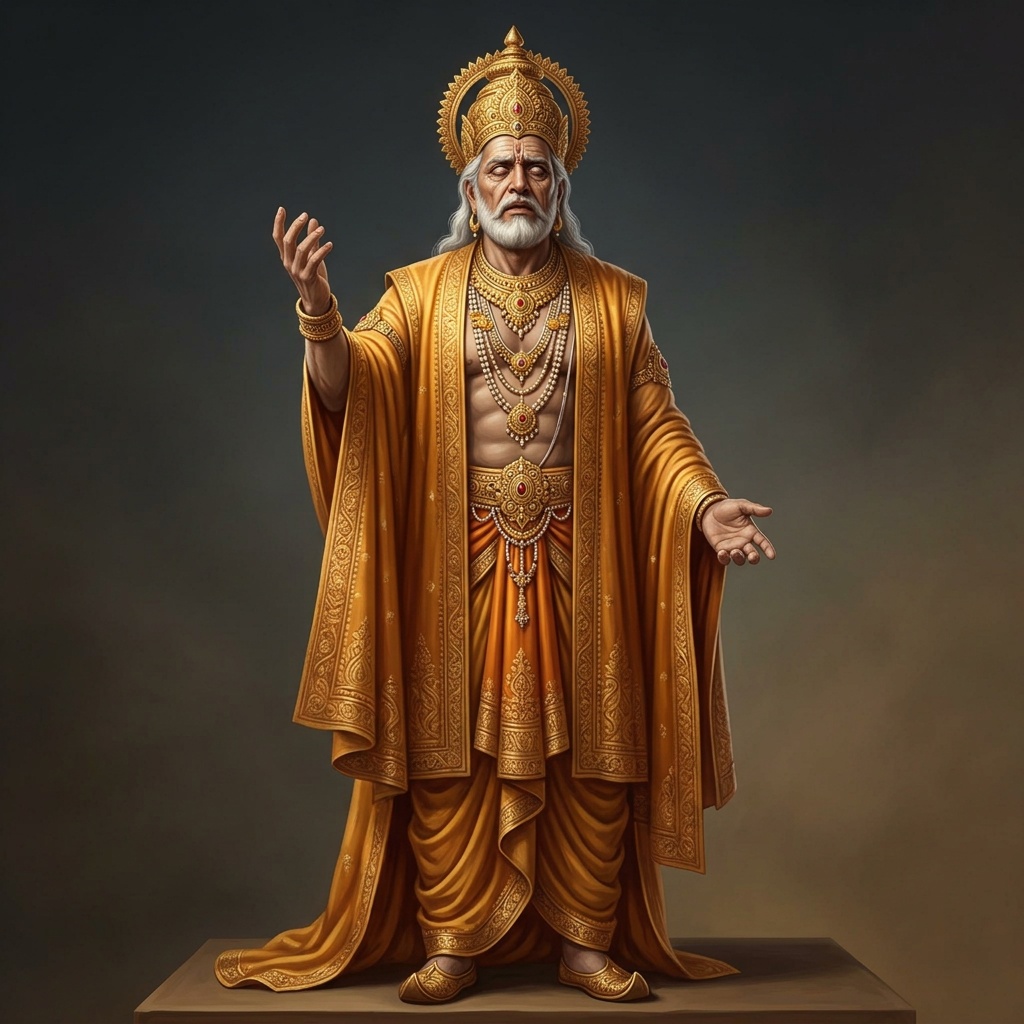
Dhritarashtra
धृतराष्ट्रThe Blind King“He could not see — and chose not to see what his sons were doing.”
Dhritarashtra
The Blind KingBorn blind, Dhritarashtra was denied the throne of Hastinapura because of his disability. He spoiled his hundred sons to compensate, turning a blind eye (literally and figuratively) to their cruelty. He loved his sons too much to discipline them — and the world paid the price.
Dhritarashtra had the strength of ten thousand elephants. When he "hugged" a metal statue of Bhima after the war, thinking it was real, he crushed it into scrap metal.
Listening to the entire war through Sanjaya's divine narration
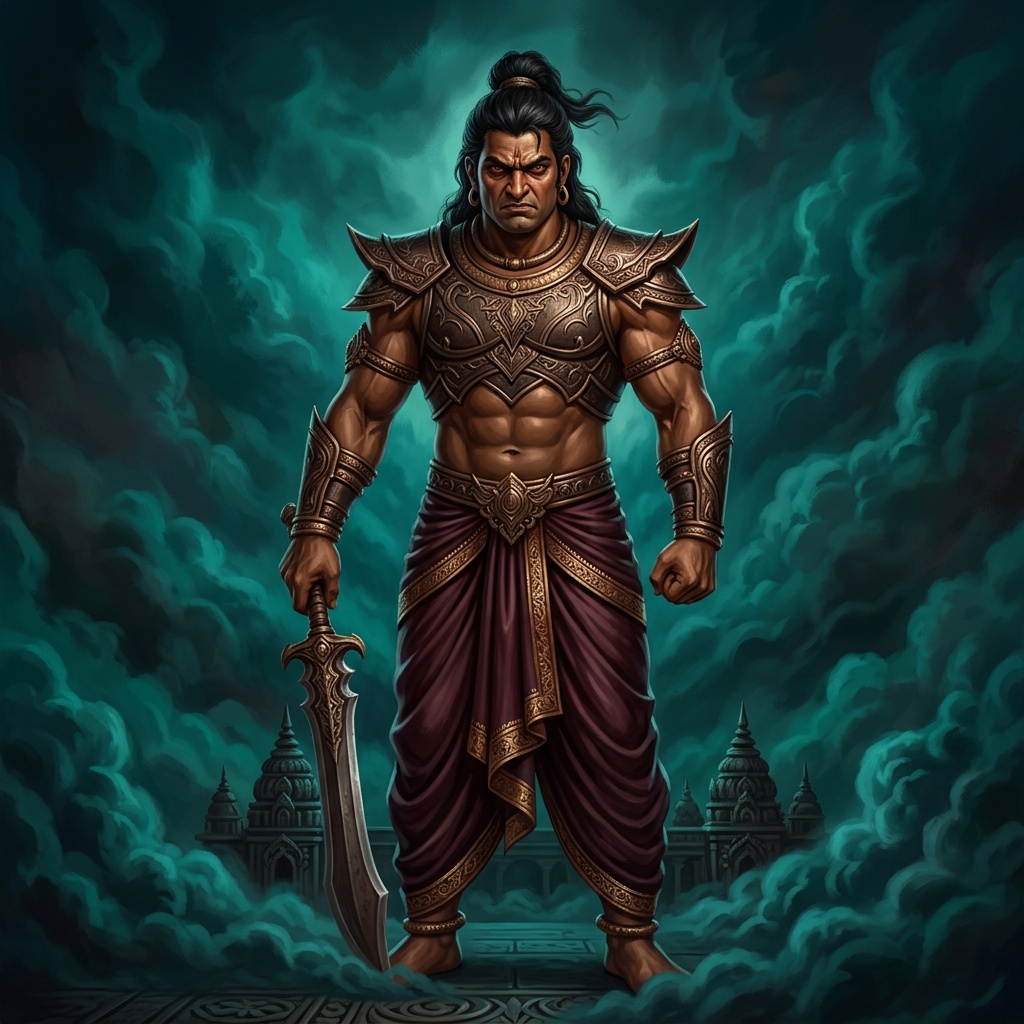
Dushasana
दुःशासनThe Cruel Prince“He tried to disrobe a queen — and paid with his blood.”
Dushasana
The Cruel PrinceDuryodhana's brother Dushasana committed the most infamous act in the Mahabharata — he dragged Draupadi by her hair into the court and tried to disrobe her. Bhima swore an oath to drink his blood, and on the eighteenth day of war, he fulfilled that terrible promise.
Draupadi vowed not to tie her hair until it was washed with Dushasana's blood. She kept her hair untied for thirteen years until Bhima finally kept his promise.
The attempted disrobing of Draupadi — the act that sealed the Kauravas' doom
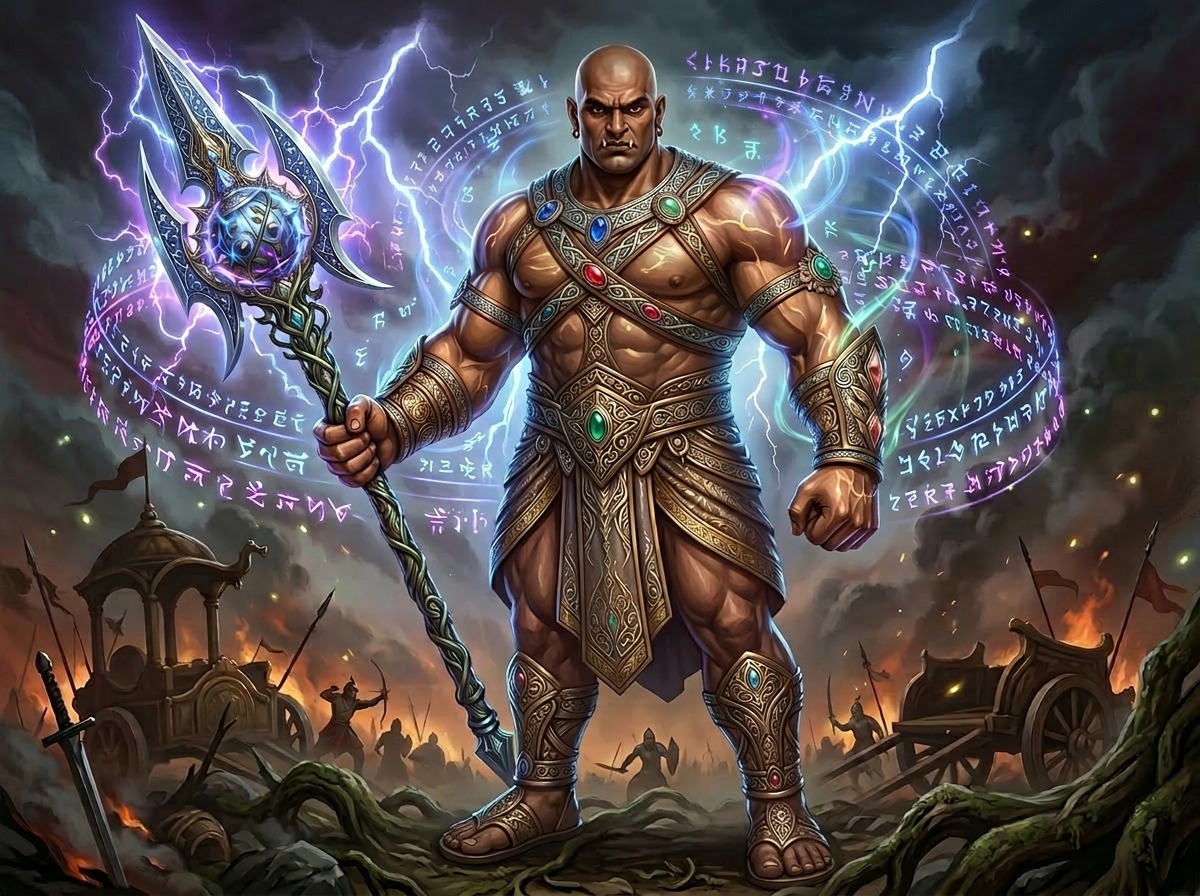
Ghatotkacha
घटोत्कचThe Demon Prince“Half-demon, all heart — he gave his life to save his family.”
Ghatotkacha
The Demon PrinceGhatotkacha was the son of Bhima and the rakshasi Hidimba. He inherited his mother's magical powers and his father's incredible strength. During the war, he wreaked such havoc on the Kaurava army at night that Karna was forced to use his one-time divine weapon on him — the weapon meant for Arjuna.
When Karna killed Ghatotkacha with the Shakti weapon, Krishna actually celebrated — because that weapon was now gone and could no longer be used against Arjuna.
Growing to colossal size and raining fire on the battlefield at night
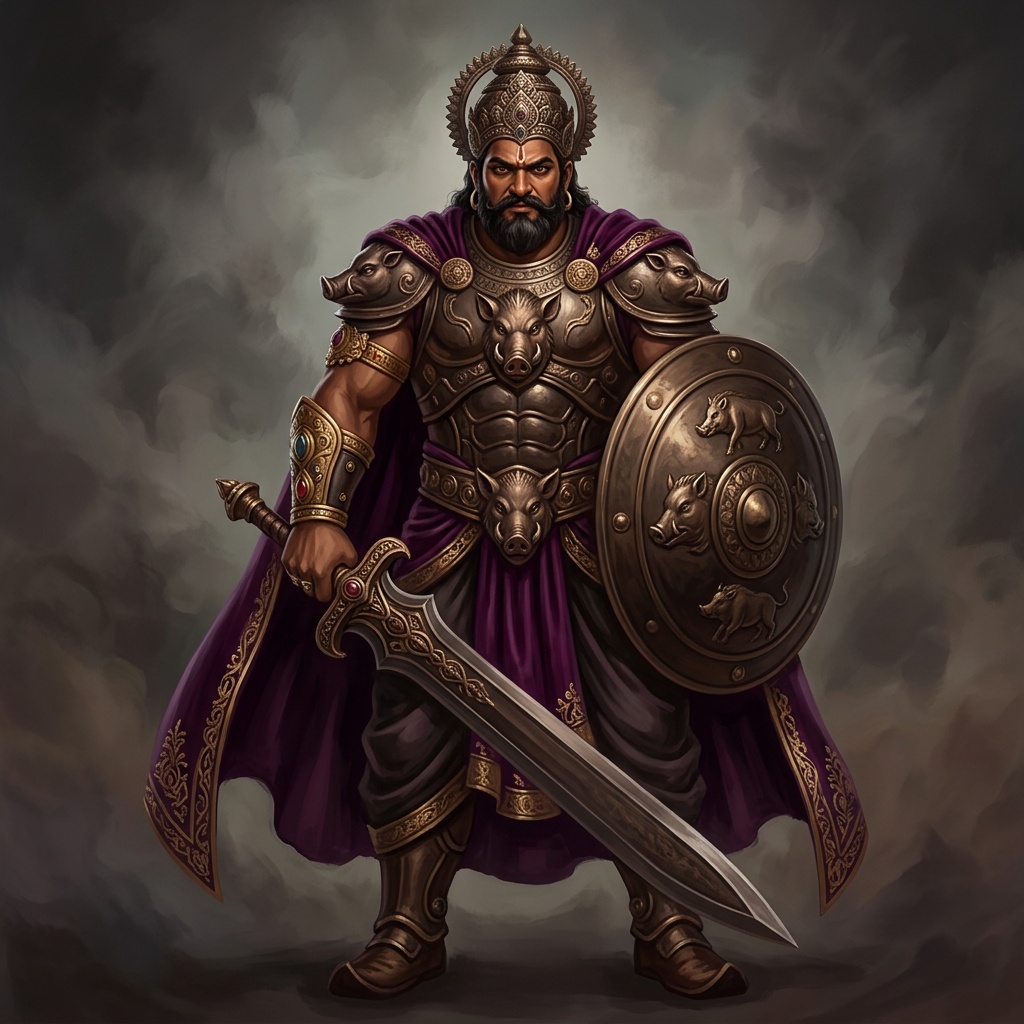
Jayadratha
जयद्रथThe Gate Keeper“He blocked four Pandavas at once — and sealed Abhimanyu's fate.”
Jayadratha
The Gate KeeperJayadratha was the king of Sindhu who received a boon from Shiva to hold back all four Pandavas (except Arjuna) for one day. He used this power to trap Abhimanyu inside the Chakravyuha, leading to the young hero's death. Arjuna swore to kill him by sunset — or die himself.
Jayadratha's father had a curse: whoever caused Jayadratha's head to fall to the ground would have their own head explode. Krishna made sure Arjuna's arrow carried the head into the father's lap instead.
Using Shiva's boon to single-handedly hold back four Pandava brothers
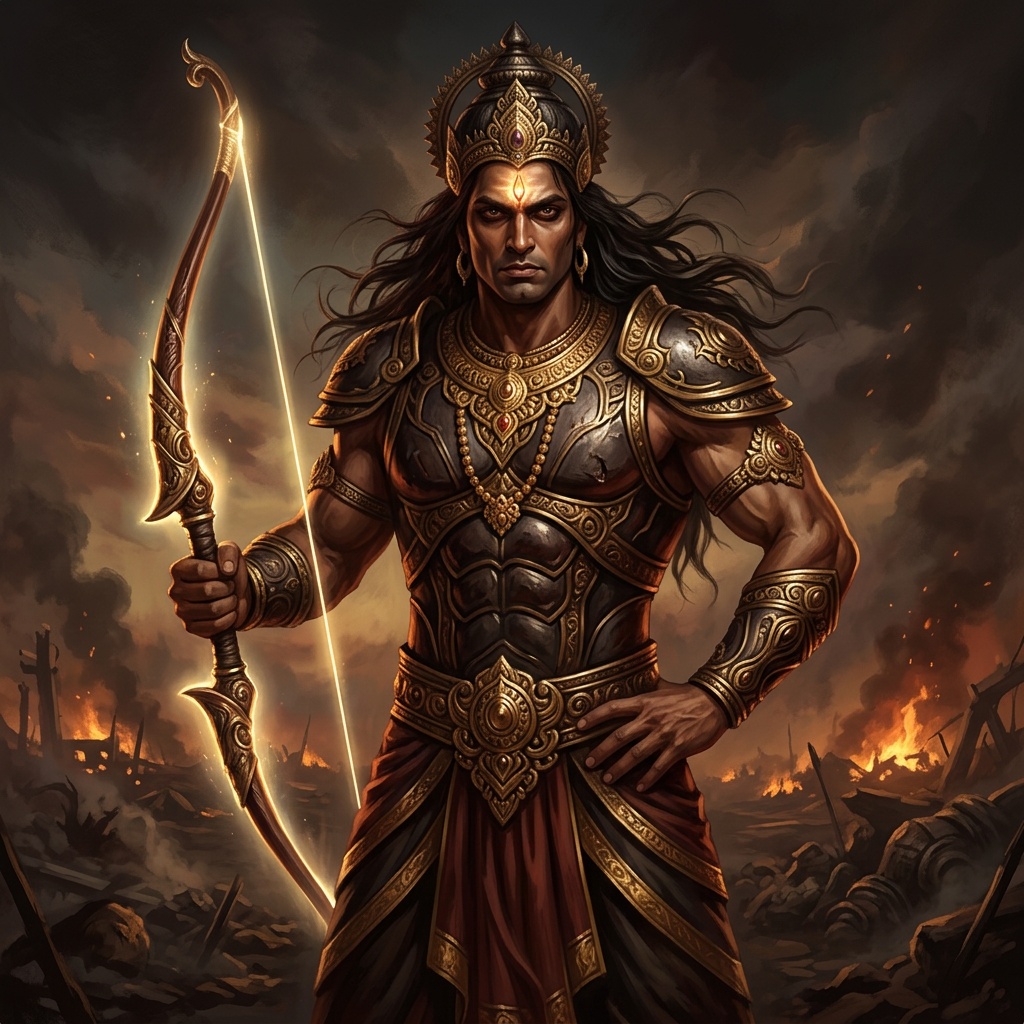
Ashwatthama
अश्वत्थामाThe Cursed Immortal“He was given immortality as a punishment, not a reward.”
Ashwatthama
The Cursed ImmortalSon of Drona, Ashwatthama committed the greatest war crime in the Mahabharata — he attacked the Pandava camp at night and killed Draupadi's five sleeping sons. When Krishna cursed him, the gem in his forehead was ripped out and he was condemned to wander the earth in agony for eternity.
Legend says Ashwatthama still wanders India with a bleeding wound on his forehead, cursed to live forever in pain. Some believe he visits temples at night, seeking relief that never comes.
Launching the Narayanastra — a weapon that grows stronger the more you resist it
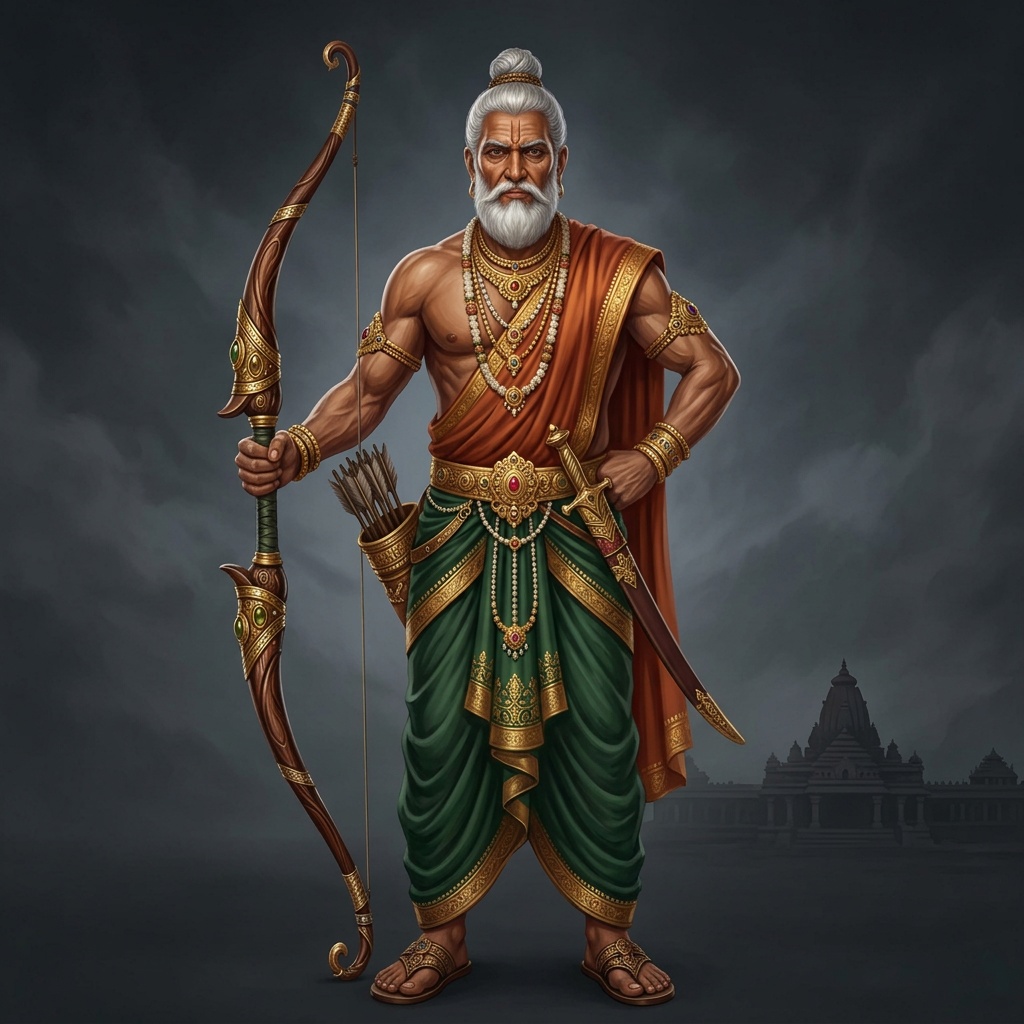
Kripacharya
कृपाचार्यThe Eternal Teacher“One of the immortal seven — the teacher who never stops teaching.”
Kripacharya
The Eternal TeacherKripacharya taught both Pandavas and Kauravas before Drona arrived. He fought on the Kaurava side out of duty, not choice. As one of the Chiranjivi (seven immortals), he is said to still walk the earth, teaching wisdom to those who seek it.
Kripacharya is one of only seven beings in Hindu mythology who are truly immortal. He survived the entire Kurukshetra war and is believed to still be alive today.
Surviving every battle and every age — the eternal witness and teacher
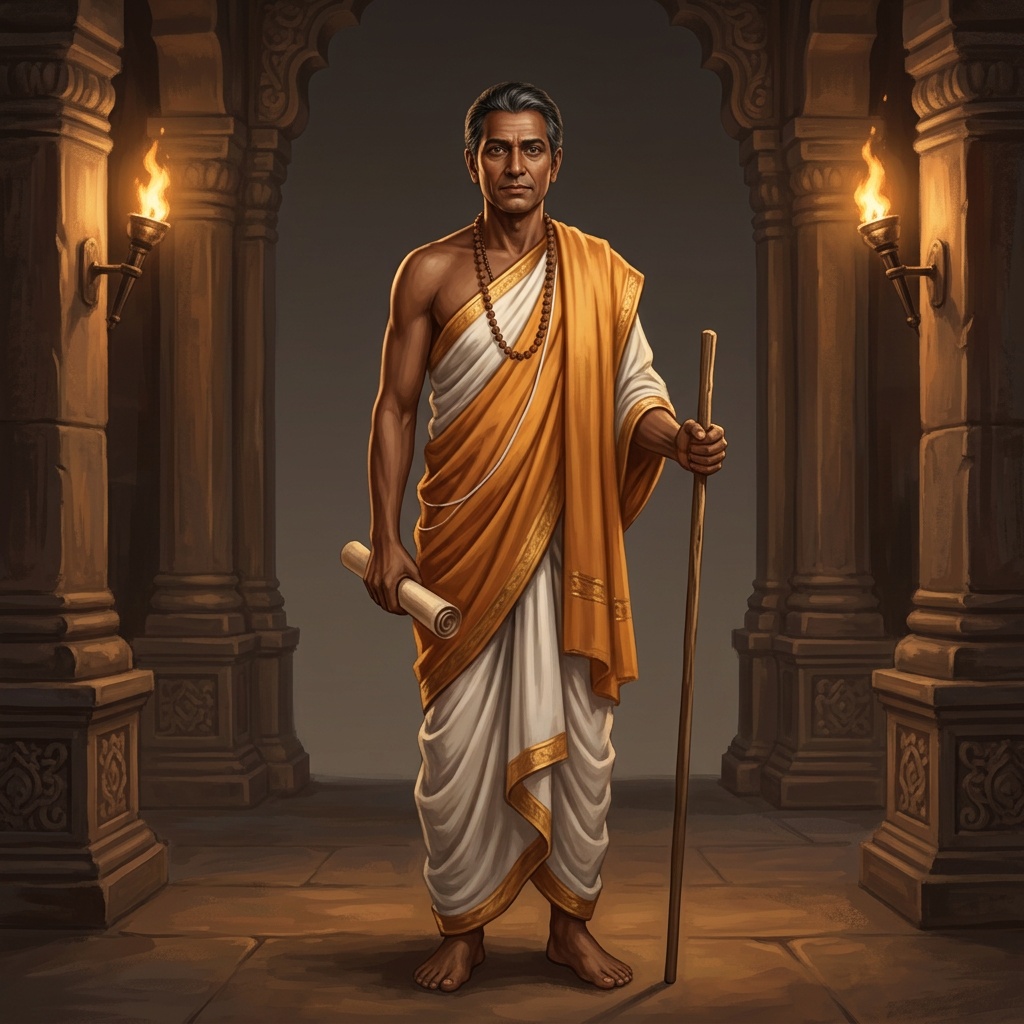
Vidura
विदुरThe Voice of Conscience“The only person in the Kaurava court who always told the truth.”
Vidura
The Voice of ConscienceVidura was Dhritarashtra's half-brother and the prime minister of Hastinapura. He was the incarnation of Dharma itself. In a court full of people who stayed silent when Draupadi was humiliated, Vidura alone spoke up against the injustice — again and again, even when no one listened.
Vidura secretly warned the Pandavas before the house of lac was set on fire, saving their lives with a coded message. His quiet rebellion saved the heroes of the Mahabharata.
Speaking uncomfortable truths in a court that didn't want to hear them

Subhadra
सुभद्राKrishna's Brave Sister“She drove the chariot herself when she chose her own husband.”
Subhadra
Krishna's Brave SisterSubhadra was Krishna's sister who fell in love with Arjuna. When Balarama planned to marry her to Duryodhana, Krishna helped Arjuna elope with her. She drove the chariot herself during their escape — a princess who chose her own destiny. She became the mother of the brave Abhimanyu.
Subhadra was trained in chariot driving and warfare. When she and Arjuna eloped, she drove the chariot while Arjuna defended them from pursuers.
Driving the escape chariot — choosing love and freedom over an arranged fate
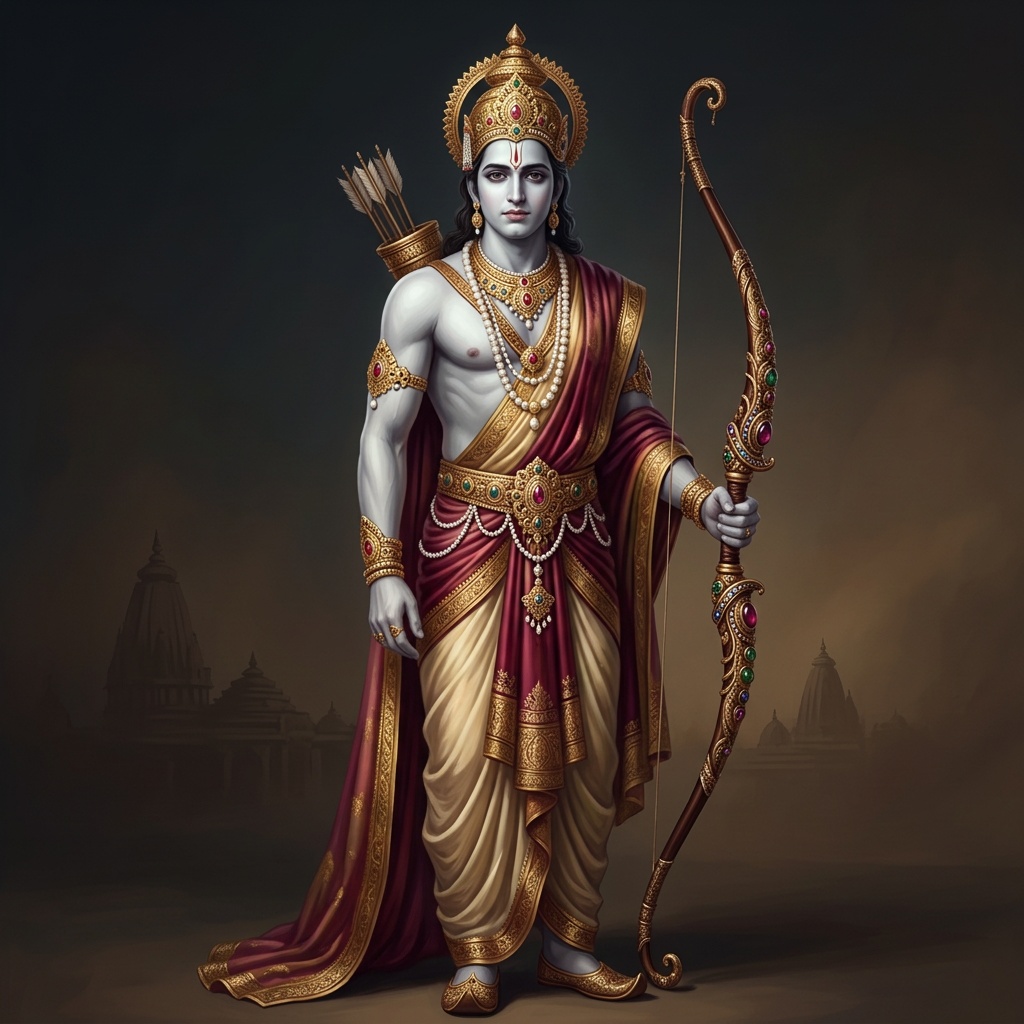
Pandu
पाण्डुThe Pale King“A king whose curse shaped the destiny of an entire epic.”
Pandu
The Pale KingKing Pandu accidentally killed a sage and was cursed — the touch of any woman would kill him. He abdicated the throne to his blind brother Dhritarashtra and retreated to the forest with his wives. Through divine boons, his queens bore the five Pandavas, but Pandu himself could never hold them.
Pandu's name literally means "pale" or "white" — he is described as having an unusually pale complexion. His five sons became the greatest heroes of the Mahabharata.
Abdicating the throne and accepting his curse with dignity
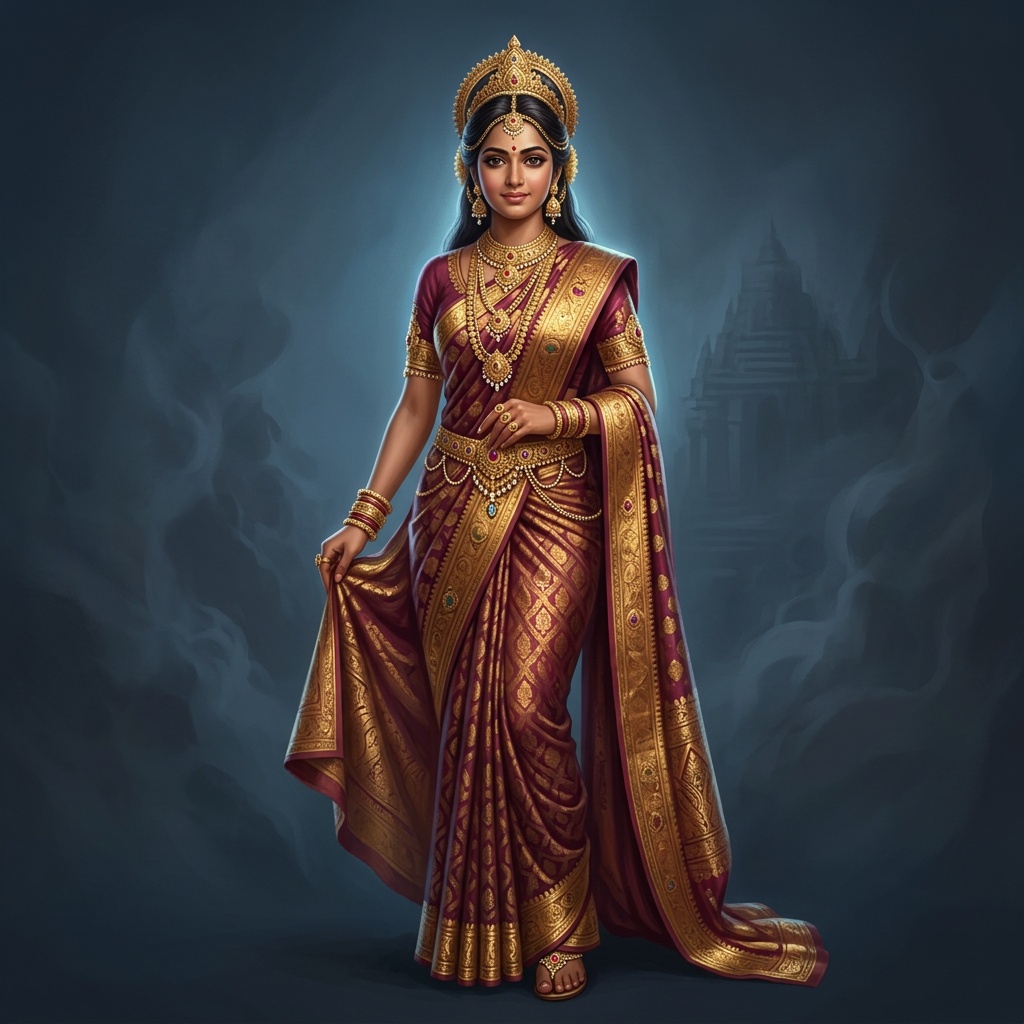
Madri
माद्रीThe Devoted Second Queen“She chose to follow her husband into death rather than live without him.”
Madri
The Devoted Second QueenMadri was Pandu's second wife and the mother of the twins Nakula and Sahadeva. When Pandu died because of his curse, Madri committed sati — joining him on the funeral pyre. She entrusted her infant twins to Kunti, who raised all five Pandavas as her own.
Madri was a princess of the Madra kingdom, known for its beautiful women and fine horses. Her twin sons Nakula and Sahadeva inherited both her beauty and her kingdom's skill with horses.
Her final act of devotion — joining Pandu in death and trusting Kunti with her sons
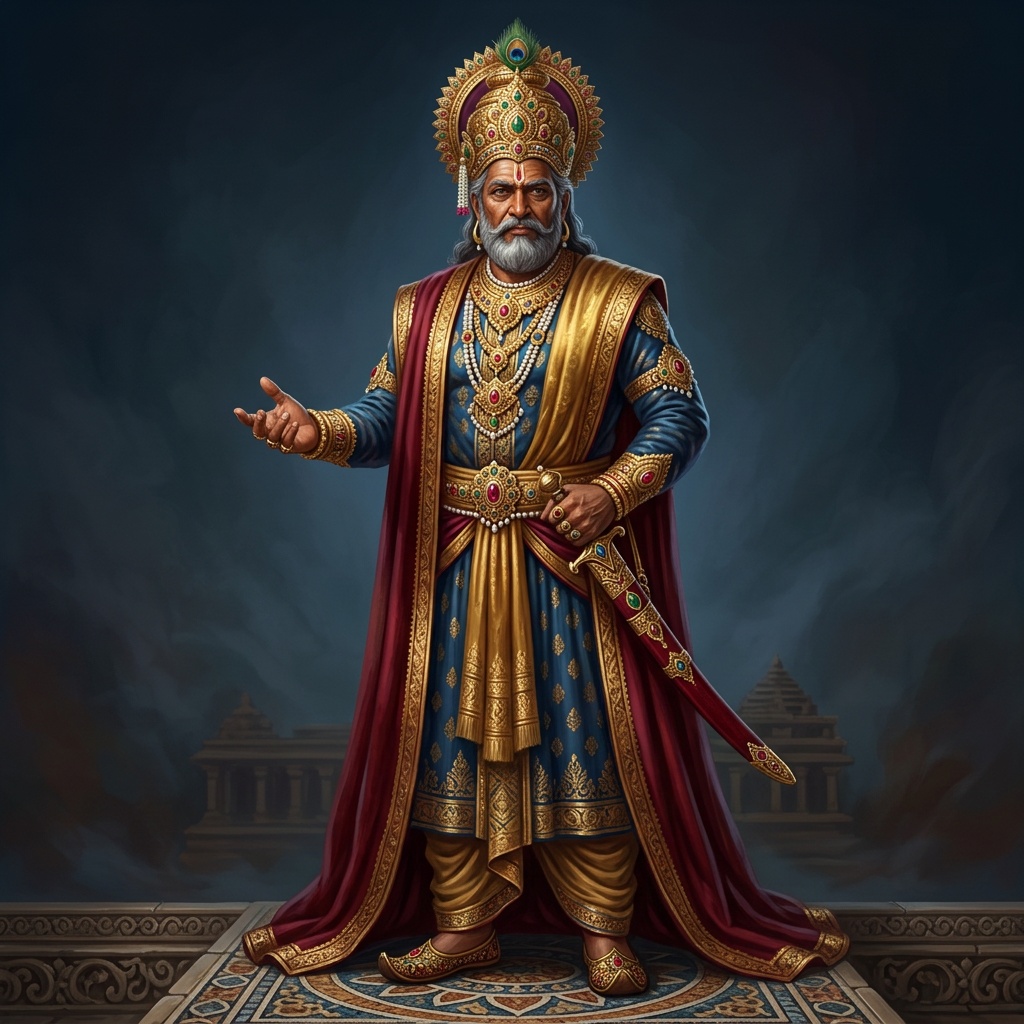
Drupada
द्रुपदThe King of Vengeance“He performed a fire sacrifice just to create a son who could kill Drona.”
Drupada
The King of VengeanceDrupada was once Drona's childhood friend, but their friendship broke when Drona humiliated him as a king. Burning with desire for revenge, Drupada performed a massive fire sacrifice — from which emerged Dhrishtadyumna, destined to kill Drona, and Draupadi, who would change the world.
Both Draupadi and Dhrishtadyumna literally walked out of a fire — fully grown — during Drupada's revenge sacrifice. They were born from rage and emerged as instruments of fate.
Commissioning a fire sacrifice that created two world-changing beings
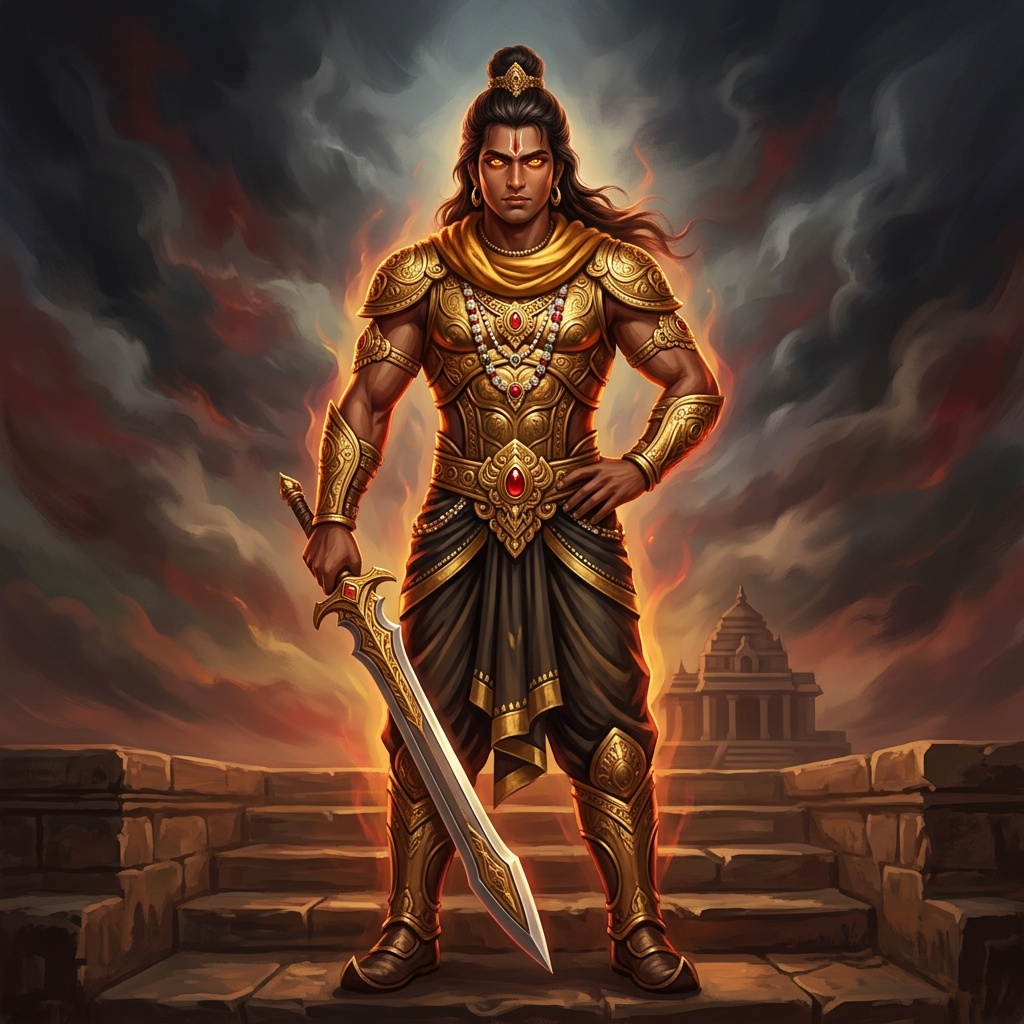
Dhrishtadyumna
धृष्टद्युम्नBorn to Kill“He was born from fire for one purpose — and he fulfilled it.”
Dhrishtadyumna
Born to KillDhrishtadyumna emerged fully formed from Drupada's sacrificial fire, created with one destiny: to kill Drona. In an ironic twist, Drona himself trained him in warfare, knowing the prophecy. On the battlefield, Dhrishtadyumna beheaded his own guru — fulfilling the fate that was written in fire.
Drona knew from the moment he saw Dhrishtadyumna that this boy would one day kill him. He trained him anyway, believing that destiny cannot be avoided.
Beheading Drona on the battlefield — fulfilling the prophecy of his birth
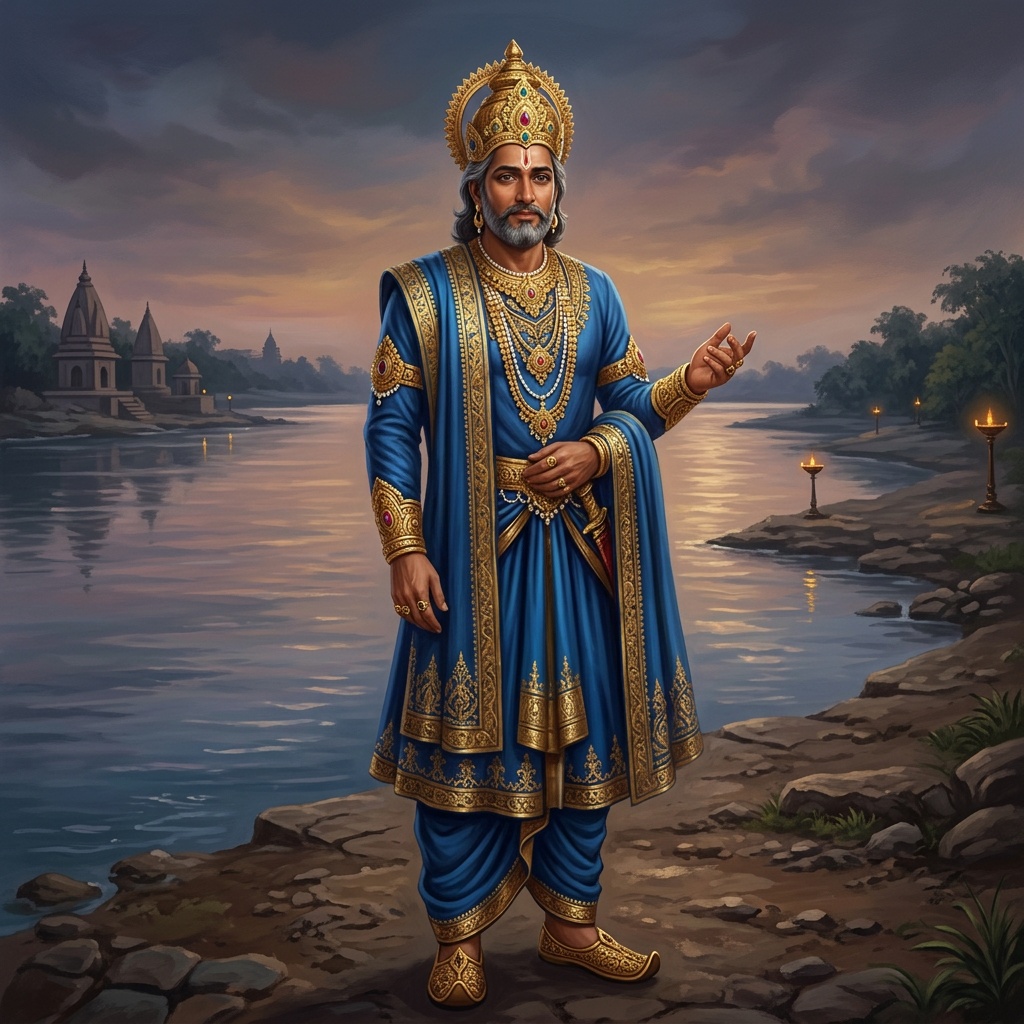
Shantanu
शान्तनुThe Love-Struck King“His love for two women cost his son everything.”
Shantanu
The Love-Struck KingKing Shantanu fell in love twice — first with Ganga, who drowned seven of their eight sons, and then with the fisherwoman Satyavati. To marry Satyavati, his son Devavrata had to take the terrible vow of lifelong celibacy, becoming Bhishma. Shantanu's romantic heart set the stage for generations of tragedy.
Shantanu had a magical touch that could make anyone he touched feel youthful and happy. This gift was given to him by the gods — but it couldn't prevent the sorrows his family would face.
The youthful touch — anyone he touched felt years younger
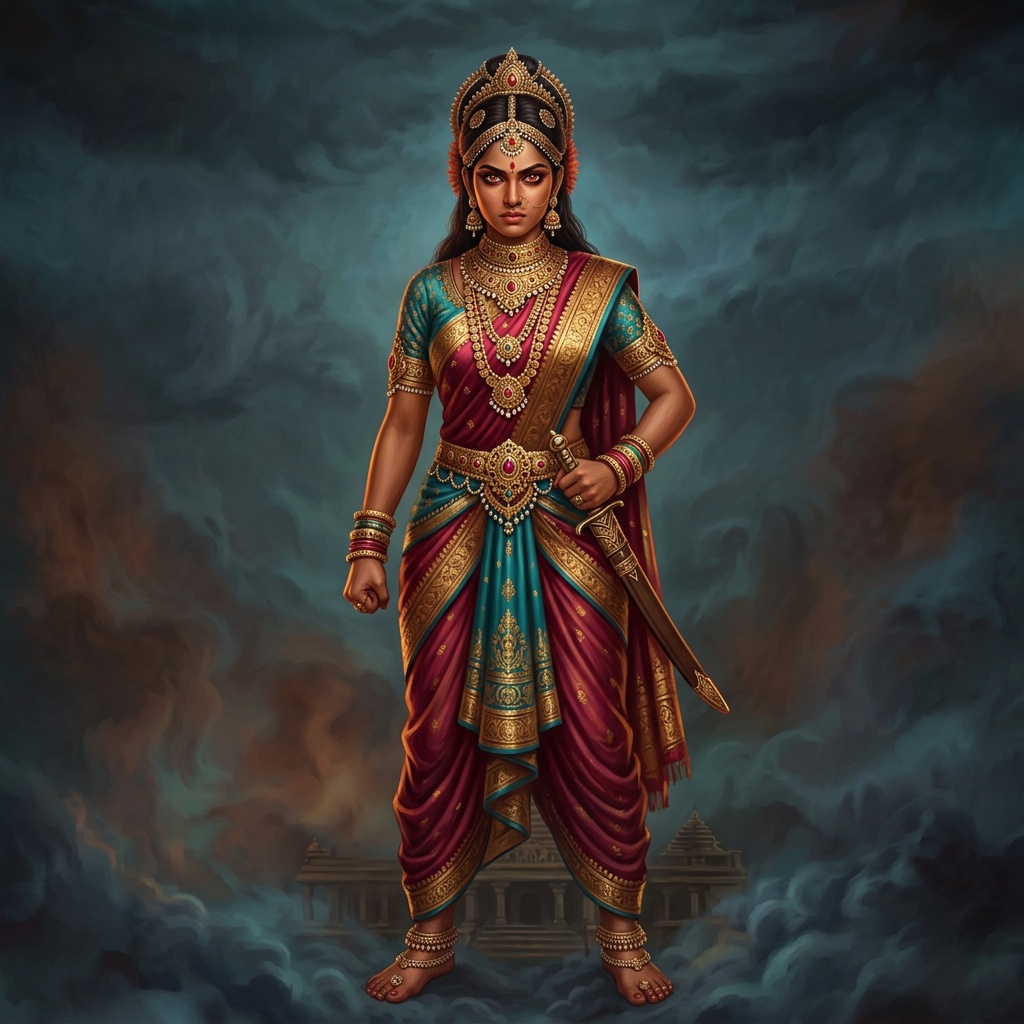
Amba
अम्बाThe Princess Who Became Vengeance“She burned herself alive and was reborn as the weapon that killed Bhishma.”
Amba
The Princess Who Became VengeancePrincess Amba was abducted by Bhishma for his brother's wedding. When her beloved rejected her and Bhishma refused to marry her himself, she was left with nothing. She performed fierce penance, burned herself on a pyre, and was reborn as Shikhandi — the warrior who would finally bring Bhishma down.
No warrior in the world could defeat Bhishma in direct combat. It took a woman's rage, carried across lifetimes, to find the one way to end the invincible grandsire.
Carrying her vengeance across death and rebirth to confront Bhishma
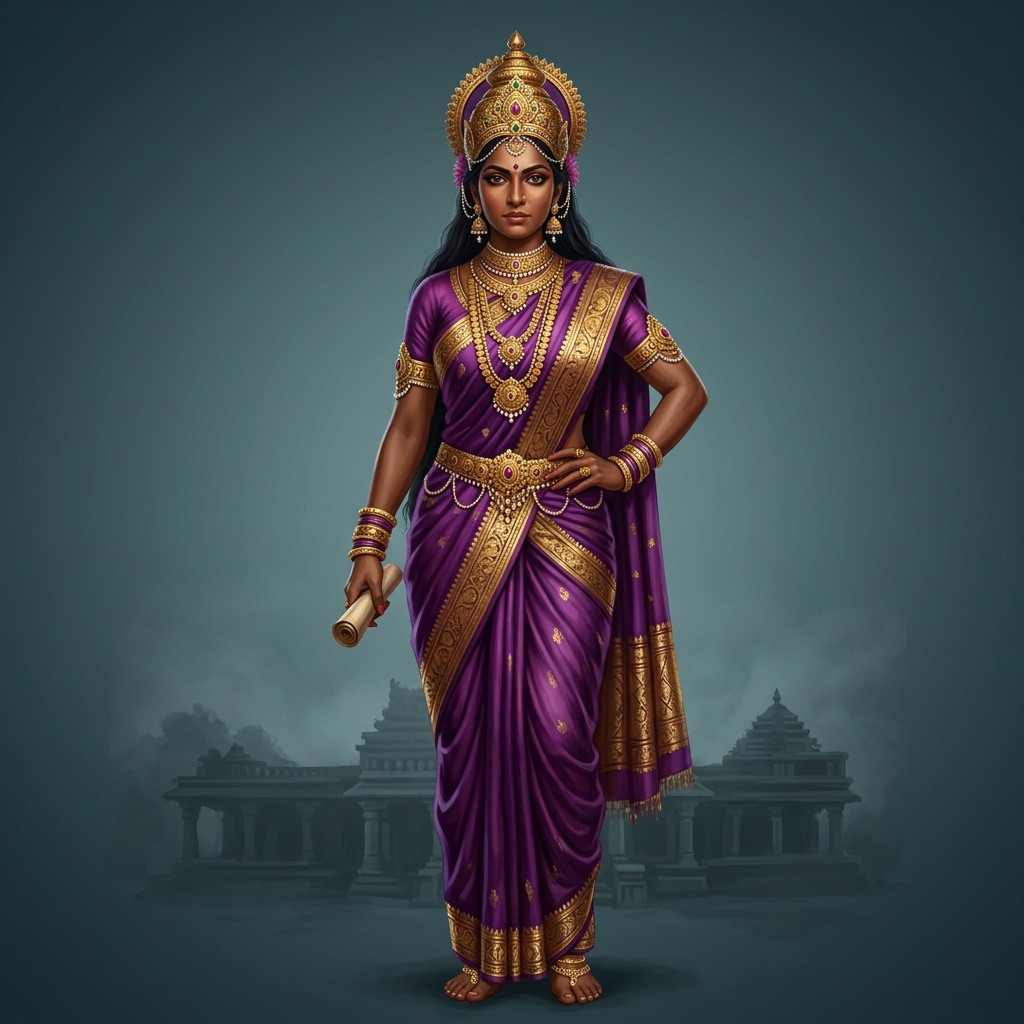
Satyavati
सत्यवतीThe Fisherwoman Queen“From a fisherman's boat to the throne of Hastinapura.”
Satyavati
The Fisherwoman QueenSatyavati was a fisherman's daughter who smelled of fish until the sage Parashara blessed her with a divine fragrance. She married King Shantanu on the condition that her sons would inherit the throne — the demand that forced Bhishma's terrible vow. She was the grandmother whose ambition shaped the entire Mahabharata.
Before marrying Shantanu, Satyavati had a secret son with the sage Parashara — Vyasa, who would grow up to author the Mahabharata itself. The author was born from the story's own characters.
Negotiating the condition that changed the Kuru dynasty forever
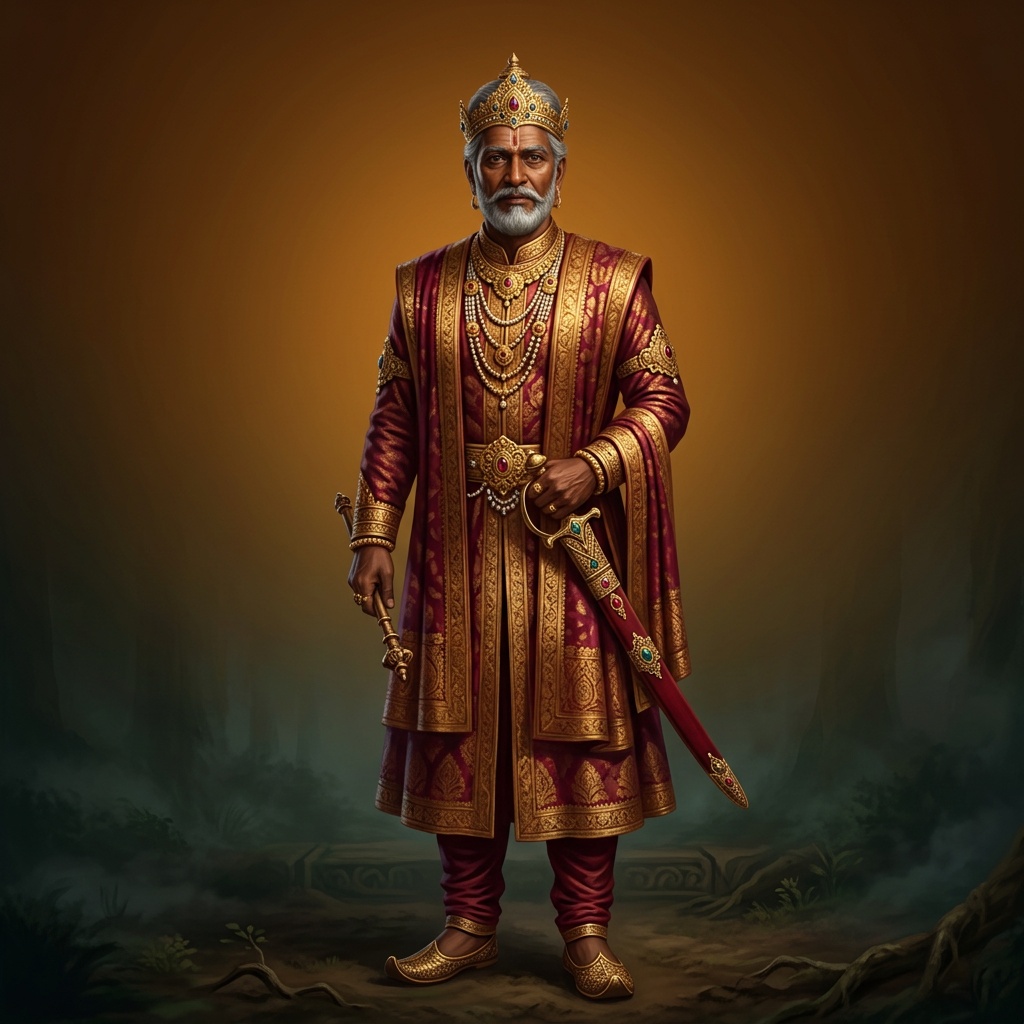
King Virata
विराटThe Unknowing Host“He sheltered the Pandavas for a year without knowing who they were.”
King Virata
The Unknowing HostKing Virata unknowingly harbored the five disguised Pandavas during their final year of exile. Yudhishthira served as his dice companion, Bhima as his cook, Arjuna as a dance teacher, and the twins as horse and cattle keepers. When the truth was revealed, he became one of their greatest allies.
Bhima worked as Virata's cook under the name "Ballava." He also secretly fought as a wrestler in the king's arena — and nobody connected the unbeatable wrestler with the gentle cook.
Offering shelter that protected the Pandavas during their most vulnerable year
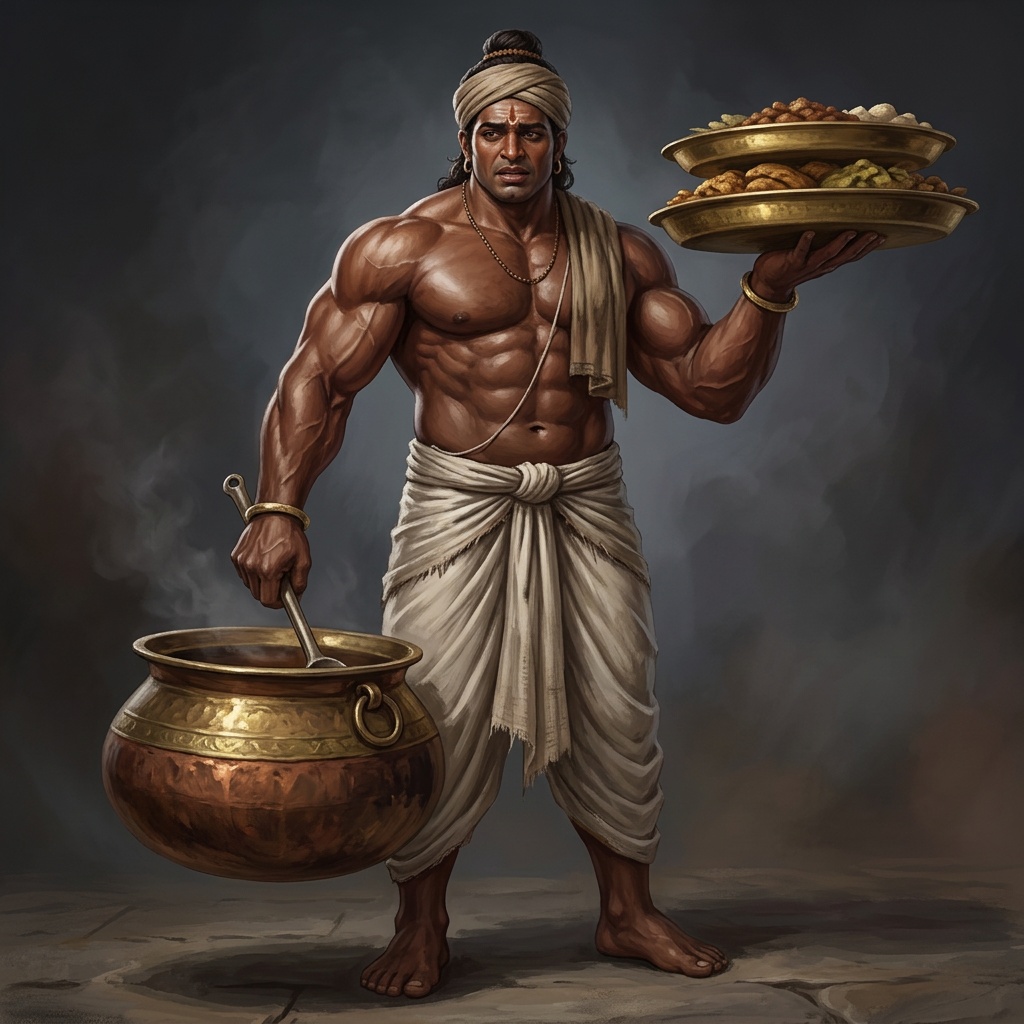
Ballava
बल्लवBhima's Disguise“The cook who could crush armies between courses.”
Ballava
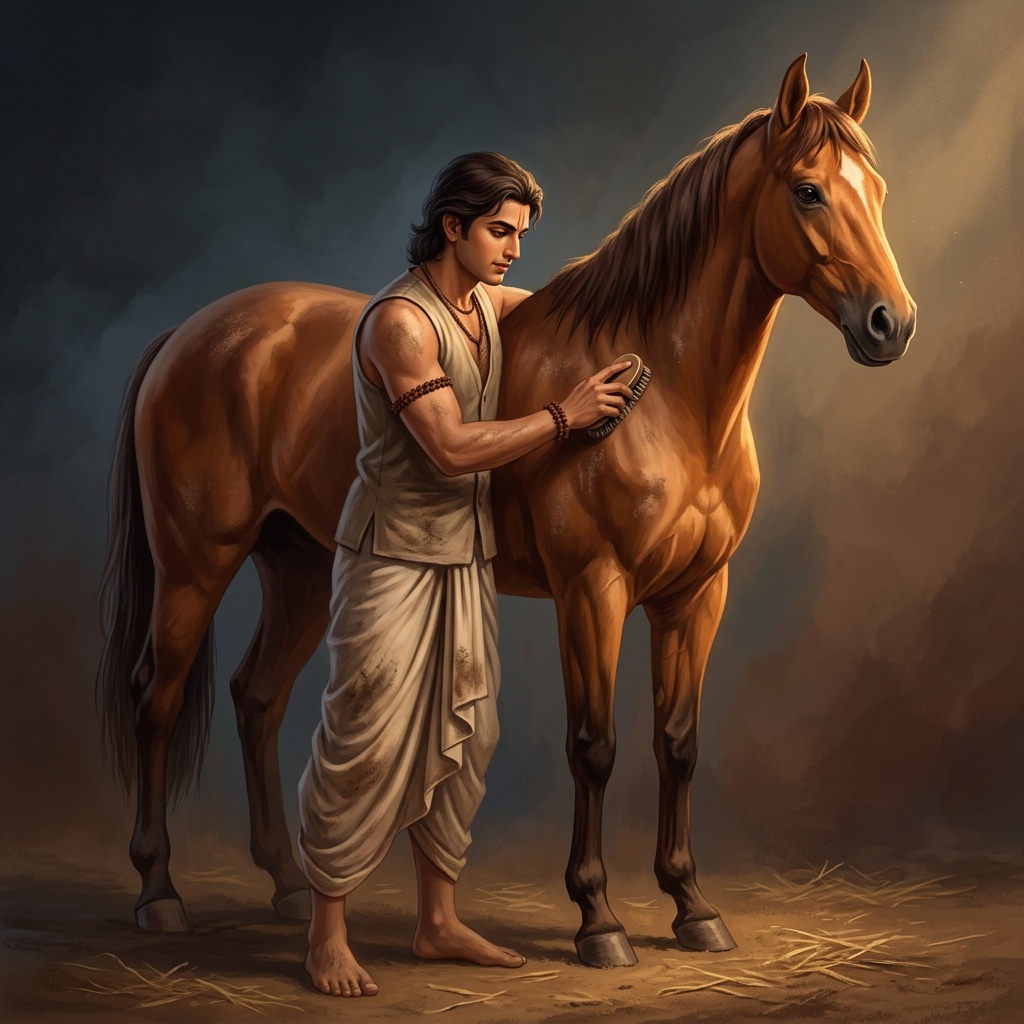
Bhima's DisguiseBallava was Bhima's disguise during the Pandavas' year of hiding in King Virata's court. The strongest warrior alive pretended to be a simple cook — though his enormous appetite and habit of wrestling anyone who challenged him made the disguise paper-thin.
As Ballava, Bhima killed the wrestler Jimuta in Virata's arena and also secretly killed Kichaka, the general who harassed Draupadi — all while maintaining his cover as a cook.
Defeating warriors while pretending to be an ordinary cook
Granthika
ग्रन्थिकNakula's Disguise“The horse keeper who whispered to stallions.”
Granthika
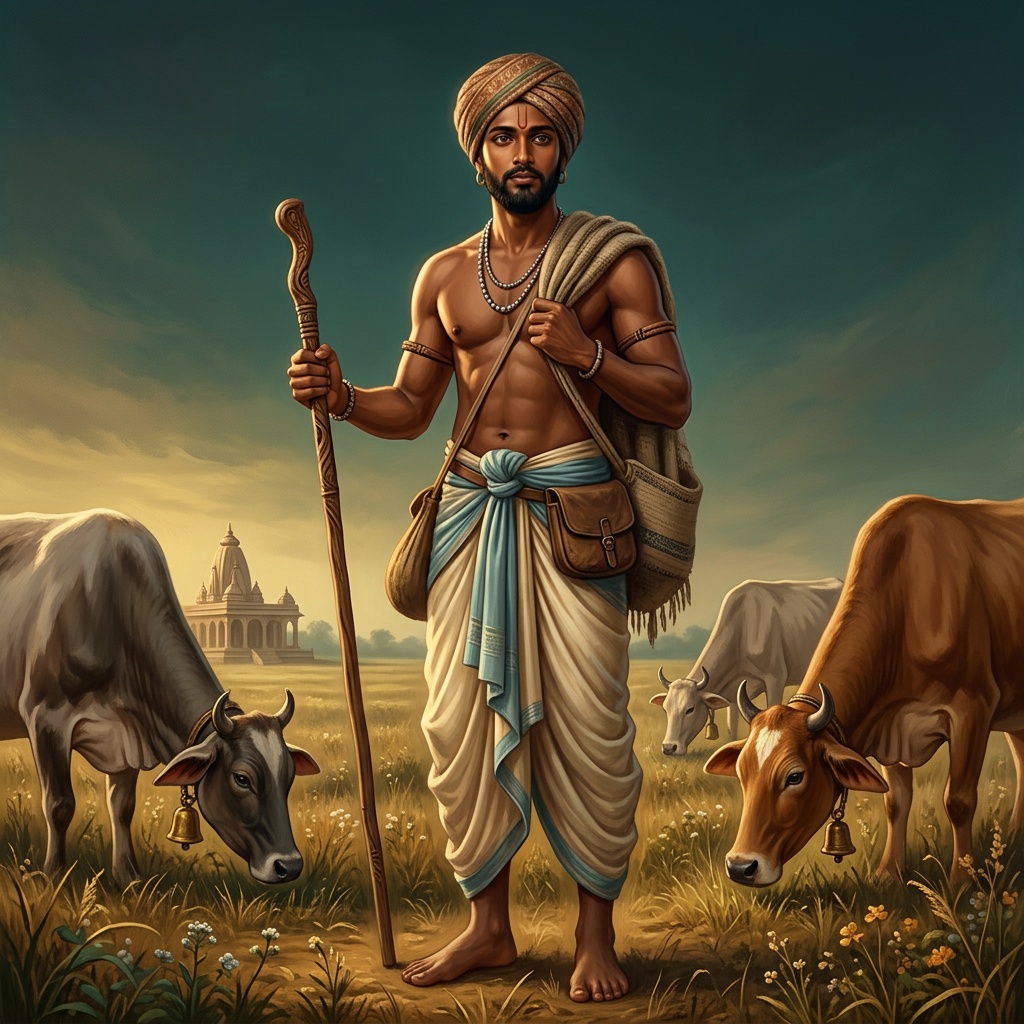
Nakula's DisguiseGranthika was Nakula's disguise during the year of hiding in Virata's court. The most handsome of the Pandavas served as a horse keeper, using his legendary skill with horses to tend the royal stables. Even in disguise, the horses responded to him like no other.
Nakula could heal sick horses and tame wild ones just by speaking to them softly. As Granthika, he transformed Virata's stables into the finest in the land.
Calming and healing horses with an almost supernatural touch
Tantripala
तन्त्रिपालSahadeva's Disguise“The cattle keeper who knew the stars.”
Tantripala
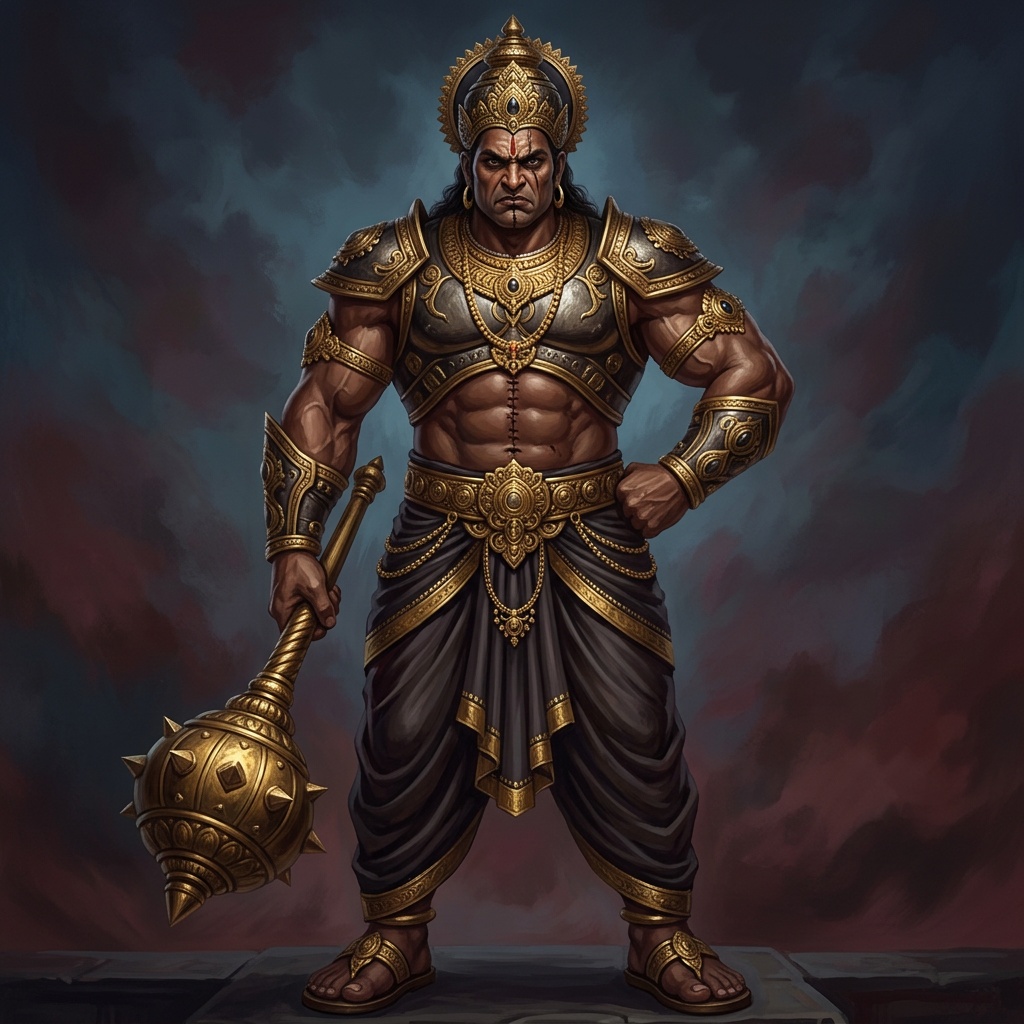
Sahadeva's DisguiseTantripala was Sahadeva's disguise during the year of incognito exile. The youngest Pandava, who could read the future in the stars, served as a humble cattle keeper in Virata's court. He kept the cows healthy and the king's herds prosperous, all while hiding his cosmic knowledge.
Even as Tantripala, Sahadeva couldn't help making astrological predictions. The accuracy of his "guesses" about weather and cattle health amazed everyone at court.
Predicting the future while pretending to be an ordinary cowherd
Jarasandha
जरासन्धThe King Who Couldn't Die“Split in two at birth, joined by a demoness — and nearly impossible to kill.”
Jarasandha
The King Who Couldn't DieJarasandha was born in two halves that were joined together by the demoness Jara. He became the most powerful king in India, imprisoning 86 kings for a mass sacrifice. Only Bhima could defeat him, and only after Krishna revealed the secret — Bhima had to tear him apart from the seam where he was joined.
Jarasandha attacked Mathura 17 times trying to kill Krishna. Krishna didn't fight him — he simply relocated his entire city to Dwaraka across the sea.
Regenerating from any wound — until Bhima found his one weakness
Shikhandi
शिखण्डीThe Reborn Avenger“Amba's rage reborn — the one person Bhishma wouldn't fight.”
Shikhandi
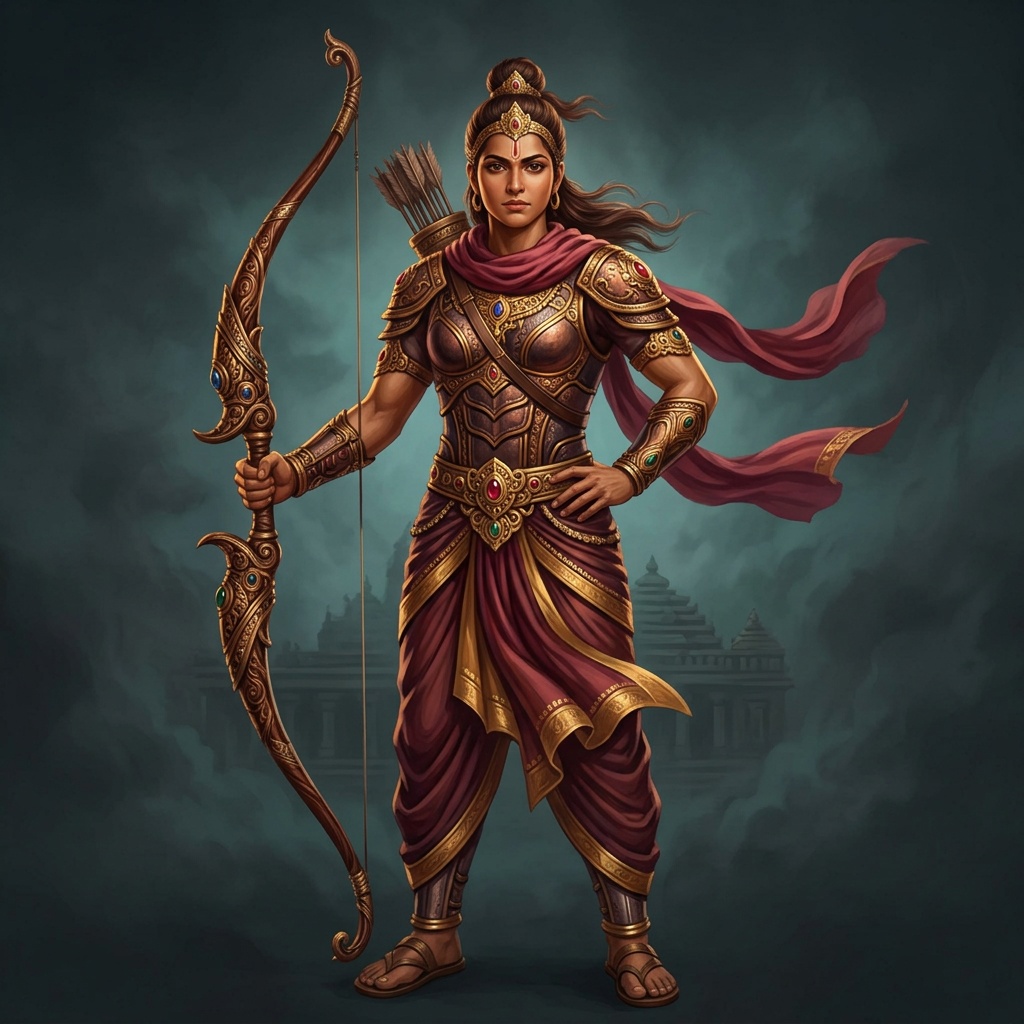
The Reborn AvengerShikhandi was the rebirth of Princess Amba, who had vowed to destroy Bhishma. Bhishma recognized Shikhandi as Amba reborn and refused to raise weapons against her. Arjuna used Shikhandi as a living shield, shooting arrows from behind — the only way to bring down the invincible grandsire.
Shikhandi remembers being Amba in a previous life. The rage that drove her to burn herself alive carried forward into a new body, a new name, but the same burning purpose.
Standing before Bhishma as a living shield — the one face that made the invincible warrior drop his weapons
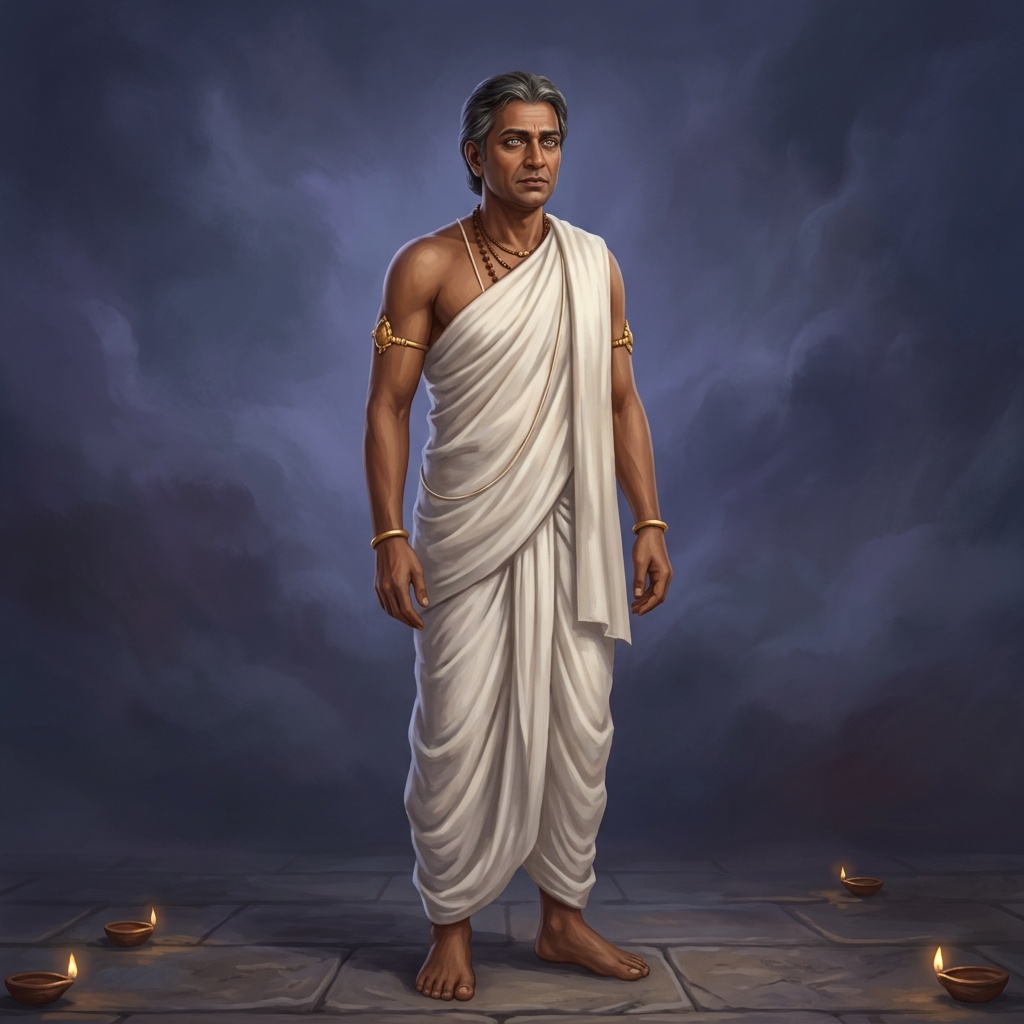
Sanjaya
सञ्जयThe Divine Narrator“He saw the entire war without stepping onto the battlefield.”
Sanjaya
The Divine NarratorSanjaya was Dhritarashtra's charioteer who received divine sight from Vyasa — the ability to see and hear everything happening on the battlefield of Kurukshetra from miles away. He narrated the entire Mahabharata war to the blind king, including the sacred Bhagavad Gita.
The Bhagavad Gita exists because Sanjaya could see and hear Krishna's conversation with Arjuna from far away. Without his divine sight, those 700 verses might have been lost forever.
Divya Drishti — seeing the entire war in real-time from miles away
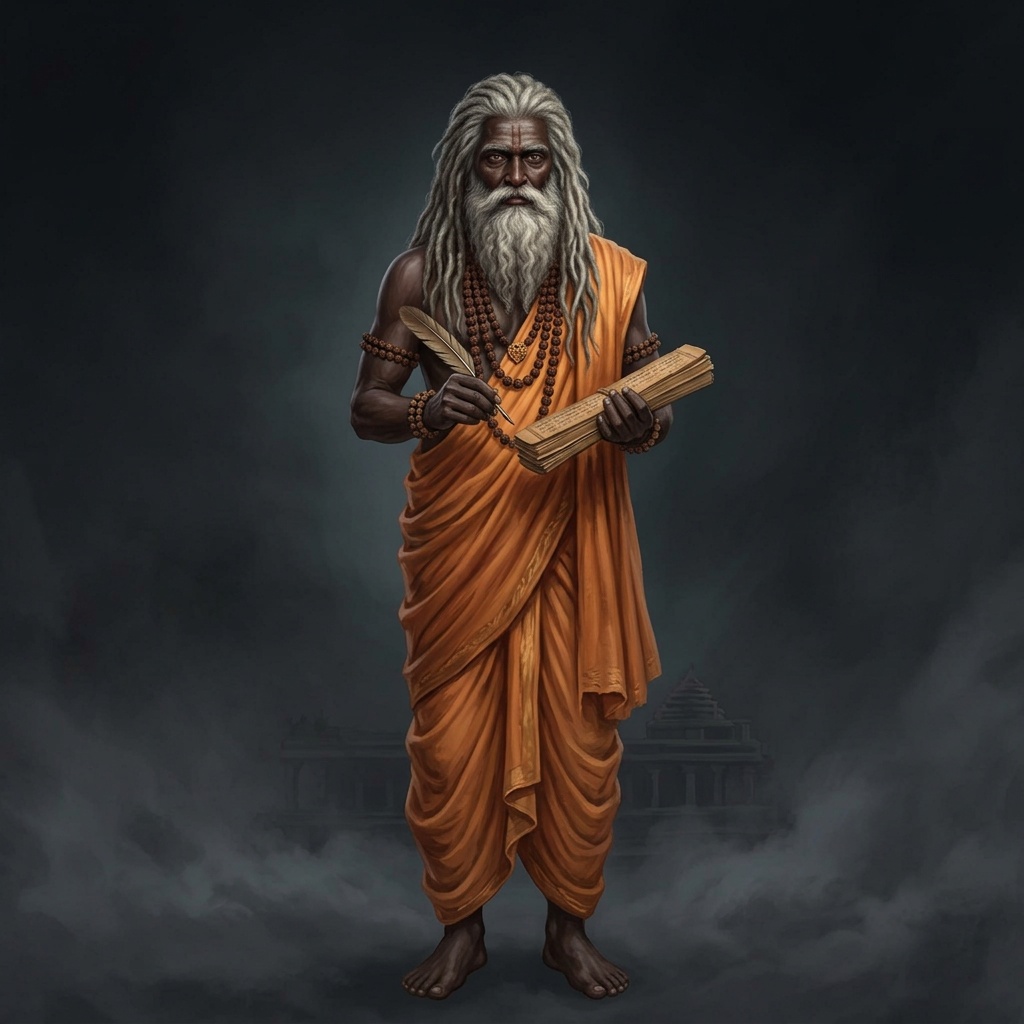
Vyasa
व्यासकृष्णद्वैपायनThe Author of Everything“He wrote the longest poem in history — and he was a character in it.”
Vyasa
The Author of EverythingVyasa is the sage who composed the Mahabharata, the Vedas, and the Puranas. But he wasn't just the author — he was also a character in his own story: the biological father of Dhritarashtra, Pandu, and Vidura. He watched the dynasty he created tear itself apart.
The Mahabharata has over 200,000 verses — ten times the length of the Iliad and Odyssey combined. Vyasa dictated it to Ganesha, who wrote so fast that his pen broke and he used his own tusk to continue.
Composing the Mahabharata — the story that contains every possible human story within it
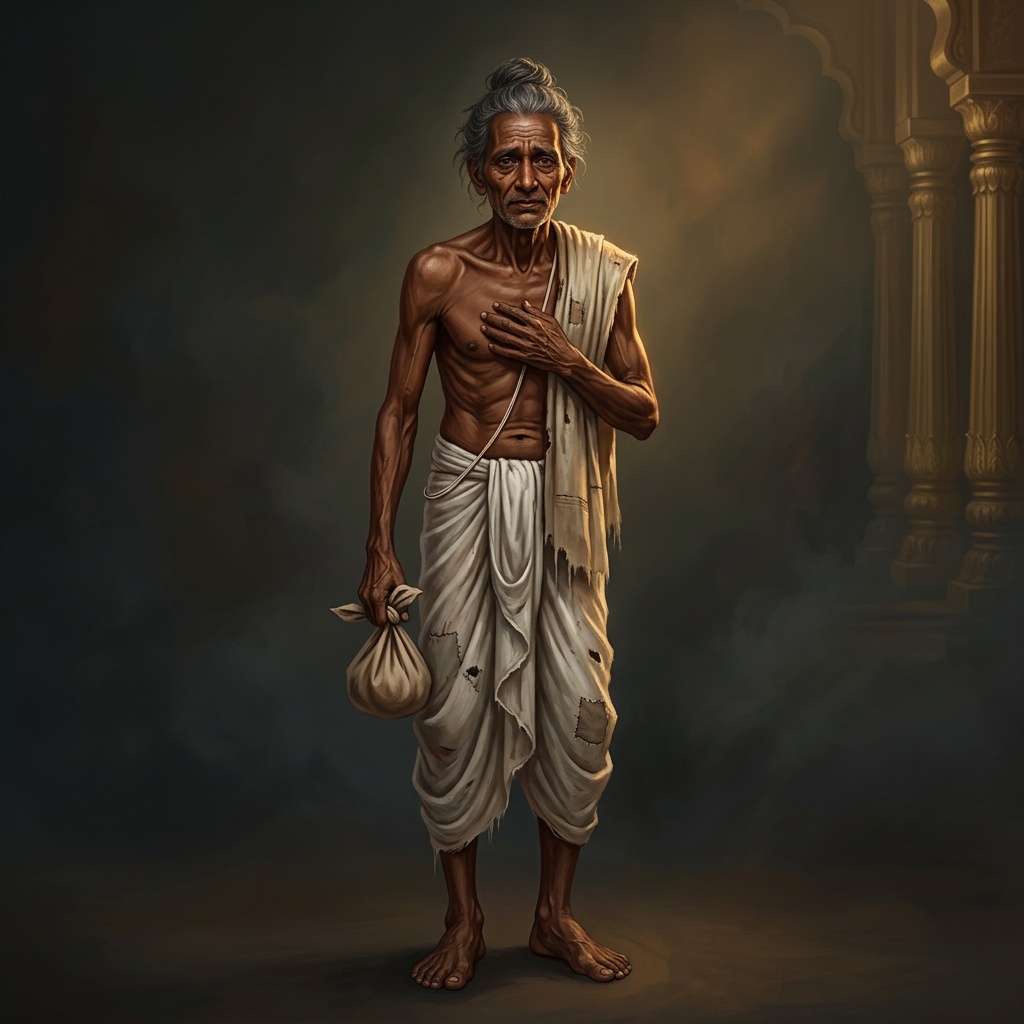
Sudama
सुदामाThe Poor Friend“He brought a handful of flattened rice — and received an entire palace.”
Sudama
The Poor FriendSudama was Krishna's childhood friend who grew up to be a poor brahmin. When his family starved, his wife convinced him to visit Krishna in Dwaraka. Ashamed of his poverty, Sudama brought only flattened rice as a gift. Krishna ate it with tears of love — and when Sudama returned home, his hut had become a palace.
Sudama was so embarrassed by his gift of flattened rice that he hid it behind his back. Krishna snatched it away and ate it with such joy that even the goddess Lakshmi was amazed.
Offering a humble gift with pure love — and receiving the universe in return
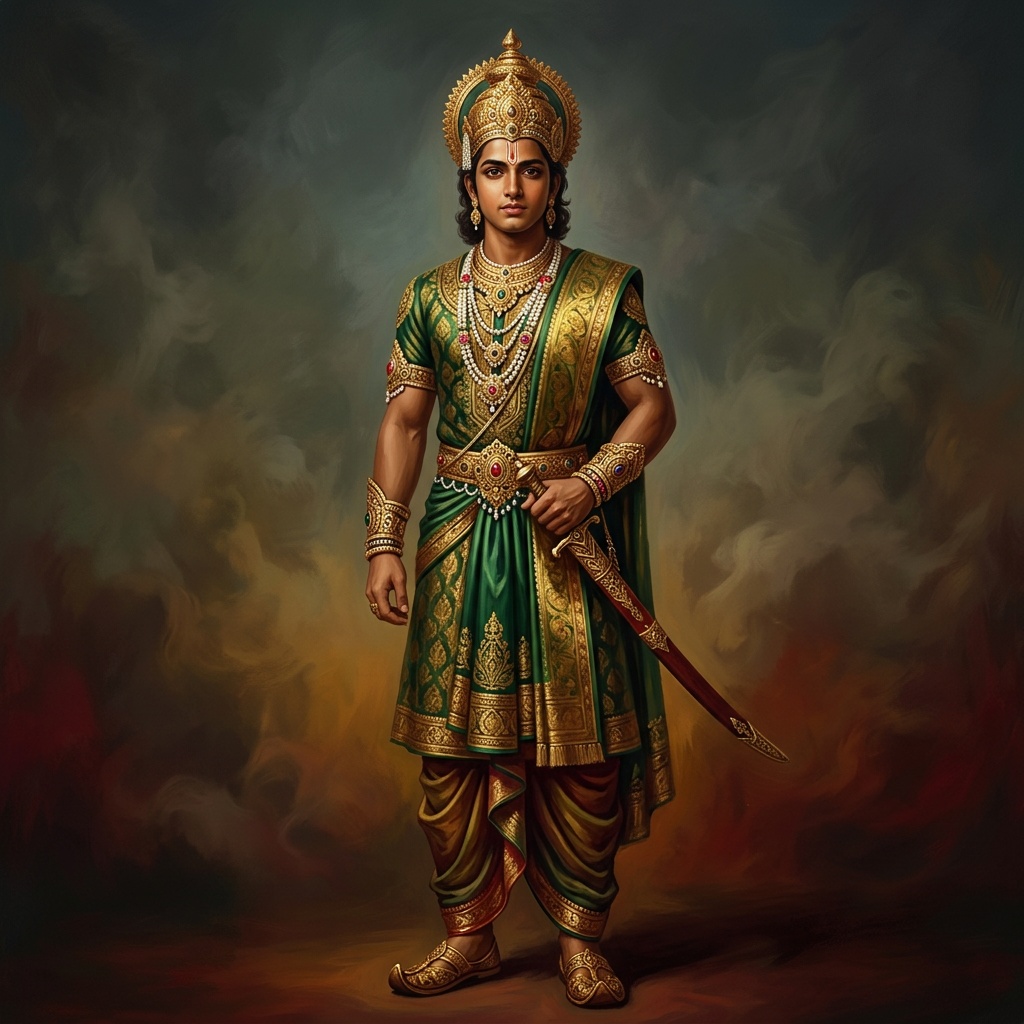
Parikshit
परीक्षितThe Last Kuru King“Saved by Krishna before he was even born.”
Parikshit
The Last Kuru KingParikshit was Abhimanyu's son and the last heir of the Pandava line. While still in his mother Uttara's womb, Ashwatthama launched the Brahmastra to destroy him. Krishna himself entered the womb and shielded the unborn child with his divine energy. Parikshit grew up to be a just and righteous king.
Parikshit's name means "the one who was tested" — because he was tested by death itself before he was even born. Krishna's protection in the womb became his defining story.
Surviving the Brahmastra through Krishna's divine protection
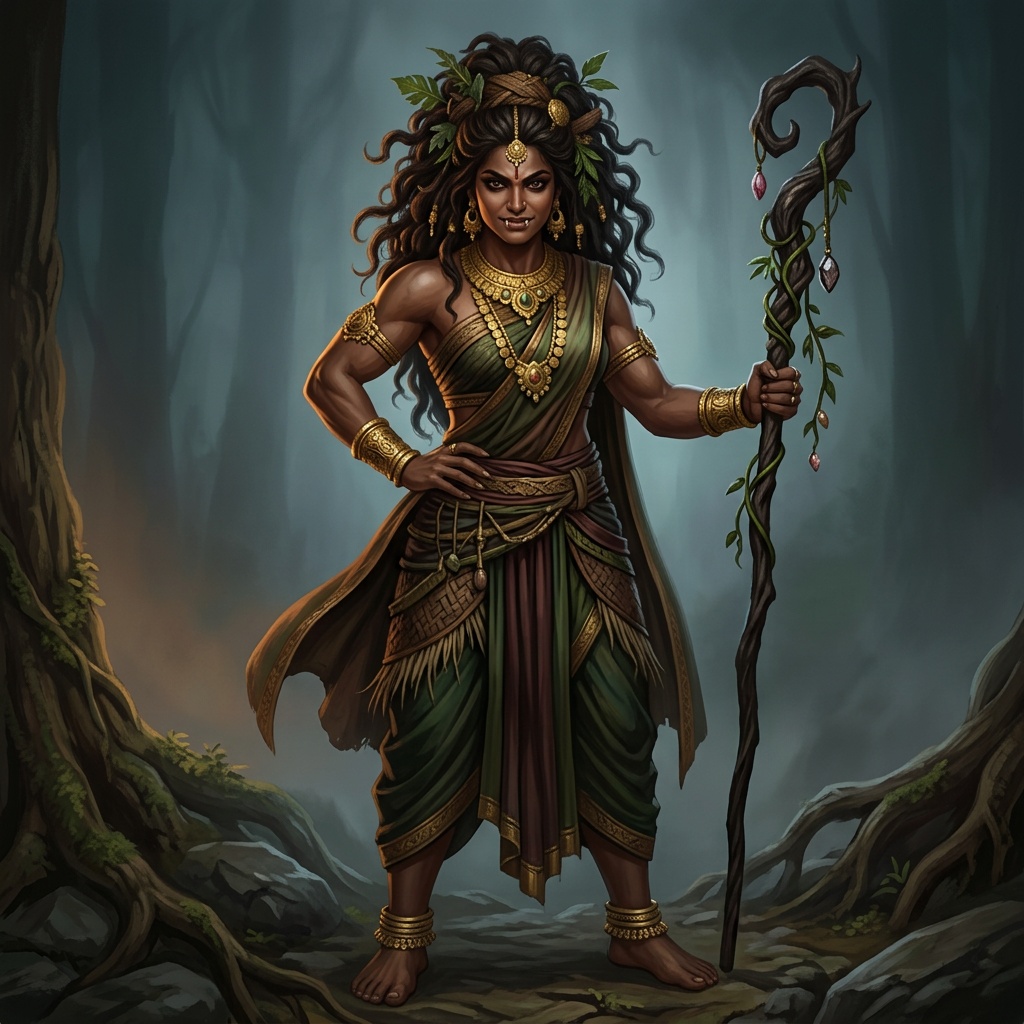
Hidimba
हिडिम्बाThe Rakshasi Who Loved“She was sent to eat the Pandavas — and fell in love with one instead.”
Hidimba
The Rakshasi Who LovedHidimba was a rakshasi sent by her demon brother to kill and eat the Pandavas. Instead, she saw Bhima sleeping and fell in love. She shapeshifted into a beautiful woman and helped Bhima kill her own brother. They married and had a son, Ghatotkacha, who would change the course of the war.
Hidimba is worshipped as a goddess in parts of Himachal Pradesh today. The Hidimba Devi Temple in Manali is one of the most famous temples in India.
Choosing love over loyalty to her demon brother
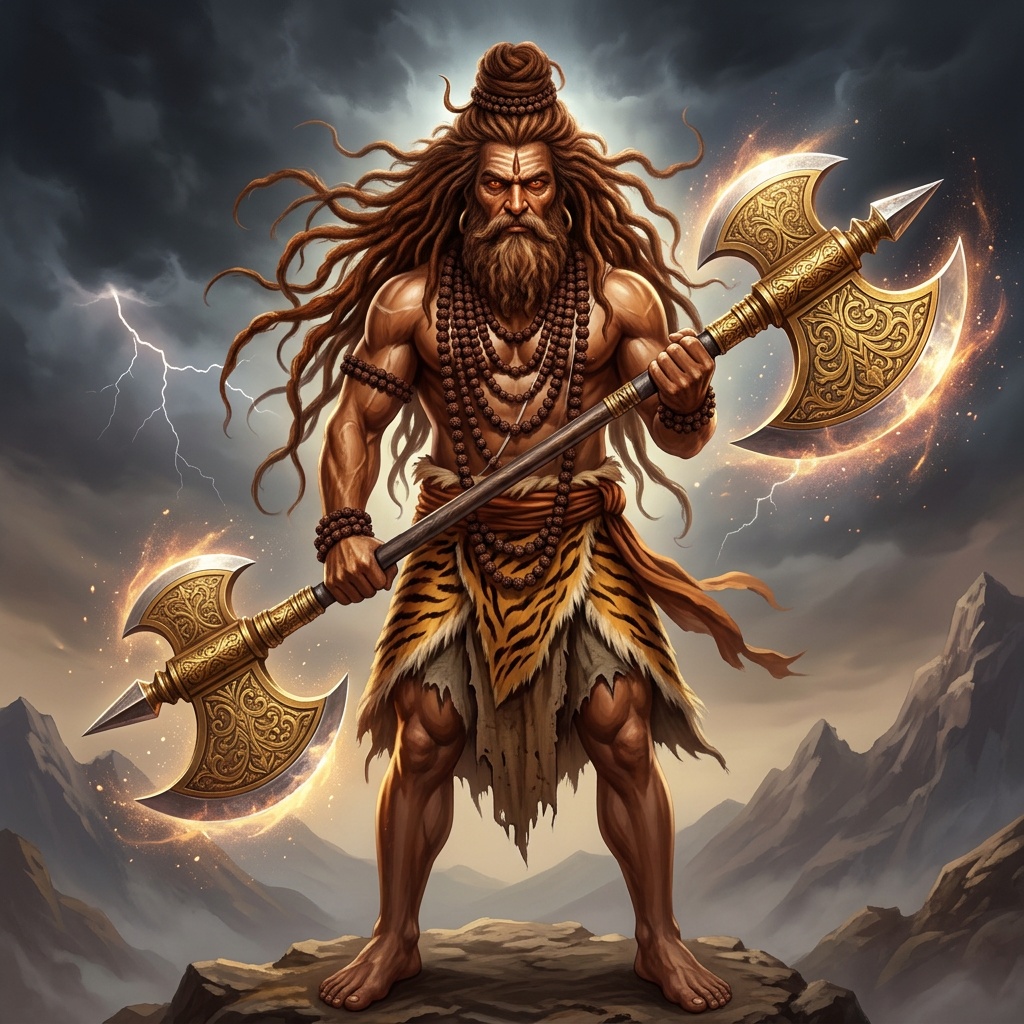
Parashurama
परशुरामThe Warrior-Sage“The brahmin who picked up an axe and changed the world.”
Parashurama
The Warrior-SageParashurama is the sixth avatar of Vishnu — a brahmin born with the fury of a warrior. When a king murdered his father, Parashurama vowed to rid the earth of corrupt kshatriyas. He circled the world 21 times, defeating every unjust warrior king. He was Bhishma's guru, Karna's teacher, and one of the seven immortals.
Parashurama is one of the Chiranjivi (seven immortals) — he is believed to still be alive, living in meditation. He will emerge again at the end of this age to train the final avatar of Vishnu.
Circling the world 21 times, defeating every corrupt warrior-king
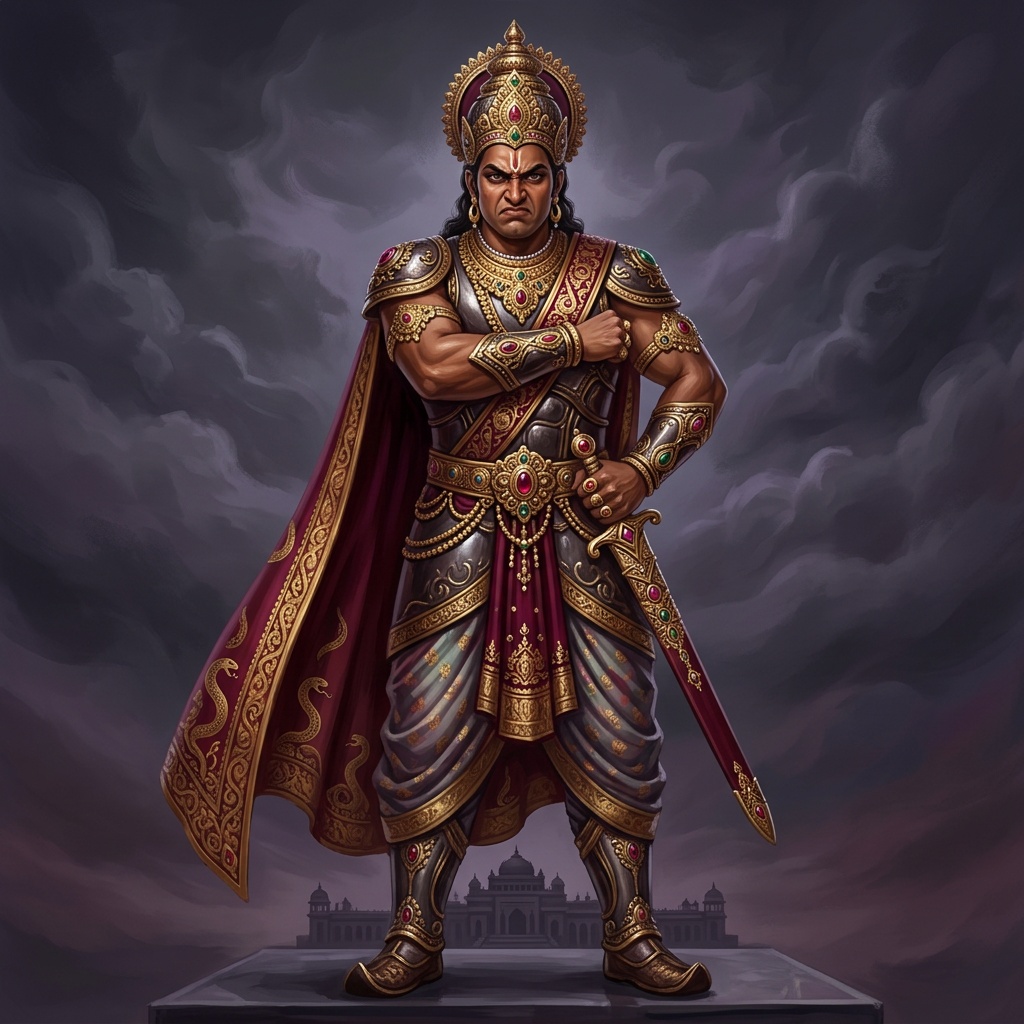
Shishupala
शिशुपालThe Hundred Insults“Krishna gave him a hundred chances. He wasted every single one.”
Shishupala
The Hundred InsultsShishupala was Krishna's cousin who was born with three eyes and four arms. A prophecy said the person who placed him on their lap would one day kill him — and that person was baby Krishna. Krishna promised to forgive 100 insults. At Yudhishthira's rajasuya, Shishupala hurled his 101st — and the Sudarshana Chakra ended him.
When baby Krishna placed Shishupala on his lap, the extra eye and arms disappeared. His mother begged Krishna for mercy, and Krishna agreed to forgive exactly 100 offenses — not one more.
Insulting Krishna publicly — 101 times
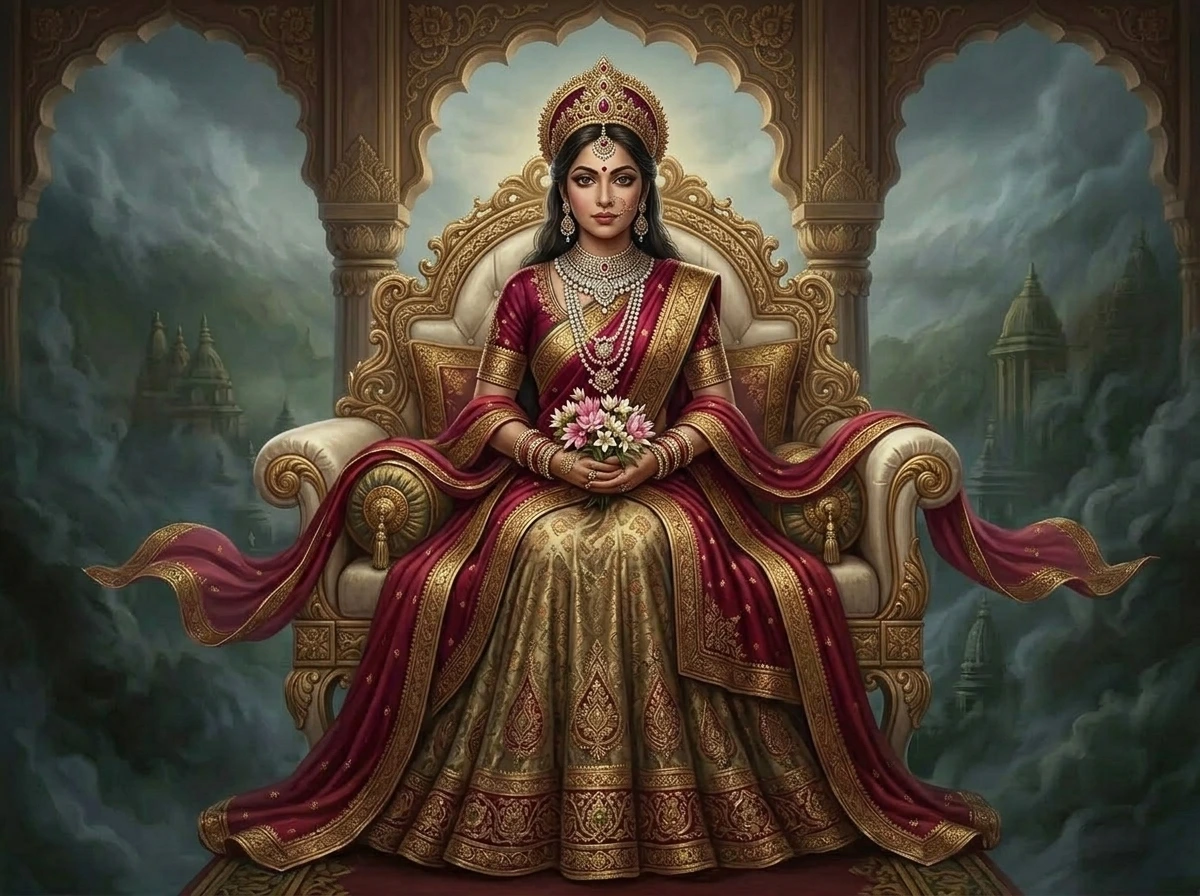
Rukmini
रुक्मिणीThe Queen Who Wrote Her Own Destiny“She wrote one letter to Krishna — and he rode across kingdoms to answer it.”
Rukmini
The Queen Who Wrote Her Own DestinyWhen Rukmini's brother arranged her marriage to Shishupala against her will, she secretly sent a letter to Krishna declaring her love and begging him to save her. Krishna rode to Vidarbha the night before the wedding, and Rukmini walked out of the temple and climbed into his chariot herself. She became his principal queen.
Rukmini's letter to Krishna is one of the most famous love letters in Indian literature. She wrote: "If I cannot have you, I will end my life" — and Krishna dropped everything to come for her.
Writing the letter that brought Krishna racing across kingdoms
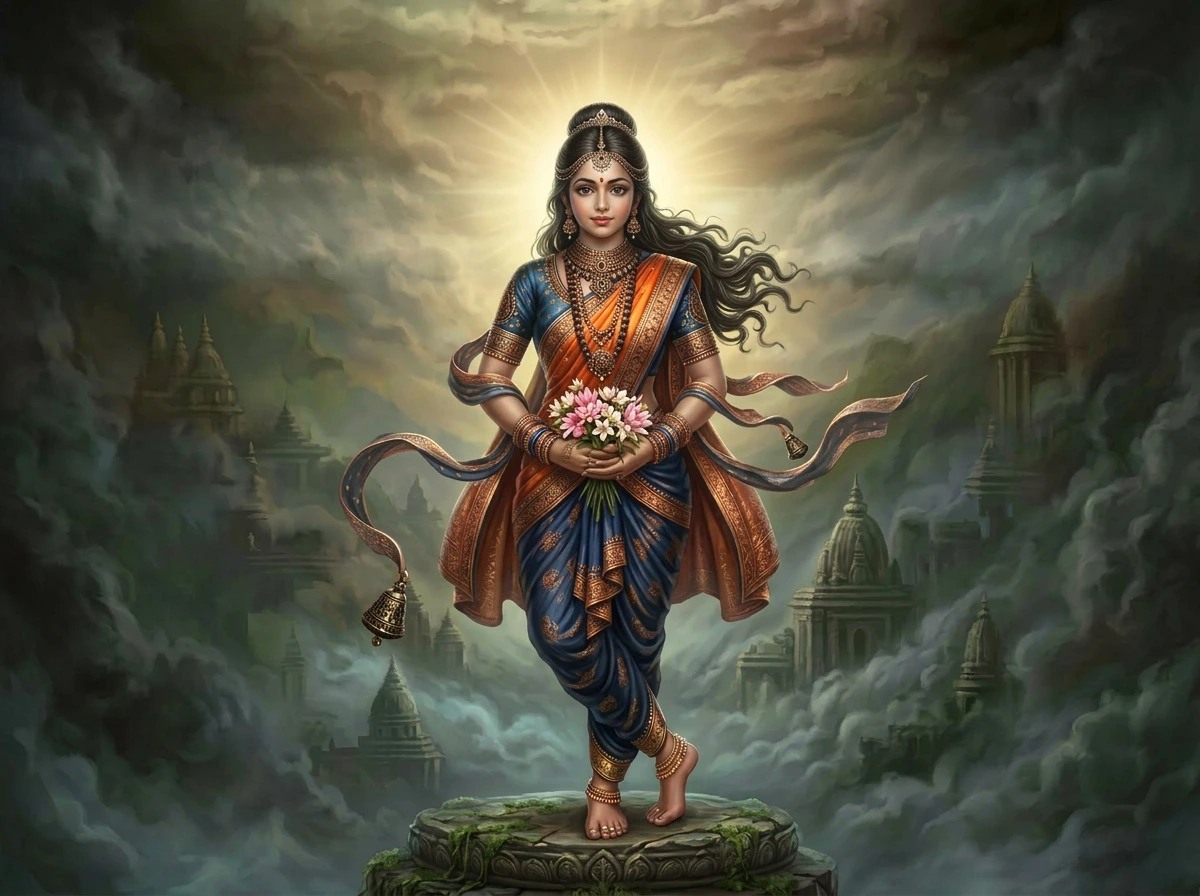
Radha
राधाराधिकाThe Heart of Vrindavan“Her love for Krishna was so pure it became a form of worship.”
Radha
The Heart of VrindavanRadha was the gopi who loved Krishna with such intensity that their bond transcended ordinary love — it became the highest form of devotion. When Krishna left Vrindavan, Radha stayed behind, turning her separation into an eternal spiritual fire. Their love story is the foundation of bhakti poetry.
In many temples, Radha's name is spoken before Krishna's — "Radhe Krishna" not "Krishna Radhe." Her devotion is considered greater than even God himself.
Rasa Lila — the divine dance with Krishna under the moonlit skies of Vrindavan
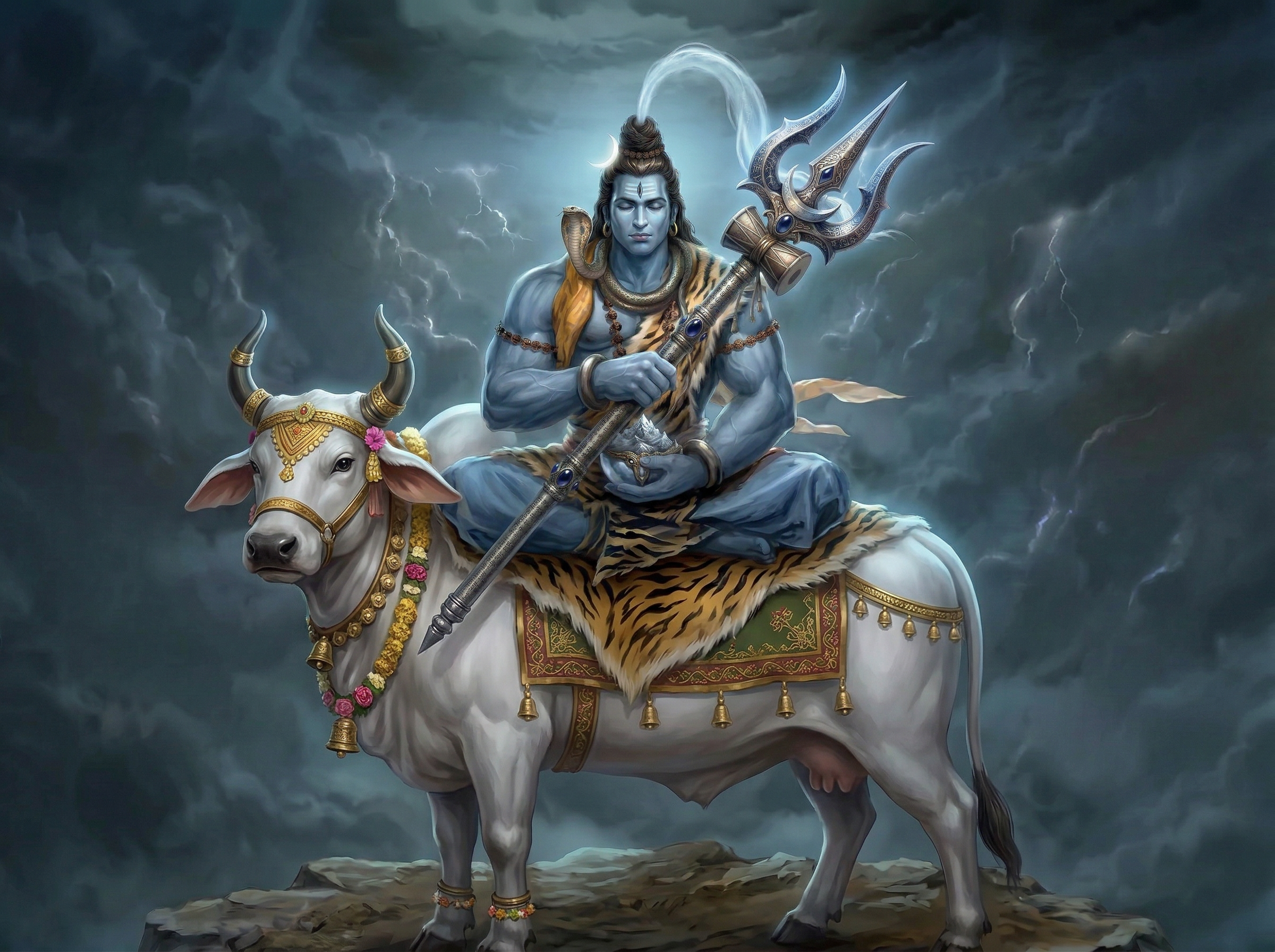
Shiva
शिवमहादेवThe Destroyer and Dancer“The god who meditates on mountaintops and dances the universe into existence.”
Shiva
The Destroyer and DancerShiva is the Destroyer in the Hindu trinity — but destruction in his case means clearing away the old to make room for the new. He lives on Mount Kailash, smeared in ash, with a cobra around his neck and the crescent moon in his matted hair. When he opens his third eye, worlds end. When he dances the Tandava, worlds begin.
The river Ganga flows from Shiva's hair. When Bhagiratha brought Ganga down from heaven, her force would have destroyed the earth — so Shiva caught her in his locks and let her trickle out gently.
Tandava — the cosmic dance that creates and destroys universes
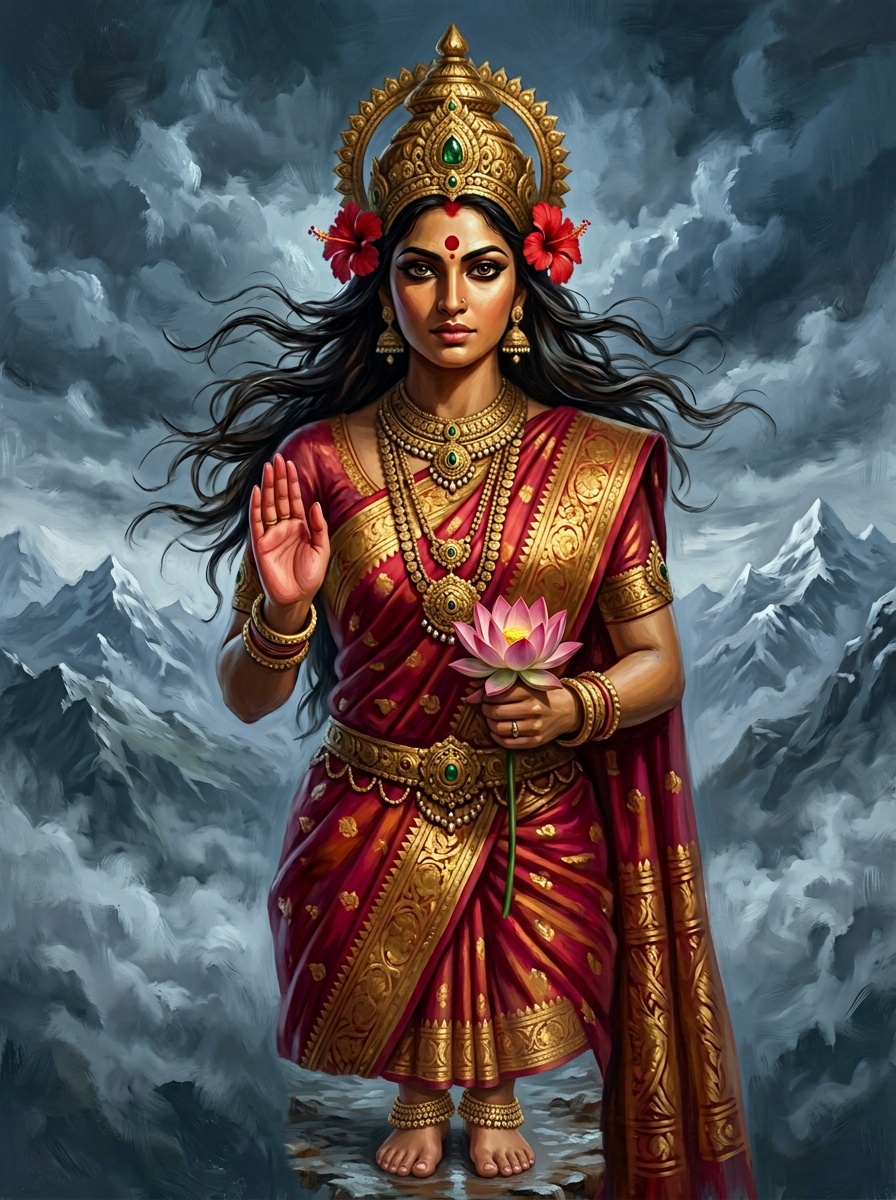
Parvati
पार्वतीगौरीThe Mountain's Daughter“She melted the heart of the god who had frozen himself in meditation.”
Parvati
The Mountain's DaughterWhen Shiva withdrew from the world after Sati's death, the universe needed him back. Parvati, daughter of the Himalayas, performed such intense penance that even the unshakeable Shiva was moved. She didn't just win his love — she completed him. Together they are the balance of power and compassion.
Parvati created Ganesha from sandalwood paste and her own breath. When Shiva accidentally beheaded him, Parvati's grief was so powerful that it threatened to unmake creation itself.
Penance so fierce that it drew Shiva out of eternal meditation
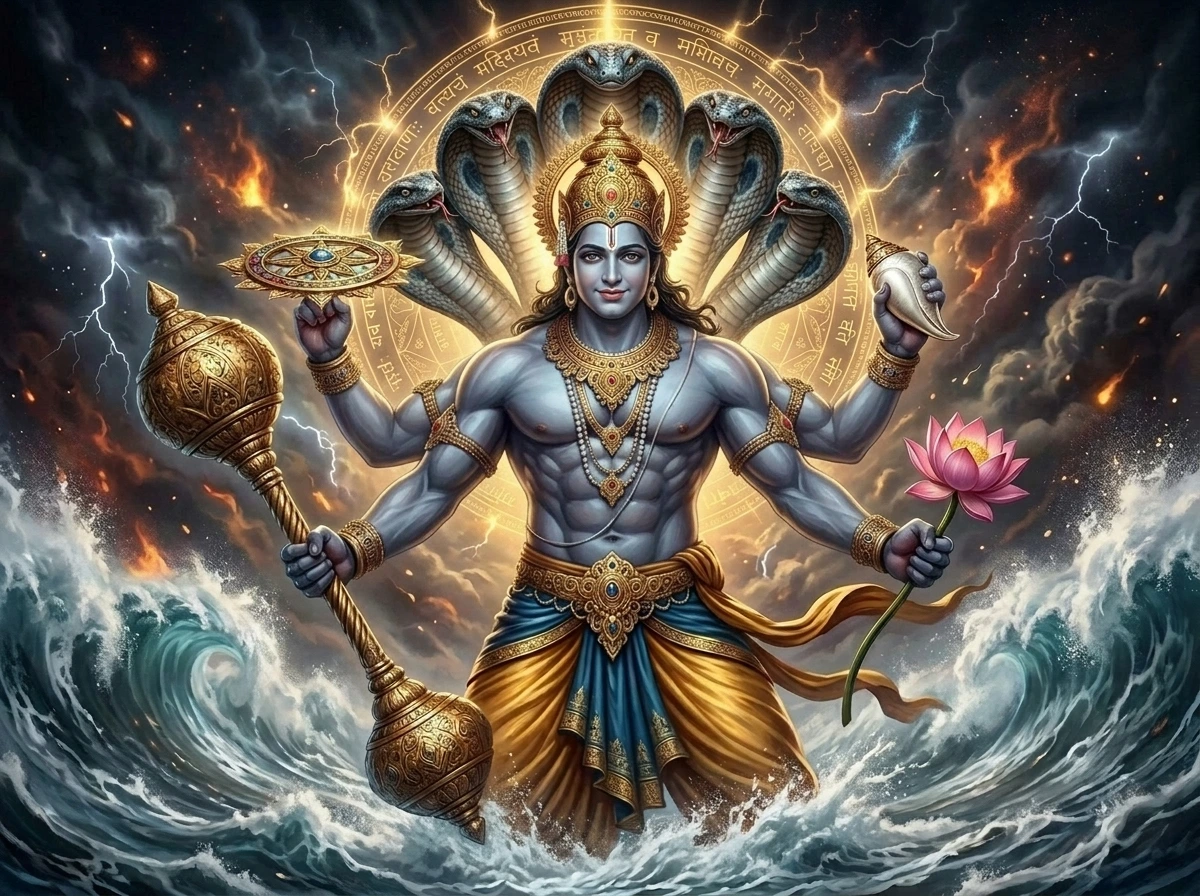
Vishnu
विष्णुनारायणThe Preserver of Worlds“Whenever the world is in danger, he comes — in whatever form is needed.”
Vishnu
The Preserver of WorldsVishnu is the Preserver in the Hindu trinity. He reclines on the cosmic serpent Shesha, dreaming the universe into existence. Whenever evil threatens to overwhelm the world, he descends as an avatar — Rama, Krishna, Narasimha, Vamana — taking exactly the form needed to restore balance.
Vishnu has ten avatars (Dashavatara) that mirror the theory of evolution: fish, tortoise, boar, half-man half-lion, dwarf, and then progressively more advanced human forms.
Descending as an avatar — becoming exactly what the universe needs to survive
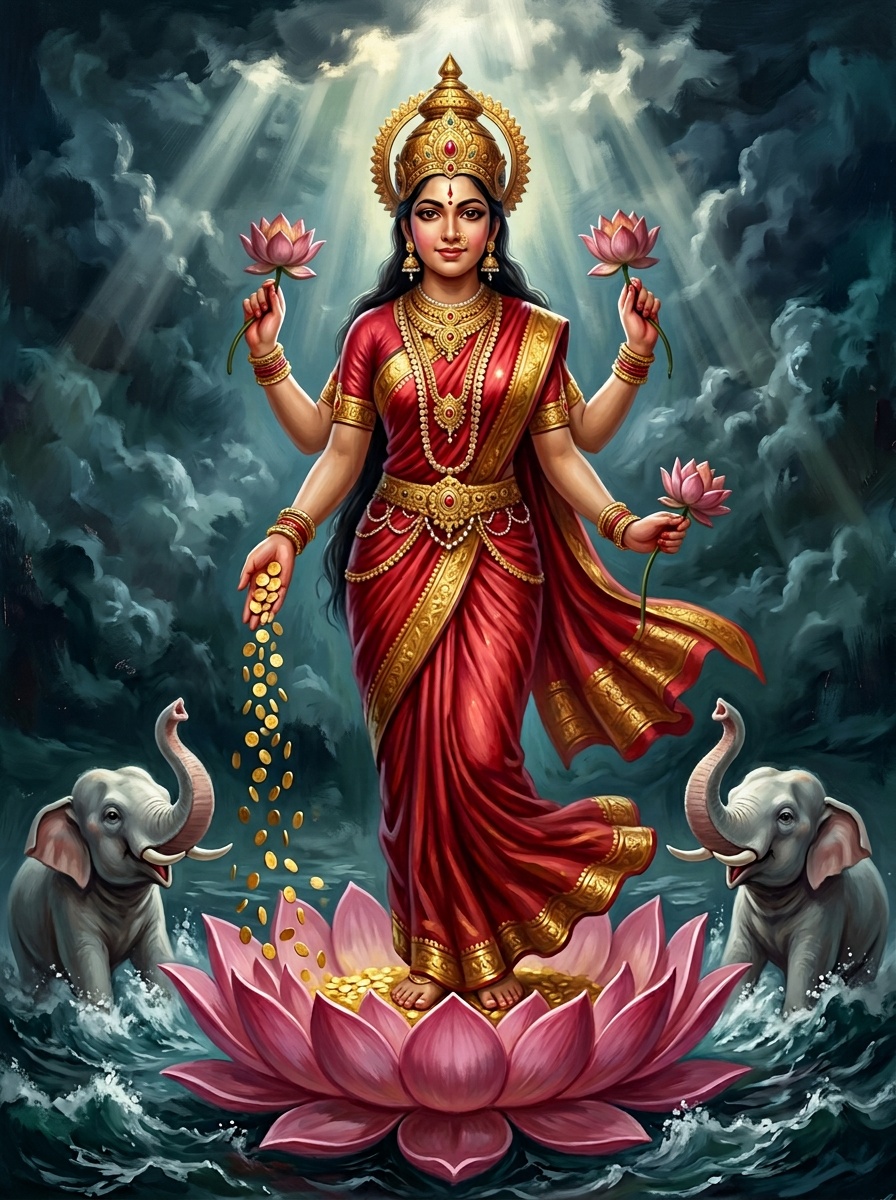
Lakshmi
लक्ष्मीमहालक्ष्मीThe Goddess of Fortune“Where she steps, prosperity follows. Where she leaves, kingdoms crumble.”
Lakshmi
The Goddess of FortuneLakshmi emerged from the churning of the cosmic ocean, standing on a lotus flower, so beautiful that every god and demon wanted her. She chose Vishnu — and together they maintain the balance of the universe. She is not just wealth — she is the fortune that comes from righteous living.
During Diwali, people light lamps and open their doors because Lakshmi is said to visit every clean, well-lit home on that night. A dark or dirty home means she passes by.
Showering gold coins from her hands — prosperity follows devotion
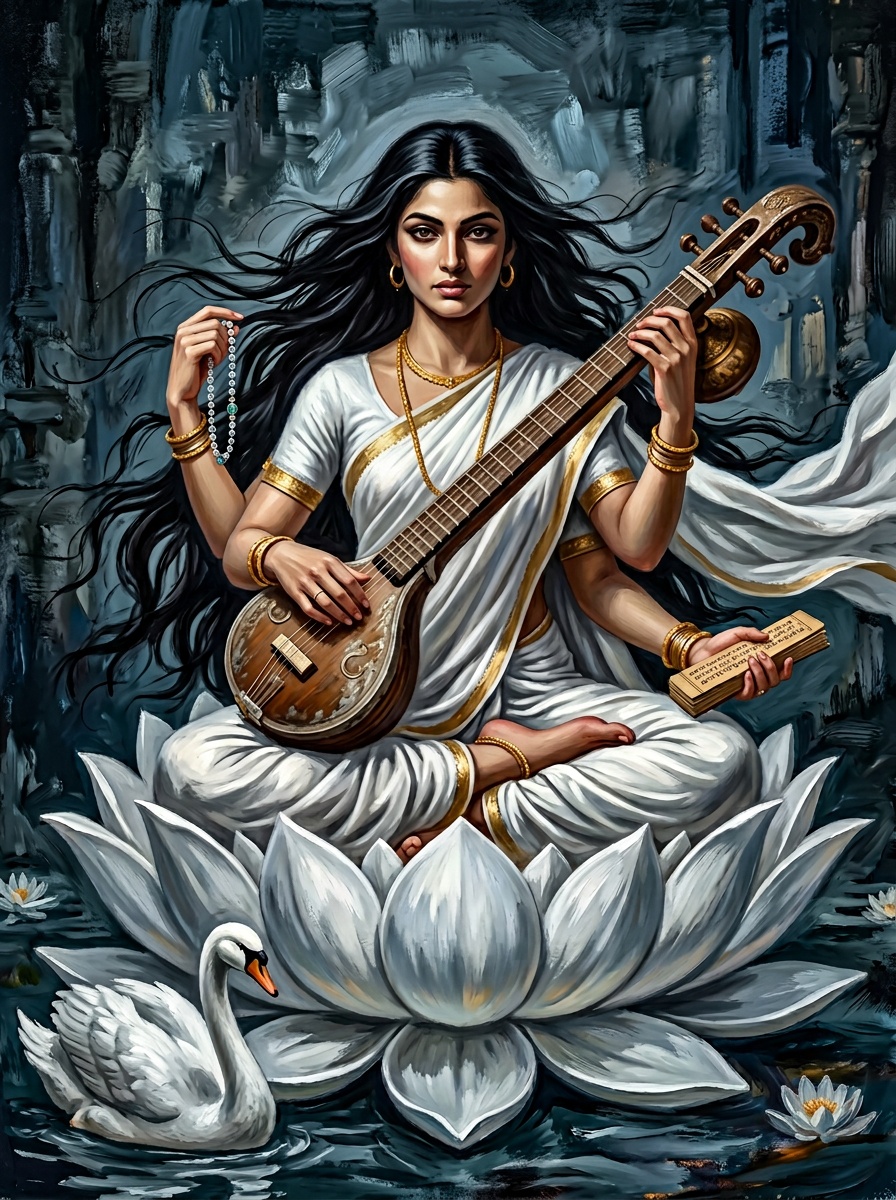
Saraswati
सरस्वतीThe Goddess of Knowledge“She doesn't give you answers — she gives you the ability to find them.”
Saraswati
The Goddess of KnowledgeSaraswati is the goddess of knowledge, music, art, and learning. Unlike the flashy gold of Lakshmi, Saraswati wears simple white, carries a veena, and sits by a flowing river. She represents the truth that real power comes from what you know, not what you own.
On Saraswati Puja day, students place their books and instruments at her feet and don't study at all — because that day belongs to the goddess of learning herself.
Playing the veena — the music that organizes chaos into knowledge
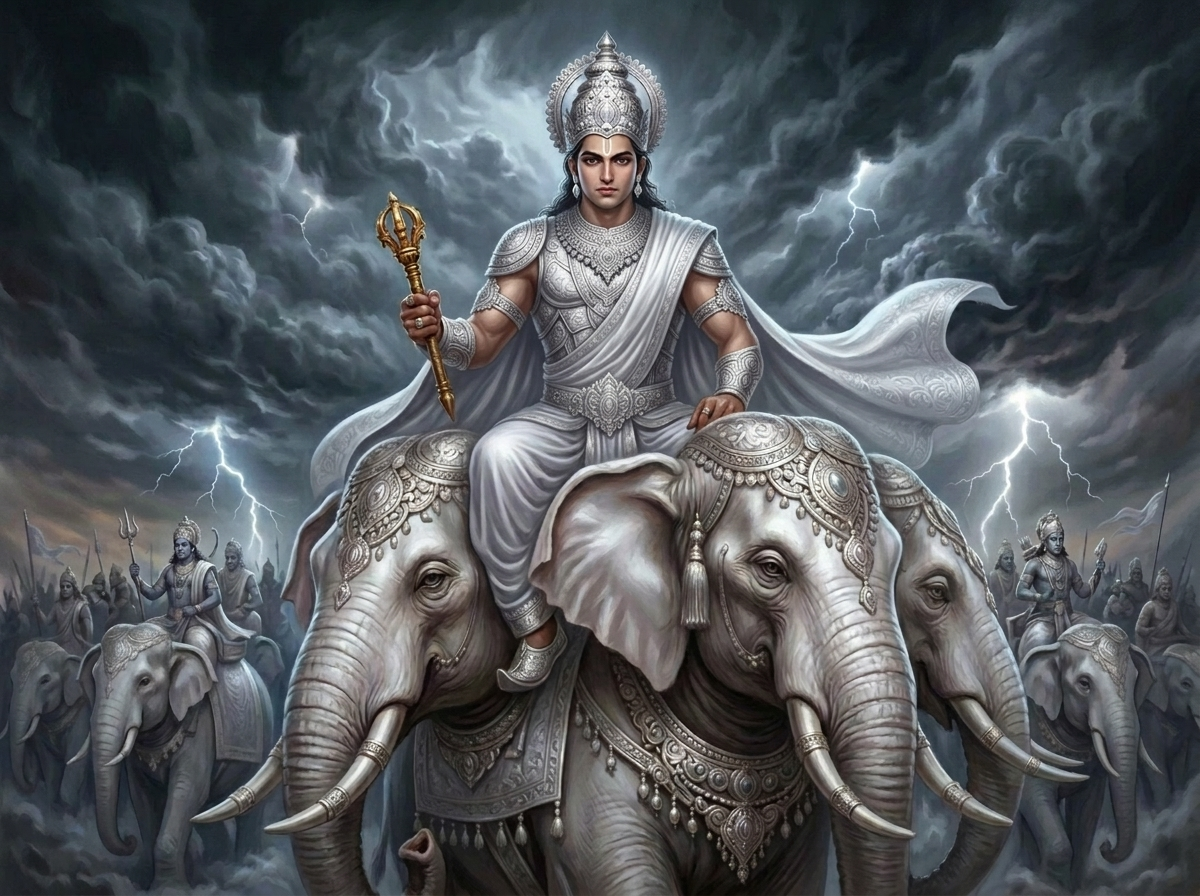
Indra
इन्द्रदेवराजThe King of Gods“The king of heaven who keeps getting humbled by mortals.”
Indra
The King of GodsIndra rules Svarga (heaven) and commands storms, rain, and lightning. He carries the Vajra thunderbolt and rides Airavata, the four-tusked white elephant. But for all his power, Indra is constantly being outsmarted, outperformed, or humbled — by Krishna, by Karna, by little Prahlad. He's the king who keeps learning.
Krishna once lifted an entire mountain (Govardhan) on his little finger to shield villagers from Indra's angry rainstorm. Indra had to swallow his pride and bow to a child.
Calling down devastating thunderstorms with the Vajra
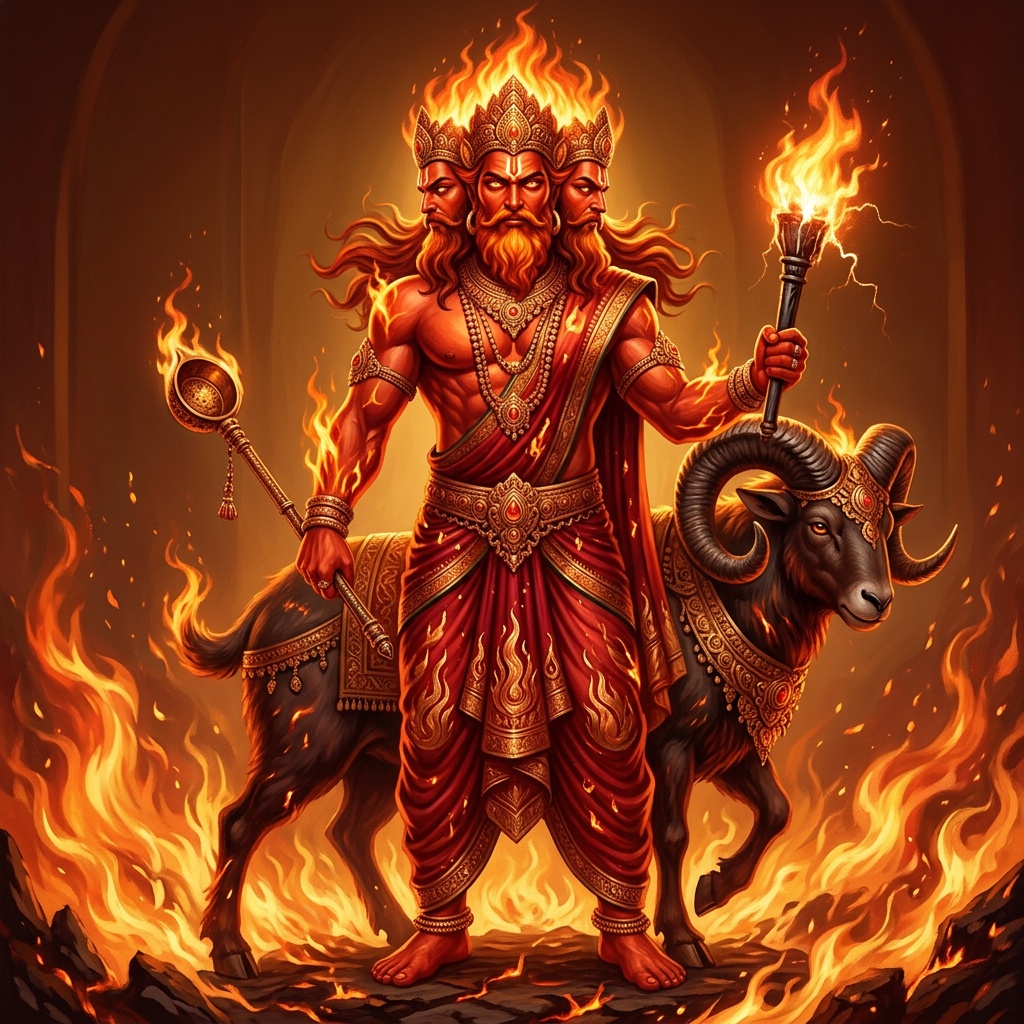
Agni
अग्निThe Fire God“Every prayer passes through his flames to reach the gods.”
Agni
The Fire GodAgni is the god of fire and the messenger between humans and gods. Every offering poured into a sacred fire reaches the gods through Agni. He has two faces — one benevolent that cooks food and warms homes, one destructive that consumes forests and cities. Fire gives life and takes it.
Agni is present at every Hindu wedding — the couple walks around a sacred fire seven times, with Agni as their witness. No Hindu marriage is complete without him.
Consuming offerings and carrying them to the gods in his flames
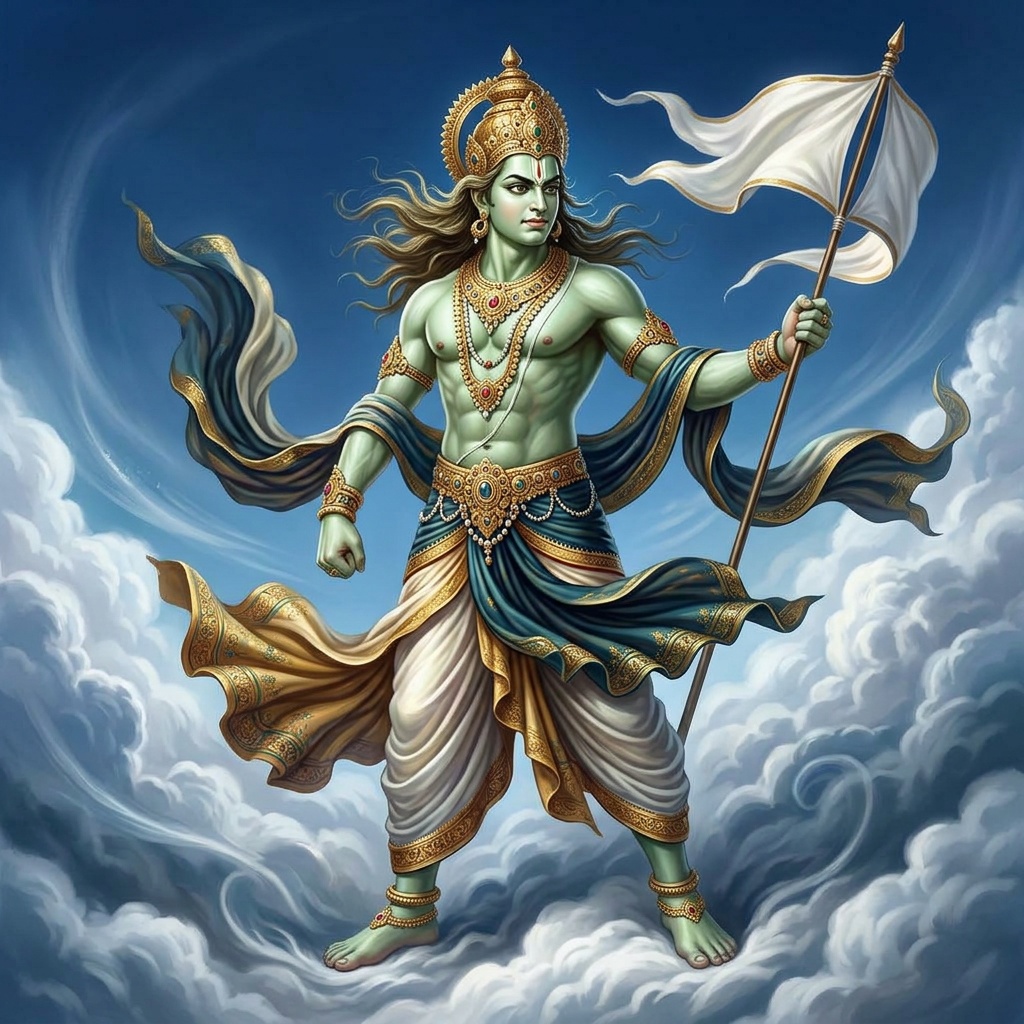
Vayu
वायुThe Wind God“Invisible, unstoppable, everywhere at once.”
Vayu
The Wind GodVayu is the god of wind, the breath of the universe, and father of both Hanuman and Bhima. He is invisible but his presence is felt everywhere. He carries fragrance, sound, and the life-breath (prana) of every living creature. Without Vayu, nothing breathes.
When Vayu got angry at the gods for insulting him, he stopped blowing entirely. Every creature in the universe began suffocating until the gods apologized and begged him to return.
Becoming a hurricane — or a gentle breeze — at will
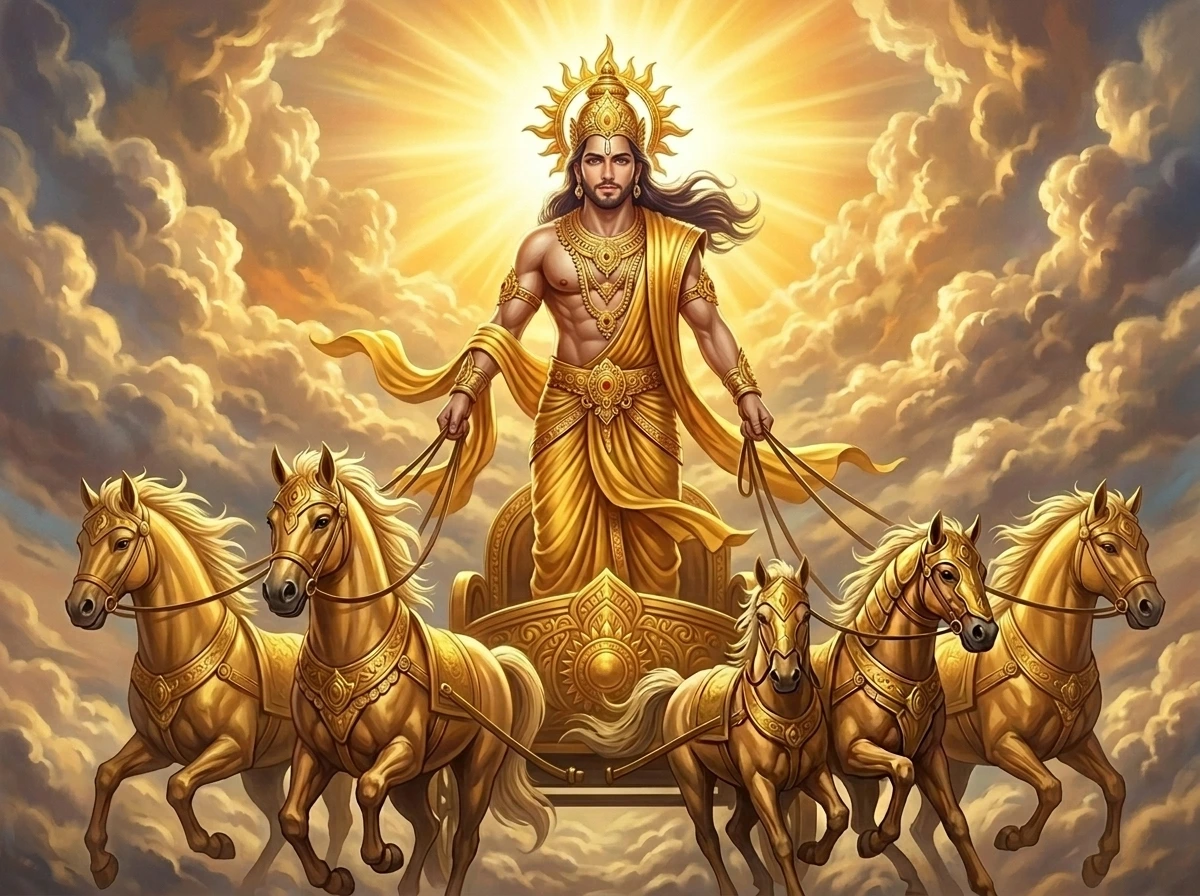
Surya
सूर्यआदित्यThe Sun God“He rides across the sky every day — and Karna was his son.”
Surya
The Sun GodSurya drives his golden chariot across the sky from east to west every day, pulled by seven horses representing the seven colors of light. He is the father of Karna, the god who watches everything, and the source of all energy on earth. Every sunrise is his gift.
Hanuman tried to eat the sun as a baby, thinking it was a ripe mango. Surya was so amused that he later became Hanuman's teacher and taught him all the scriptures.
Riding across the entire sky every day without fail — the most reliable being in the universe
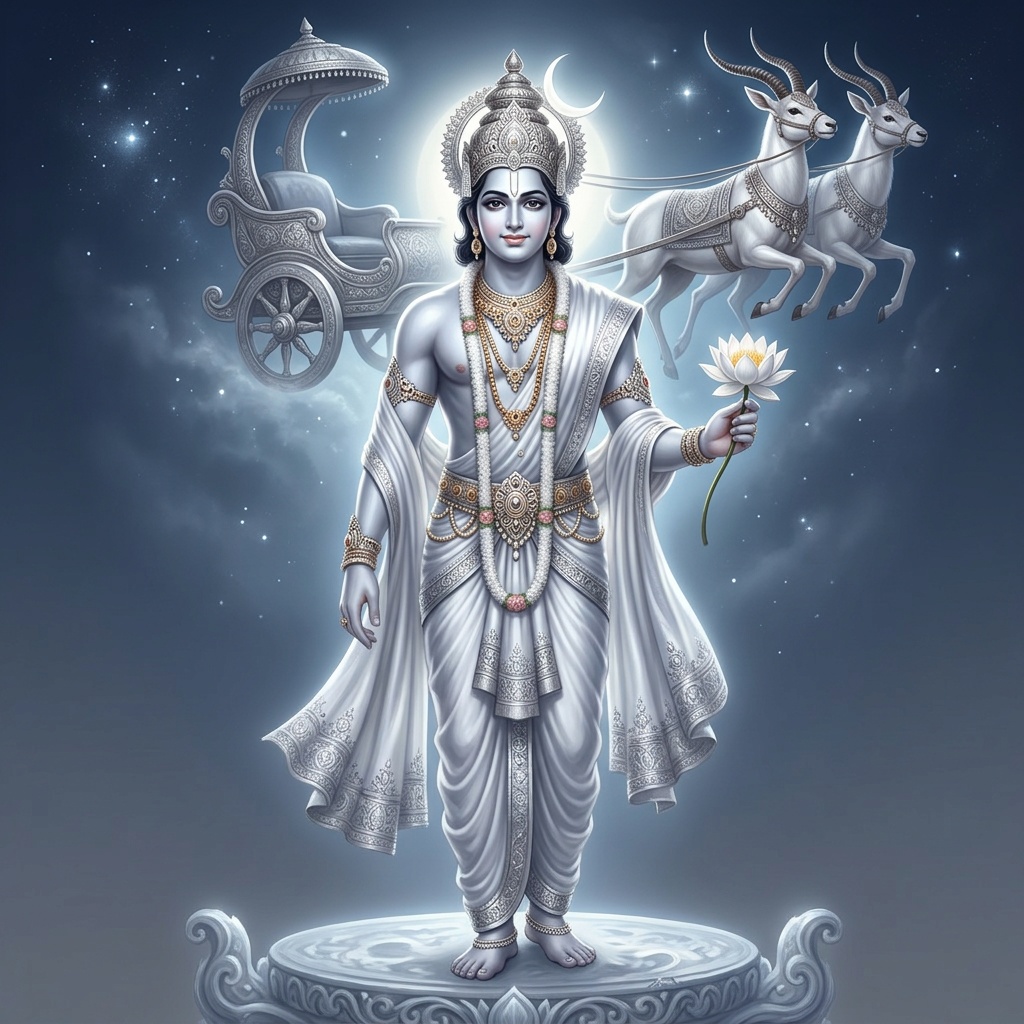
Chandra
चन्द्रThe Moon God“He waxes and wanes because of a curse — and lights up the night anyway.”
Chandra
The Moon GodChandra is the moon god who rides a chariot pulled by white horses across the night sky. He was cursed to wax and wane because he favoured one wife over his other twenty-six. Shiva placed him in his hair to save him from fading entirely. His cool light calms what the sun's heat agitates.
Chandra had 27 wives — the 27 Nakshatras (star constellations). When he spent all his time with only Rohini, the other 26 complained to their father Daksha, who cursed him to fade away.
Waxing and waning through the month — an eternal cycle of renewal
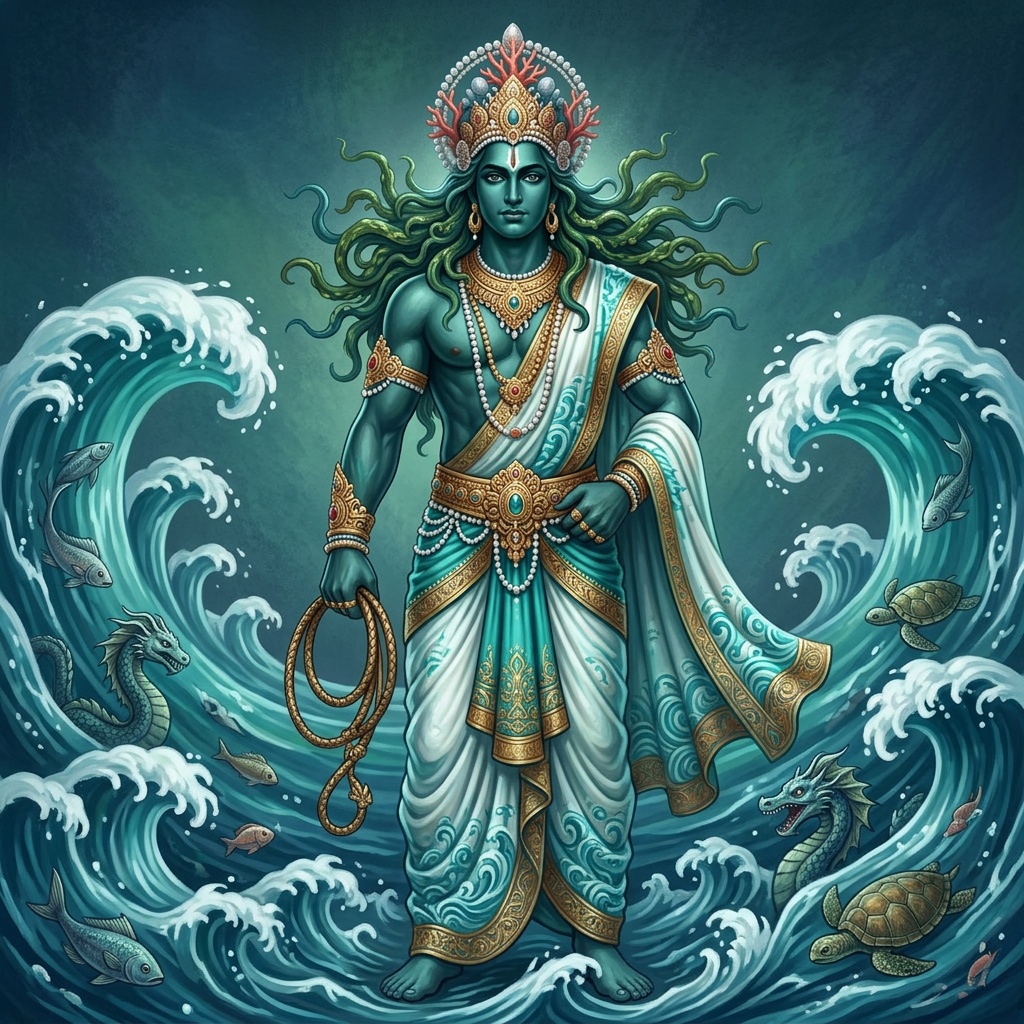
Varuna
वरुणThe Lord of Oceans“He rules everything the eye cannot see beneath the waves.”
Varuna
The Lord of OceansVaruna is the god of the oceans, waters, and cosmic order. When Rama needed to cross the ocean to reach Lanka, he prayed to Varuna for three days. When Varuna didn't respond, Rama raised his bow — and Varuna appeared instantly, parting the waters and helping build the bridge.
Varuna's noose (pasha) never misses its target. He uses it to bind liars and oath-breakers — he is the cosmic enforcer of truth and promises.
Parting the ocean to let Rama's army cross to Lanka
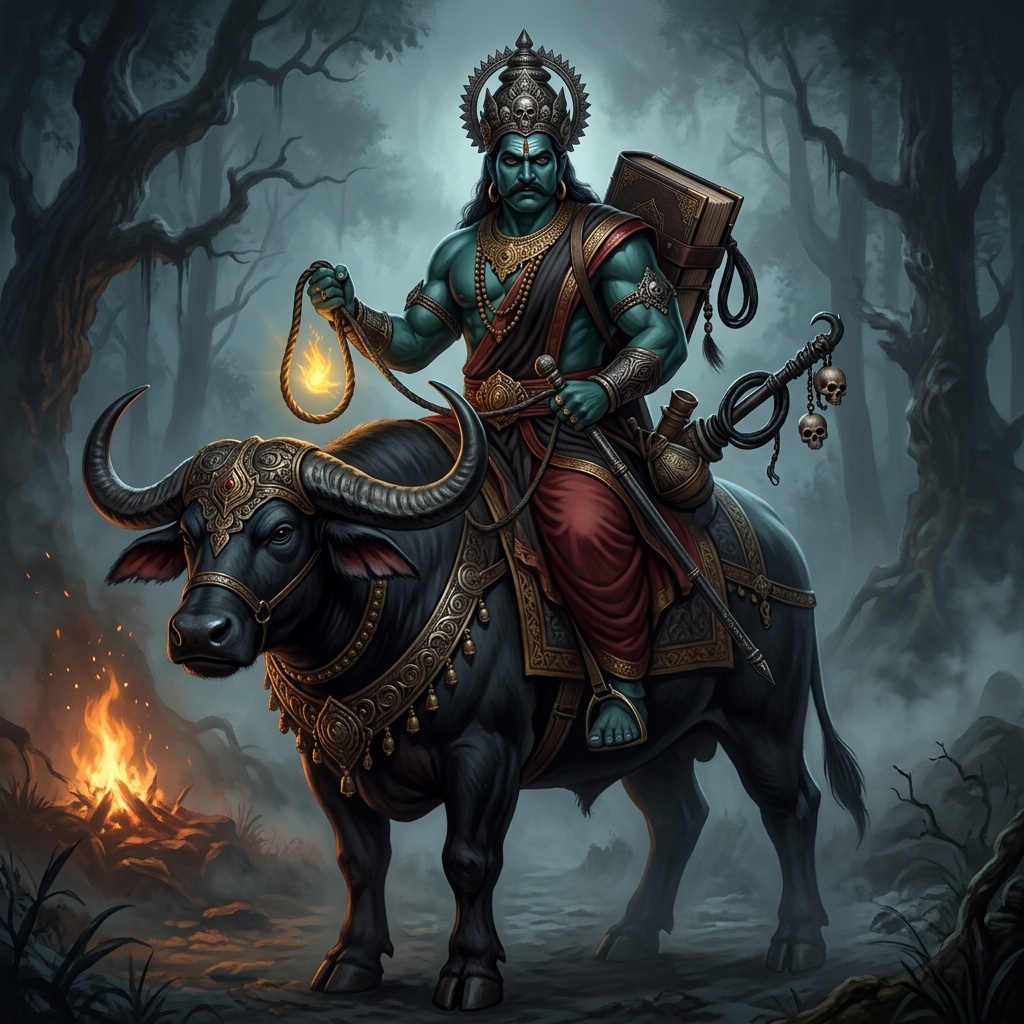
Yama
यमधर्मराजThe God of Death“He is not cruel — he is fair. And fairness is sometimes the hardest thing.”
Yama
The God of DeathYama is the god of death and dharma. He doesn't kill — he collects. His ledger records every soul, and his buffalo carries him without hurry. When Savitri followed him to get her husband back, Yama was so impressed by her devotion and wit that he returned Satyavan's soul — the only time death was reversed.
Yama was the very first being to die in Hindu mythology. He chose death so that others could live, and was then appointed as lord of the dead.
Casting his noose to collect souls — it never misses and cannot be cut
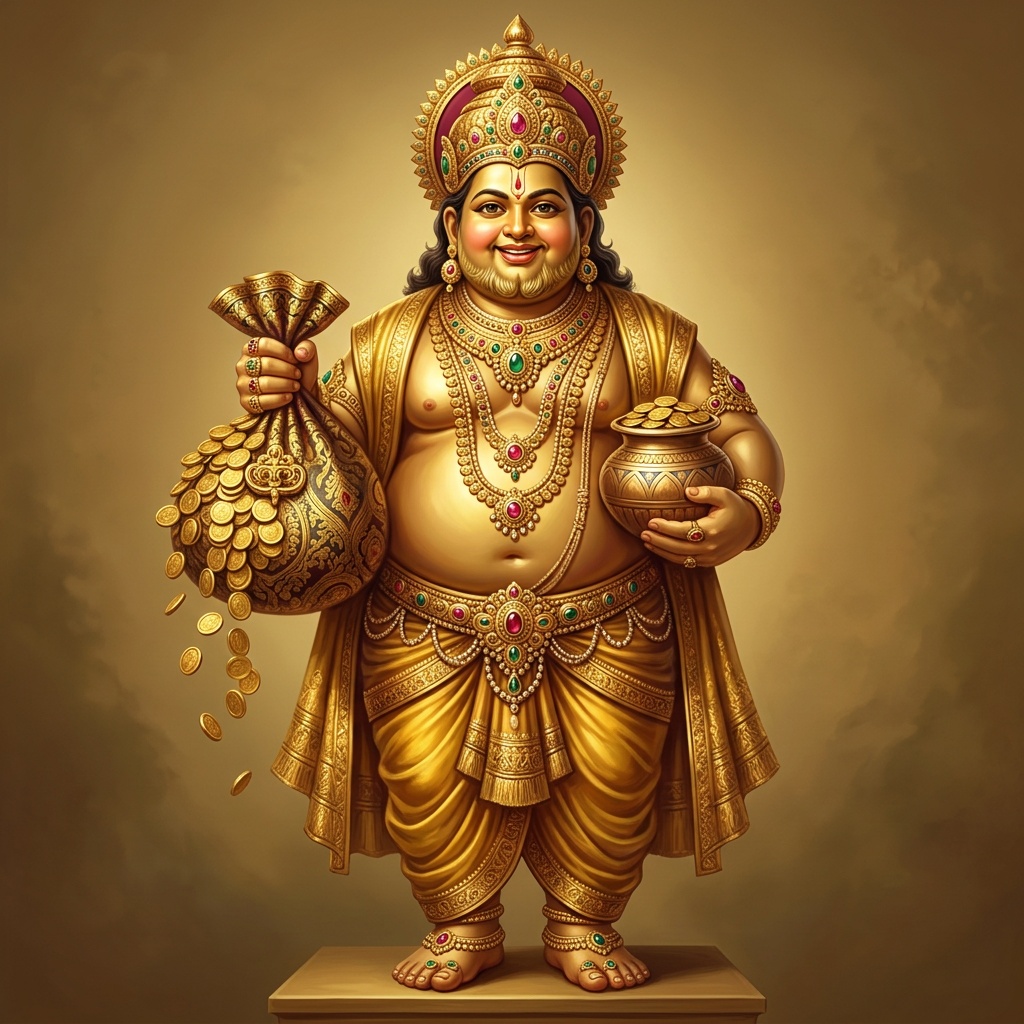
Kubera
कुबेरThe Lord of Wealth“The banker of the gods — even heaven has a treasury.”
Kubera
The Lord of WealthKubera is the god of wealth and the guardian of the north. He was once the king of Lanka before Ravana expelled him. His city Alakapuri is said to be paved with gold and jewels. He is the treasurer of the gods, ensuring that prosperity flows to the deserving.
Kubera's Pushpaka Vimana — the flying chariot — was stolen by Ravana. After the war, Rama used it to fly back to Ayodhya and then returned it to Kubera.
Opening the divine treasury — wealth flows wherever he commands
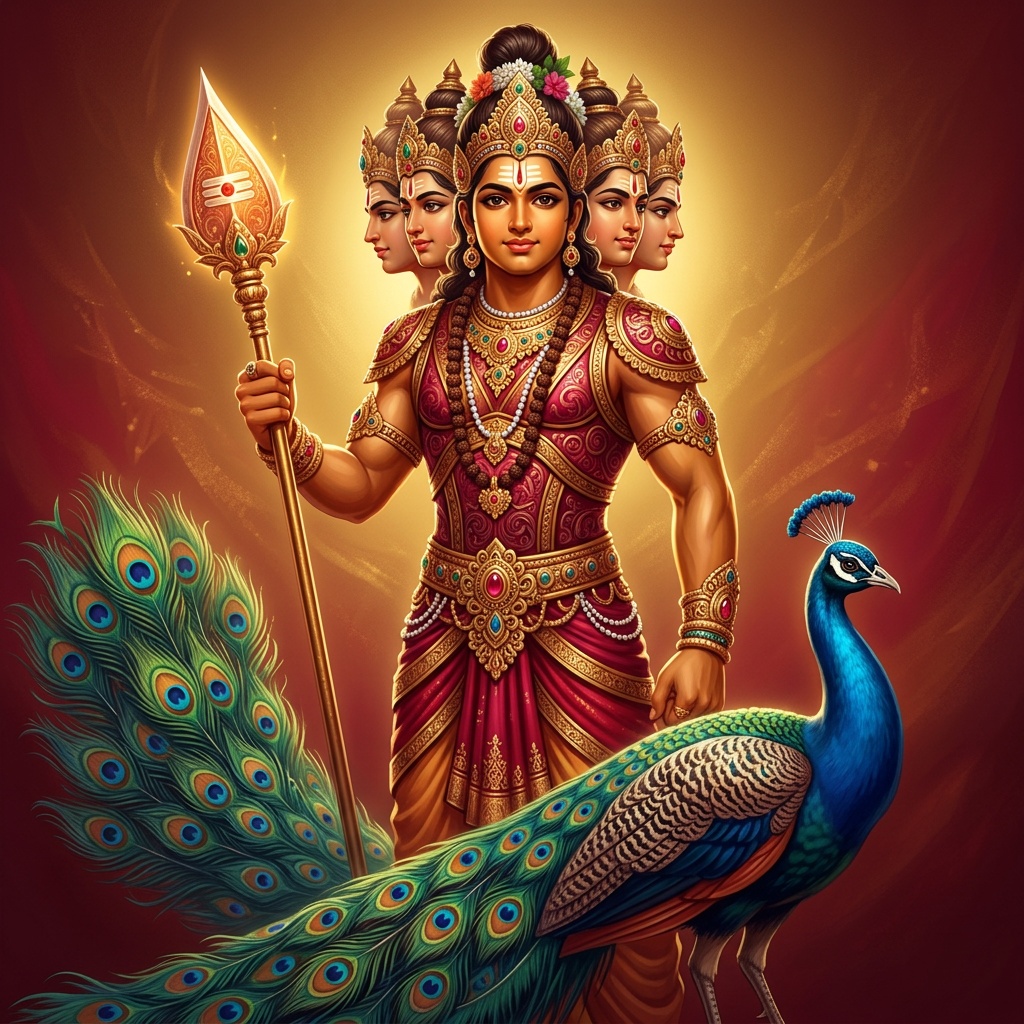
Kartikeya
कार्तिकेयमुरुगनThe Commander of the Gods“Born from Shiva's fire, raised by six mothers, and commander before he could walk.”
Kartikeya
The Commander of the GodsKartikeya was born to defeat the demon Tarakasura, whom no one else could kill. He was raised by the six Krittika stars (giving him six faces) and became the commander-in-chief of the divine armies while still a child. His spear, the Vel, was forged by Parvati's love itself.
Kartikeya has six heads and twelve arms. When his brother Ganesha won a race by circling their parents (representing the universe), Kartikeya was so upset he moved to South India — which is why he's especially worshipped there.
Hurling the Vel — a spear of pure divine energy that shatters any darkness
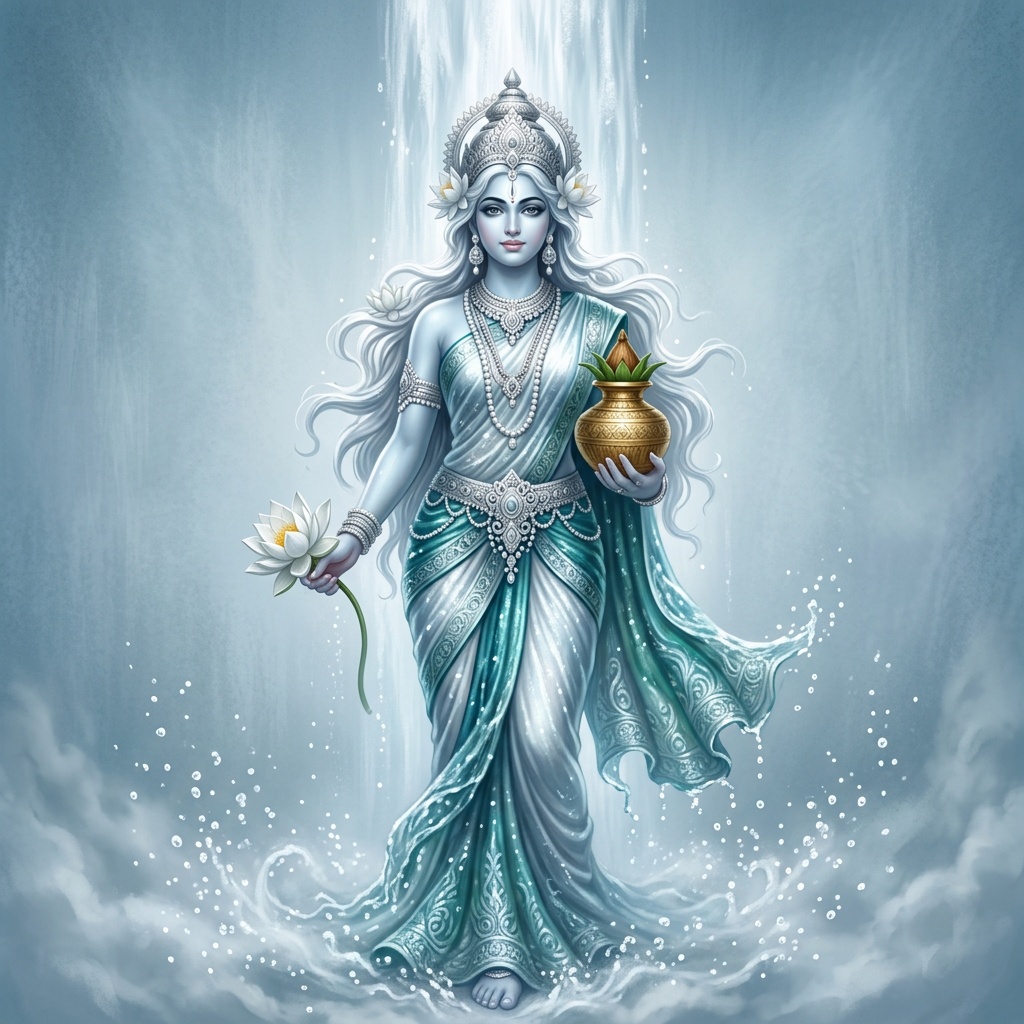
Ganga
गंगाThe River Goddess“She fell from heaven — and Shiva caught her in his hair.”
Ganga
The River GoddessGanga is the goddess who IS the river Ganges. She descended from heaven to purify 60,000 cursed souls, but her force would have shattered the earth. Shiva caught her in his matted hair and released her gently. She also married King Shantanu but drowned seven of their eight sons — because they were cursed gods she was freeing.
Ganga drowned seven of her babies in the river, and Shantanu watched in horror but said nothing because he had promised never to question her. The eighth baby, whom he finally saved, grew up to become Bhishma.
Descending from heaven with enough force to shatter the earth
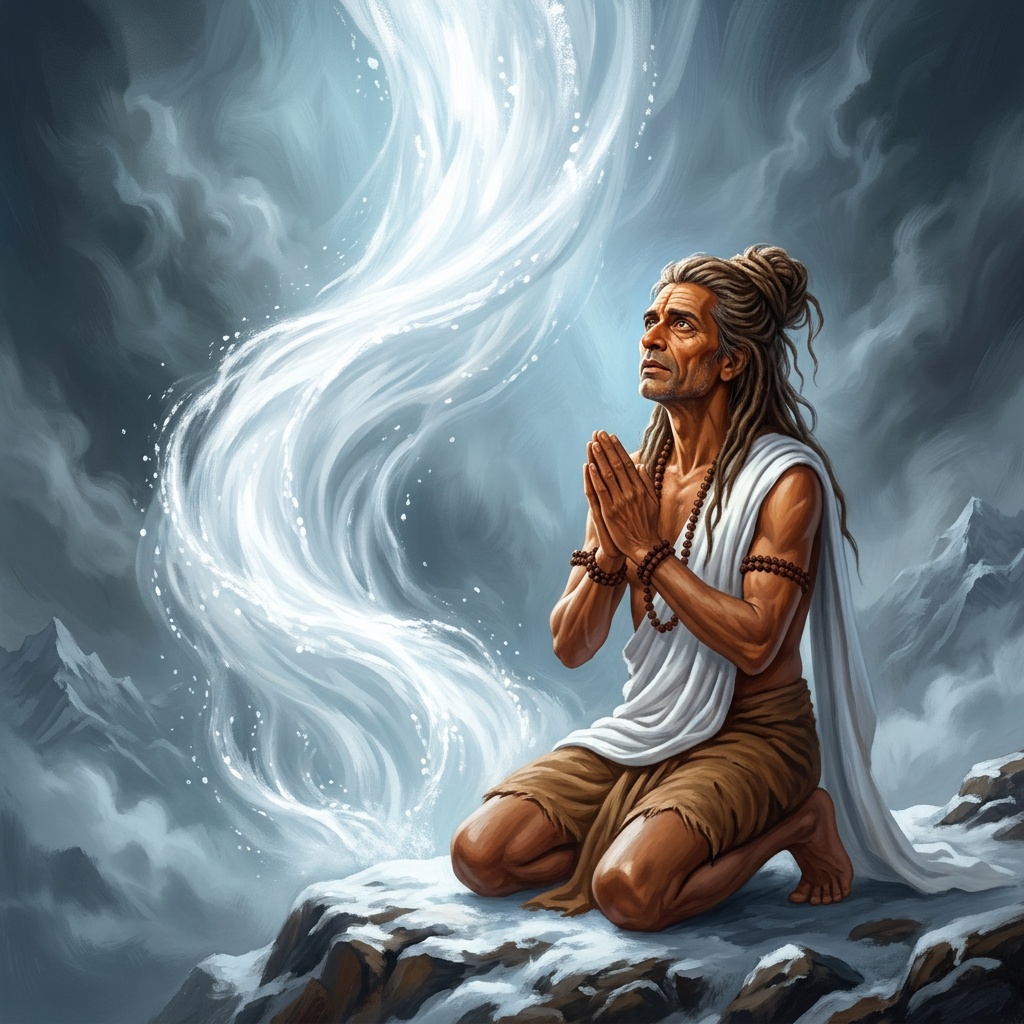
Bhagiratha
भगीरथThe King Who Brought a River“He meditated for centuries to bring a river down from heaven.”
Bhagiratha
The King Who Brought a RiverKing Bhagiratha's 60,000 ancestors were cursed to ash by Sage Kapila. Only the waters of the heavenly Ganga could purify them. Bhagiratha performed severe penance for thousands of years, convinced Ganga to descend, and then convinced Shiva to catch her. The phrase "Bhagirath Prayatna" means an effort of extraordinary persistence.
The word "Bhagirath Prayatna" (Bhagiratha's effort) is used in Hindi today to describe any task that requires superhuman persistence and determination.
Millennia of penance to bring the river Ganga from heaven to earth
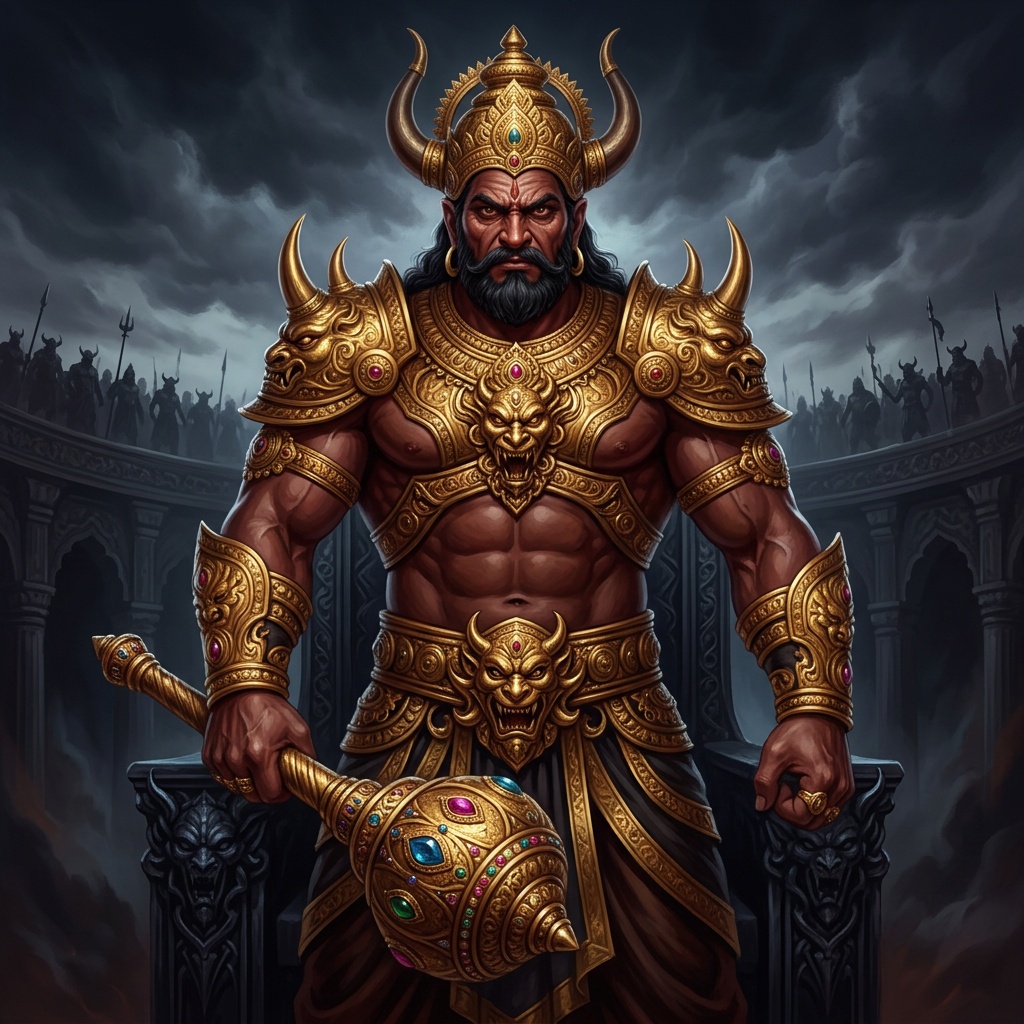
Hiranyakashipu
हिरण्यकशिपुThe Demon Who Demanded Worship“He made the universe worship him — except his own five-year-old son.”
Hiranyakashipu
The Demon Who Demanded WorshipHiranyakashipu performed such fierce penance that Brahma granted him near-invincibility — he could not be killed by man or beast, inside or outside, by day or by night. He declared himself god and demanded all worship. Every being complied — except his tiny son Prahlad, who loved only Vishnu.
Hiranyakashipu tried to kill Prahlad by throwing him off cliffs, feeding him to snakes, trampling him with elephants, and burning him alive. Prahlad survived every single attempt with a smile.
His boon of near-invincibility — the puzzle that only Narasimha could solve
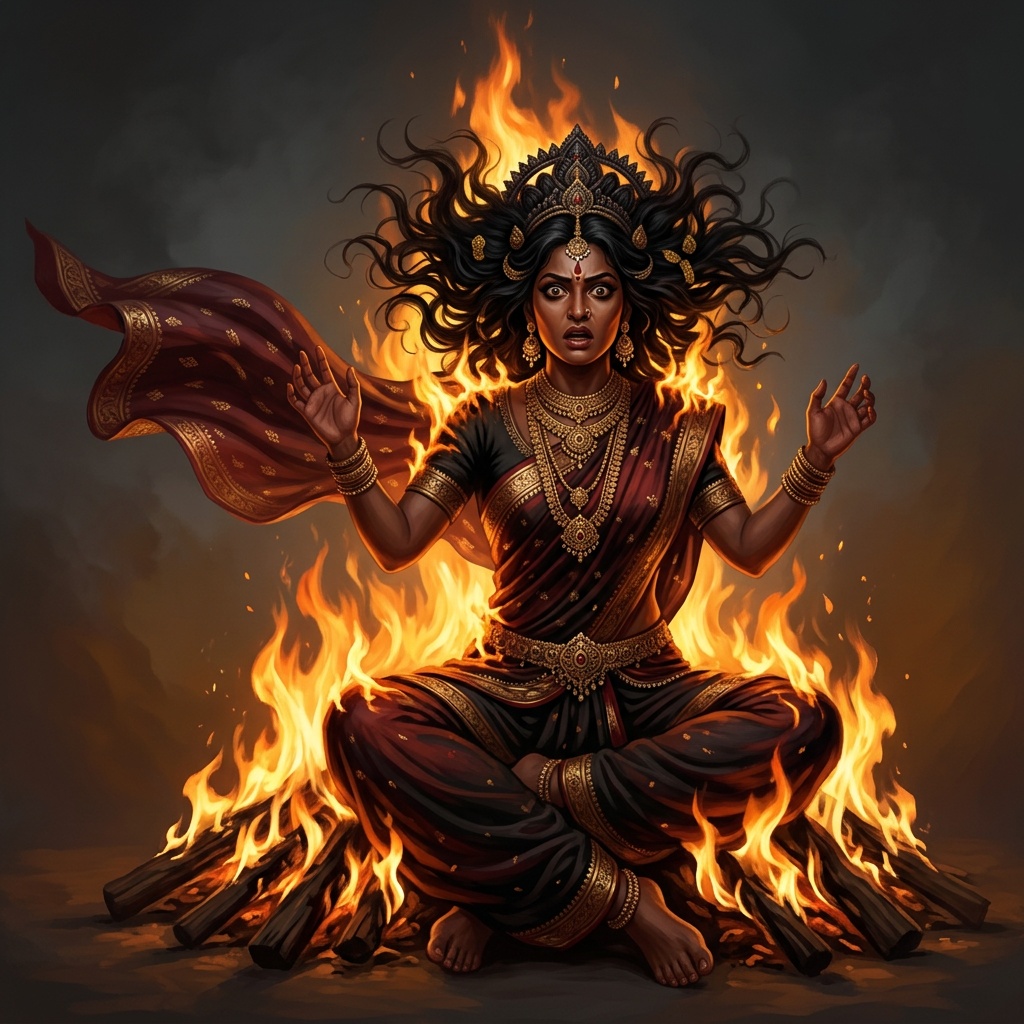
Holika
होलिकाThe Fire-Proof Aunt“She sat in fire with a fireproof cloak — and the cloak chose the child instead.”
Holika
The Fire-Proof AuntHolika was Hiranyakashipu's sister who had a divine cloak that made her immune to fire. The plan was simple — sit in a bonfire with young Prahlad on her lap and burn him alive while she stayed safe. But divine justice intervened: the cloak flew off Holika and wrapped around Prahlad. She burned; he survived.
The festival of Holi is named after Holika. Every year, people burn a bonfire on Holika Dahan night to celebrate good's triumph over evil — and the next day they play with colors.
Sitting in a bonfire with her nephew — the plan that backfired literally
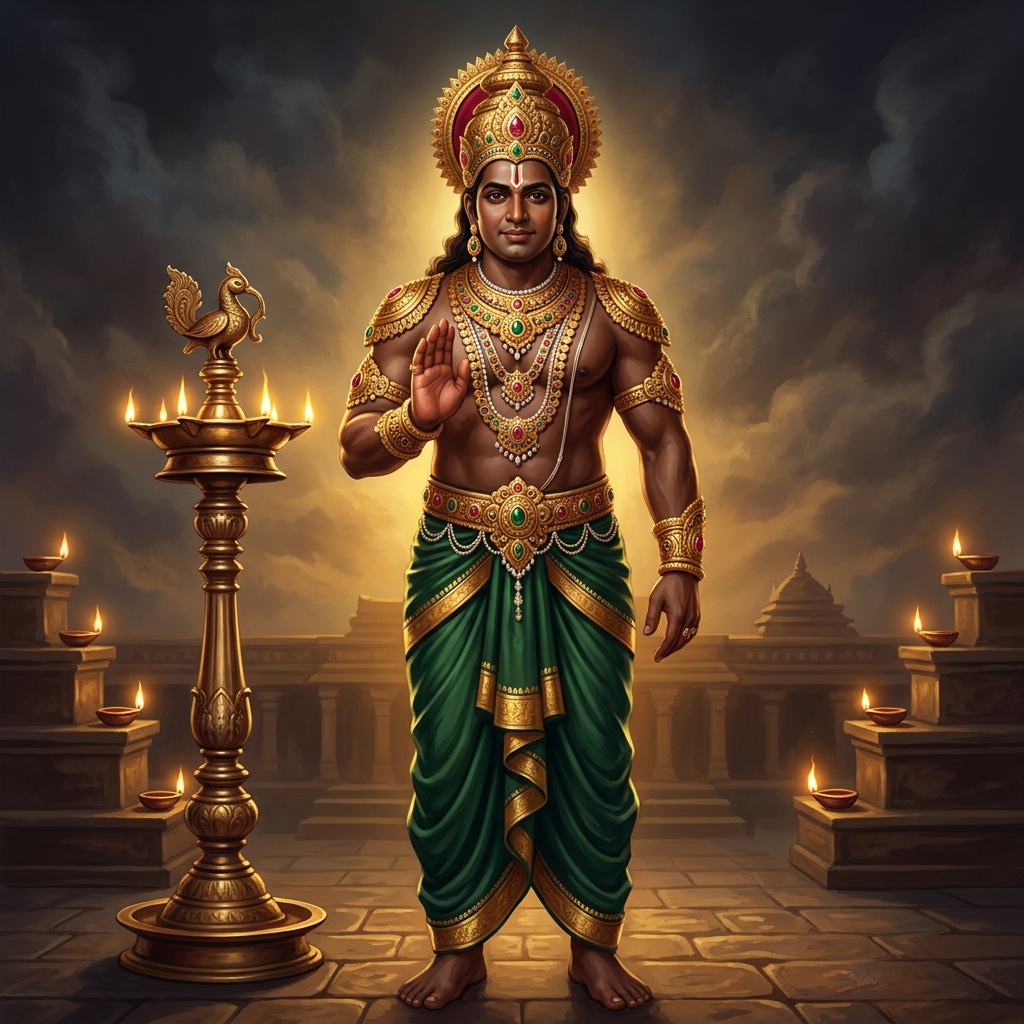
Mahabali
महाबलिThe Generous Demon King“So generous that he gave away the earth, the sky, and the underworld.”
Mahabali
The Generous Demon KingKing Mahabali was an asura king so generous and just that even the gods feared his growing power. When the dwarf Vamana (Vishnu's avatar) asked for three steps of land, Mahabali agreed. Vamana grew cosmic-sized and covered the earth and heaven in two steps. For the third, Mahabali offered his own head — earning Vishnu's eternal respect.
The festival of Onam in Kerala celebrates Mahabali's annual visit to his people. He is so beloved that Kerala welcomes their "demon king" back with a ten-day festival every year.
Offering his own head as the third step — ultimate generosity
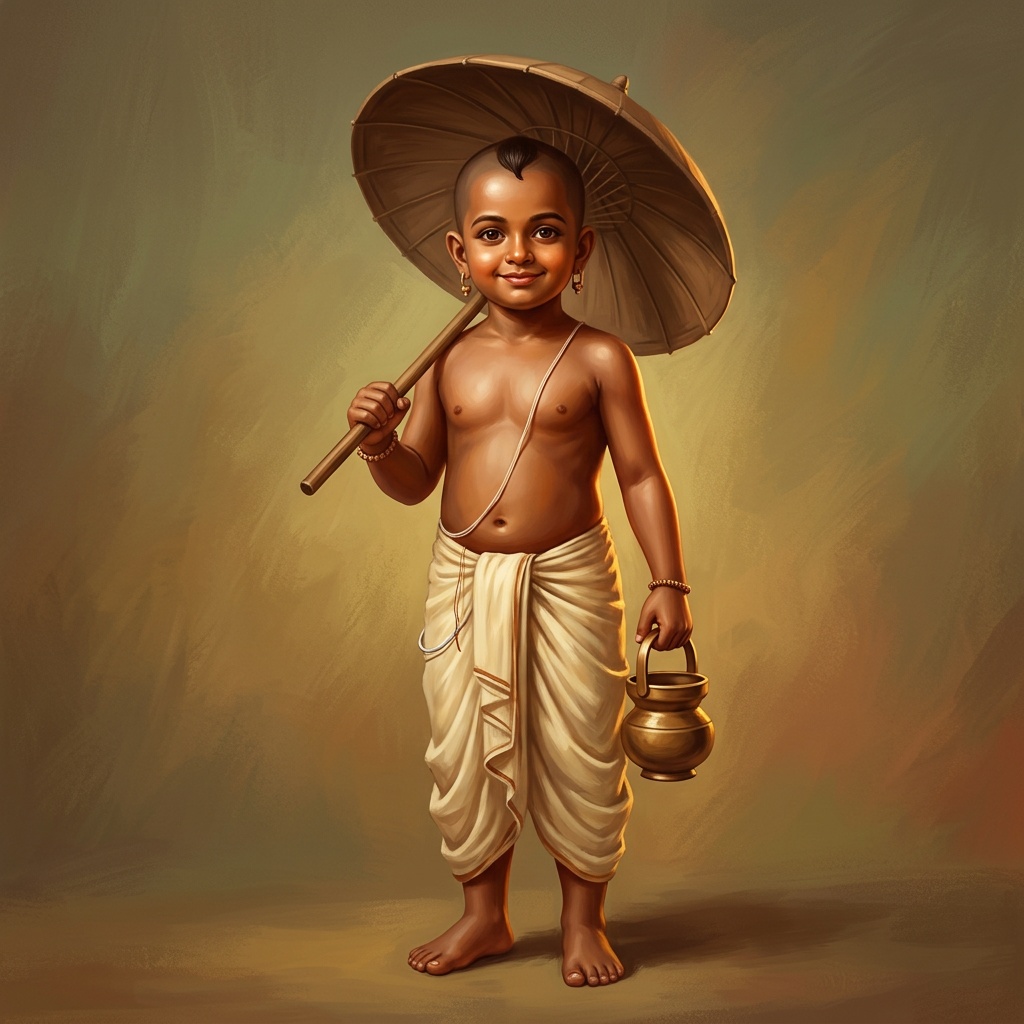
Vamana
वामनThe Dwarf Who Covered the Universe“He asked for three steps of land — then grew big enough to cover the cosmos.”
Vamana
The Dwarf Who Covered the UniverseVamana is Vishnu's fifth avatar — a tiny brahmin dwarf who appeared before King Mahabali and asked for just three steps of land. When Mahabali agreed, Vamana grew to cosmic proportions, covering the entire earth with one step, the heavens with the second, and asked where to place the third.
Even though Vamana essentially tricked Mahabali, the demon king is honored for his generosity. The lesson is that giving freely, even when deceived, is always noble.
Trivikrama — growing from a dwarf to a cosmic giant in three steps
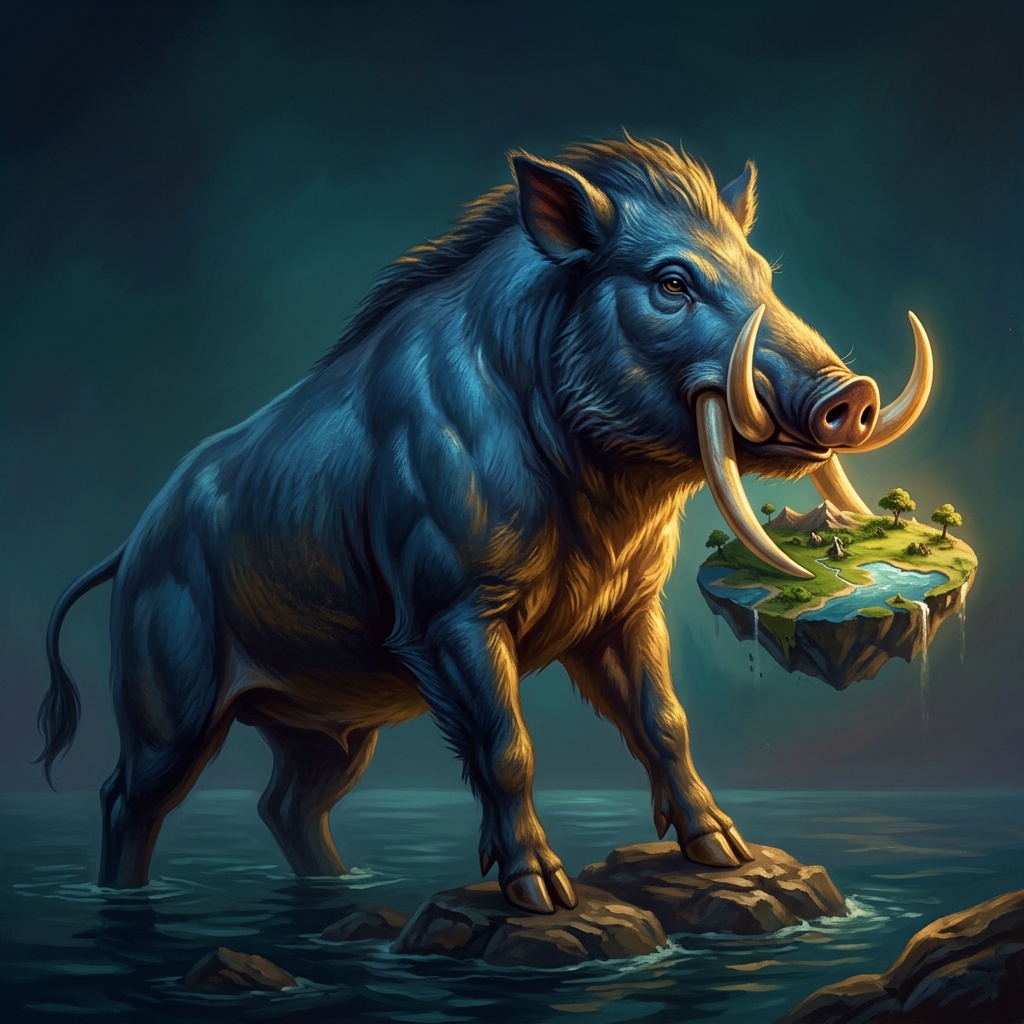
Varaha
वराहThe Cosmic Boar“He dove to the bottom of the cosmic ocean to rescue the earth on his tusks.”
Varaha
The Cosmic BoarWhen the demon Hiranyaksha dragged the earth to the bottom of the cosmic ocean, Vishnu took the form of Varaha — a gigantic boar. He dove into the primordial waters, fought Hiranyaksha for a thousand years, defeated him, and lifted the earth back to its place on his mighty tusks.
Varaha is so enormous that the earth sits on his tusks like a small ball. Ancient sculptures show the earth goddess Bhudevi perched delicately on his massive tusk.
Diving into the cosmic ocean and lifting the earth on his tusks

Matsya
मत्स्यThe First Avatar“A tiny fish that grew to save all of creation.”
Matsya
The First AvatarMatsya is Vishnu's first avatar. He appeared as a tiny fish to King Manu, who saved him in a pot. The fish kept growing until it filled the ocean. When the great flood came, Matsya pulled Manu's boat through the deluge, saving all life, the Vedas, and the seeds of every plant on earth.
The Matsya story is remarkably similar to Noah's Ark and the Mesopotamian flood myths — suggesting an ancient shared memory of a real catastrophic flood.
Growing from a tiny fish to ocean-sized and towing the ark of creation through the flood
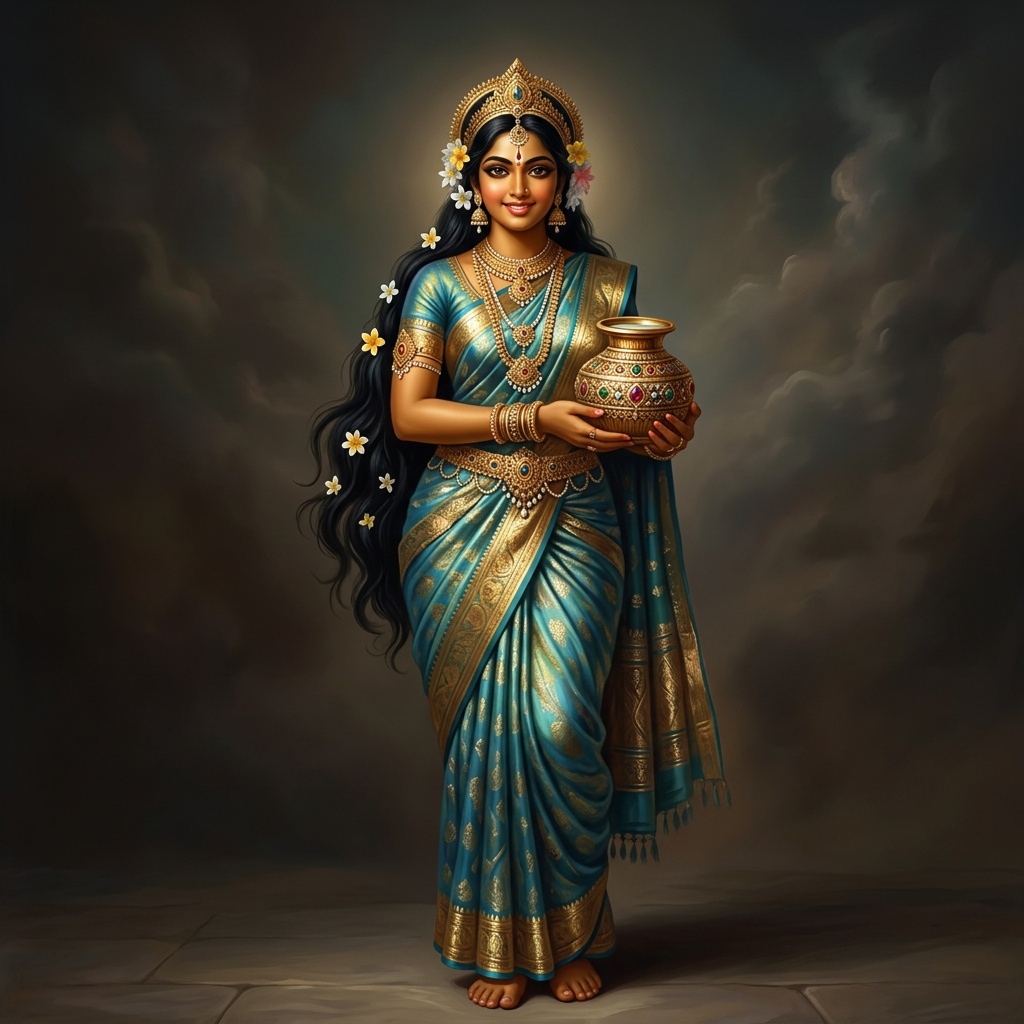
Mohini
मोहिनीThe Enchantress“Vishnu became the most beautiful woman alive — and tricked every demon in existence.”
Mohini
The EnchantressAfter the churning of the ocean, demons and gods fought over the nectar of immortality. Vishnu transformed into Mohini — an enchantingly beautiful woman — and offered to distribute the amrit fairly. Mesmerized, the demons agreed. Mohini served all the nectar to the gods and not a drop to the demons.
Even Lord Shiva was captivated by Mohini's beauty. Their encounter resulted in the birth of Lord Ayyappa, one of the most popular deities in South India.
Distributing the nectar of immortality with a smile — giving everything to the gods and nothing to the demons
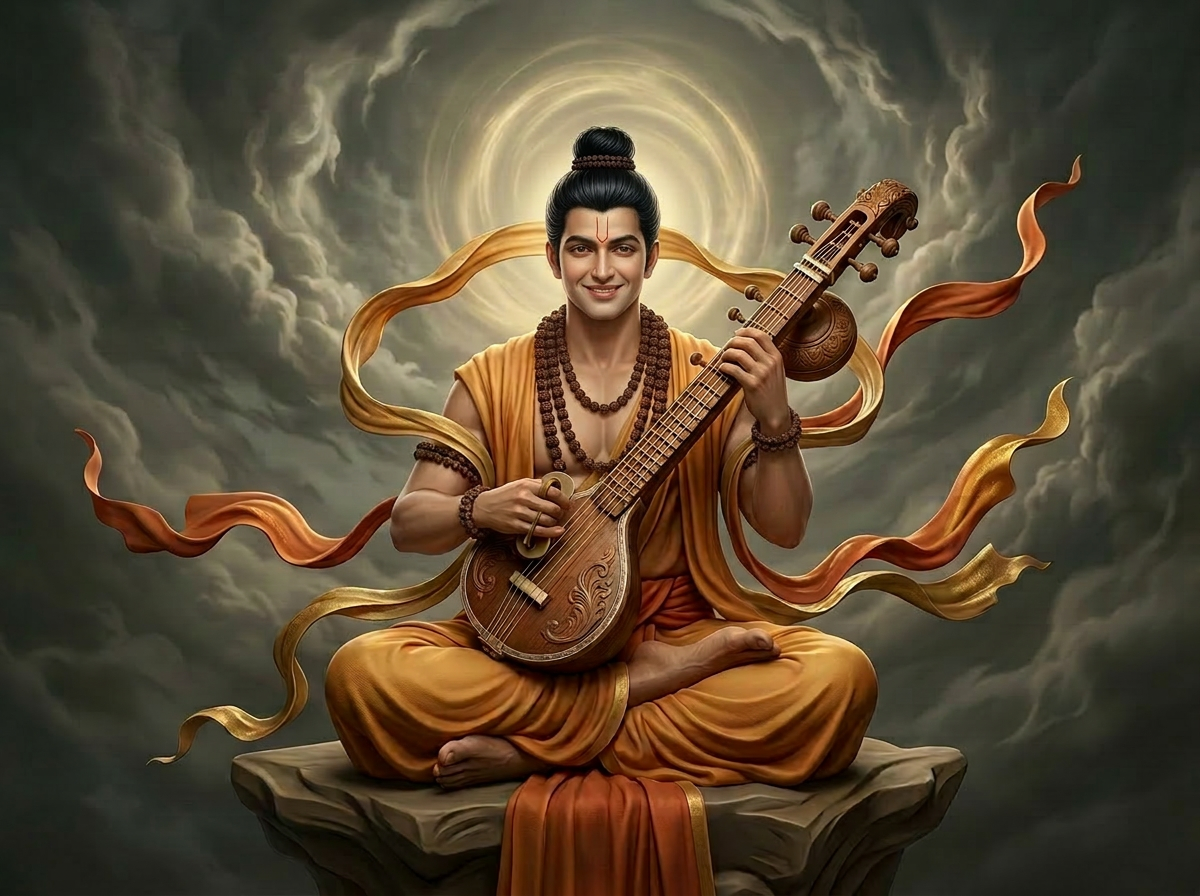
Narada Muni
नारद मुनिThe Cosmic Gossip“He travels between worlds stirring up trouble — and somehow always making things better.”
Narada Muni
The Cosmic GossipNarada is the celestial sage who travels between heaven, earth, and the underworld, carrying news and creating drama wherever he goes. He stirs conflict between gods and demons, kings and sages — but his mischief always serves a higher purpose. He is Vishnu's most devoted messenger.
Narada once cursed Vishnu to suffer the pain of separation from his wife — which became the Ramayana. The entire Ramayana happened because of Narada's curse.
Arriving uninvited, sharing exactly the information that causes maximum chaos — and maximum good
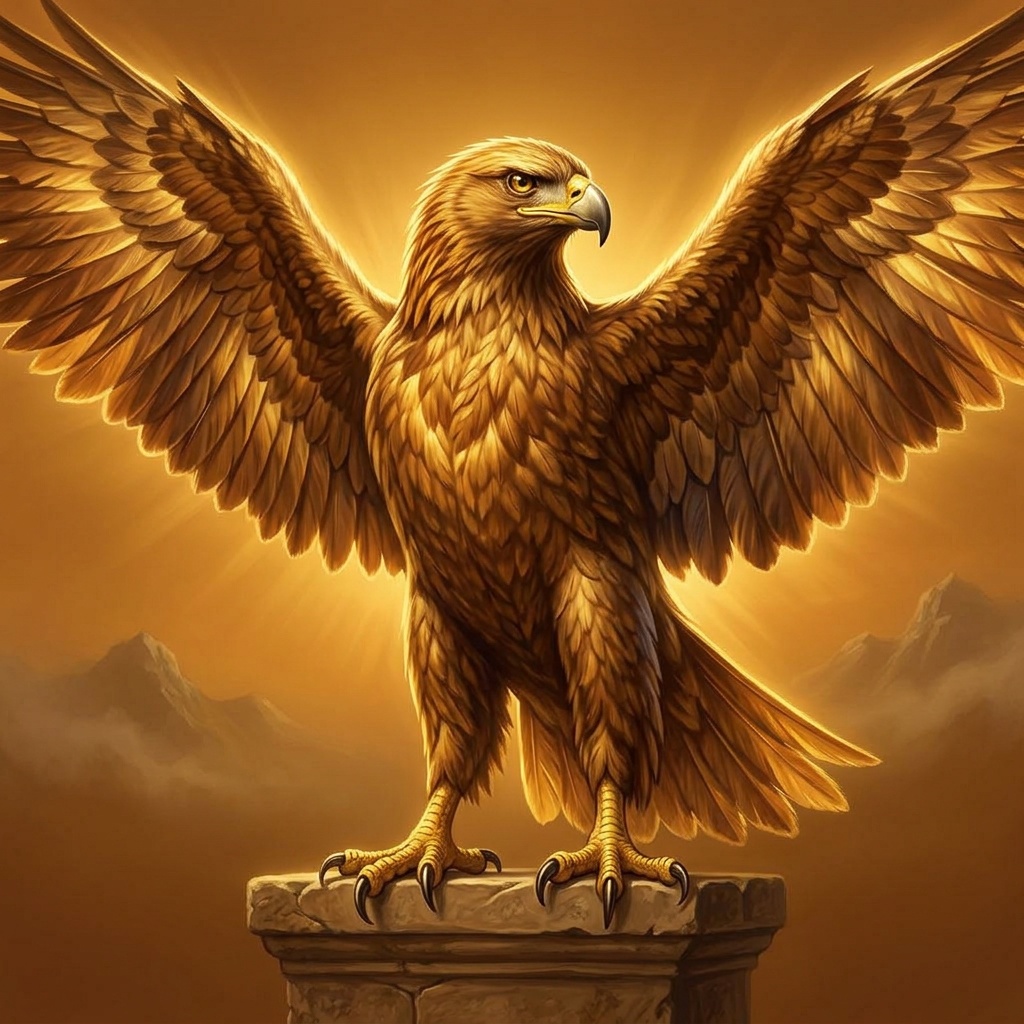
Garuda
गरुड़The King of Birds“He stole the nectar of immortality from heaven — for his mother.”
Garuda
The King of BirdsGaruda is the divine eagle who serves as Vishnu's mount. Born with the power to rival the gods, he once stormed into heaven, defeated Indra and all the devas, and stole the pot of amrit — all to free his enslaved mother, Vinata. Even the gods couldn't stop him until Vishnu offered a deal.
Garuda is so massive that his wings create hurricane-force winds. He can carry Vishnu across the entire universe in the time it takes to blink.
Storming heaven single-handedly and defeating every god to free his mother
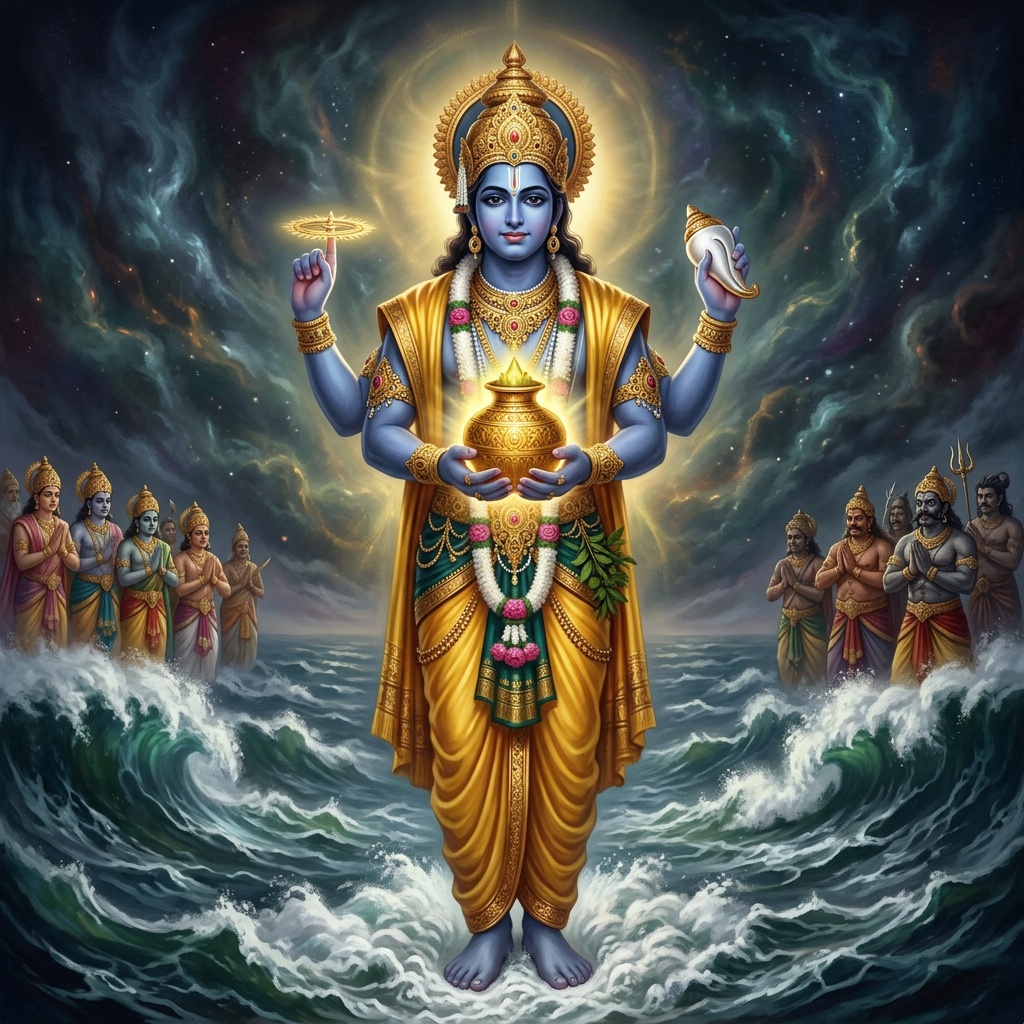
Dhanvantari
धन्वन्तरिThe Divine Physician“He emerged from the ocean carrying the cure for death itself.”
Dhanvantari
The Divine PhysicianDuring the churning of the cosmic ocean, Dhanvantari rose from the waters carrying the pot of amrit — the nectar of immortality. He is the father of Ayurveda, the ancient Indian system of medicine. Every herb, every healing mantra, every medical cure traces back to his divine knowledge.
Dhanteras, the first day of Diwali, is dedicated to Dhanvantari. People buy gold and new utensils on this day to honor the god who brought health and immortality to the world.
Emerging from the cosmic ocean bearing the nectar of immortality
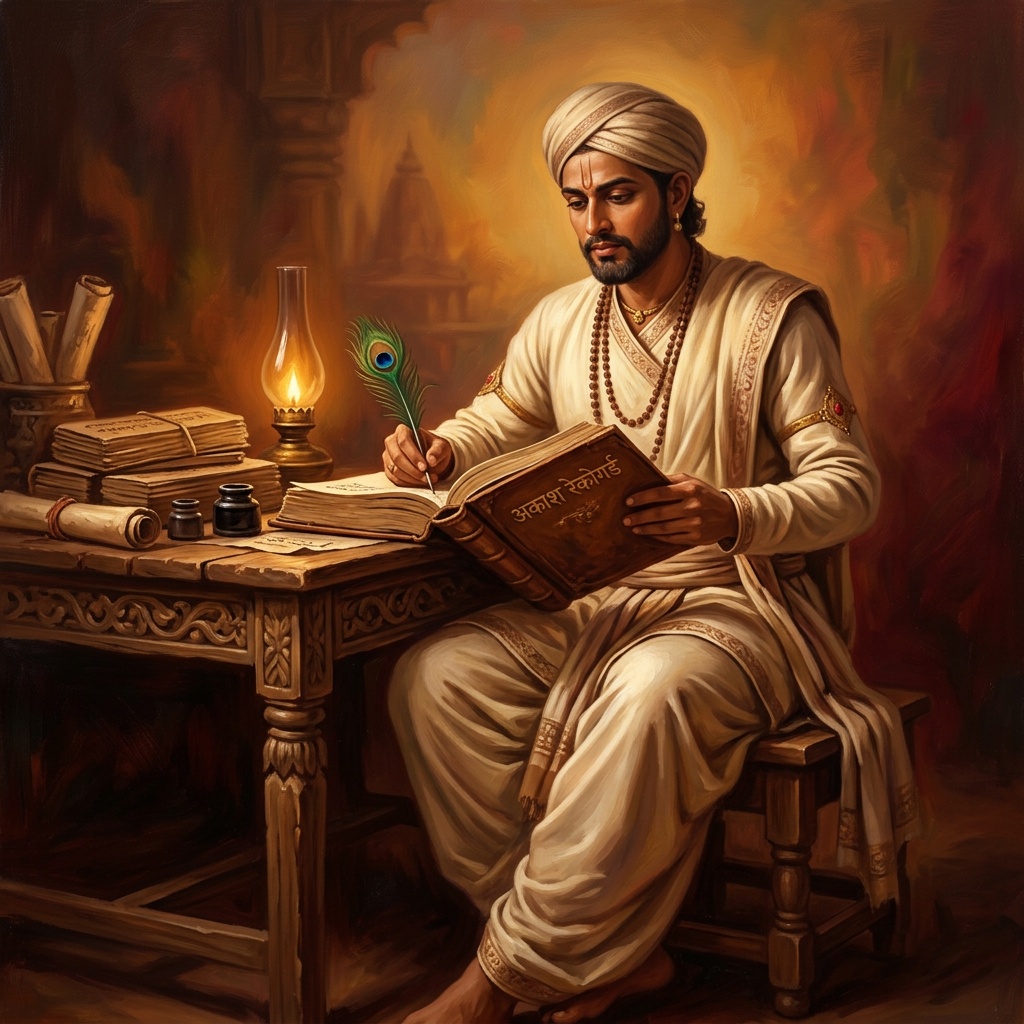
Chitragupta
चित्रगुप्तThe Cosmic Accountant“He has written down every deed you've ever done — good and bad.”
Chitragupta
The Cosmic AccountantChitragupta is the divine record-keeper who sits beside Yama in the court of death. He maintains the Agrasandhani — the ledger of every soul's deeds through every lifetime. When you die, Chitragupta reads your record and determines whether you go to heaven, hell, or back to earth.
Chitragupta is the patron deity of the Kayastha community. His name means "hidden picture" — because he sees and records things that are hidden from everyone else.
Reading out the complete record of a soul's deeds — nothing is forgotten, nothing is hidden
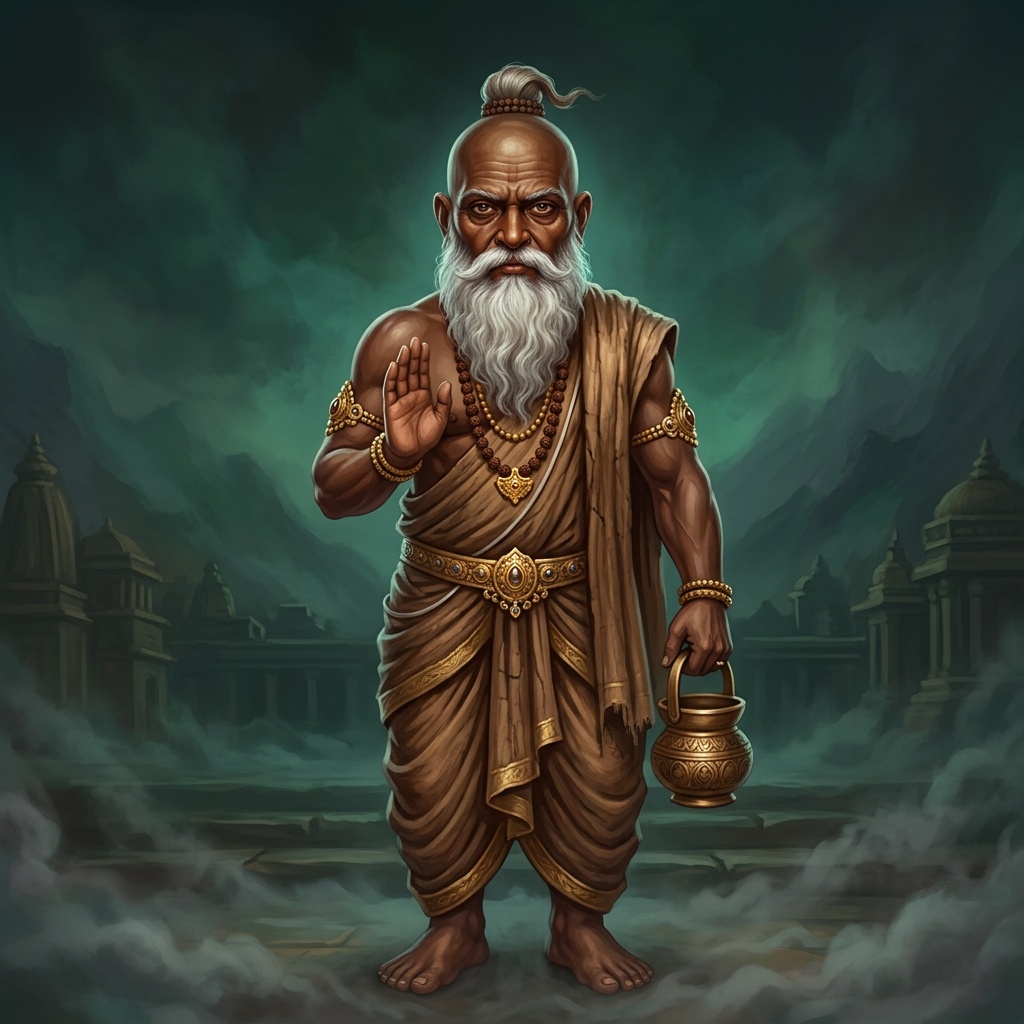
Agastya
अगस्त्यThe Sage Who Drank the Ocean“Short in stature, tall enough to drink an entire ocean.”
Agastya
The Sage Who Drank the OceanSage Agastya is one of the most remarkable figures in Indian mythology. When demons hid at the bottom of the ocean, Agastya drank the entire ocean in one sip so the gods could find them. He also tamed the Vindhya mountains by asking them to bow — and they never rose again.
Agastya is credited with bringing Vedic civilization to South India. He crossed the Vindhya range and established traditions that continue to this day. Tamil literature calls him the father of Tamil grammar.
Drinking the entire ocean in a single sip
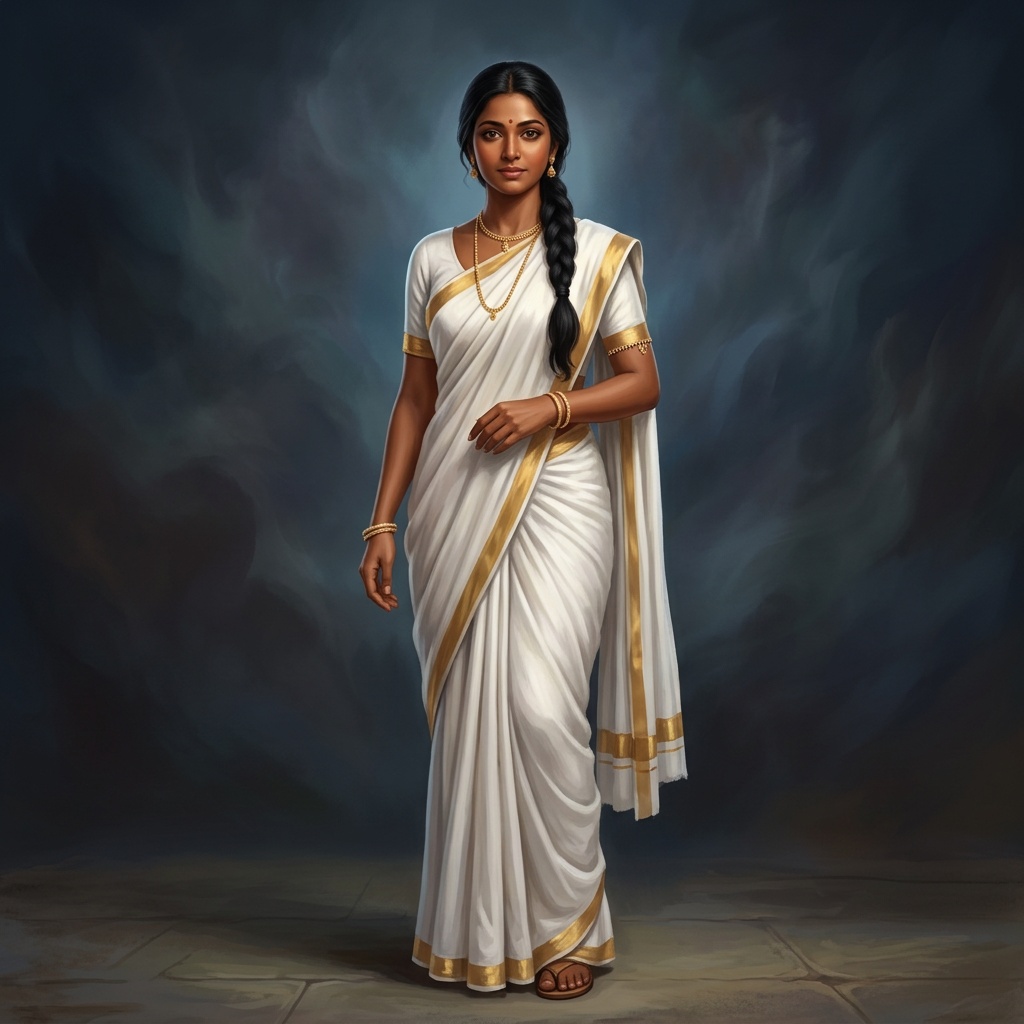
Suniti
सुनीतिThe Gentle Queen“She told her five-year-old to go find God — because she couldn't protect him anymore.”
Suniti
The Gentle QueenSuniti was the first queen of King Uttanapada, pushed aside for the younger Queen Suruchi. When little Dhruva was cruelly told he had no right to sit on his father's lap, Suniti told him: "If I can't help you, pray to Vishnu — only God can." Those words sent a five-year-old into the forest to find the divine.
Suniti didn't stop Dhruva from going into the dangerous forest at age five. Her faith in God was so strong that she trusted the universe to protect her child — and it did.
Pointing her son toward God when the world offered no other hope
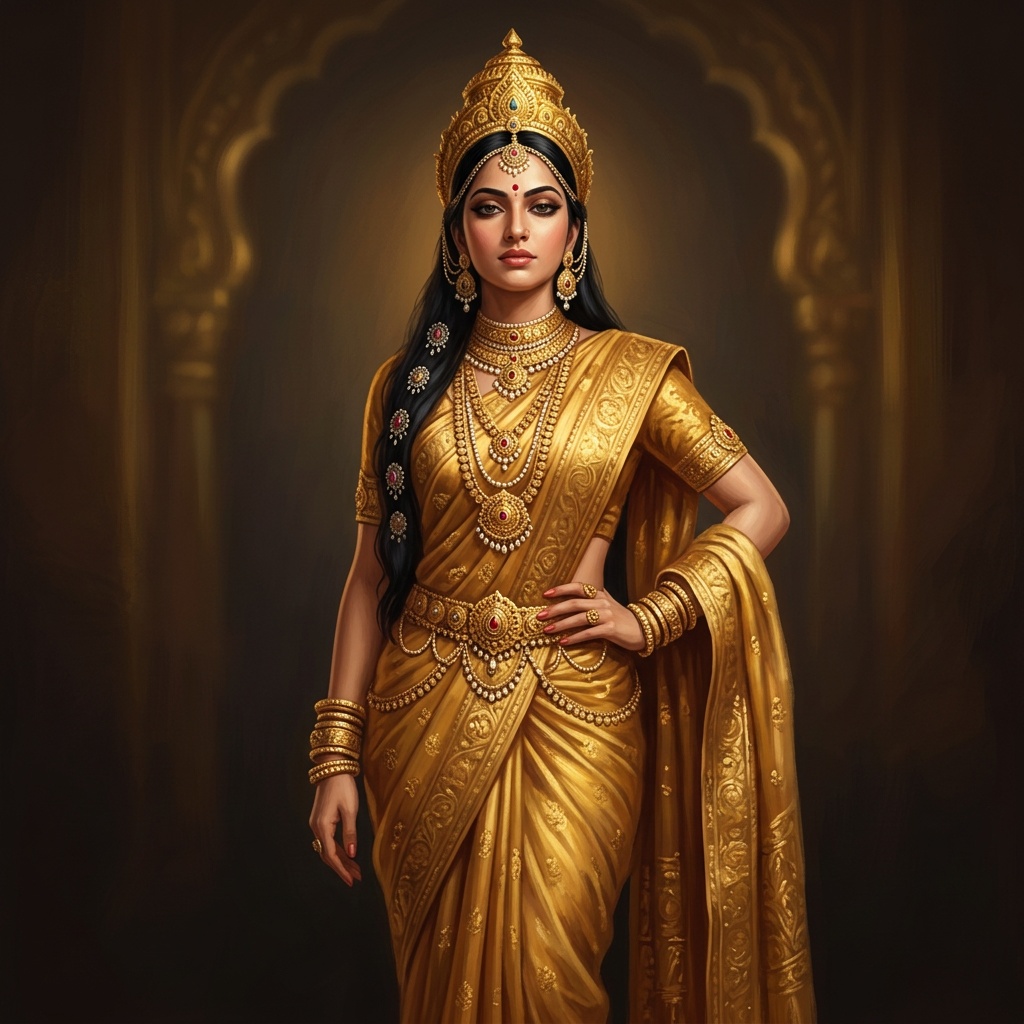
Suruchi
सुरुचिThe Cruel Stepmother“She told a child he needed to be reborn to deserve his father's love.”
Suruchi
The Cruel StepmotherSuruchi was King Uttanapada's favourite queen. When five-year-old Dhruva tried to sit on his father's lap, she cruelly told him he should have been born from her womb if he wanted such privileges. Her words, meant to crush a child, instead ignited the determination that created the Pole Star.
Suruchi's cruelty was actually the catalyst for one of the most inspiring stories in Hindu mythology. Without her harsh words, Dhruva would never have sought God — and the Pole Star wouldn't exist.
The cruel words that accidentally launched a child toward immortality
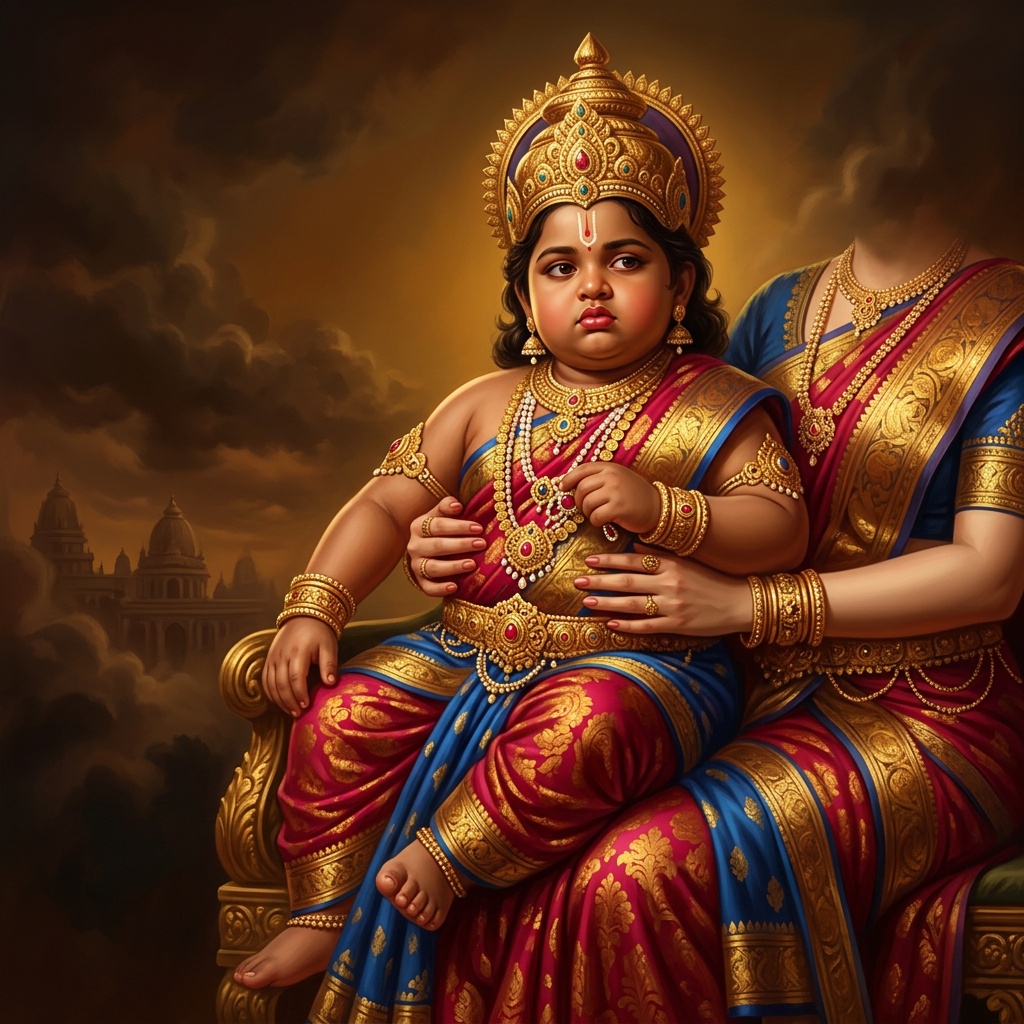
Uttama
उत्तमThe Favoured Prince“The prince who had everything — because his brother had nothing.”
Uttama
The Favoured PrinceUttama was Suruchi's son and Dhruva's half-brother. He was the favoured prince who got everything Dhruva was denied. Yet the story never blames Uttama — he was just a child benefiting from his mother's manipulation. His very privilege is what drove Dhruva to seek something greater than any throne.
Despite being the "preferred" son, Uttama is barely remembered. Dhruva — the rejected one — became a star. Sometimes the one who is denied becomes the one who is eternal.
Being the unwitting catalyst for his brother's cosmic journey
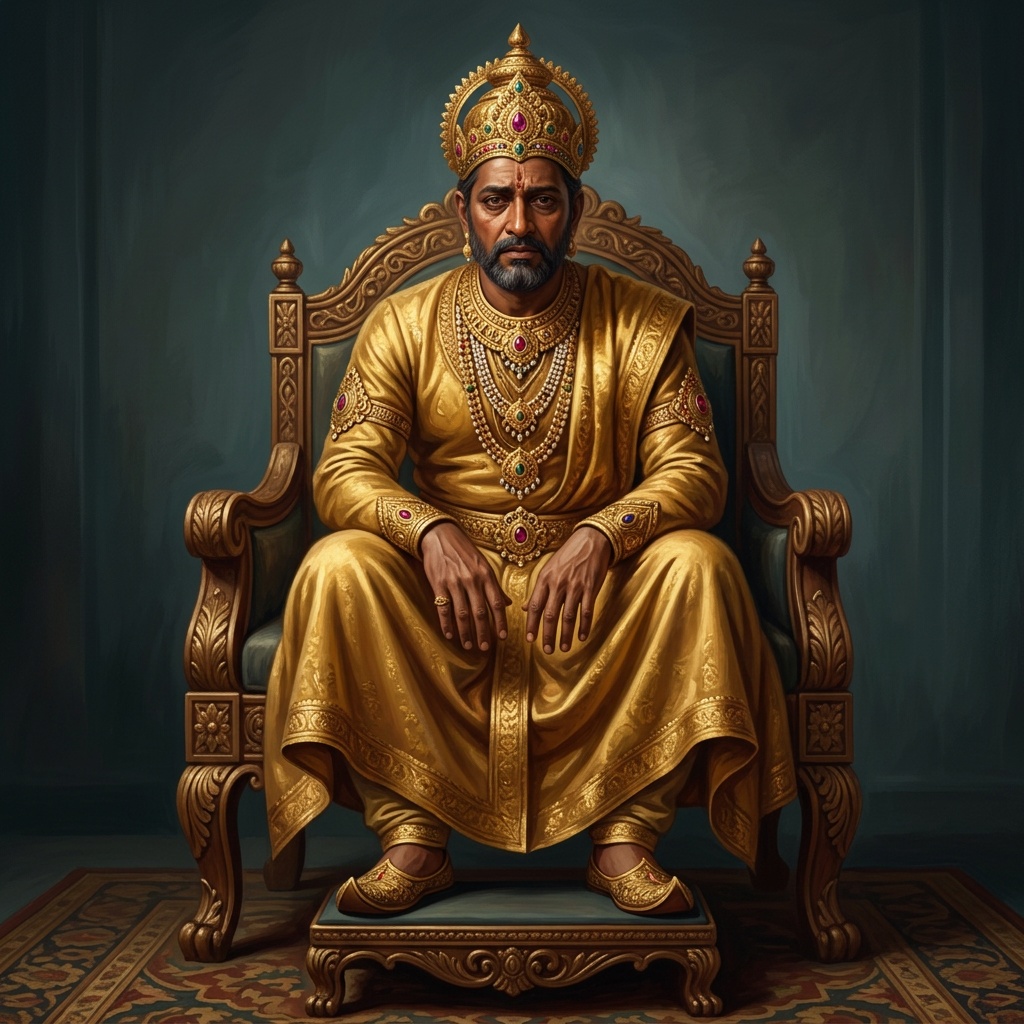
Uttanapada
उत्तानपादThe Conflicted Father“The king who loved two queens — and failed one child.”
Uttanapada
The Conflicted FatherKing Uttanapada was torn between his two queens and was too weak to stand up for young Dhruva when Suruchi rejected him. His guilt haunted him, and when Dhruva returned from the forest, blessed by Vishnu himself, Uttanapada embraced him with tears — finally giving his son the love he should have given all along.
When Dhruva returned from the forest glowing with divine power, Uttanapada ran barefoot from his palace to embrace him. The guilt-ridden king had spent months regretting his failure.
Finally embracing Dhruva after the boy conquered the impossible alone
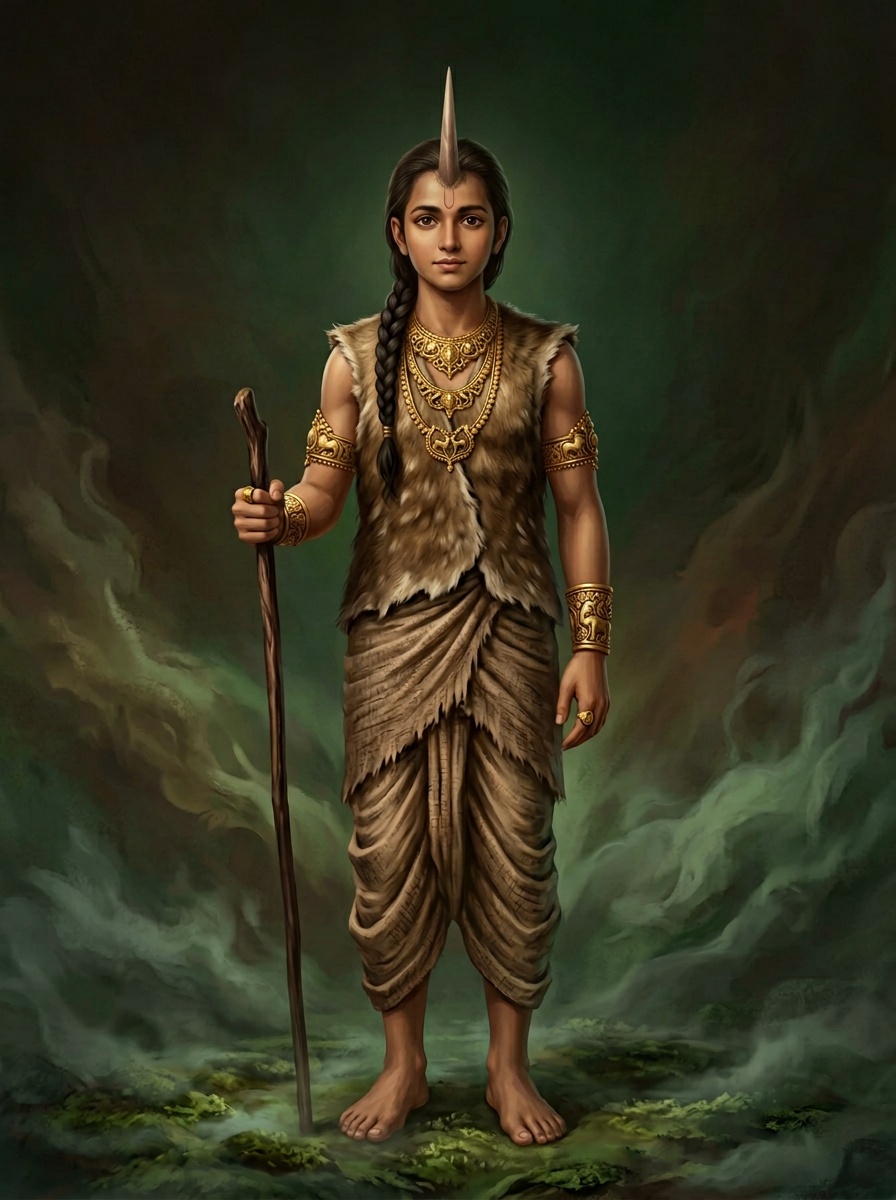
Rishyashringa
ऋष्यश्रृंगThe Deer-Horned Sage“Born with an antler, raised in a forest, and never saw a woman until the day that changed everything.”
Rishyashringa
The Deer-Horned SageRishyashringa was a sage born with a small antler on his forehead, raised in complete forest isolation by his father. He had never seen a woman or heard of civilization. When a kingdom suffered drought, he was lured to the city — and wherever he walked, rain followed. He performed the fire ceremony that led to Rama's birth.
Rishyashringa's putrakameshti yagna — the fire ceremony for King Dasharatha — directly resulted in the births of Rama, Lakshmana, Bharata, and Shatrughna. Without him, the Ramayana could never have happened.
The putrakameshti yagna — the fire ceremony that brought Rama into the world
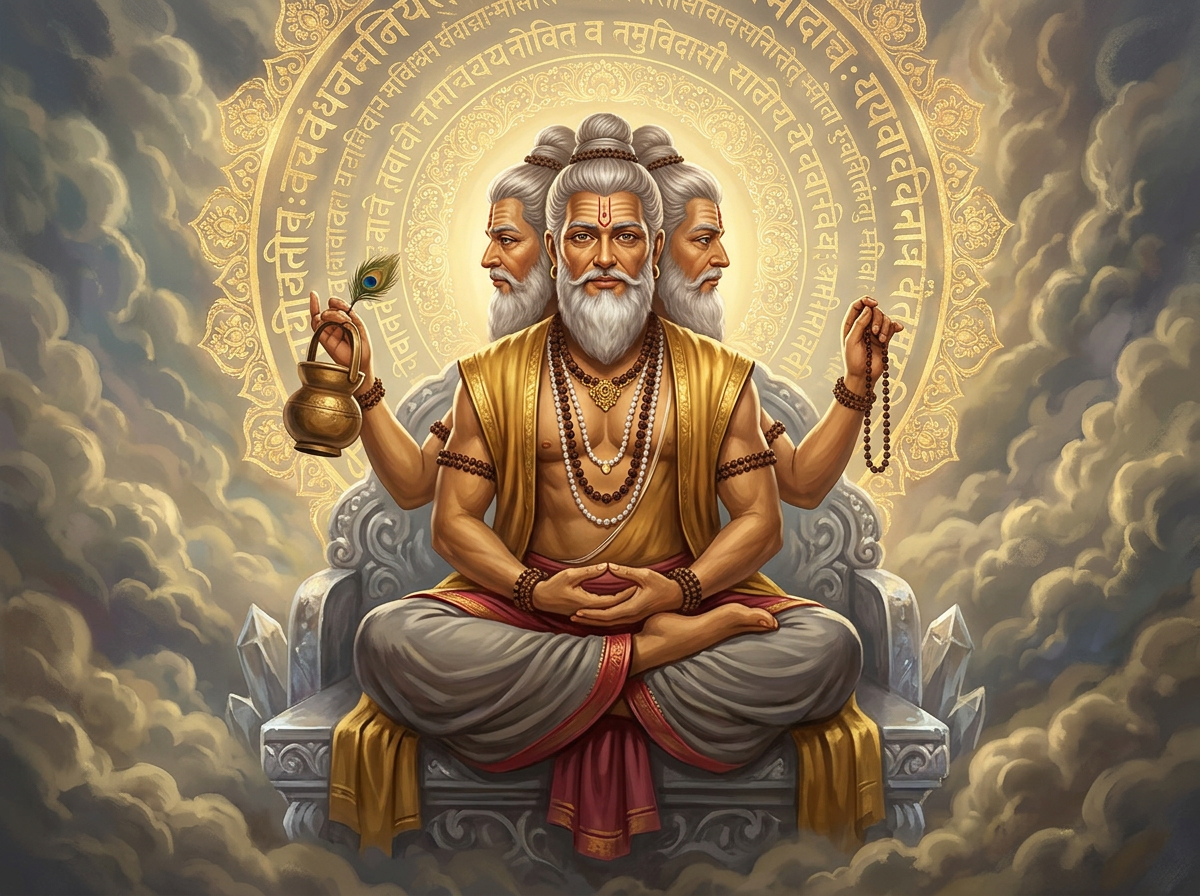
Brahma
ब्रह्माThe Creator“He created the entire universe — and then almost nobody worshipped him.”
Brahma
The CreatorBrahma is the Creator in the Hindu trinity. He has four heads (originally five, until Shiva removed one), sits on a lotus growing from Vishnu's navel, and created everything — the Vedas, time, the gods, humans, and every creature. Yet despite creating all existence, he has almost no temples dedicated to him.
There is only one major Brahma temple in all of India — in Pushkar, Rajasthan. The story says Saraswati cursed him to be forgotten because he married without her permission.
Speaking the Vedas into existence — creating the universe through words
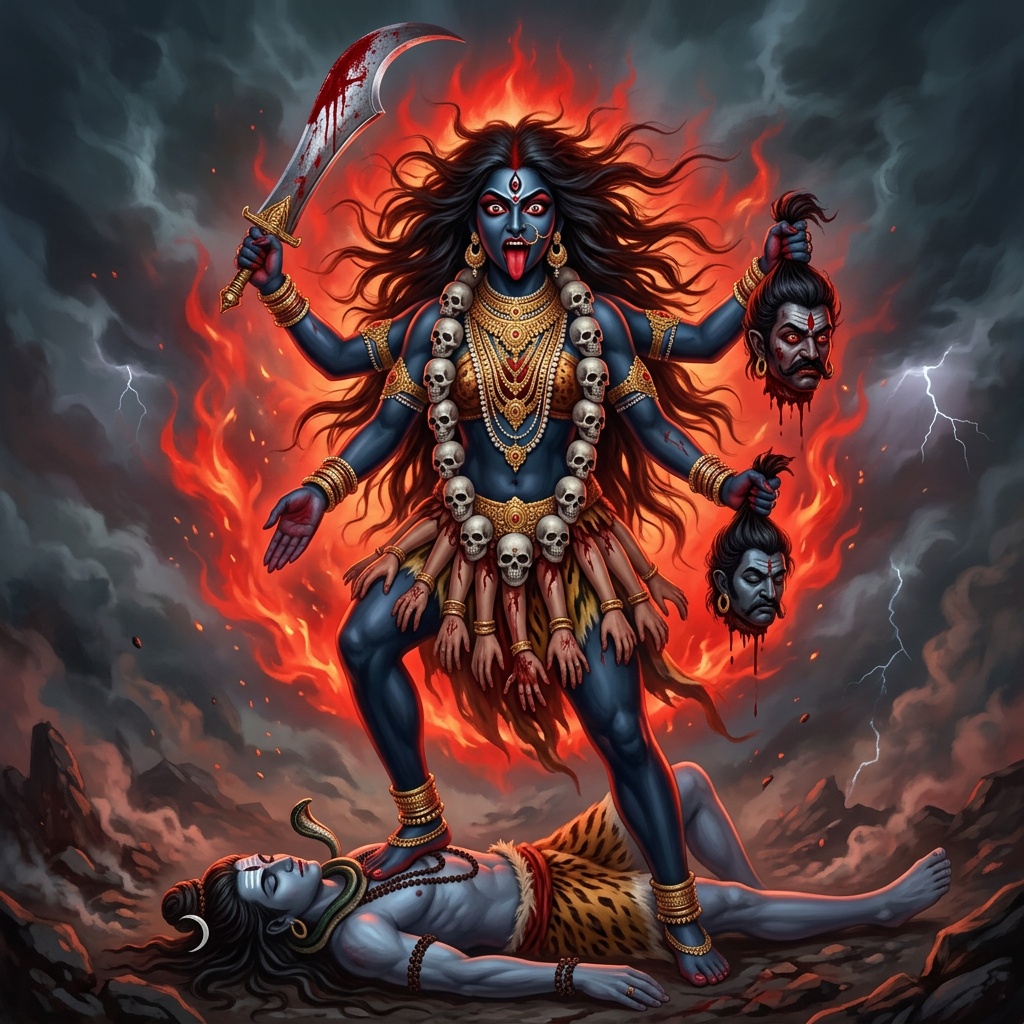
Kali
कालीमहाकालीThe Fierce Mother“The most terrifying face of the divine — and the most protective.”
Kali
The Fierce MotherWhen the demon Raktabija could multiply from every drop of his own blood, no god could stop him. Kali emerged from Durga's forehead — wild-haired, skull-necklaced, tongue out — and drank every drop of blood before it hit the ground. She destroyed him utterly. Her rage was so great that only Shiva lying beneath her feet could calm her.
Kali's tongue sticks out in many images because of embarrassment — when she realized she was standing on her husband Shiva, she bit her tongue in shock. This is the famous "Kali on Shiva" image.
Drinking Raktabija's blood faster than he could regenerate — ending the unkillable demon
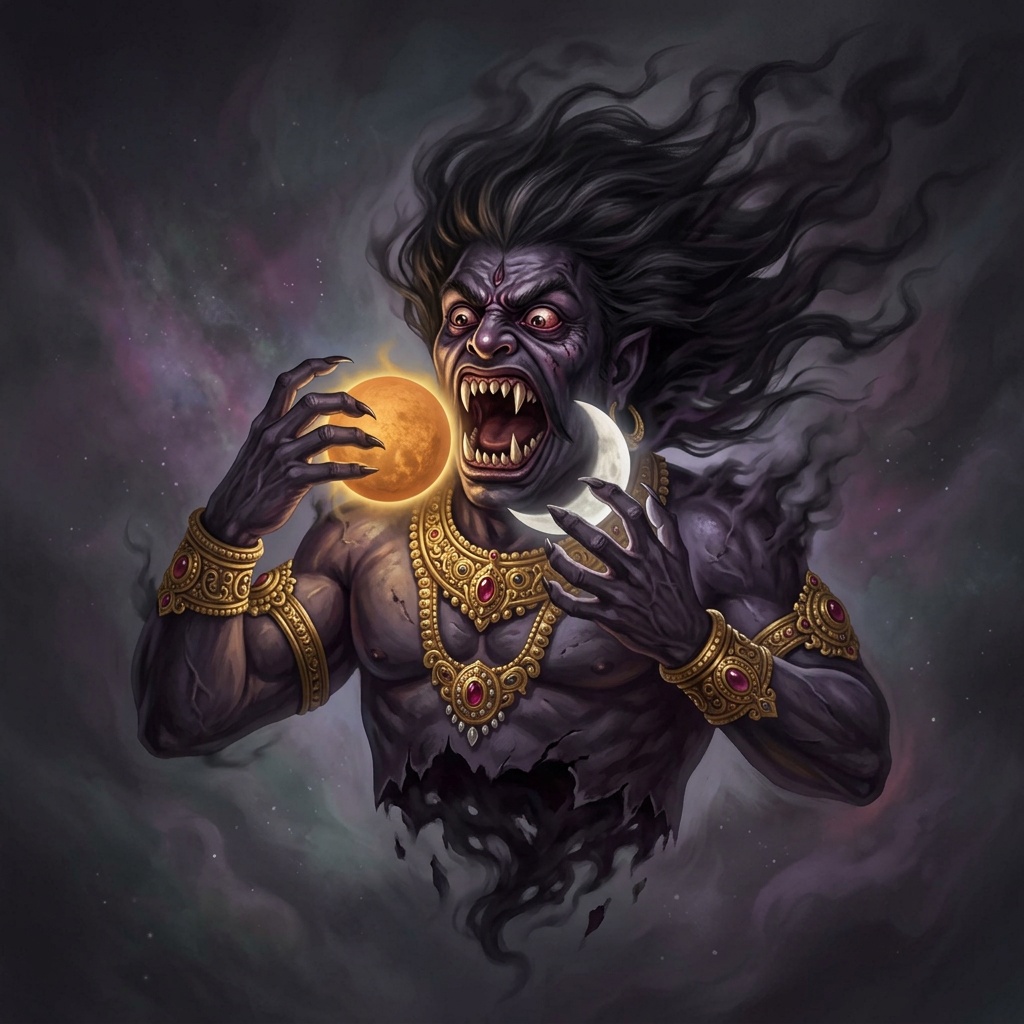
Rahu
राहुThe Shadow Planet“He drank the nectar of immortality — and lost his body for it.”
Rahu
The Shadow PlanetDuring the distribution of amrit, the demon Svarbhanu disguised himself as a god and drank a sip. The Sun and Moon exposed him, and Vishnu's Sudarshana Chakra cut him in half — but the nectar had already made him immortal. His head became Rahu, his body became Ketu, and they eternally chase the Sun and Moon for revenge.
Solar and lunar eclipses are explained as Rahu swallowing the Sun or Moon. Since he has no body, they pass right through him and emerge again.
Swallowing the sun and moon — causing eclipses
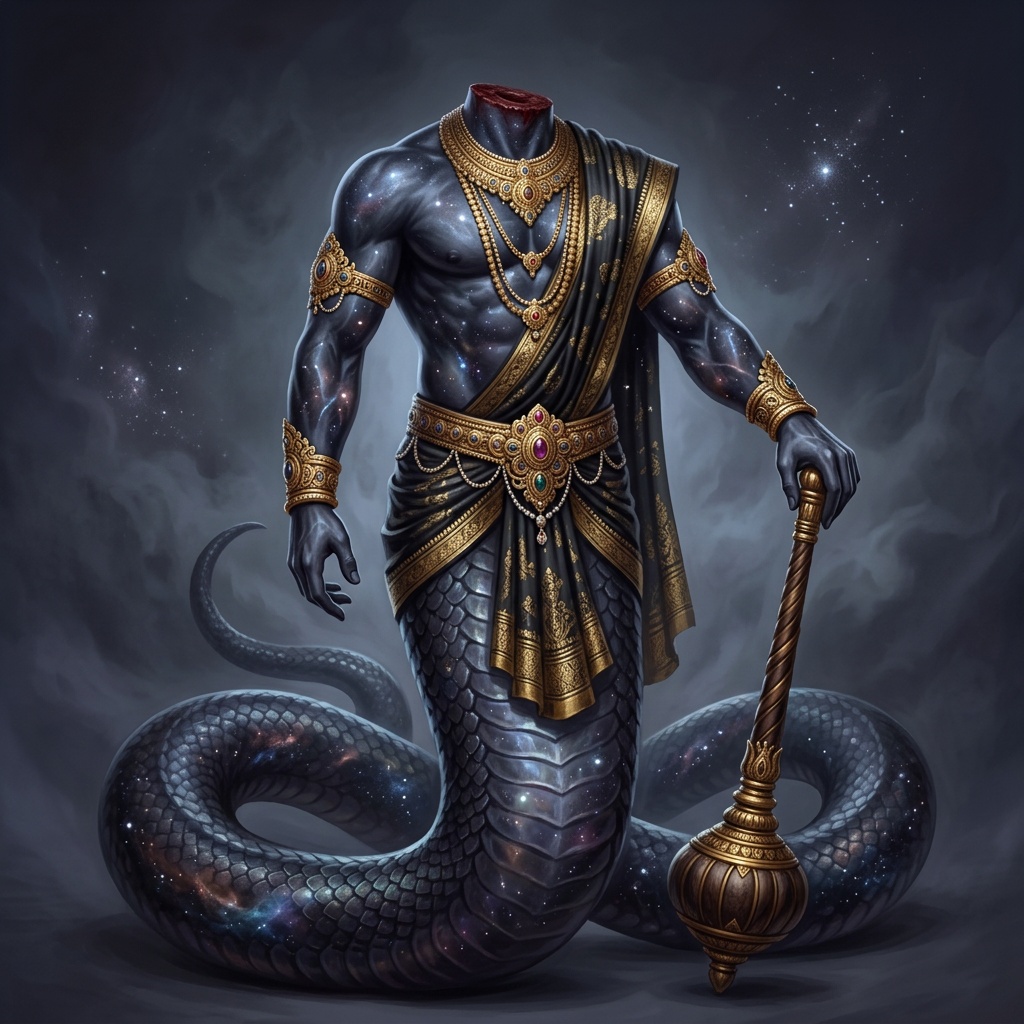
Ketu
केतुThe Headless Shadow“A body without a head — wandering the skies forever.”
Ketu
The Headless ShadowKetu is the lower body of the demon Svarbhanu, severed by Vishnu's chakra. Headless and wandering, Ketu represents the unknown, the mystical, and the spiritual. While Rahu chases worldly desires (the Sun and Moon), Ketu represents detachment and liberation — the body freed from the grasping head.
In Hindu astrology, Ketu represents moksha (spiritual liberation). While Rahu causes worldly confusion, Ketu pushes people toward spiritual awakening — even if the journey is painful.
Causing comets and mysterious celestial events
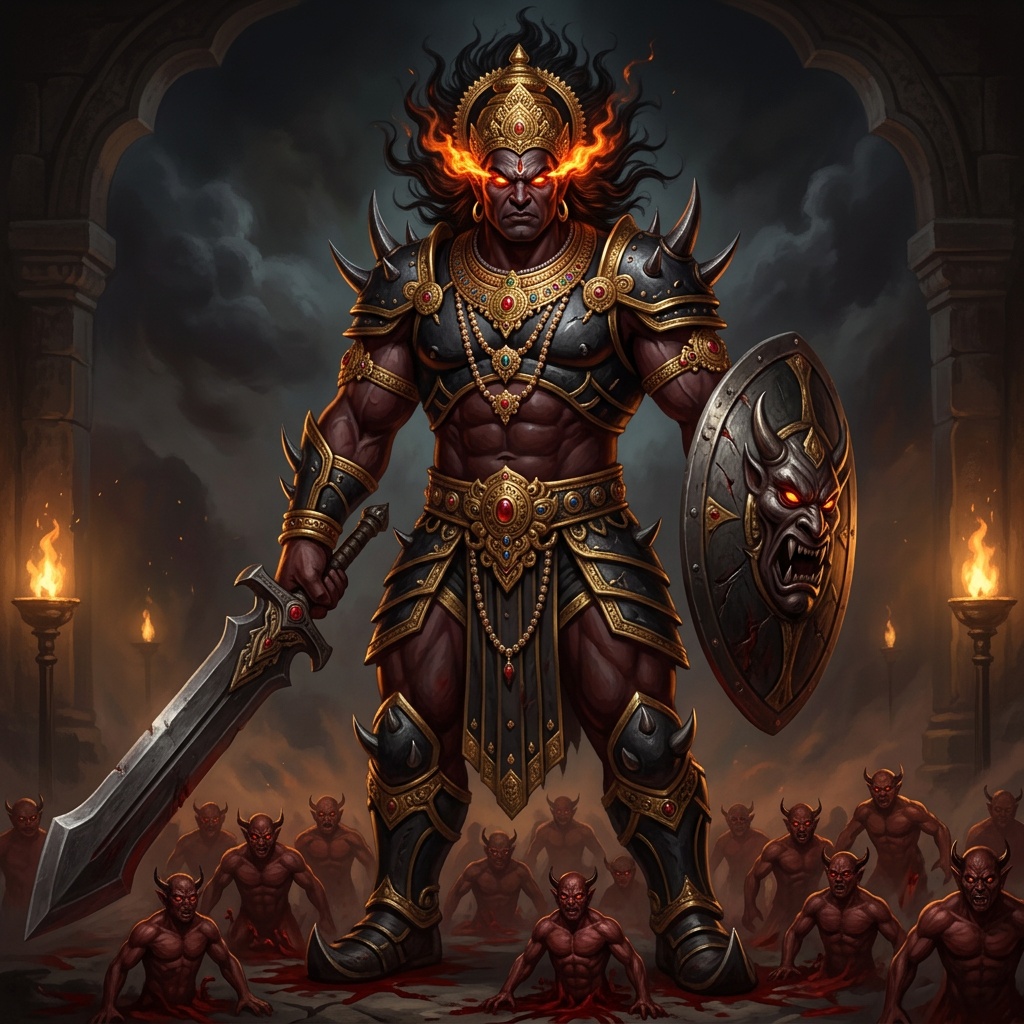
Raktabija
रक्तबीजThe Blood Demon“Every drop of his blood spawned a new demon — making him impossible to kill.”
Raktabija
The Blood DemonRaktabija was a demon with the most terrifying boon: every drop of his blood that touched the ground would spawn a new, fully grown clone of himself. The more the gods fought him, the more Raktabijas filled the battlefield. It took Goddess Kali — drinking his blood before it could fall — to finally end him.
At the height of the battle, there were thousands of Raktabija clones on the battlefield. Every sword strike, every arrow that drew blood, created two more enemies.
Multiplying from every drop of blood — an army from a single wound
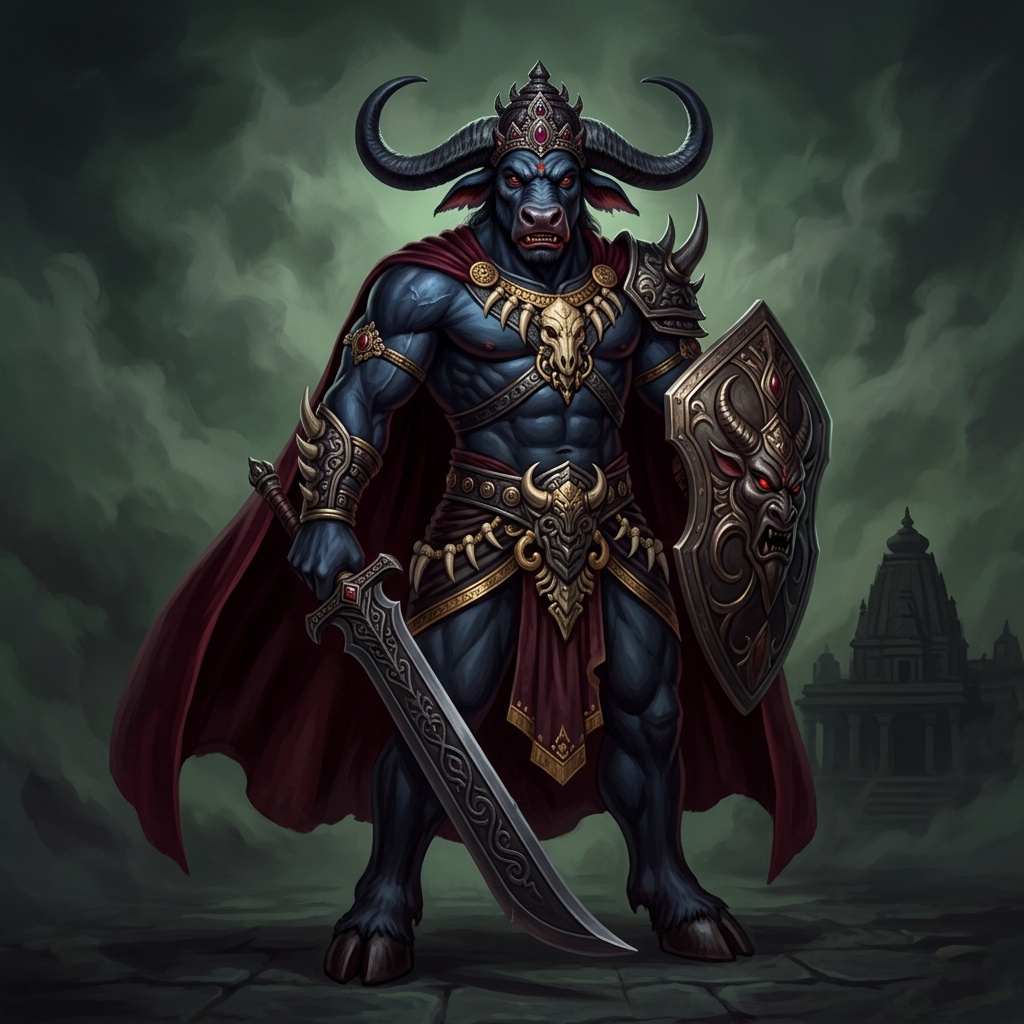
Mahishasura
महिषासुरThe Buffalo Demon“He conquered heaven itself — until the goddess who shouldn't exist appeared.”
Mahishasura
The Buffalo DemonMahishasura received a boon that no man or god could kill him. He conquered all three worlds and drove the gods from heaven. In desperation, the gods combined their power to create Goddess Durga — a being that didn't exist in Mahishasura's boon. She rode a lion into battle and ended his reign.
The city of Mysuru (Mysore) in Karnataka is named after Mahishasura. A massive statue of him stands at Chamundi Hills, where Durga is said to have defeated him.
Shapeshifting between buffalo and human form during battle
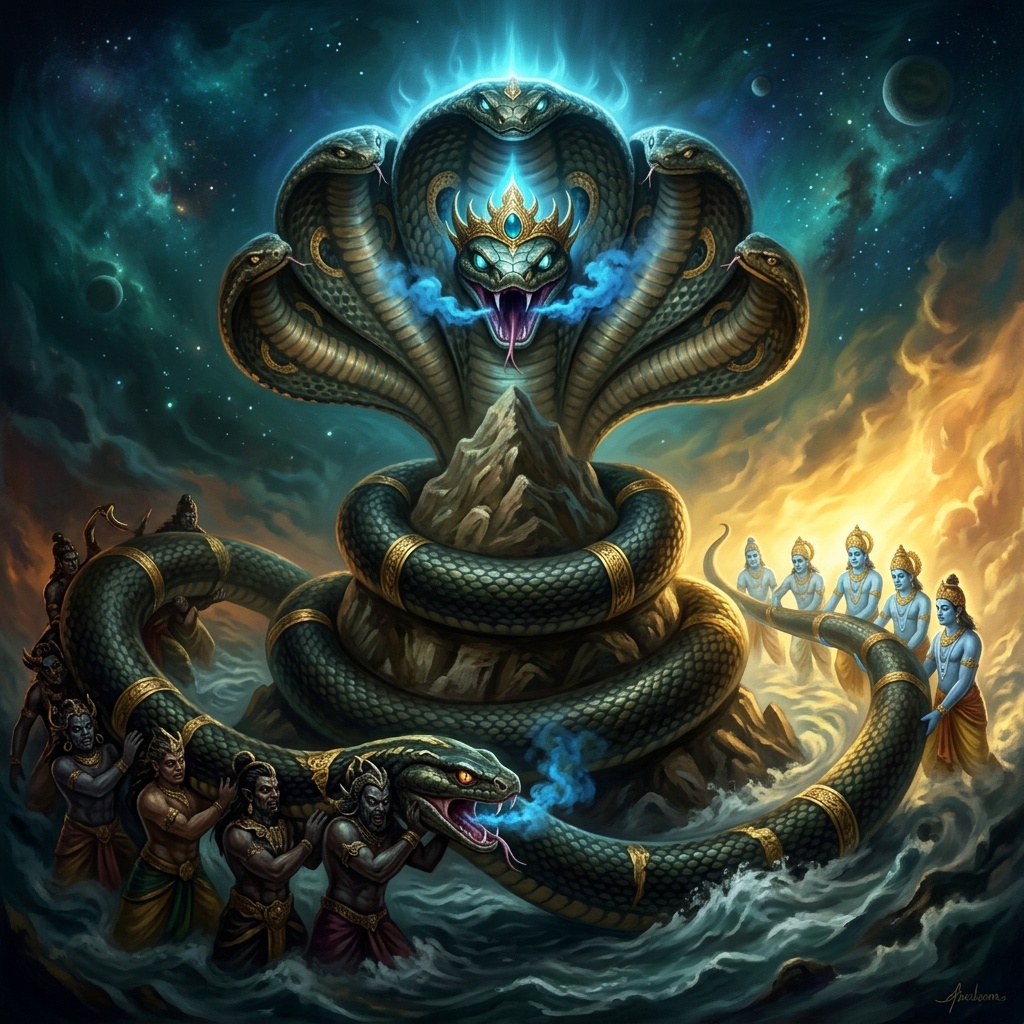
Vasuki
वासुकिThe Serpent King“He was the rope that churned the ocean of creation.”
Vasuki
The Serpent KingVasuki is the king of serpents who was wrapped around Mount Mandara during the Samudra Manthan — the churning of the cosmic ocean. Gods pulled his tail, demons pulled his head, and together they churned out the fourteen treasures of the universe. Vasuki endured unimaginable pain but held fast.
Vasuki wears the Nagamani — a glowing jewel on his hood that can grant wishes. It is said to glow in the dark, and many treasure hunters have sought it through the ages.
Serving as the churning rope for the Samudra Manthan — enduring cosmic forces for creation
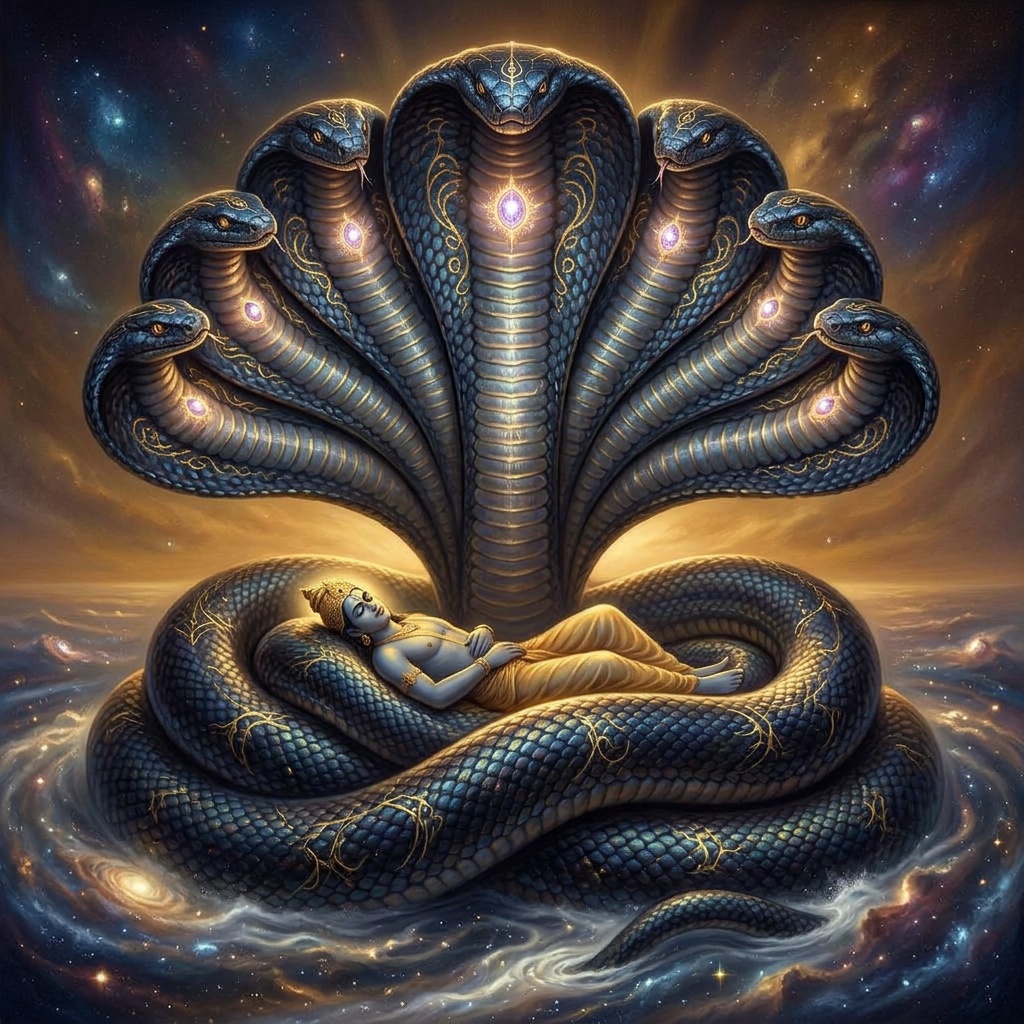
Shesha
शेषअनन्तThe Cosmic Serpent“The universe rests on his thousand hoods — and he never complains.”
Shesha
The Cosmic SerpentShesha Naga is the infinite cosmic serpent on whom Lord Vishnu reclines in the ocean of milk. He has a thousand hoods that form a canopy over Vishnu, and he carries the entire weight of the universe on his heads. When Shesha uncoils, time begins. When he recoils, creation ends.
Lakshmana (Rama's brother) and Balarama (Krishna's brother) are both considered incarnations of Shesha. The cosmic serpent takes human form to serve Vishnu's avatars on earth.
Bearing the weight of the entire universe on his thousand hoods — without ever tiring
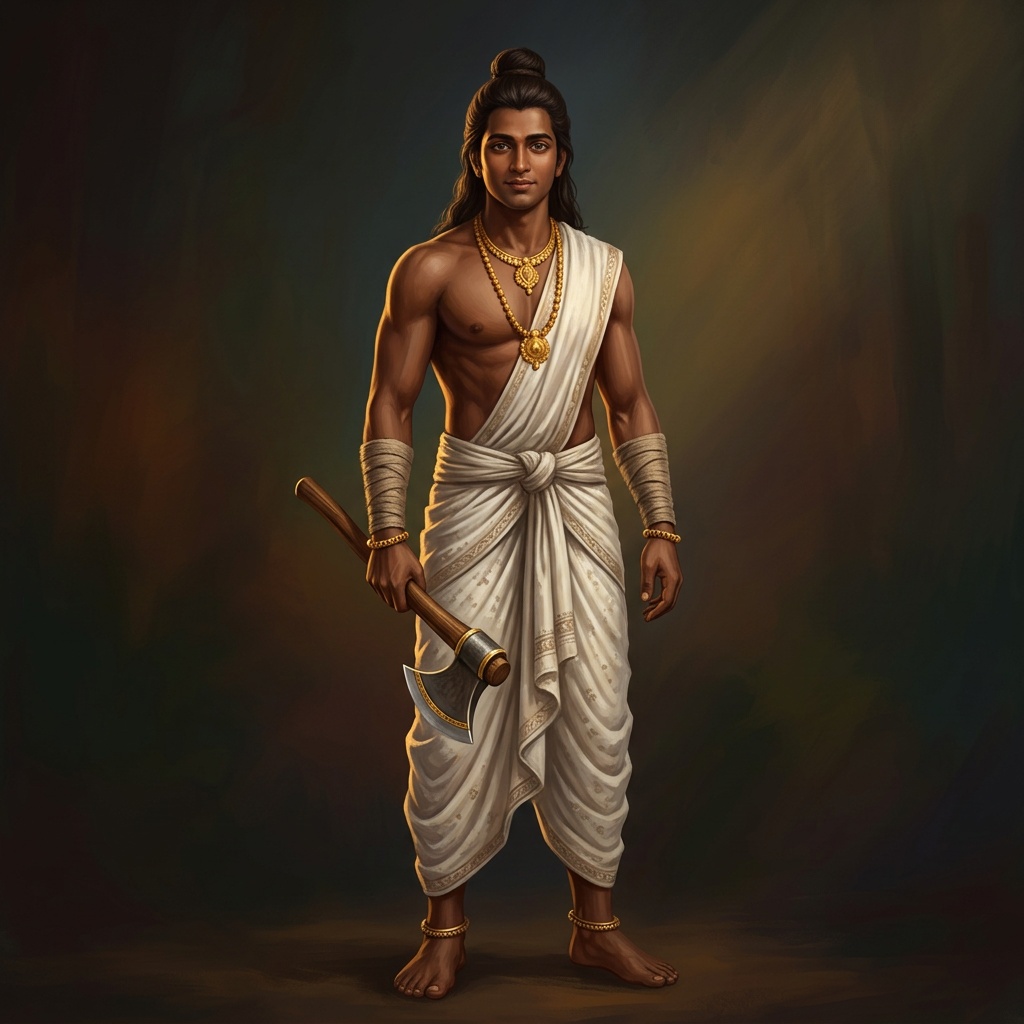
Satyavan
सत्यवानThe Doomed Prince“Destined to die within a year — loved by a woman who wouldn't let him.”
Satyavan
The Doomed PrinceSatyavan was a prince whose father lost his kingdom, reducing them to a life of forest exile. Savitri chose to marry him despite warnings that he would die within a year. When Yama came for his soul, Savitri's love and wit brought him back from the dead — the only man in mythology whose wife defeated Death.
Satyavan's name means "one who speaks truth." His honesty and gentle nature were what made Savitri fall in love with him despite knowing his terrible fate.
Being worthy of a love so powerful it could reverse death
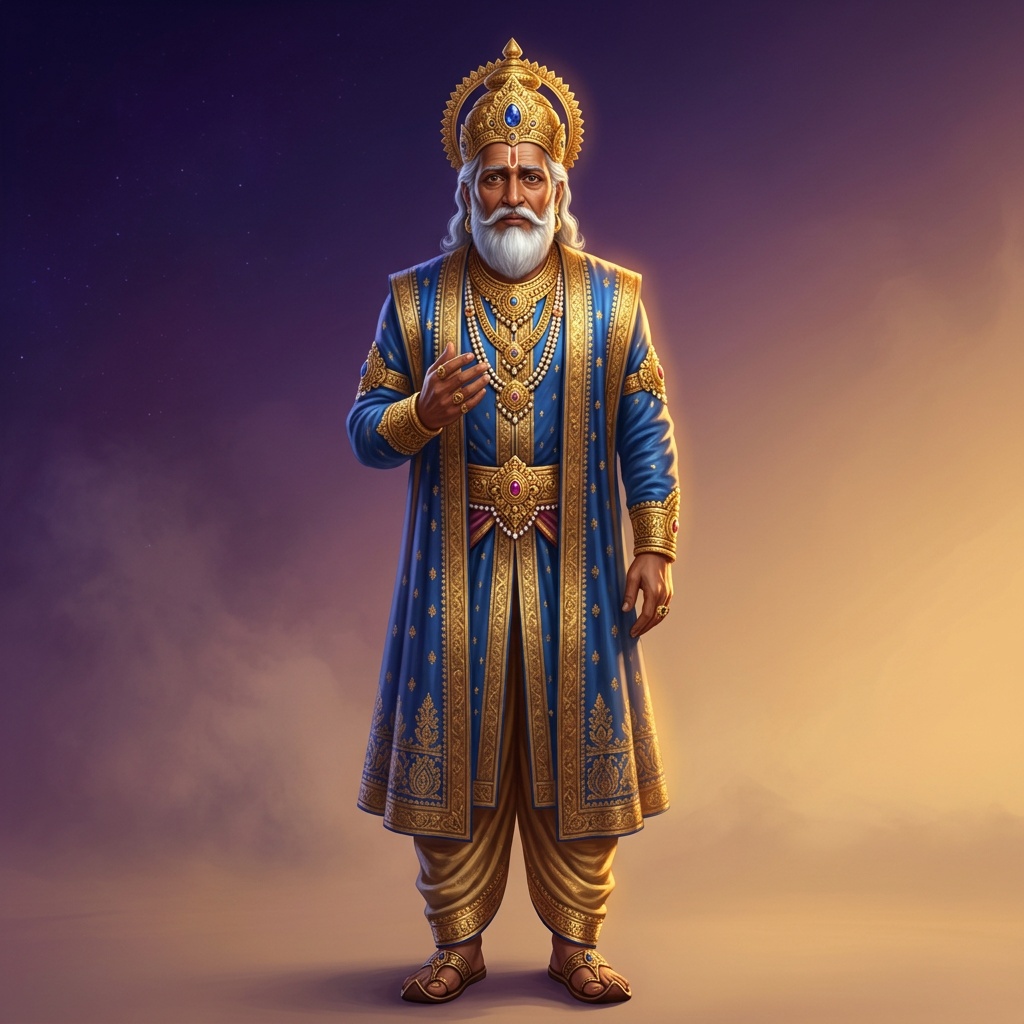
Ashvapati
अश्वपतिThe Worried Father“He begged his daughter not to marry a doomed man — and she chose love anyway.”
Ashvapati
The Worried FatherKing Ashvapati was Savitri's father. When Narada warned him that Satyavan would die within a year, Ashvapati begged Savitri to choose another husband. But Savitri refused — she had given her heart and would not take it back. Ashvapati let her go, trusting his daughter's extraordinary courage.
Ashvapati's name means "lord of horses." He was famous for his horse-sacrifice rituals and was blessed by the Sun god with a daughter of extraordinary wisdom.
Letting his daughter choose her own destiny — even when it terrified him
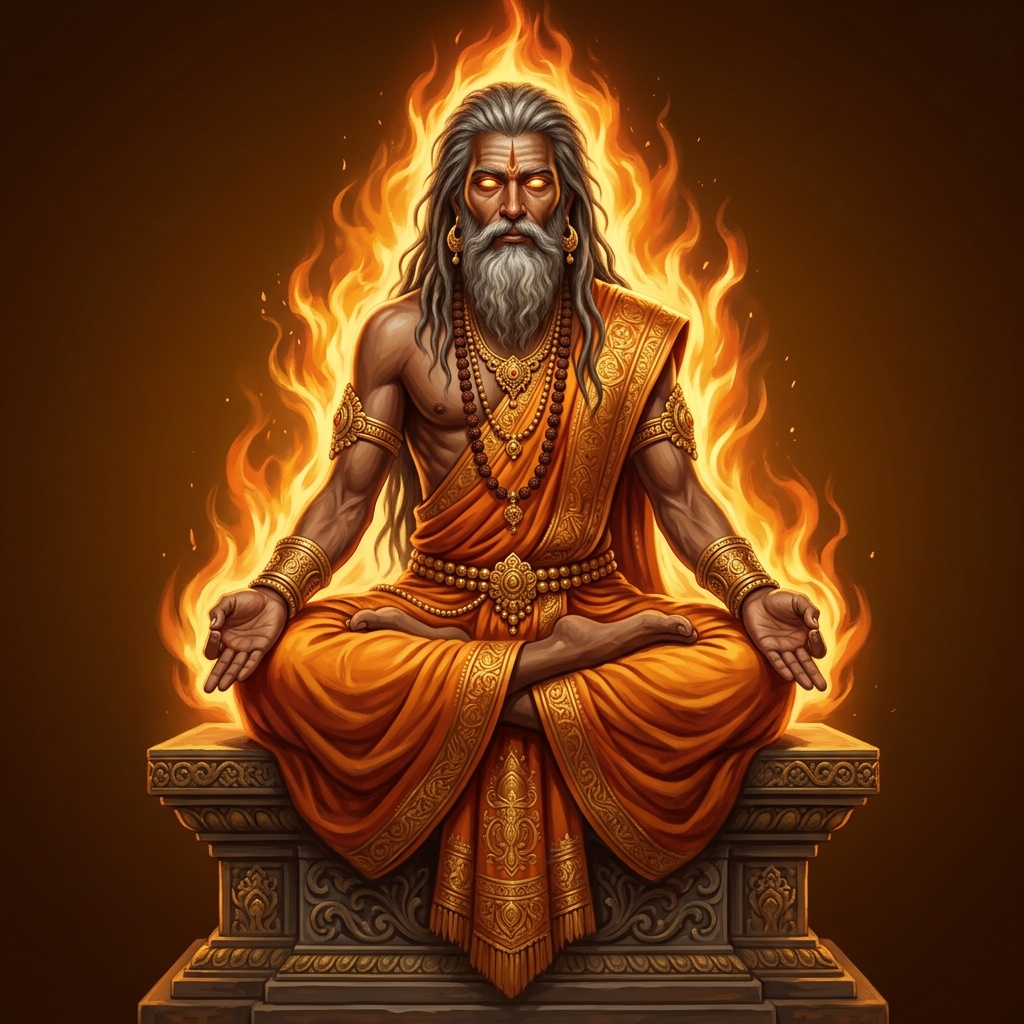
Kapila
कपिलThe Sage Whose Gaze Burns“His meditation was so powerful that a single glance turned 60,000 princes to ash.”
Kapila
The Sage Whose Gaze BurnsSage Kapila was an ancient, supremely powerful rishi meditating deep underground. When King Sagara's 60,000 sons disturbed his meditation searching for their father's stolen horse, Kapila opened his eyes and their accumulated spiritual fire reduced all 60,000 to ash in an instant.
It was Kapila's destruction of Sagara's sons that led to the quest for the river Ganga. Only Ganga's heavenly waters could purify their ashes — which is why Bhagiratha spent centuries bringing her to earth.
Opening his eyes and reducing 60,000 warriors to ash with a single look
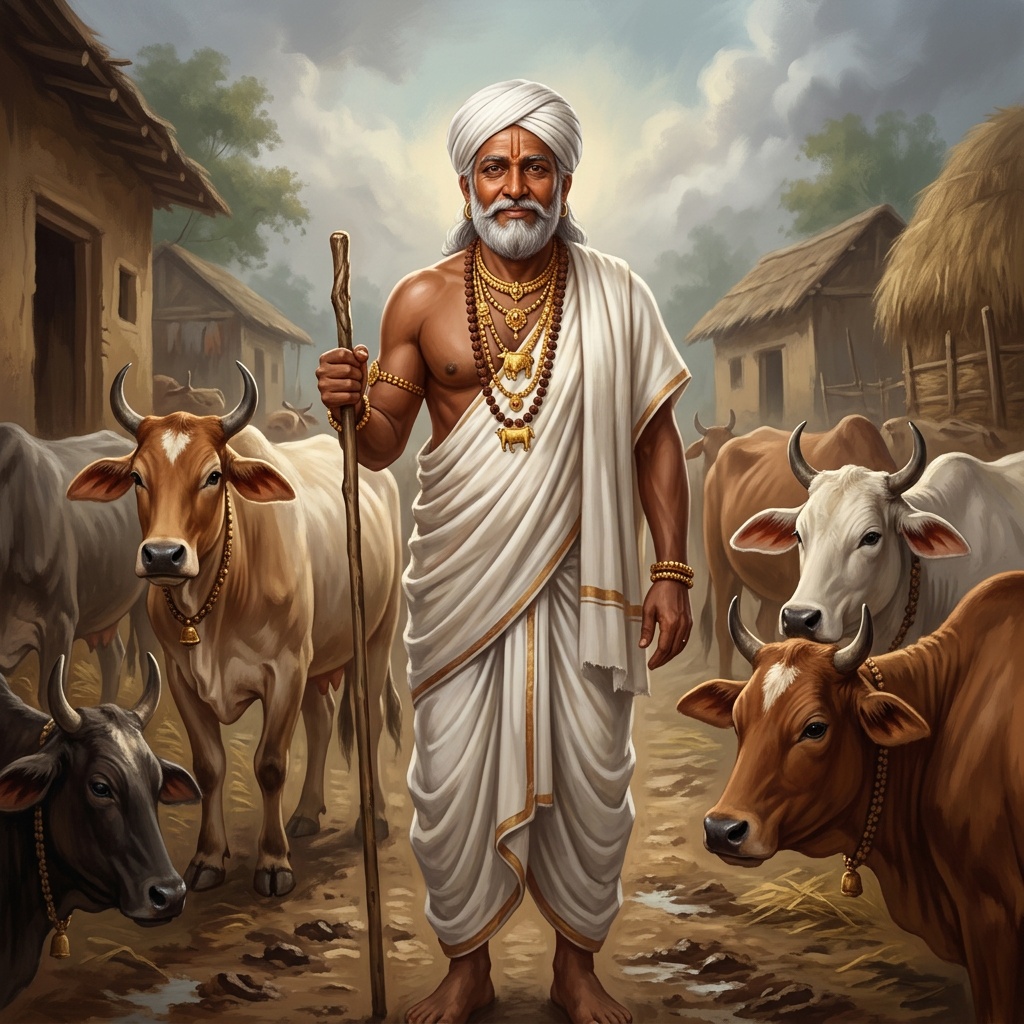
Nanda
नन्दThe Cowherd Father“He raised a god as his own son — and loved him like any father would.”
Nanda
The Cowherd FatherNanda was the chief of the cowherds of Gokul, chosen by fate to raise baby Krishna after Vasudeva smuggled the infant across the flooded Yamuna. He raised Krishna as his own child, teaching him to tend cows and play in the fields of Vrindavan — never knowing (or caring) that his son was the supreme god.
Nanda was so wealthy in cows that his village of Gokul was one of the most prosperous in the region. Yet he lived simply, valuing his cows and his family above all riches.
Raising a divine child with simple, unconditional fatherly love
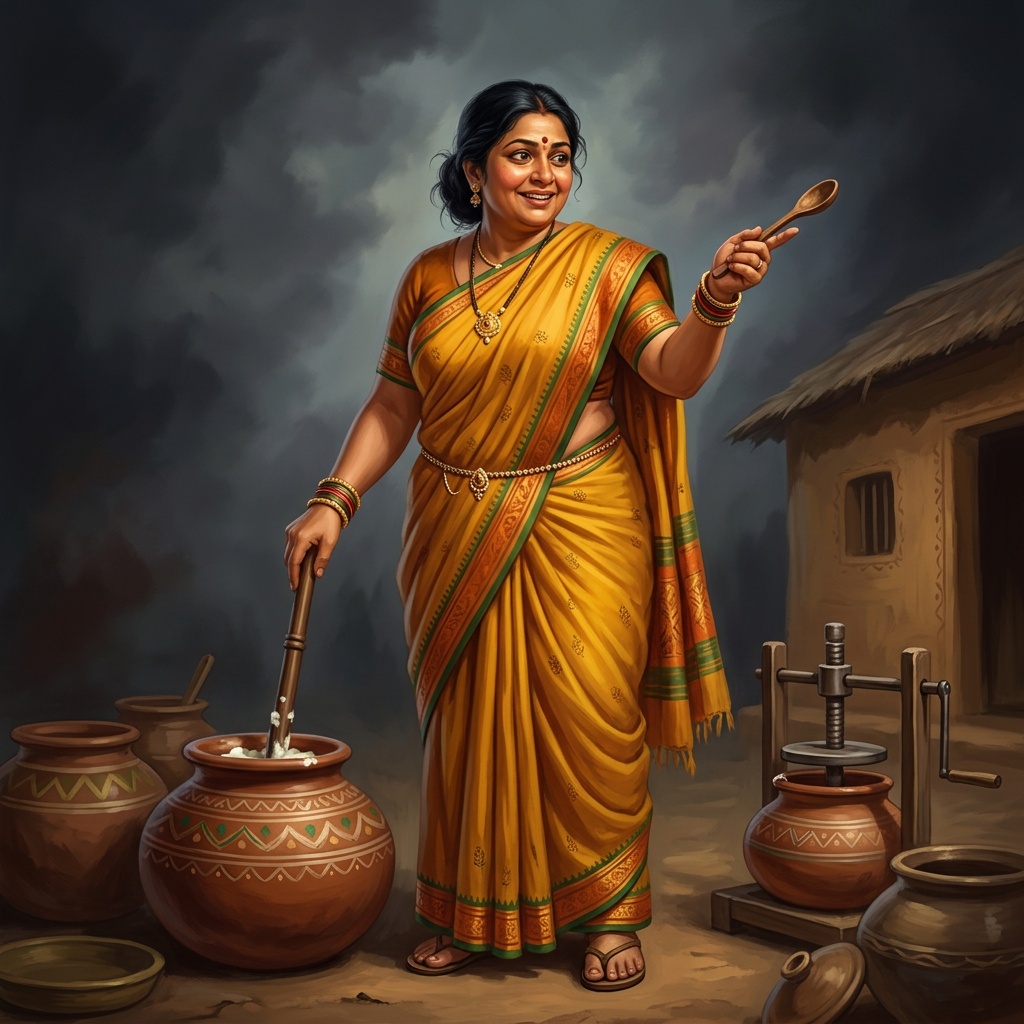
Yashoda
यशोदाThe Mother Who Saw the Universe“She opened her son's mouth to check for dirt — and saw the entire cosmos.”
Yashoda
The Mother Who Saw the UniverseYashoda was Krishna's foster mother in Gokul. She chased him for stealing butter, scolded him for eating dirt, and tied him to a grinding mortar when he was naughty. When she forced his mouth open to check for dirt, she saw the entire universe — stars, galaxies, and all of creation — inside her little boy's mouth.
The image of Yashoda tying little Krishna to a mortar with a rope is one of the most beloved scenes in Indian culture. The rope was always two inches too short — because you can't bind the infinite.
Tying the infinite god to a grinding mortar — the only person who ever bound Krishna
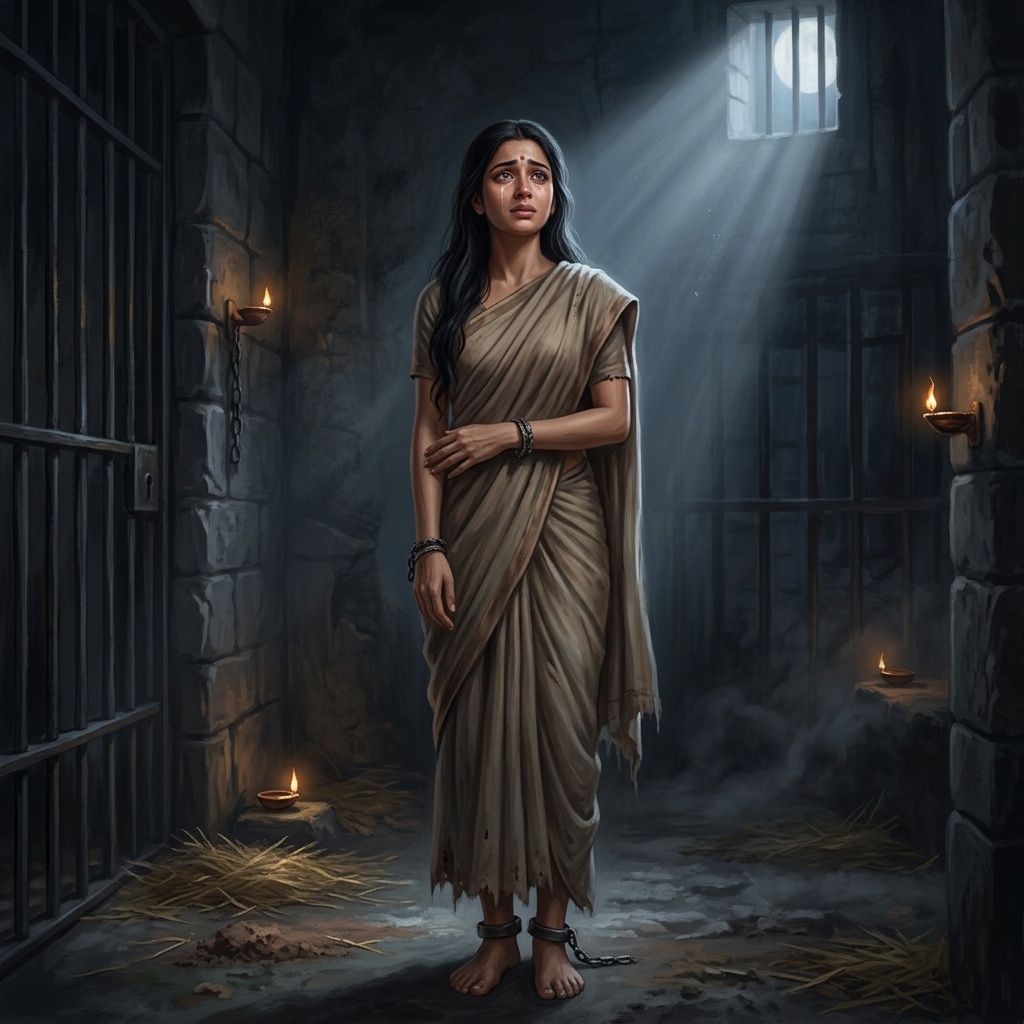
Devaki
देवकीThe Imprisoned Mother“She lost seven children to a tyrant — and the eighth one saved the world.”
Devaki
The Imprisoned MotherDevaki was Krishna's birth mother, imprisoned by her own brother Kamsa who had heard a prophecy that her eighth child would destroy him. Kamsa killed her first six babies before her eyes. The seventh was magically transferred to another womb. The eighth — Krishna — was smuggled out by Vasudeva through a storm.
Despite being the biological mother of God, Devaki spent almost no time with Krishna. Yashoda raised him in Vrindavan. Devaki's sacrifice was giving up her child so he could live.
Enduring the murder of seven children with unbroken faith that the eighth would change everything
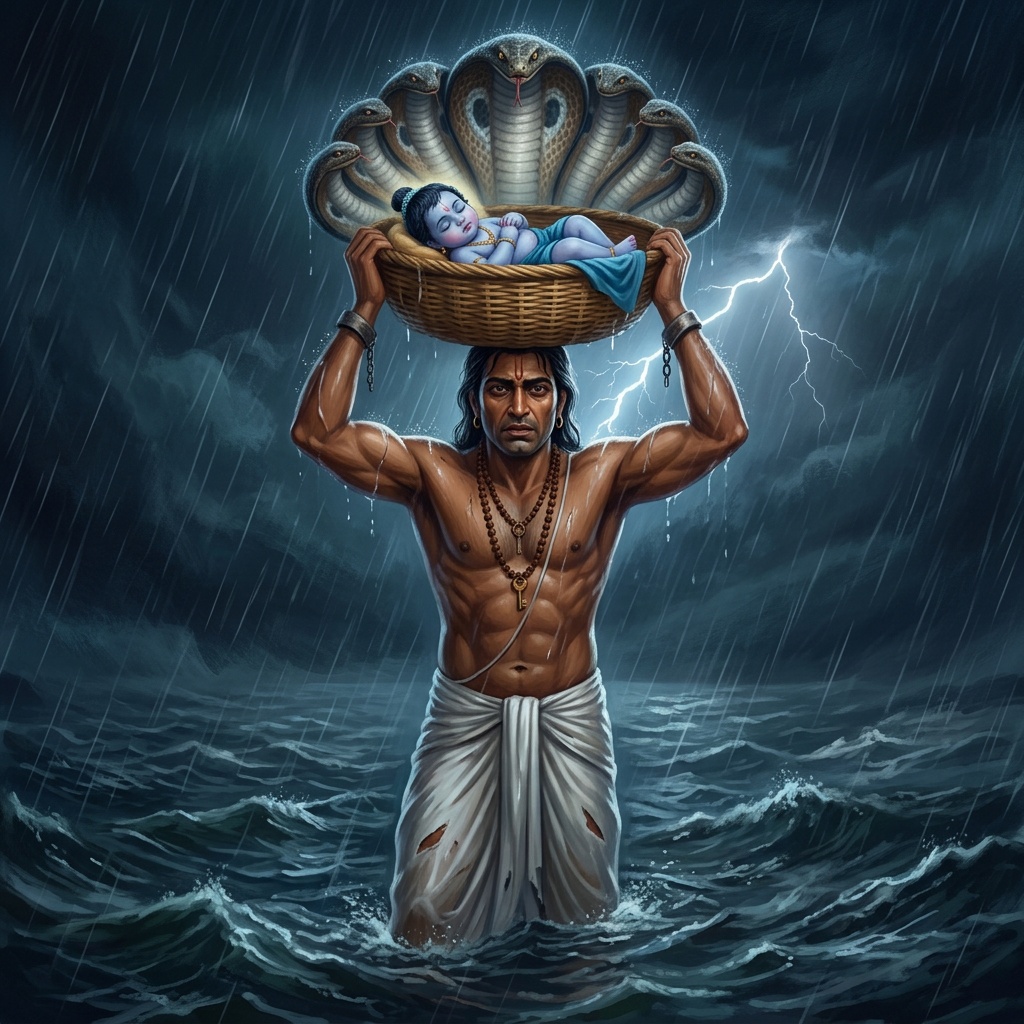
Vasudeva
वसुदेवThe Father Who Crossed the Storm“He carried a newborn god through a flood — with chains still on his wrists.”
Vasudeva
The Father Who Crossed the StormVasudeva was Krishna's father. On the night Krishna was born, the prison doors opened magically, the guards fell asleep, and Vasudeva carried the baby in a basket on his head through a raging thunderstorm across the flooded Yamuna river. Shesha Naga rose from the waters to shelter the baby.
When Vasudeva stepped into the flooded Yamuna carrying baby Krishna, the river rose even higher — then baby Krishna's foot touched the water, and the river parted instantly.
Crossing the flooded Yamuna at midnight with baby Krishna on his head
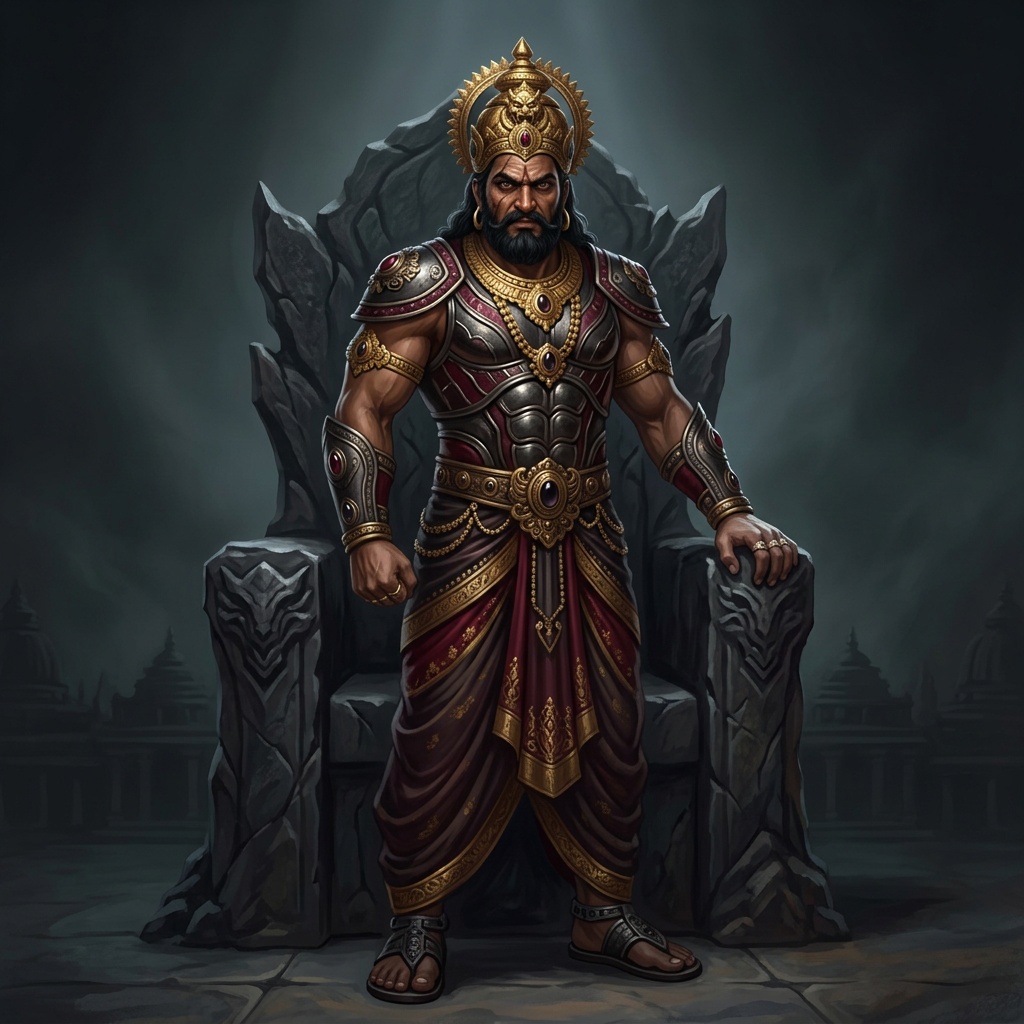
Kamsa
कंसThe Tyrant Uncle“He killed seven babies out of fear — and the eighth one came for him.”
Kamsa
The Tyrant UncleKamsa was the tyrannical king of Mathura who imprisoned his own sister Devaki after a prophecy foretold her eighth son would destroy him. He murdered seven of her children, terrorized the kingdom, and spent years hunting for the eighth child. Krishna eventually returned to Mathura and killed Kamsa in his own wrestling arena.
Kamsa was actually a good ruler before the prophecy drove him mad with fear. His descent from a just king to a child-killing tyrant is one of mythology's great cautionary tales about paranoia.
Hunting for baby Krishna across the land — and failing every time
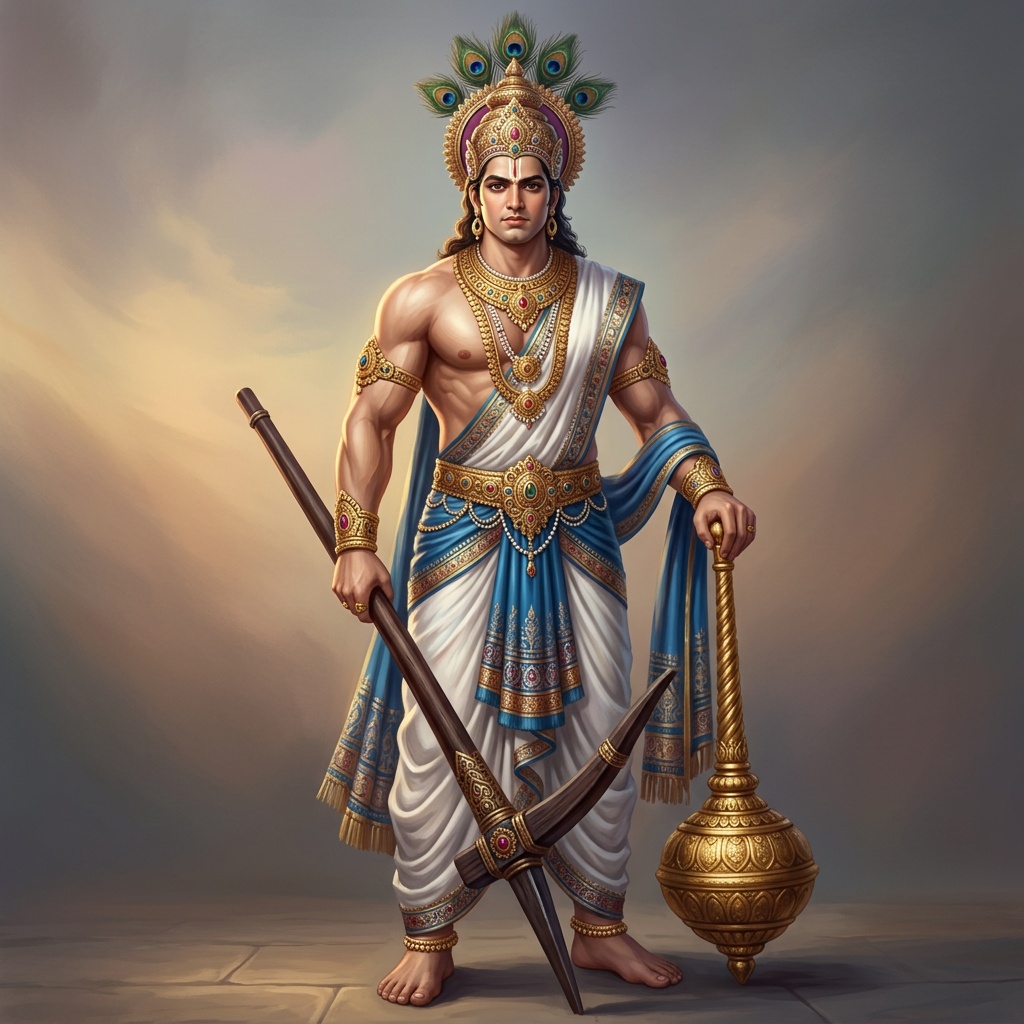
Balarama
बलरामहलधरThe Plough-Bearer“Krishna's elder brother — the one who fought with a plough and a mace.”
Balarama
The Plough-BearerBalarama is Krishna's elder brother, an incarnation of Shesha Naga. He fights with a plough (hala) and a mace, and his strength rivals even Bhima's. While Krishna used wit and strategy, Balarama preferred straightforward power. He taught both Duryodhana and Bhima the art of mace-fighting.
Balarama was neutral in the Mahabharata war — he loved both Bhima (his student) and Duryodhana (also his student). He went on a pilgrimage instead of fighting, refusing to choose sides.
Dragging an entire river off its course with his plough when it refused to come to him
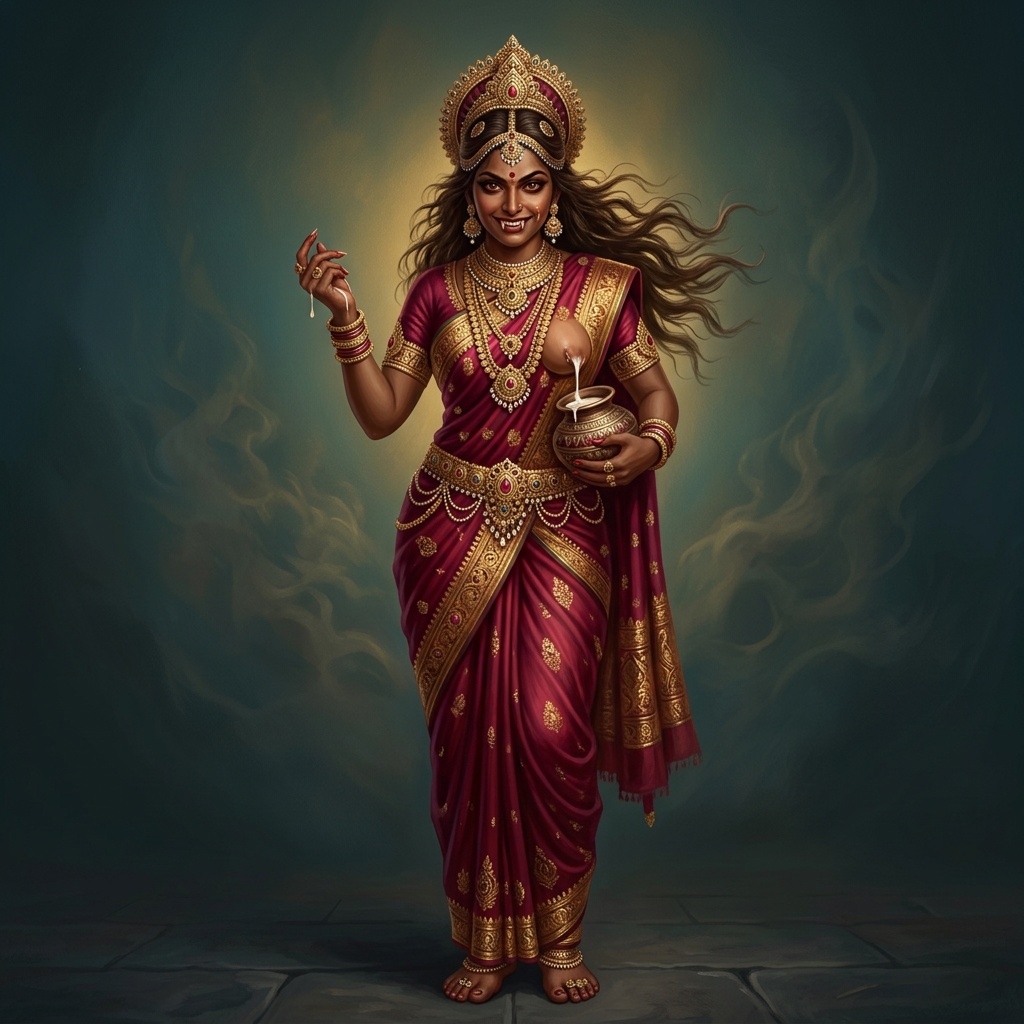
Putana
पूतनाThe Poison Nurse“She came to poison a baby — and the baby drank her life instead.”
Putana
The Poison NursePutana was a demoness sent by Kamsa to kill baby Krishna by feeding him poisoned milk. She disguised herself as a beautiful woman, picked up the infant, and offered her breast. Baby Krishna drank — not just the poison, but her very life force. She collapsed dead, returning to her true monstrous form.
Despite trying to kill him, Putana is said to have attained liberation (moksha) because she performed the act of nursing Krishna — even with evil intent. The act of feeding God, even unknowingly, was enough.
Disguising herself as a beautiful nurse to poison baby Krishna — and failing spectacularly
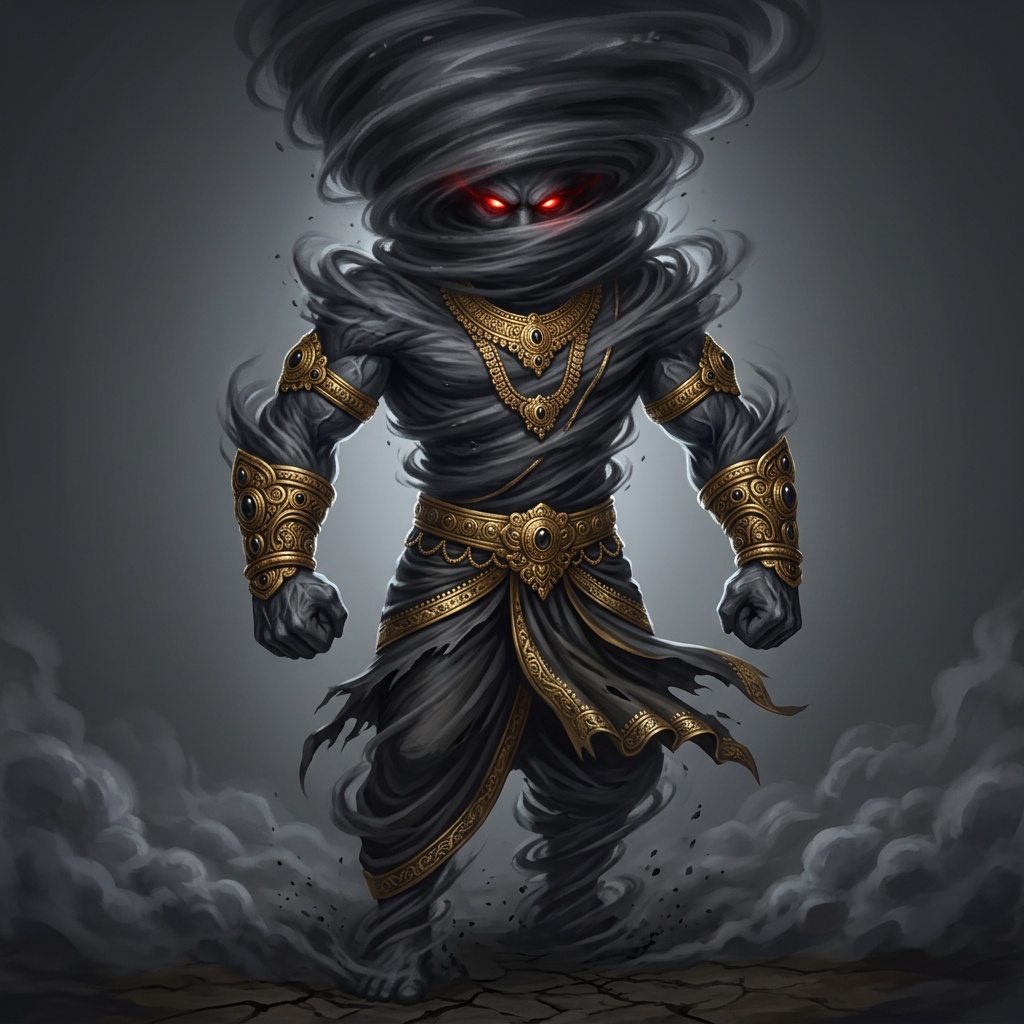
Trinavarta
तृणावर्तThe Whirlwind Demon“He tried to carry baby Krishna into the sky — and couldn't handle the weight.”
Trinavarta
The Whirlwind DemonTrinavarta was a whirlwind demon sent by Kamsa to kidnap baby Krishna. He created a massive dust storm, snatched the baby, and flew into the sky. But baby Krishna suddenly became as heavy as a mountain. Trinavarta couldn't hold him, crashed to earth, and was destroyed — by an infant.
Baby Krishna made himself so heavy that the demon who could create hurricanes couldn't carry him. The infinite weight of the universe in a baby's body — that's what Trinavarta tried to lift.
Creating massive dust storms to kidnap children
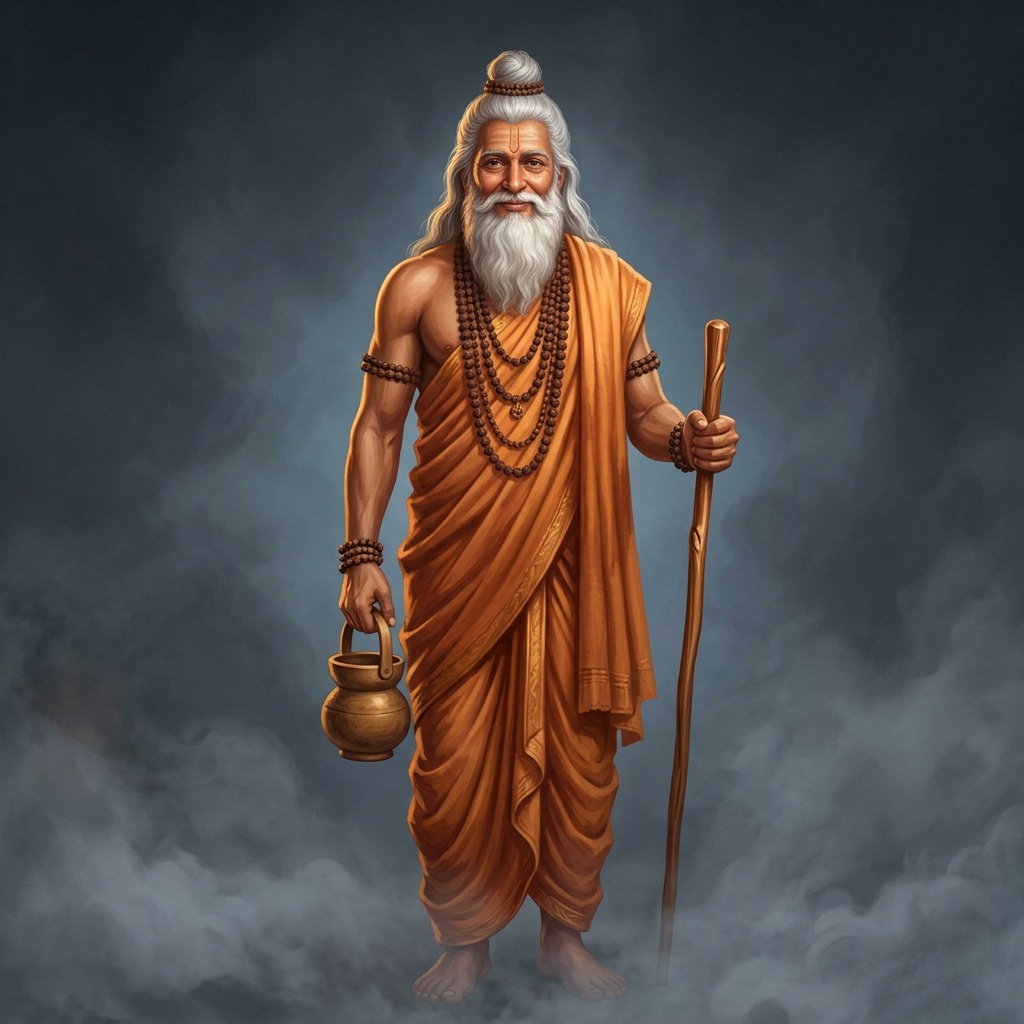
Sandipani
सान्दीपनिKrishna's Guru“The teacher who taught God — and God honored him like any grateful student.”
Sandipani
Krishna's GuruSage Sandipani was the guru at whose ashram Krishna and Balarama studied the sixty-four arts. In just sixty-four days, Krishna mastered everything — warfare, music, science, and philosophy. As guru dakshina, Sandipani asked for the impossible: the return of his dead son. Krishna went to the realm of death and brought the boy back.
Krishna could have learned everything instantly — he IS all-knowing. But he chose to study under Sandipani like a regular student, to show that respecting your teacher matters even if you're God.
Teaching the sixty-four arts to the God of the universe — and asking for his son as payment
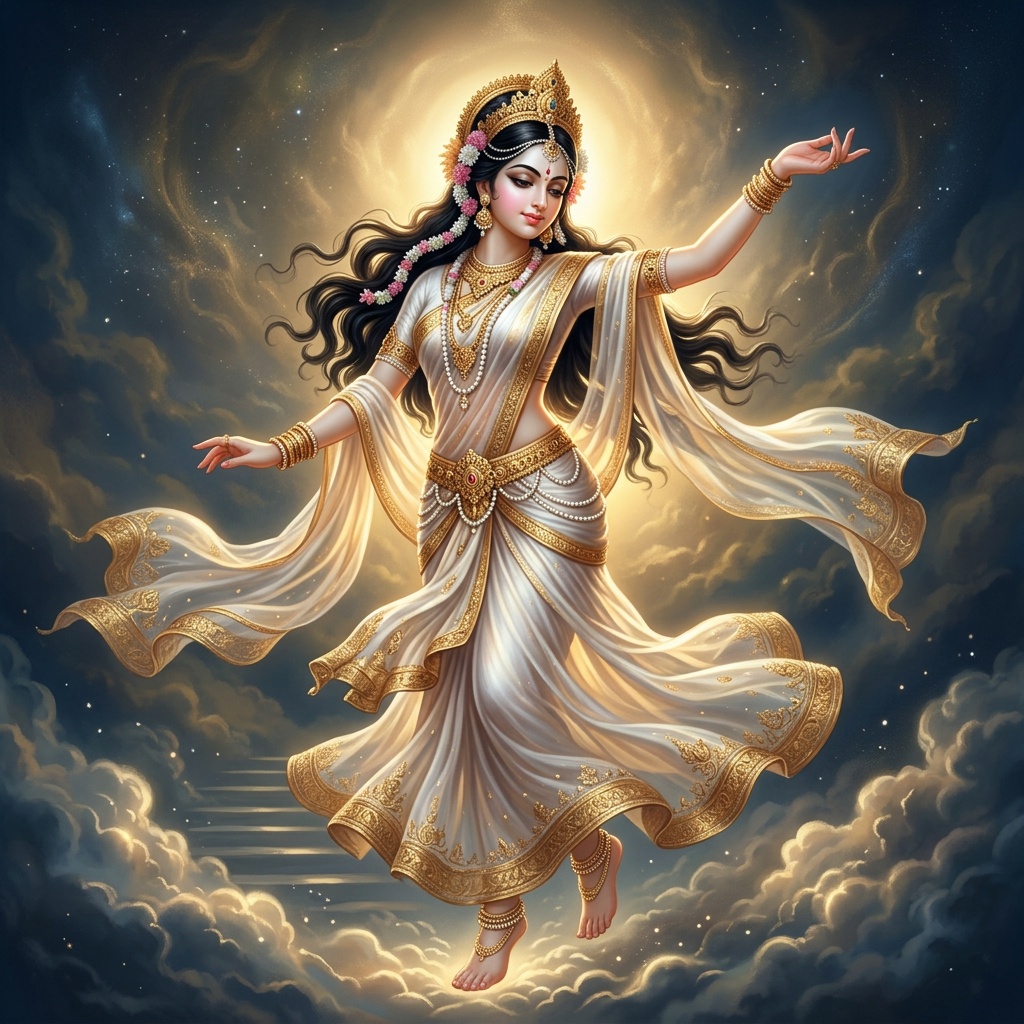
Urvashi
उर्वशीThe Celestial Dancer“The most beautiful apsara in heaven — whose dance could enchant gods and sages.”
Urvashi
The Celestial DancerUrvashi is the most famous of the apsaras — celestial dancers of Indra's court. She was sent to distract sages from their meditation but often fell in love herself. Her relationship with King Pururavas is one of the oldest love stories in Indian literature — a divine being who chose a mortal.
When Urvashi tried to distract Arjuna during his time in heaven, he respectfully called her "mother." Furious at being rejected, she cursed him to become a eunuch — which actually helped him during the year of disguise.
Dancing the celestial dance that can break any sage's meditation
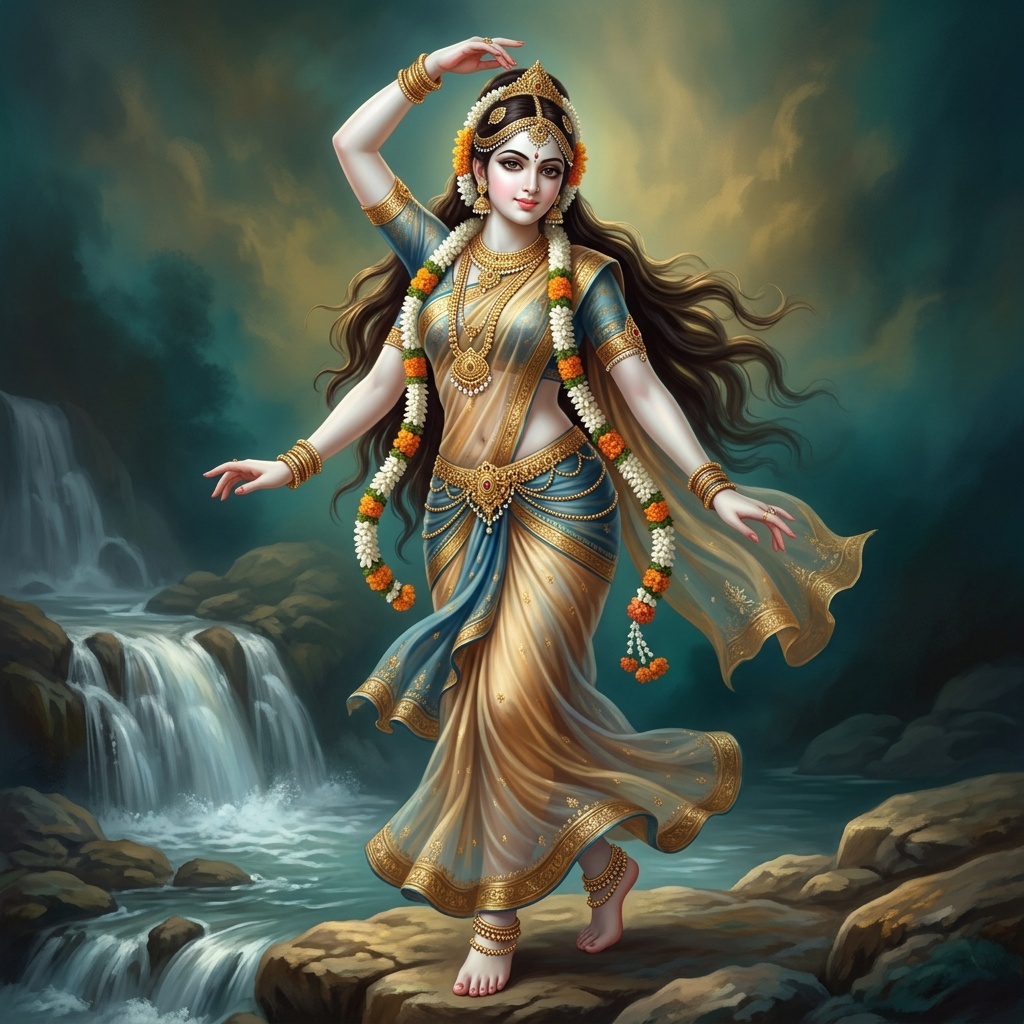
Menaka
मेनकाThe Apsara Who Loved“Sent to distract a sage — and fell in love for real.”
Menaka
The Apsara Who LovedMenaka was the apsara sent by Indra to break Vishwamitra's powerful meditation, which threatened Indra's throne. She succeeded — they fell in love and had a daughter, Shakuntala. But Menaka genuinely loved Vishwamitra, and leaving him was her own tragedy. Her daughter Shakuntala became the mother of Emperor Bharata.
Menaka and Vishwamitra's daughter Shakuntala married King Dushyanta, and their son Bharata became so great that the entire Indian subcontinent is named after him — Bharat.
Breaking Vishwamitra's meditation — a penance that had the gods terrified
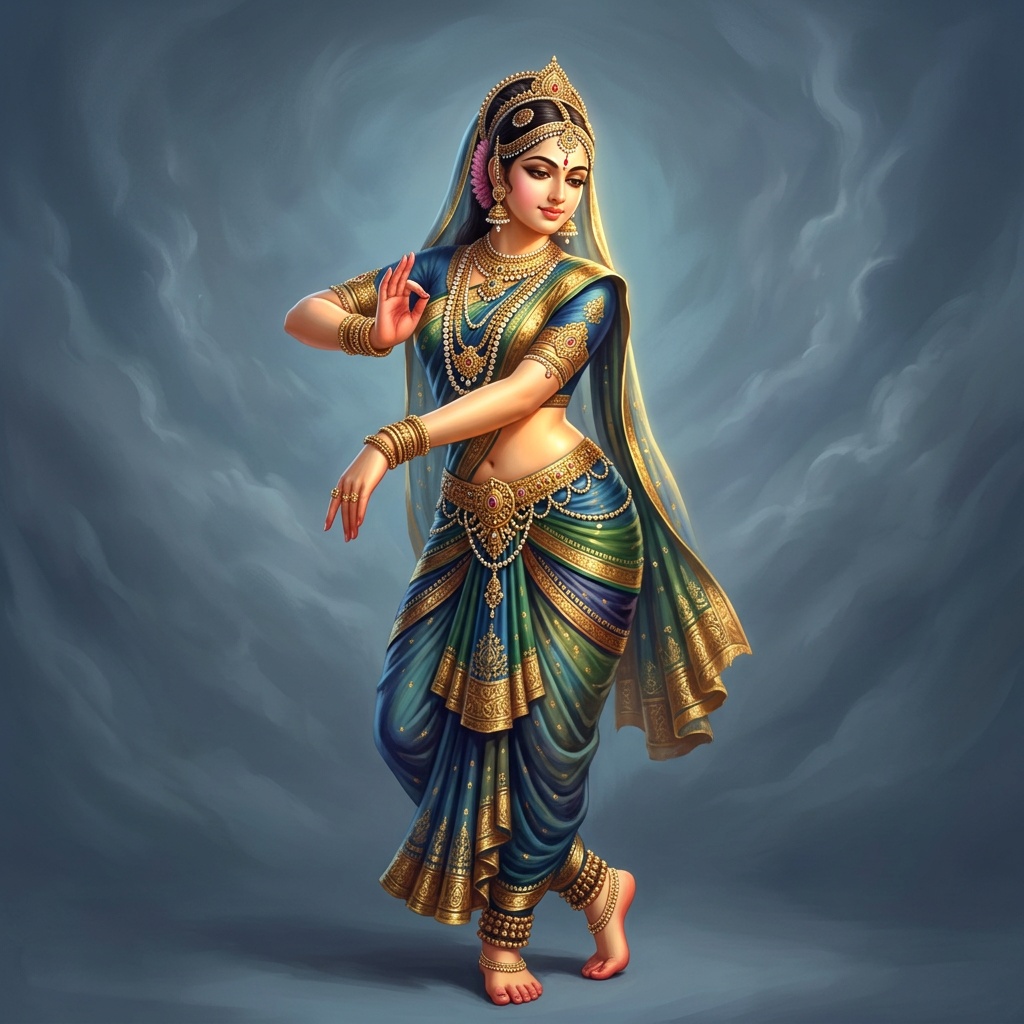
Rambha
रम्भाThe Queen of Apsaras“Indra's greatest weapon wasn't the Vajra — it was her dance.”
Rambha
The Queen of ApsarasRambha is considered the queen of all apsaras in Indra's court. When Indra sent her to break Vishwamitra's meditation a second time, the sage was ready — he cursed her to become a stone for ten thousand years. Her story is a reminder that even divine beauty is no match for true spiritual power.
Rambha's name is synonymous with beauty in Indian literature. The phrase "as beautiful as Rambha" has been used in poetry for thousands of years.
The celestial dance that has distracted gods and sages across the ages
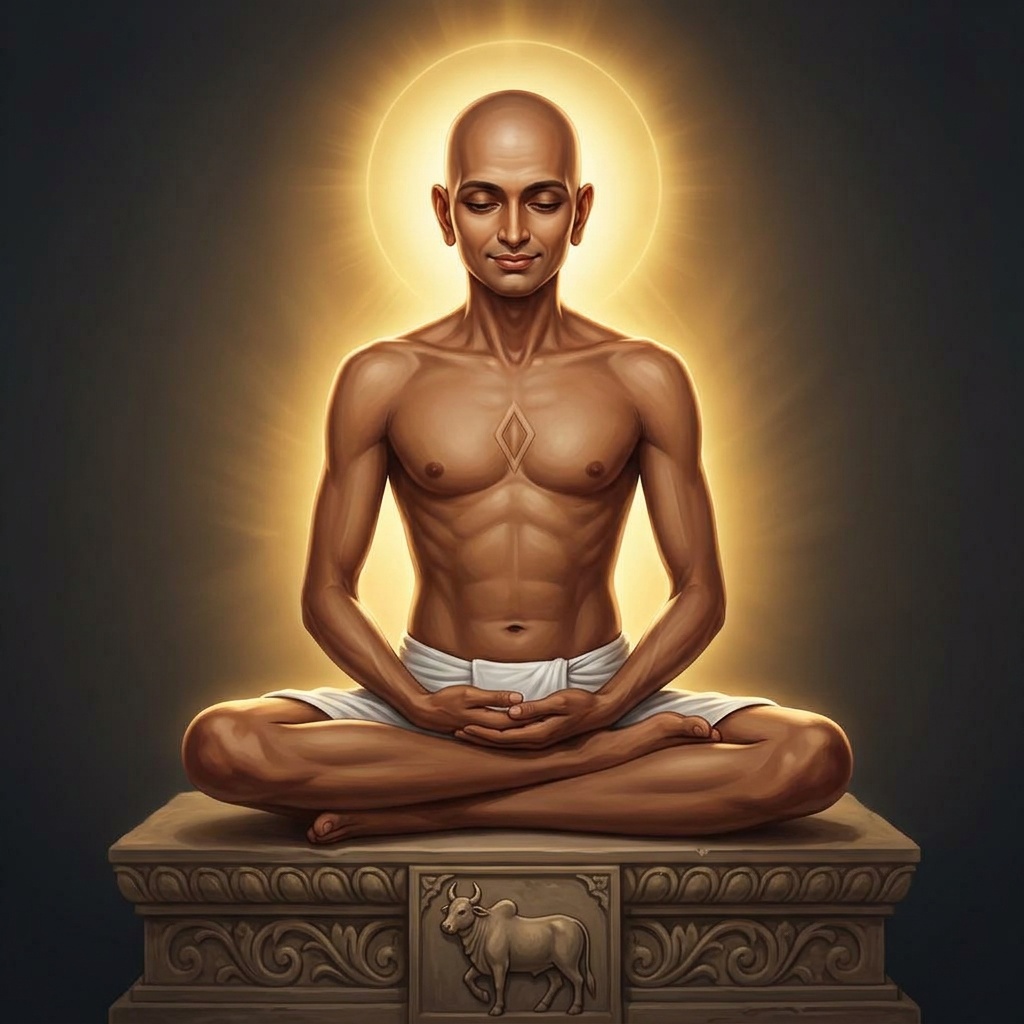
Rishabhadeva
ऋषभदेवआदिनाथThe First Tirthankara“The first teacher — who taught humanity everything from farming to alphabets.”
Rishabhadeva
The First TirthankaraRishabhadeva (Adinath) was the first of the 24 Tirthankaras in Jainism. Before he arrived, humans didn't know how to cook, farm, write, or govern. He taught them everything — and then renounced it all, walking into the forest to meditate until he achieved perfect knowledge.
Rishabhadeva fasted for an entire year before anyone understood how to offer food to a monk. Chandanbala was finally the one who figured out the right way — with specific conditions fulfilled.
Teaching humanity civilization itself — then walking away from all of it
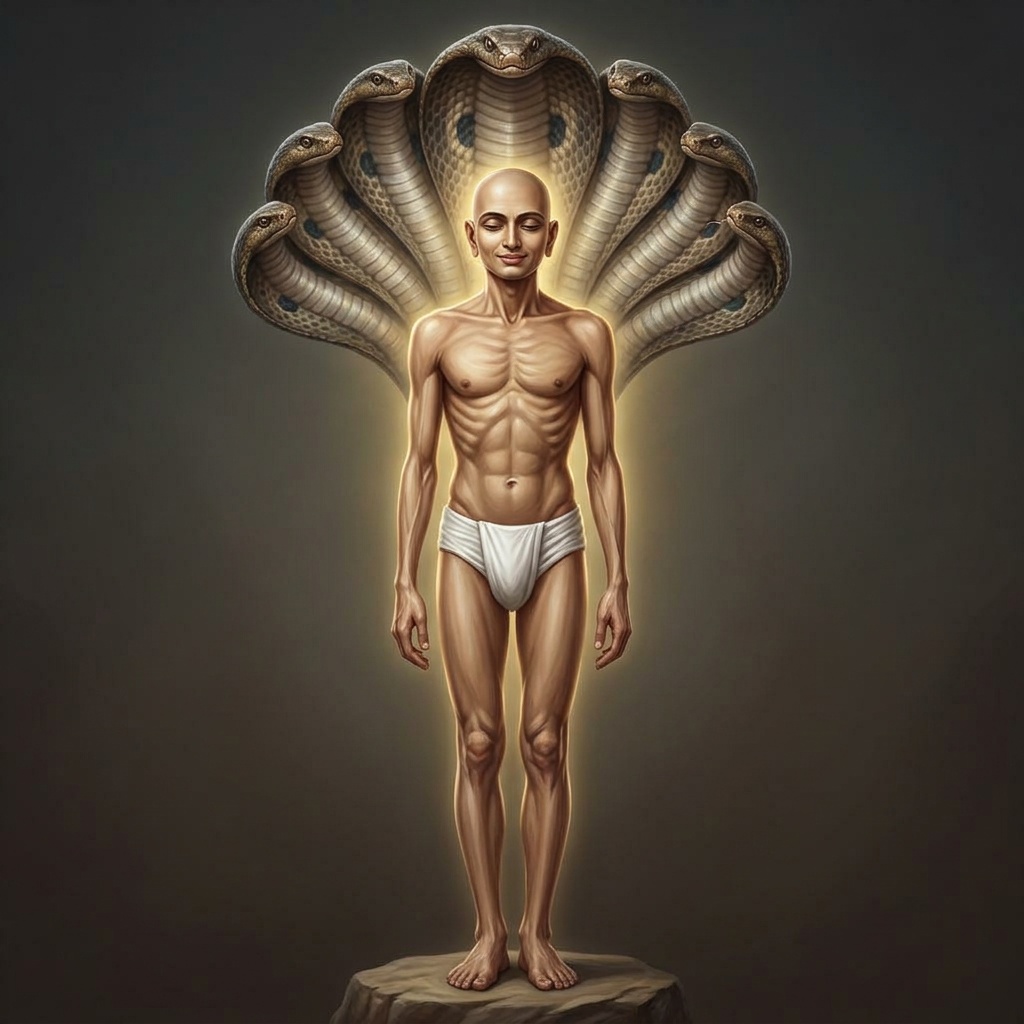
Parshvanatha
पार्श्वनाथThe Serpent-Shielded Lord“Even the serpents bowed their hoods to protect him.”
Parshvanatha
The Serpent-Shielded LordParshvanatha was the 23rd Tirthankara, born 250 years before Mahavira. When a demon tried to drown him in a storm during meditation, the serpent king Dharanendra rose from the earth and spread his hoods as an umbrella over Parshvanatha. He meditated through the flood without moving.
Parshvanatha is always depicted with a canopy of seven serpent hoods above his head. This is the iconic image that distinguishes him from all other Tirthankaras.
Meditating through a demonic flood without flinching — while serpents sheltered him
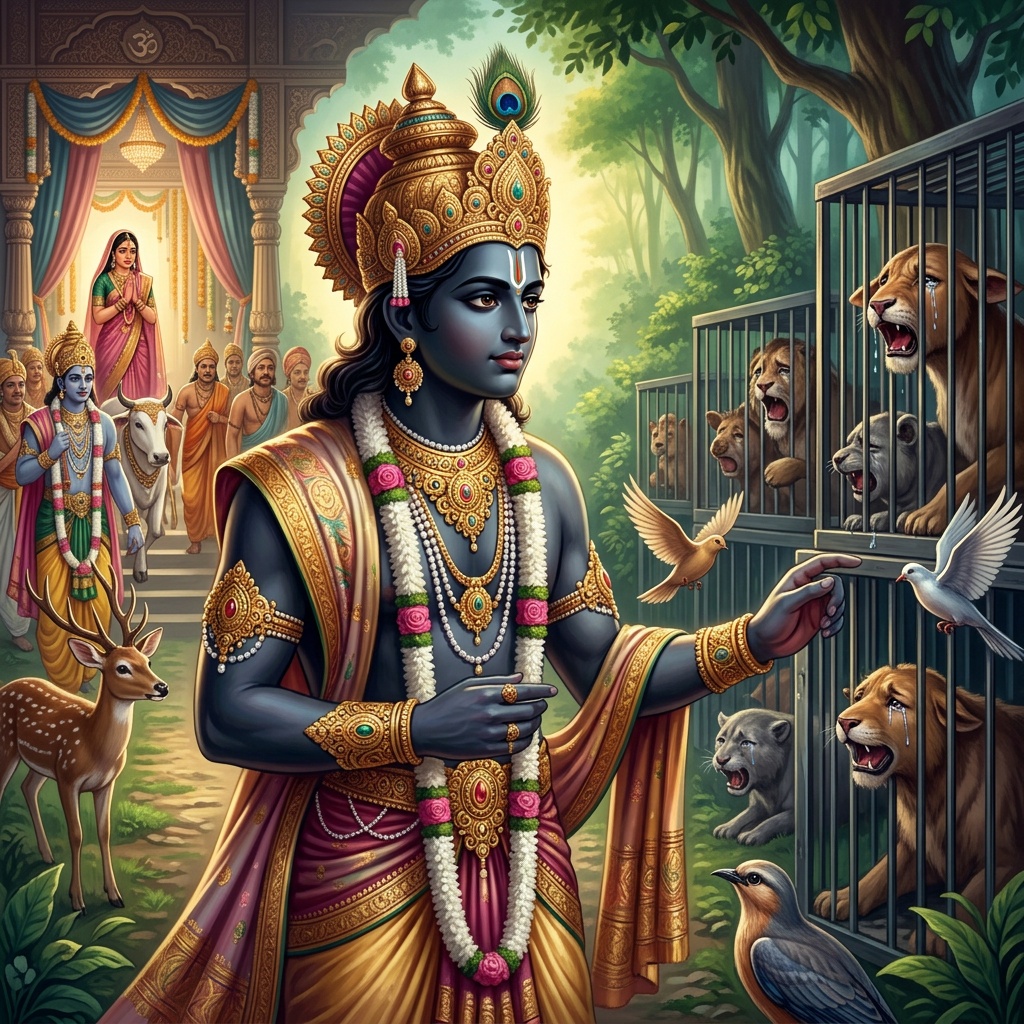
Neminatha
नेमिनाथThe Compassionate Prince“He heard the cries of animals at his wedding — and walked away from it all.”
Neminatha
The Compassionate PrinceNeminatha was the 22nd Tirthankara and Krishna's cousin. On the day of his grand wedding, he heard the wailing of animals being slaughtered for the feast. Overcome with compassion, he abandoned the wedding procession, gave up his royal life, and became an ascetic — choosing the cries of animals over a crown.
Neminatha's fiancee Rajimati was so inspired by his renunciation that she too became a Jain nun, considered one of the greatest sadhvis in Jain history.
Walking away from his own wedding because animals were being harmed for the feast
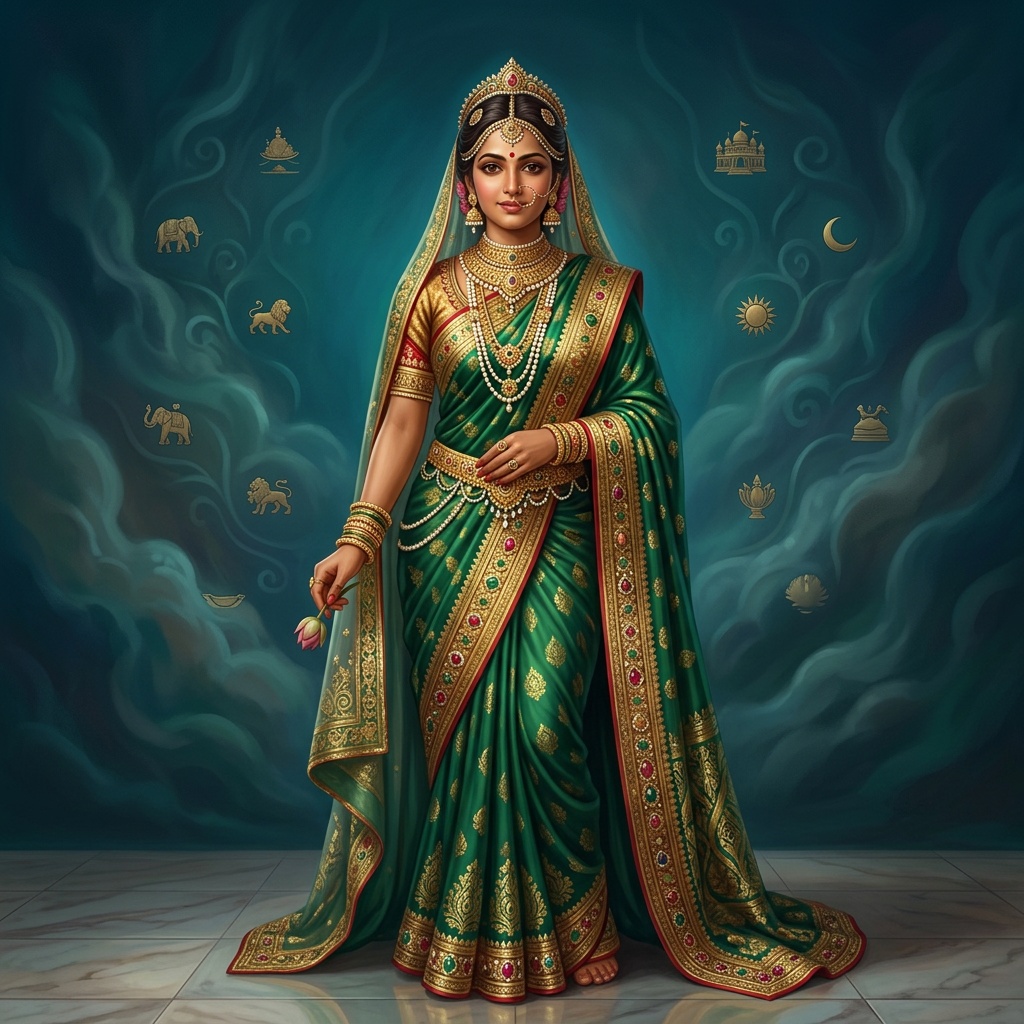
Trishala
त्रिशलाMahavira's Mother“She had sixteen auspicious dreams — and each one foretold a great soul.”
Trishala
Mahavira's MotherQueen Trishala dreamed sixteen magnificent dreams the night Mahavira was conceived — a white elephant, a lion, the sun, the moon, and more. Dream interpreters told her that her son would be either a universal emperor or a great spiritual teacher. He became the latter.
The sixteen dreams of Trishala are so important in Jain tradition that they are depicted in every Jain temple. Each dream symbolizes a different aspect of Mahavira's future greatness.
The sixteen auspicious dreams that heralded a world-changing soul
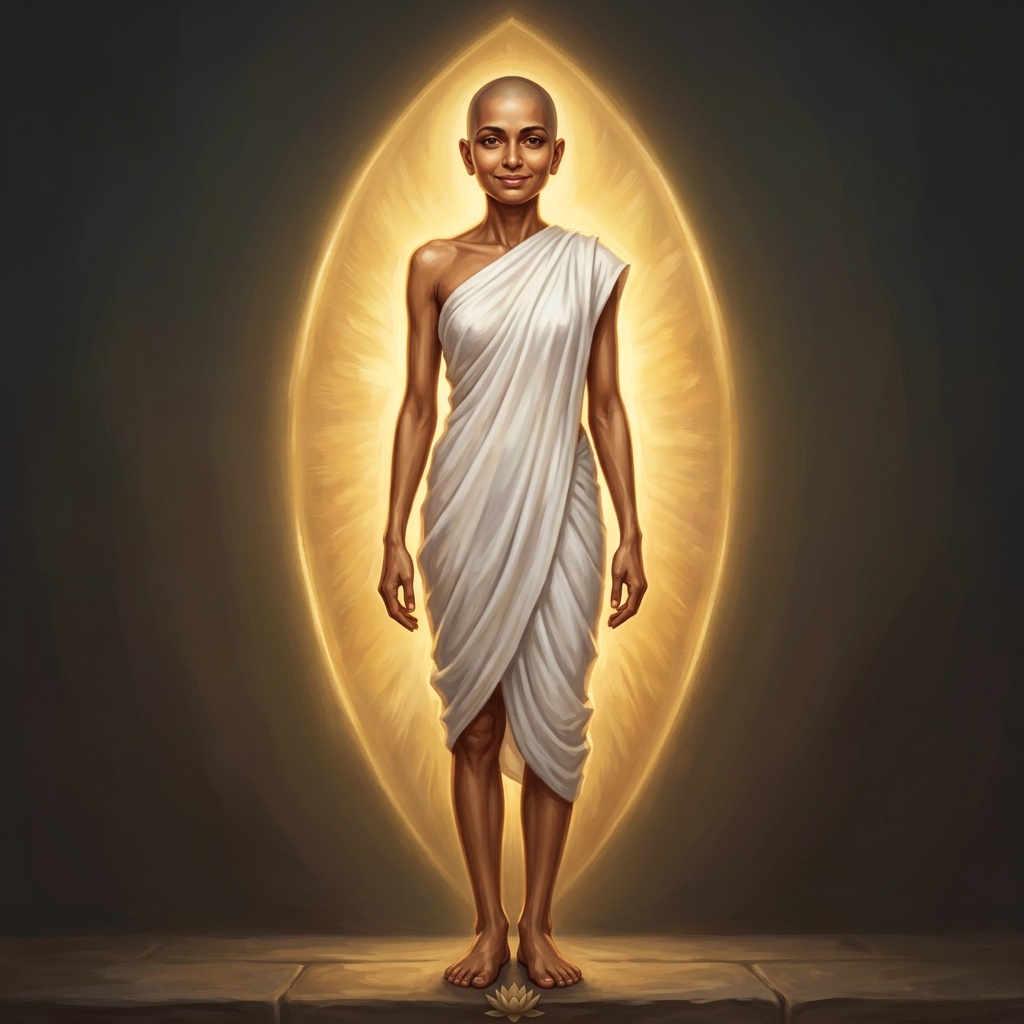
Malli
मल्लिनाथThe Only Female Tirthankara“She proved that the path to liberation has no gender.”
Malli
The Only Female TirthankaraAccording to the Shvetambara tradition, Malli was the 19th Tirthankara — and a woman. She was a princess so beautiful that six kings went to war over her. To teach them the futility of desire, she collected her own perspiration in a pot and showed them its decay. The kings renounced the world; she achieved kevala jnana.
Malli is the center of one of Jainism's biggest theological debates. Shvetambaras believe she was a woman; Digambaras believe the 19th Tirthankara was male (Mallinatha). Both agree on the teachings.
Using the pot of decay to shatter six kings' illusion about beauty
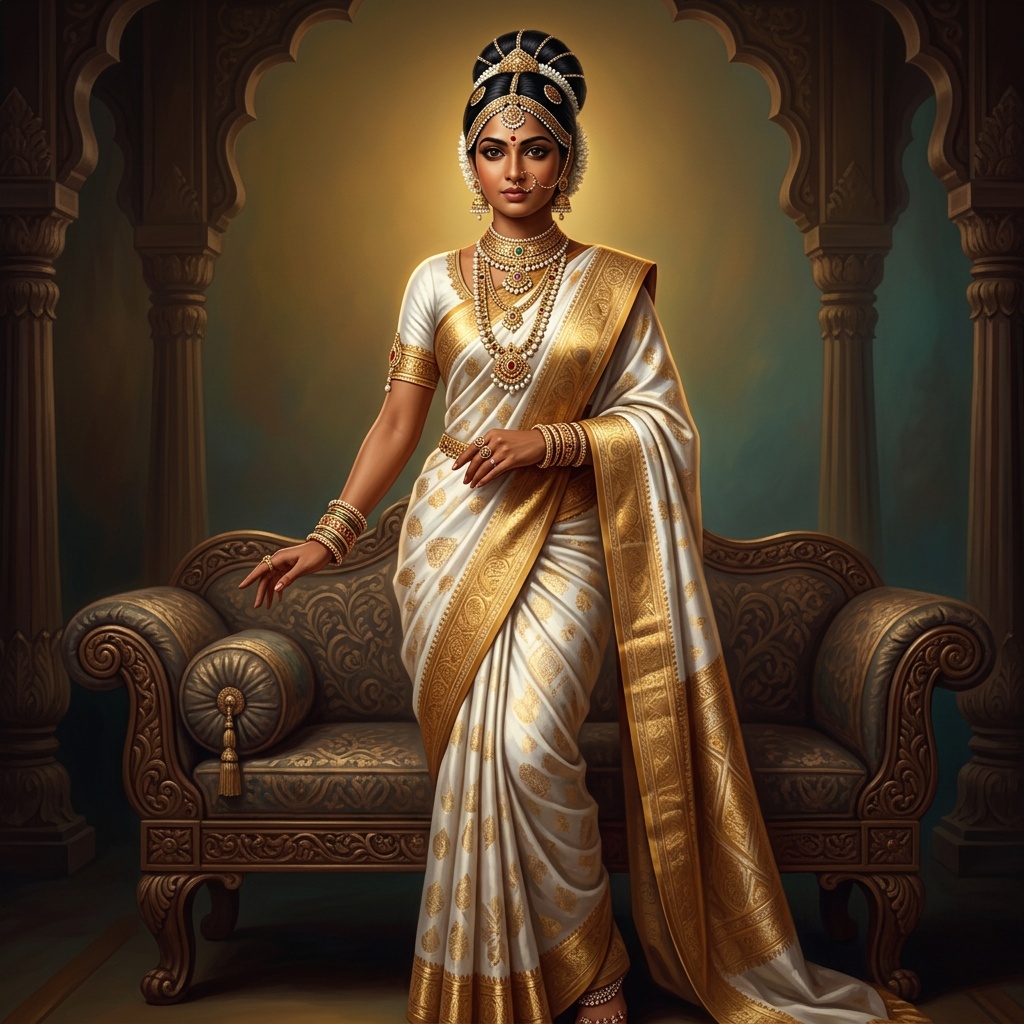
Chelna
चेलनाThe Devoted Queen“Her faith turned a king into a monk.”
Chelna
The Devoted QueenQueen Chelna was known for her extraordinary devotion and faith in Jain teachings. Her influence helped transform the warrior king Prasannachandra into a devout follower of non-violence. In many Jain tales, she represents the power of gentle spiritual influence over brute force.
Chelna's name means "one who inspires." In Jain tradition, she embodies the idea that spiritual transformation often begins not with thunder, but with a gentle whisper.
Inspiring a warrior-king to lay down his weapons through pure faith
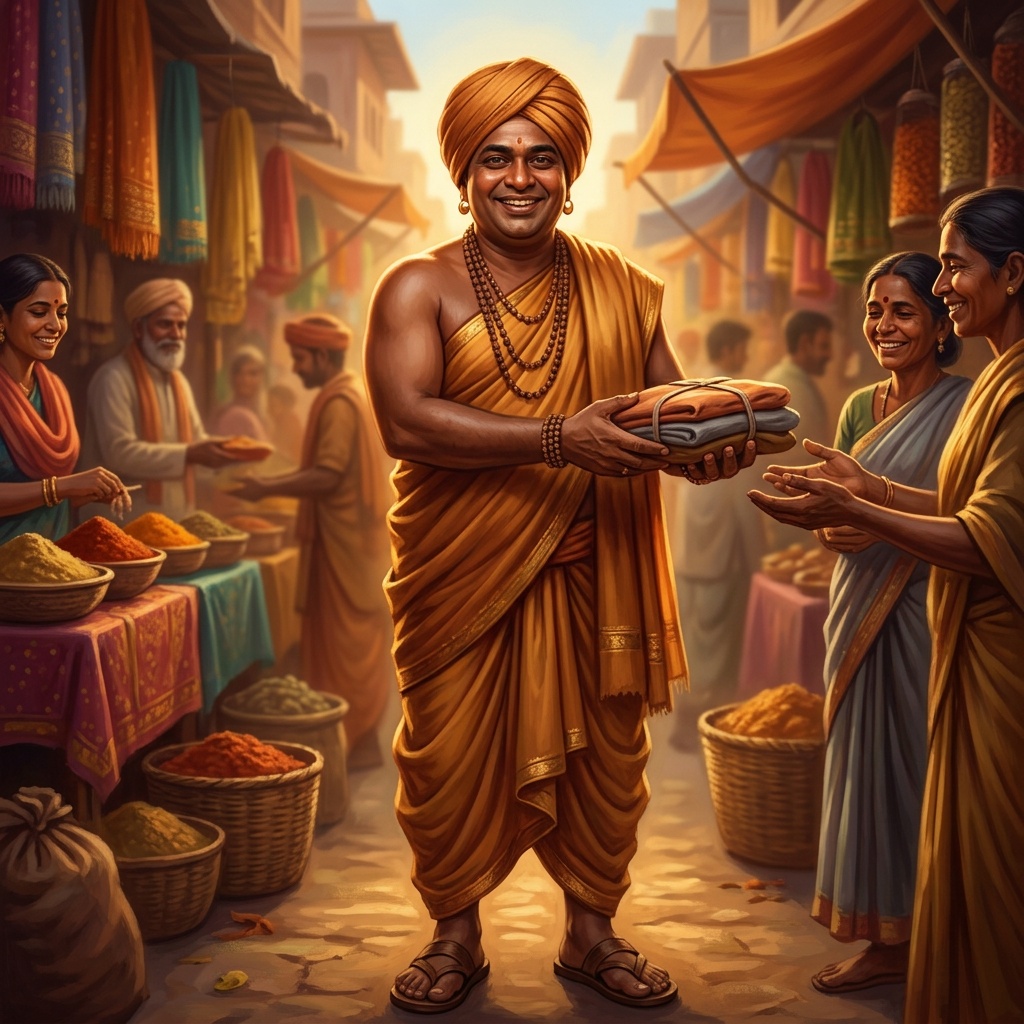
Dhanna
धन्नाThe Merchant of Merit“He traded gold for karma — and considered it the best deal of his life.”
Dhanna
The Merchant of MeritDhanna was a wealthy Jain merchant who understood that true wealth isn't gold but good karma. He gave away his fortune to feed the hungry, shelter the homeless, and support monks. In Jain tradition, his story teaches that generosity toward spiritual seekers multiplies merit infinitely.
Dhanna's charitable acts are celebrated in Jain literature as the gold standard of dana (giving). He believed that feeding a monk was worth more than a mountain of gold.
Giving away his entire fortune and finding true wealth in spiritual merit
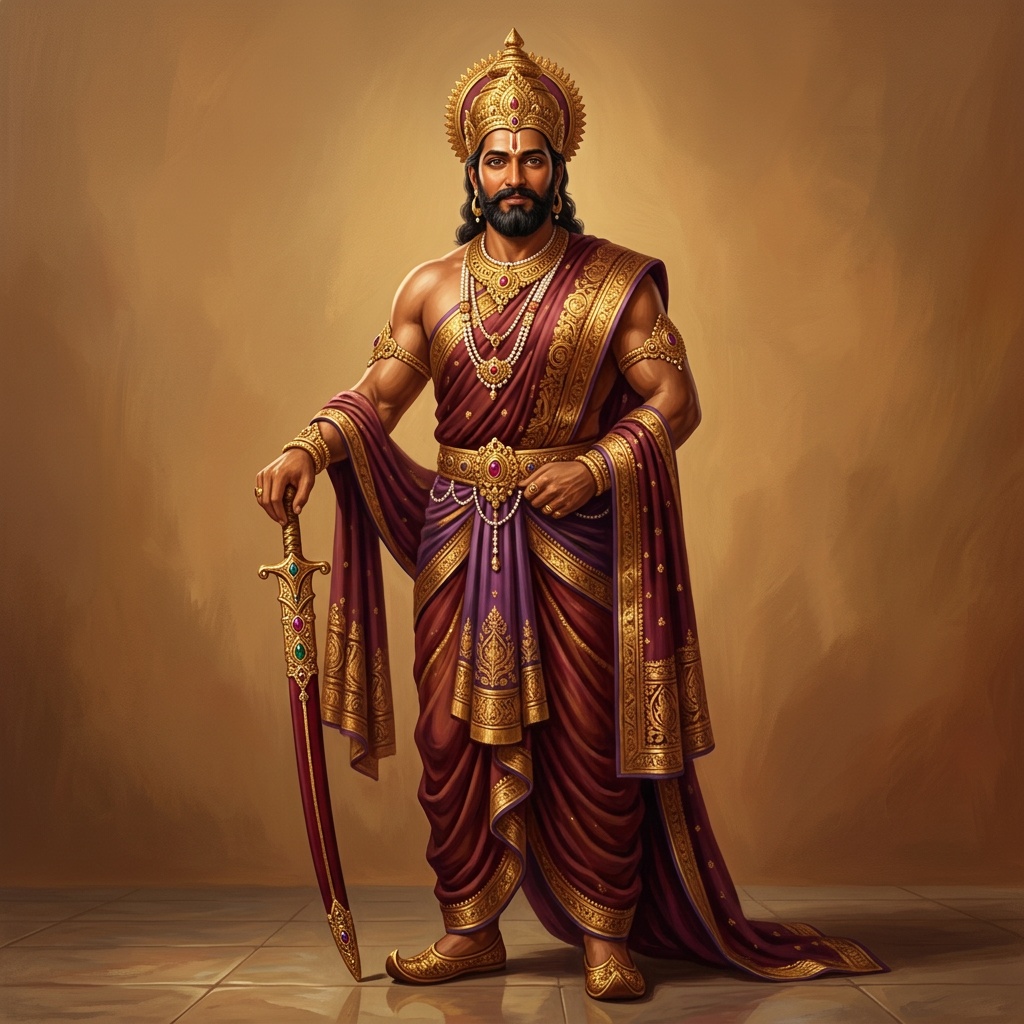
Siddhartha
सिद्धार्थMahavira's Father“A king whose kingdom prospered the moment his son was conceived.”
Siddhartha
Mahavira's FatherKing Siddhartha was Mahavira's father and the ruler of the Jnatrika clan. From the moment Mahavira was conceived, the kingdom experienced unprecedented prosperity — harvests overflowed, rains came on time, and peace prevailed. Siddhartha named his son "Vardhamana" meaning "the one who brings increase."
Siddhartha initially didn't want Mahavira to become a monk. When Mahavira finally left for the forest, Siddhartha had already passed away — as if destiny waited for the father to depart before the son could renounce.
Naming his son Vardhamana — "the one who brings increase" — sensing his cosmic destiny
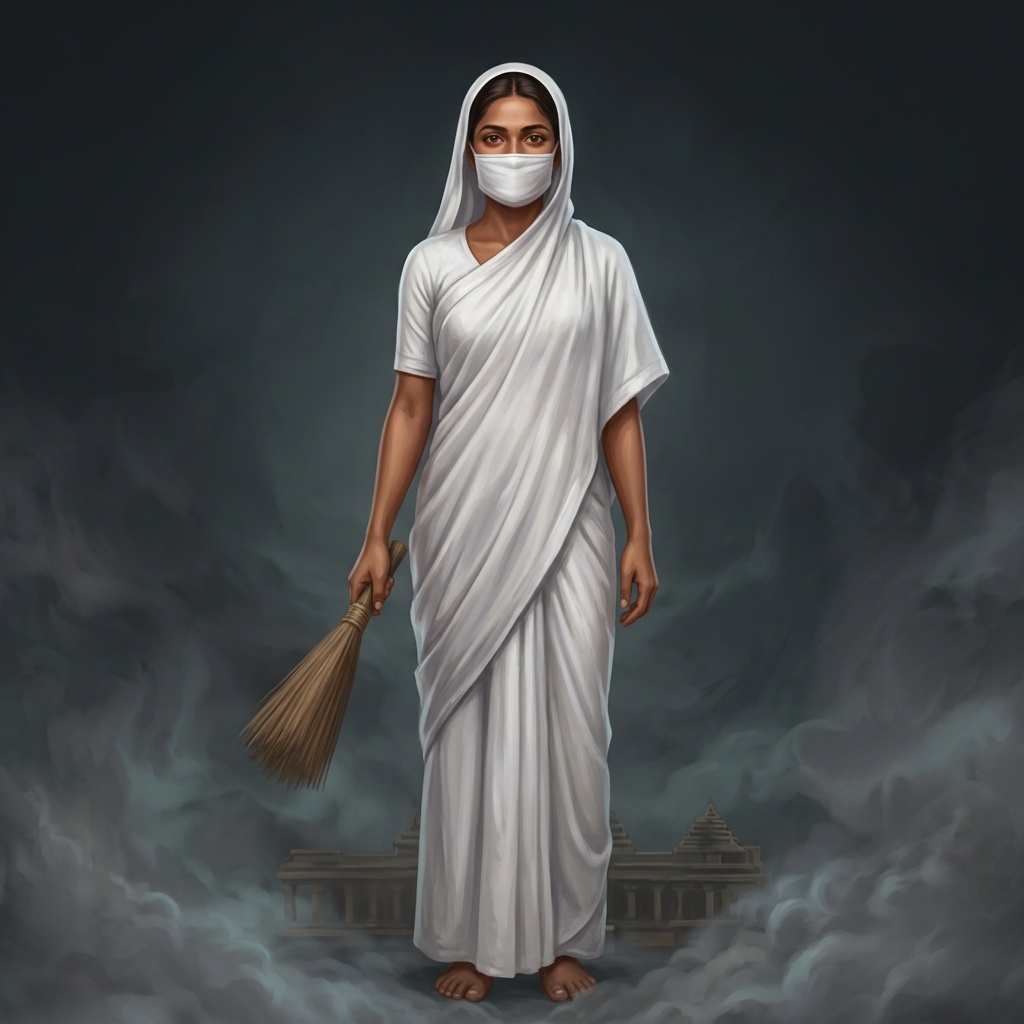
Rajimati
राजीमतीThe Abandoned Bride“Left at the altar — and she turned her heartbreak into enlightenment.”
Rajimati
The Abandoned BrideRajimati was engaged to Prince Neminatha. On their wedding day, he heard animals crying and abandoned the ceremony to become a monk. Instead of bitterness, Rajimati was inspired by his compassion and eventually became a Jain nun herself — one of the most celebrated sadhvis in Jain history.
Rajimati is honored in Jain tradition not as a victim but as a hero. She transformed abandonment into awakening — proving that the greatest pain can become the greatest teacher.
Transforming heartbreak into spiritual liberation
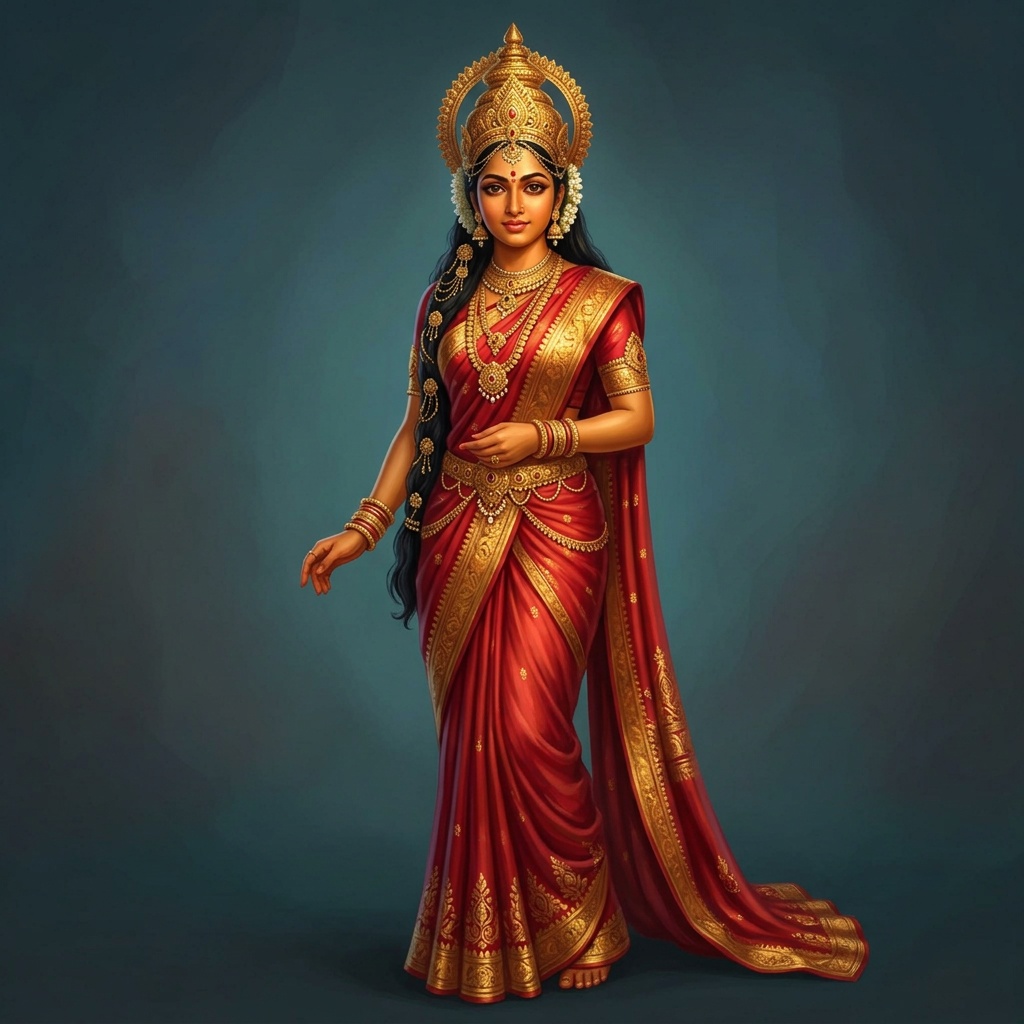
Marudevi
मरुदेवीThe First Soul to Achieve Liberation“She saw her son achieve enlightenment — and followed him into liberation.”
Marudevi
The First Soul to Achieve LiberationMarudevi was the mother of Rishabhadeva, the first Tirthankara. When she saw her son achieve kevala jnana (perfect knowledge), the sight was so overwhelmingly beautiful that she achieved moksha herself — becoming the very first soul in this cosmic cycle to attain liberation.
Marudevi achieved moksha without any formal spiritual practice — just by witnessing the pure truth of her son's enlightenment. Her liberation proves that a single moment of perfect insight can free a soul.
Achieving moksha through a single moment of witnessing pure truth
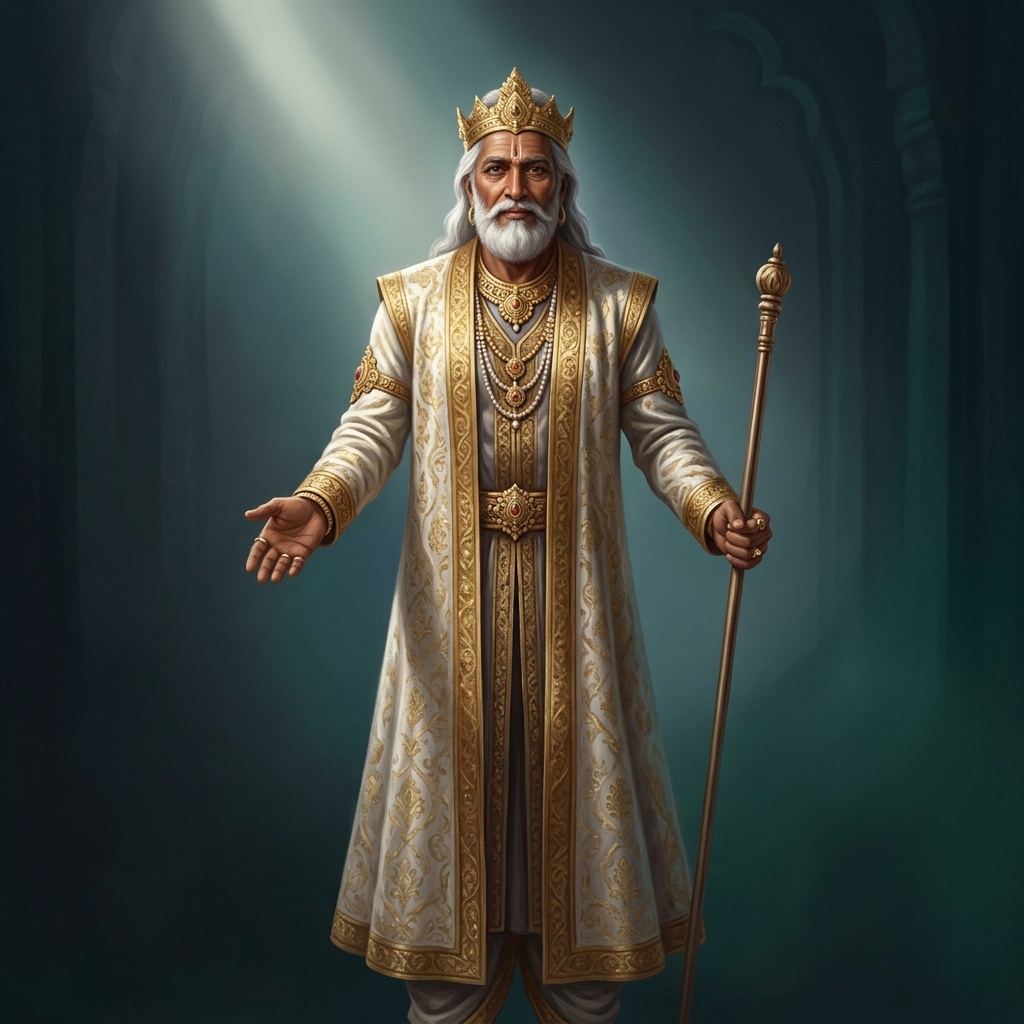
Nabhi
नाभिRishabhadeva's Royal Father“A king who knew his son was destined for something greater than any throne.”
Nabhi
Rishabhadeva's Royal FatherKing Nabhi was the father of Rishabhadeva and husband of Marudevi. He ruled the kingdom of Ayodhya in the Jain tradition and eventually handed the throne to his son, recognizing that Rishabhadeva would be both a great king and a greater teacher. Nabhi then retired to the forest for meditation.
In Jain cosmology, Nabhi and Marudevi are considered among the most blessed parents — they gave birth to the first Tirthankara of our current cosmic cycle.
Recognizing his son's cosmic destiny and gracefully stepping aside
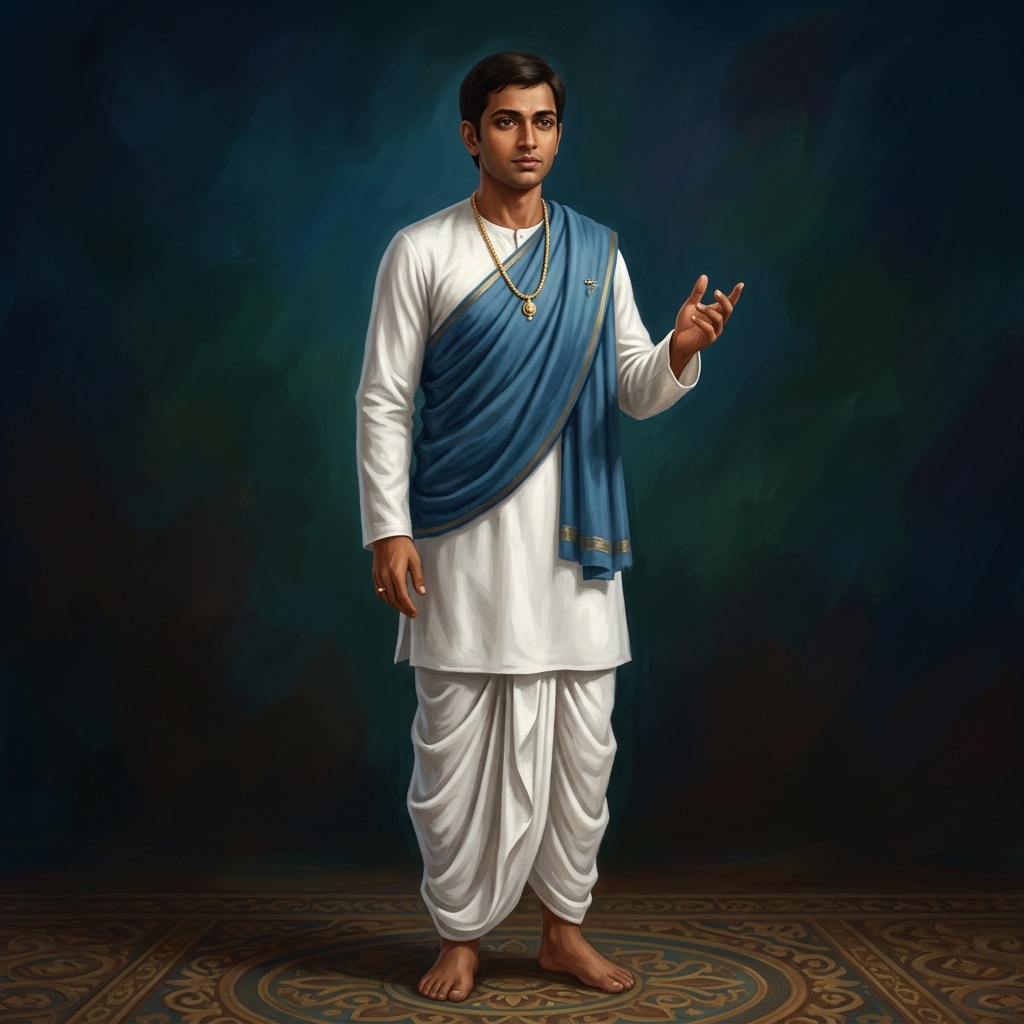
Abhayakumar
अभयकुमारThe Fearless Prince“His wisdom solved mysteries that baffled entire kingdoms.”
Abhayakumar
The Fearless PrinceAbhayakumar was the son of King Shrenik and a devoted follower of Mahavira. He was famous for his extraordinary intelligence, solving complex disputes and mysteries that no one else could. His stories teach that wisdom and non-violence can solve any problem — even ones that seem to require force.
Abhayakumar's wisdom stories are among the most popular in Jain literature. He solved crimes, settled disputes, and managed kingdoms — all through clever thinking, never violence.
Solving impossible puzzles and disputes through pure intelligence
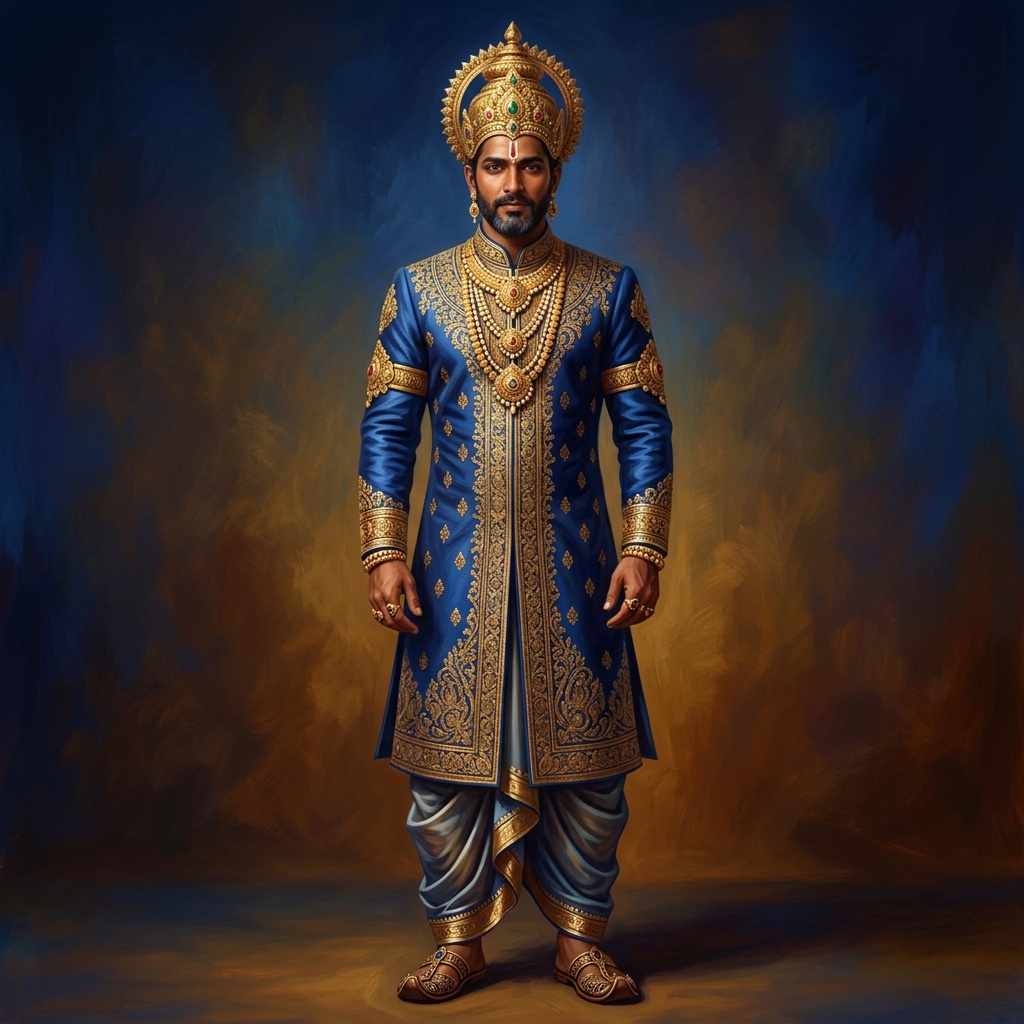
Prasannachandra
प्रसन्नचन्द्रThe Reformed King“A warrior who traded his sword for silence.”
Prasannachandra
The Reformed KingKing Prasannachandra was a fierce warrior who ruled with iron and fire. Through the influence of Jain teachings — and often his queen Chelna — he gradually transformed into a devoted practitioner of non-violence. His story shows that even the most hardened warrior can find peace.
Prasannachandra's transformation is used in Jain parables to show that it's never too late to change. A lifetime of violence can be redeemed by a genuine turn toward ahimsa.
Laying down his weapons and embracing non-violence — the hardest battle of all
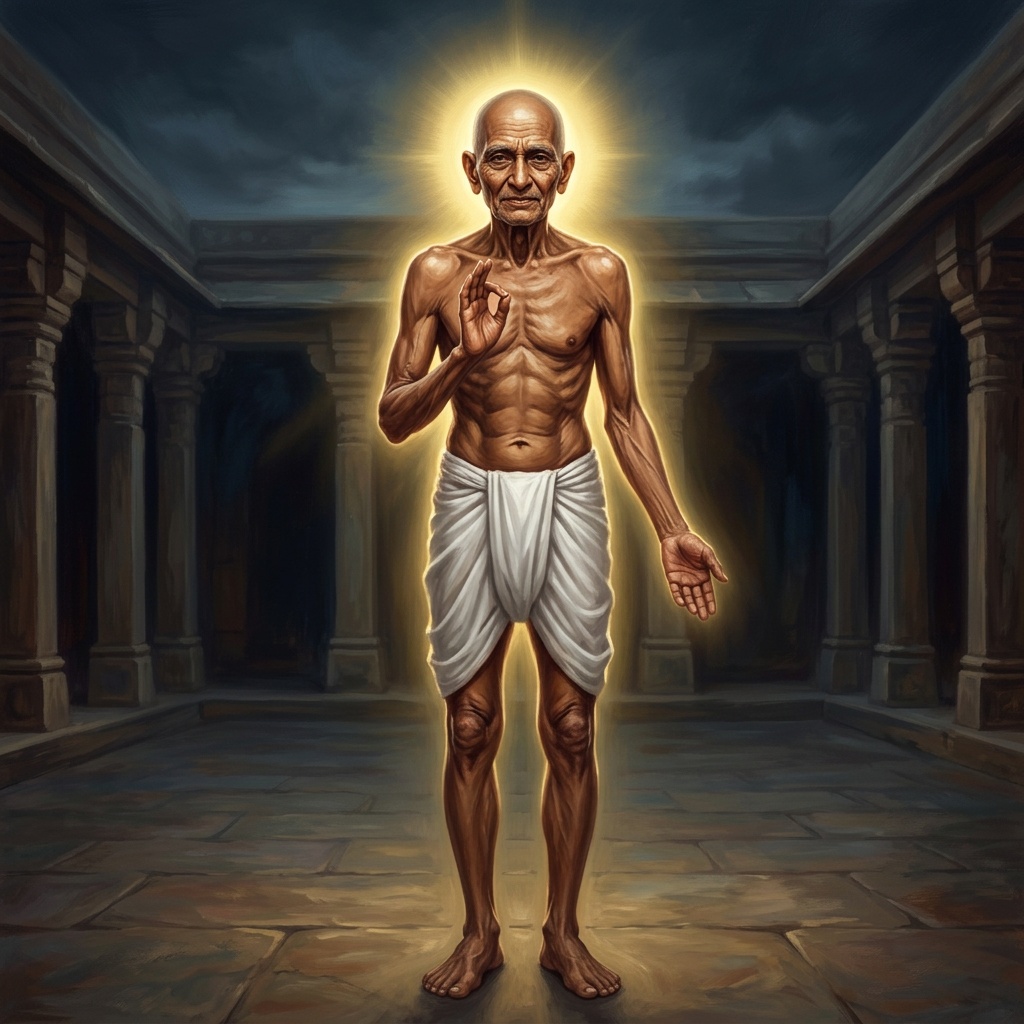
Sambhutavijay
संभूतविजयThe Eternal Friendship“A friendship so pure it lasted across multiple lifetimes.”
Sambhutavijay
The Eternal FriendshipSambhutavijay and his friend are central to a Jain parable about friendship that transcends death and rebirth. Their bond remained unbroken across multiple lifetimes, demonstrating that true connection between souls is eternal — a core Jain belief about the nature of the atman.
In Jain philosophy, certain soul bonds are so strong that two atmas will find each other across countless rebirths. Sambhutavijay's story is the most famous example.
Recognizing his friend across lifetimes — the bond that death cannot break
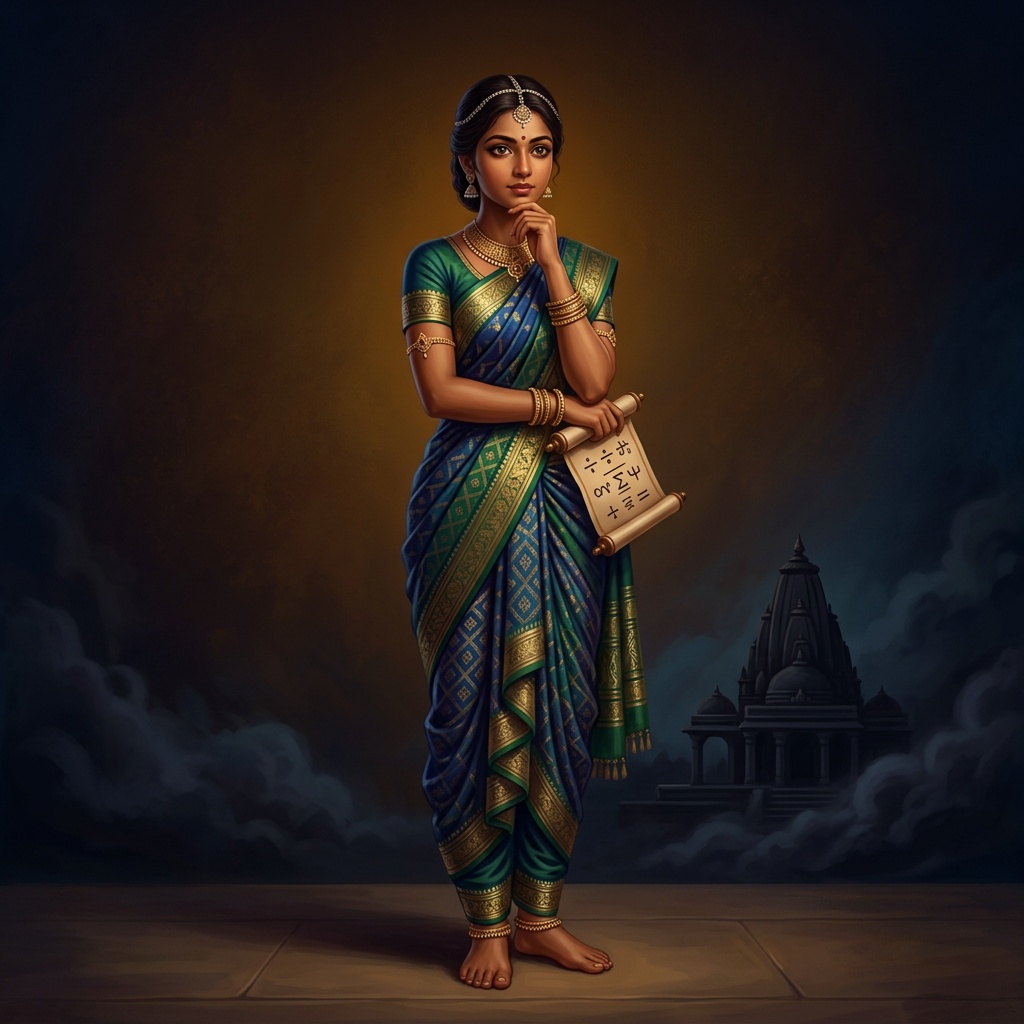
Sundari
सुन्दरीThe Beautiful Renunciant“She had everything the world values — and chose to give it all away.”
Sundari
The Beautiful RenunciantSundari was renowned for her extraordinary beauty and wealth. Rather than being trapped by worldly pleasures, she saw through their impermanence and chose the path of renunciation. Her story is a powerful lesson in Jain philosophy about the fleeting nature of physical beauty and material wealth.
Sundari's name literally means "the beautiful one." Jain tradition uses her story to teach that true beauty is not in the body but in the soul's purity.
Walking away from beauty and wealth — choosing inner radiance over outer
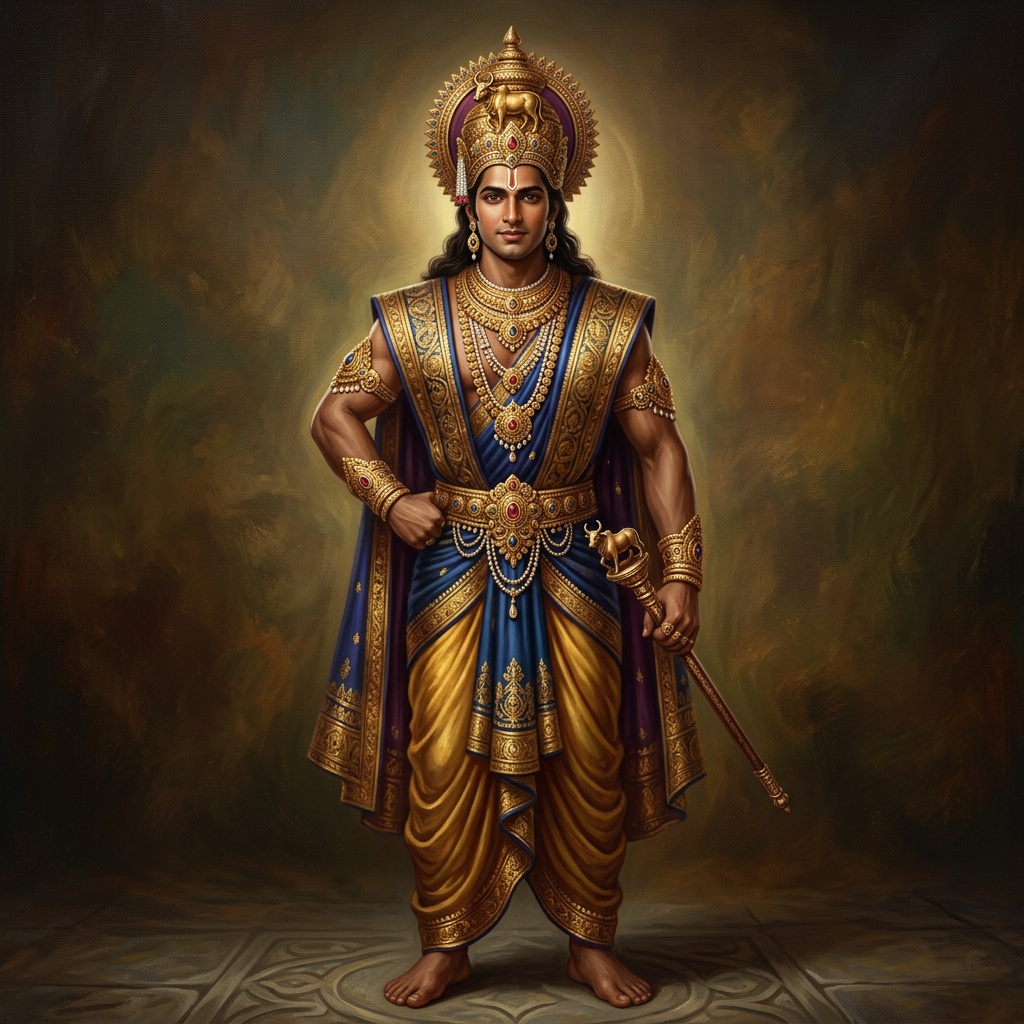
Prince Rishabhadeva
राजकुमार ऋषभदेवThe First Prince“Before he taught the world to renounce, he first taught it to build.”
Prince Rishabhadeva
The First PrinceBefore becoming the first Tirthankara, Rishabhadeva was a magnificent prince who invented agriculture, pottery, writing, and governance. He taught humanity how to survive and thrive. It was only after creating civilization that he renounced it — showing that true renunciation means giving up something you fully understand.
Prince Rishabhadeva is credited with teaching seventy-two arts to men and sixty-four arts to women. He literally invented civilization as we know it before walking away from it.
Teaching humanity every skill needed for civilization
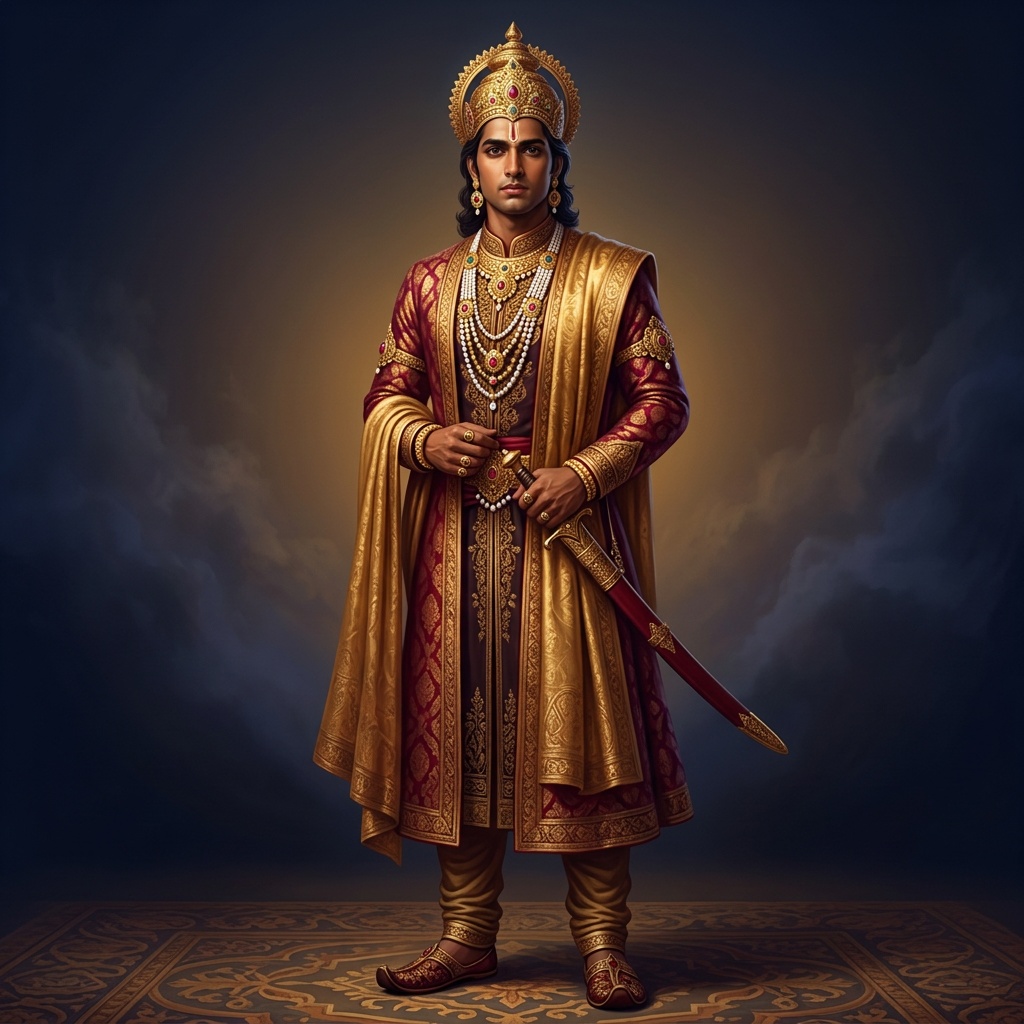
Prince Mahavira
राजकुमार महावीरThe Brave Prince“Fearless since childhood — he tamed a cobra before he turned ten.”
Prince Mahavira
The Brave PrinceBefore becoming the great Tirthankara, young Mahavira was a fearless prince. He once climbed on the back of a rampaging cobra that was terrifying the other children. Instead of running, he calmly sat on it until it stopped. His fearlessness earned him the name "Mahavira" — the great brave one.
Mahavira was originally named Vardhamana (the increasing one). His name was changed to Mahavira after he showed superhuman bravery as a child by calming a dangerous snake.
Calmly sitting on a rampaging cobra as a child — earning the name "Great Hero"
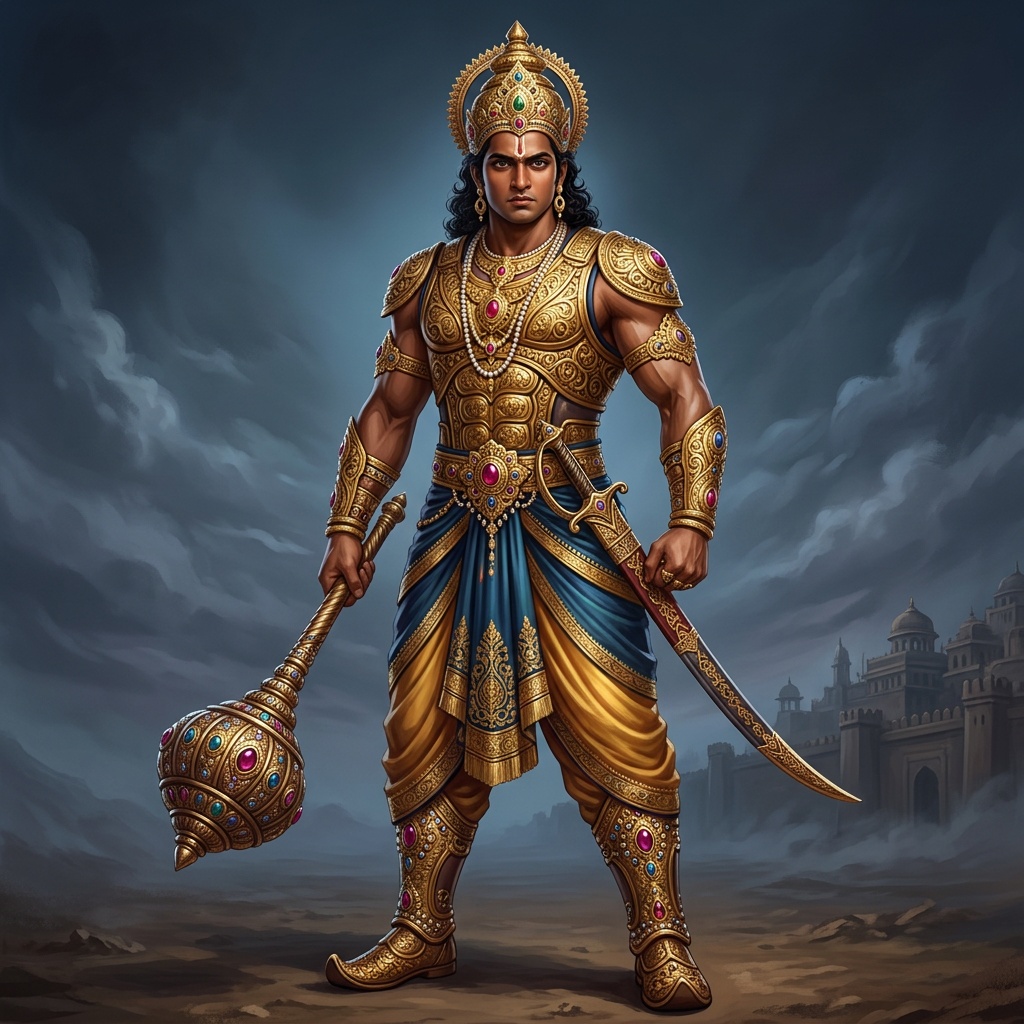
Prince Bahubali
राजकुमार बाहुबलीThe Undefeated Warrior“He won every battle — and realized winning wasn't the point.”
Prince Bahubali
The Undefeated WarriorBefore his renunciation, Prince Bahubali was the mightiest warrior alive. He defeated his brother Bharata in single combat for the throne. But at the moment of total victory, standing over his defeated brother, he felt nothing but emptiness — and that emptiness became the doorway to enlightenment.
The combat between Bahubali and Bharata included three types of duels: eye contact (drishti yuddha), water splashing (jala yuddha), and wrestling (malla yuddha). Bahubali won all three.
Winning the throne in combat — then immediately giving it away
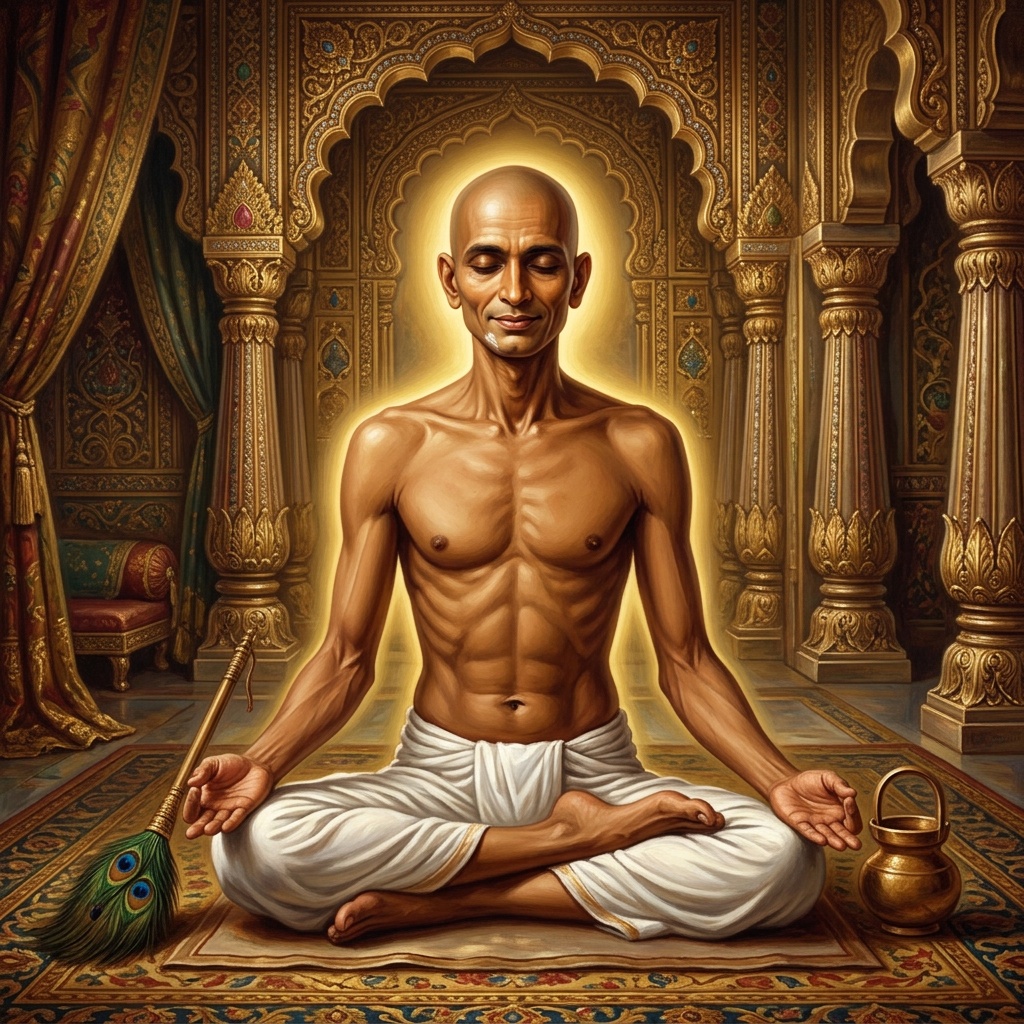
Sthulabhadra
स्थूलभद्रThe Disciplined Monk“He spent twelve years in a lion's cave — and the lions left him alone.”
Sthulabhadra
The Disciplined MonkSthulabhadra was a brilliant Jain monk who mastered all fourteen Purvas (ancient texts). His discipline was legendary — he spent twelve years meditating in a cave inhabited by lions, and the animals never disturbed him. His spiritual power was so great that he could shapeshift, but he used this power only to teach.
Sthulabhadra was once a wealthy prince who fell in love with a courtesan named Kosha. He later renounced everything, and when Kosha tried to tempt him back, his spiritual power was so great that she became his disciple instead.
Meditating among lions for twelve years without being disturbed
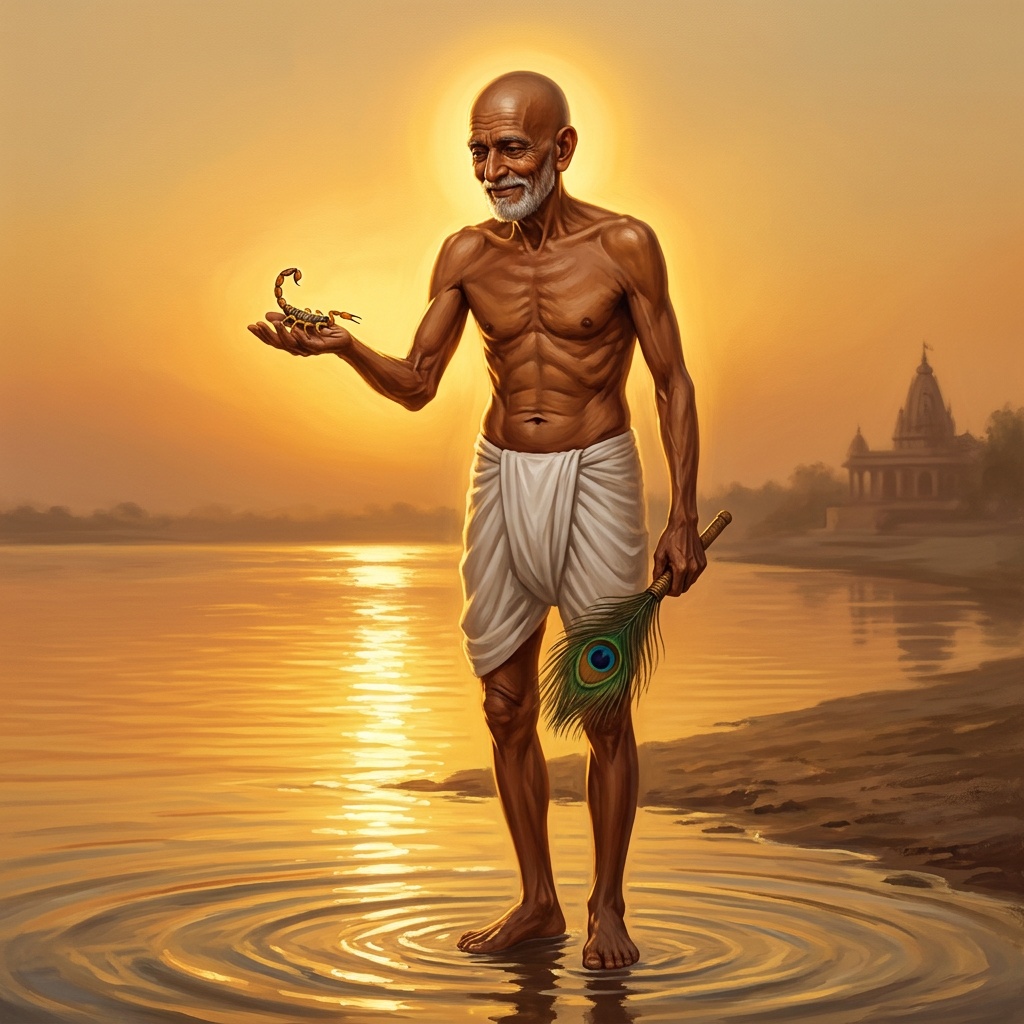
Jain Monk
जैन मुनिThe Wandering Ascetic“No possessions, no home, no harm — just a path walked in perfect peace.”
Jain Monk
The Wandering AsceticThe Jain monk represents the ideal ascetic life in Jain tradition. Owning nothing, harming no living being, sweeping the ground before walking to avoid crushing insects, wearing a mouth cloth to protect airborne creatures — every moment is lived with total awareness and infinite compassion.
Jain monks carry a small broom (rajoharana) to gently sweep insects from their path, and wear a muhpatti (mouth cloth) to avoid accidentally inhaling tiny creatures. Every breath is an act of care.
Walking the earth without harming a single living being — the ultimate discipline
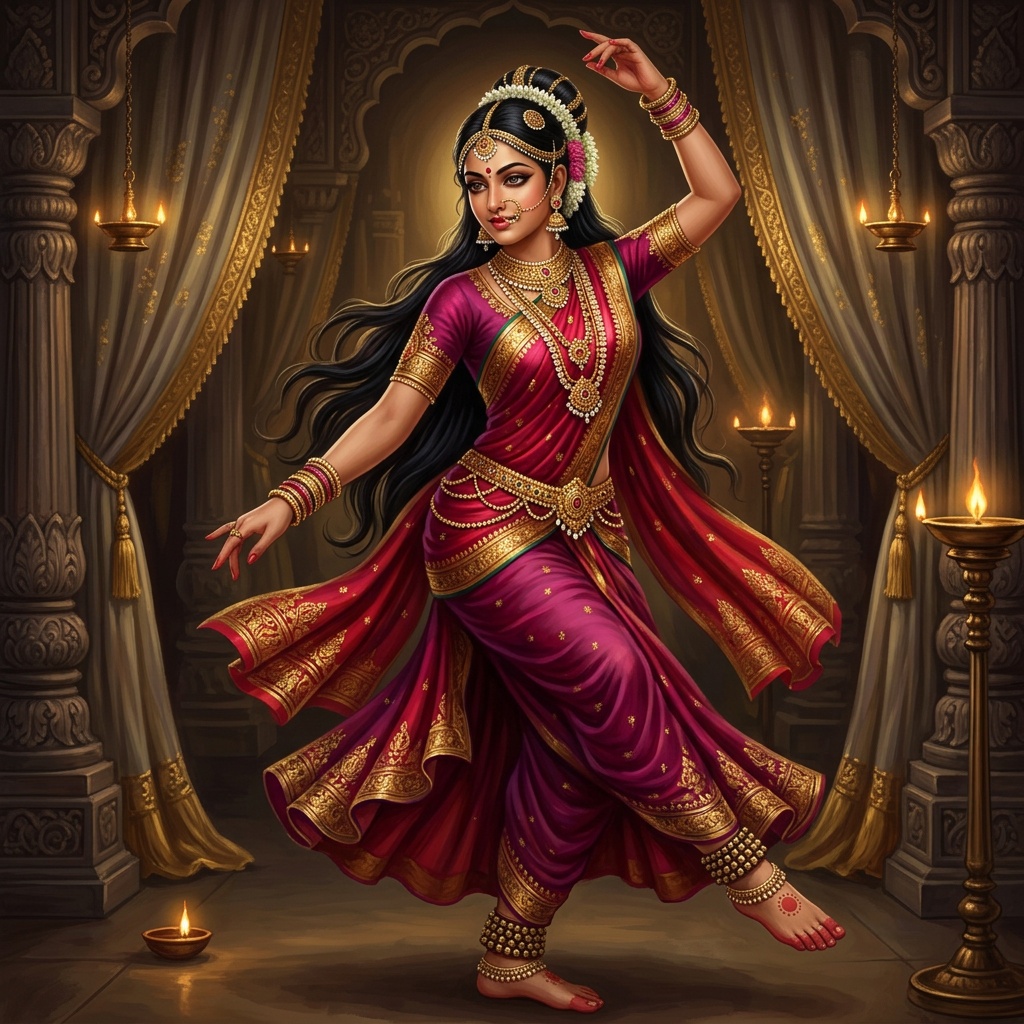
Kosha
कोशाThe Courtesan Who Changed“She tried to reclaim a monk — and his purity reclaimed her instead.”
Kosha
The Courtesan Who ChangedKosha was a famous courtesan who had been Sthulabhadra's lover before he became a monk. She tried to tempt him back to worldly life, but his spiritual power and serenity were so overwhelming that she was transformed instead. She renounced her former life and became a devoted Jain laywoman.
Kosha's transformation story is one of Jainism's most powerful parables about the infectious nature of true spiritual power — it doesn't fight temptation, it transforms it.
Transforming from tempter to devotee — proving that purity is contagious
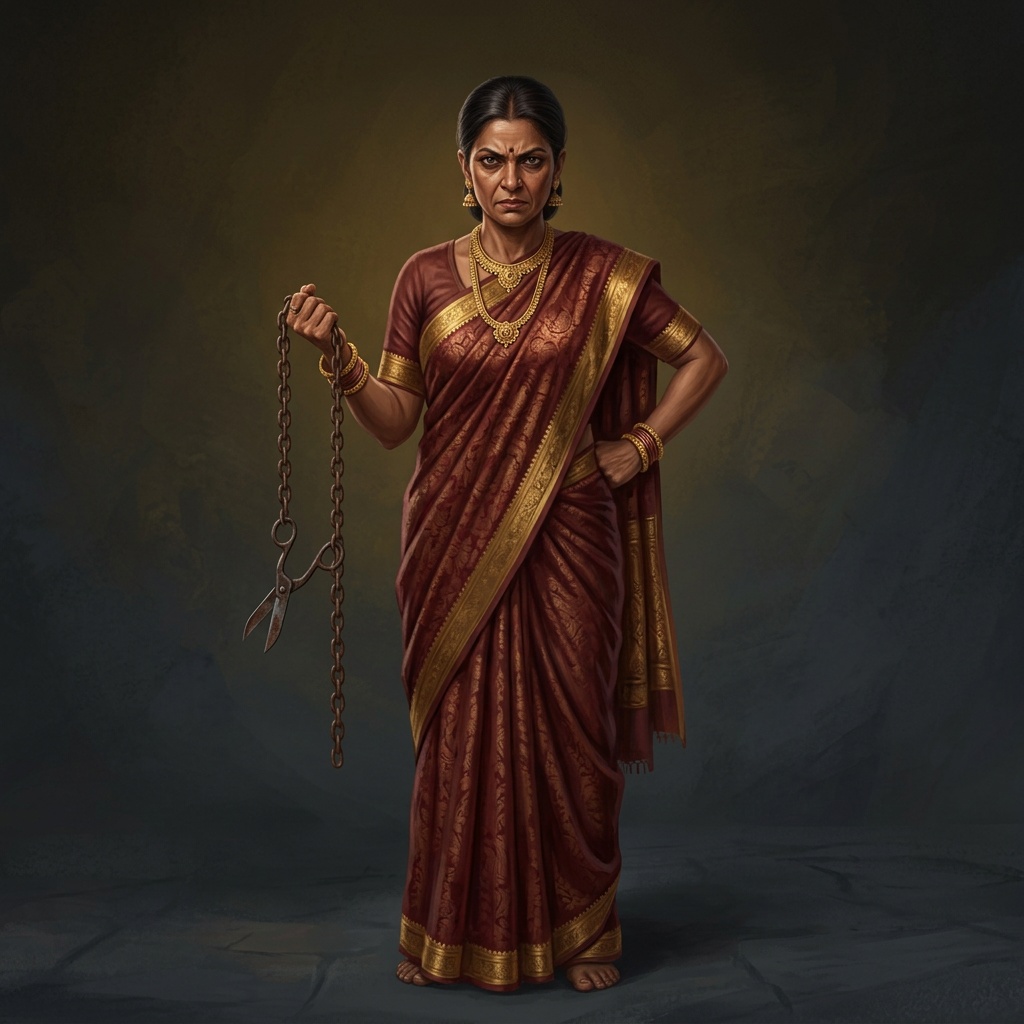
Moola
मूलाThe Slave Master“He bought a princess and chained her — never knowing her destiny.”
Moola
The Slave MasterMoola was the merchant who purchased Chandanbala as a slave after she was kidnapped from her royal family. He kept her in chains and treated her harshly. Yet it was through this suffering that Chandanbala fulfilled the impossible conditions of Mahavira's vow — showing that even cruelty can be part of a larger divine plan.
Moola had no idea that the slave girl he treated so poorly would become one of the most revered figures in Jain history. Her story is told in every Jain household.
Unknowingly creating the conditions for one of Jainism's greatest moments
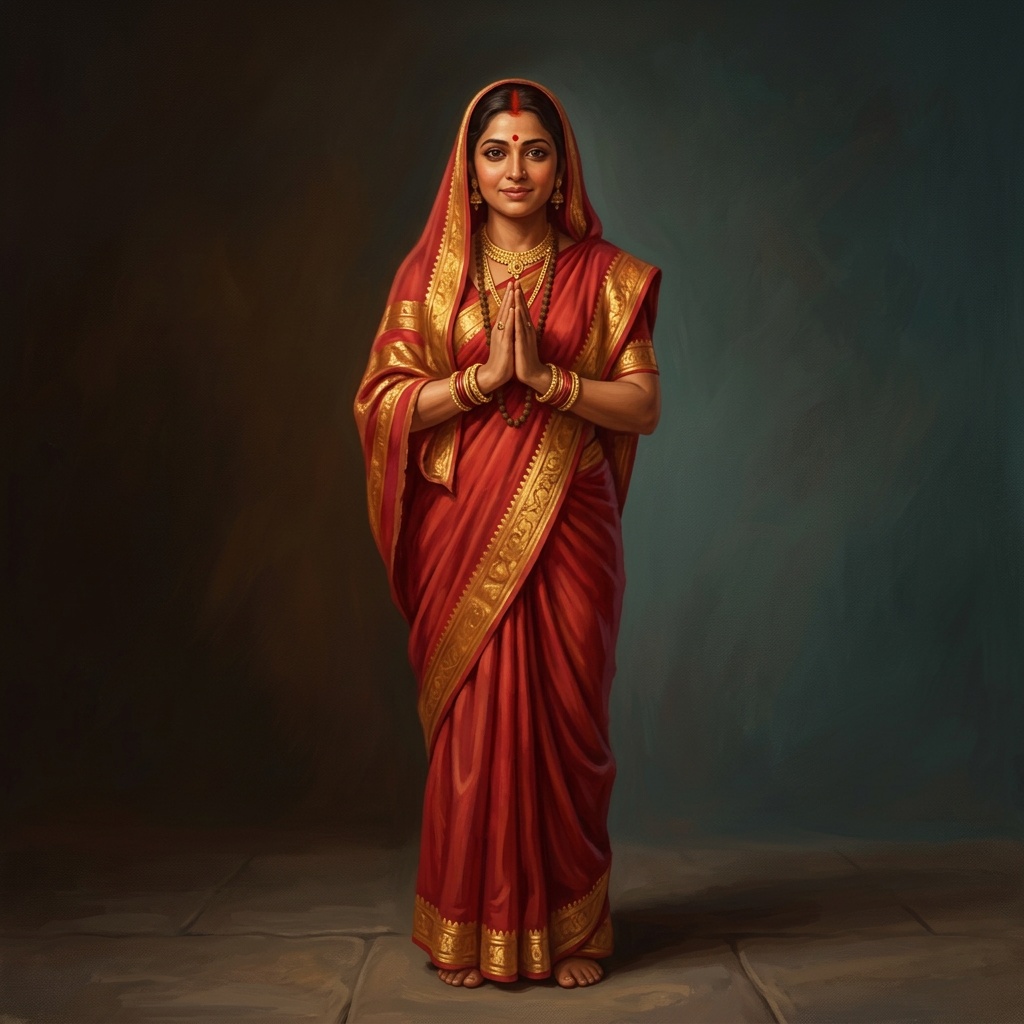
Bhaktimata
भक्तिमाताThe Mother of Devotion“Her devotion was so pure it became a teaching for generations.”
Bhaktimata
The Mother of DevotionBhaktimata represents the ideal of pure bhakti in Jain tradition — devotion free from desire, fear, or expectation. Her stories emphasize that true devotion is not about rituals but about the purity of heart behind every action.
In Jain philosophy, bhakti (devotion) is considered a form of spiritual practice that purifies karma. Bhaktimata embodies this principle — devotion as a path to liberation.
Devotion so pure it needs no temple, no ritual, no ornament — just a silent, open heart
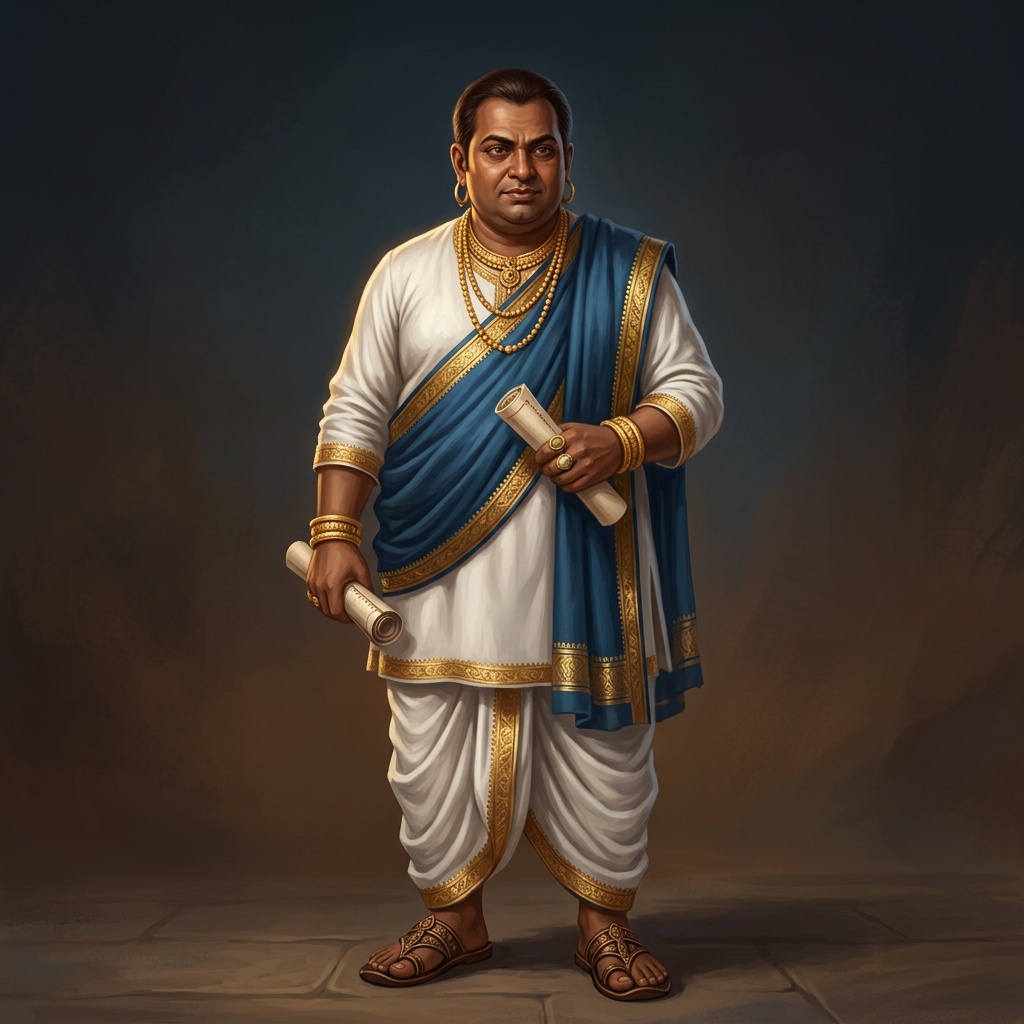
Dhanavah
धनावहThe Wealthy Pilgrim“Rich in gold, richer in generosity.”
Dhanavah
The Wealthy PilgrimDhanavah was a prosperous merchant who discovered that true wealth is measured by what you give, not what you keep. His pilgrimages and charitable acts across Jain holy sites became legendary, inspiring generations of laypeople to support monks, temples, and the needy.
Dhanavah's name literally means "one who brings wealth." In Jain tradition, his greatest wealth was the merit he earned through selfless giving.
Transforming material wealth into spiritual merit through generosity
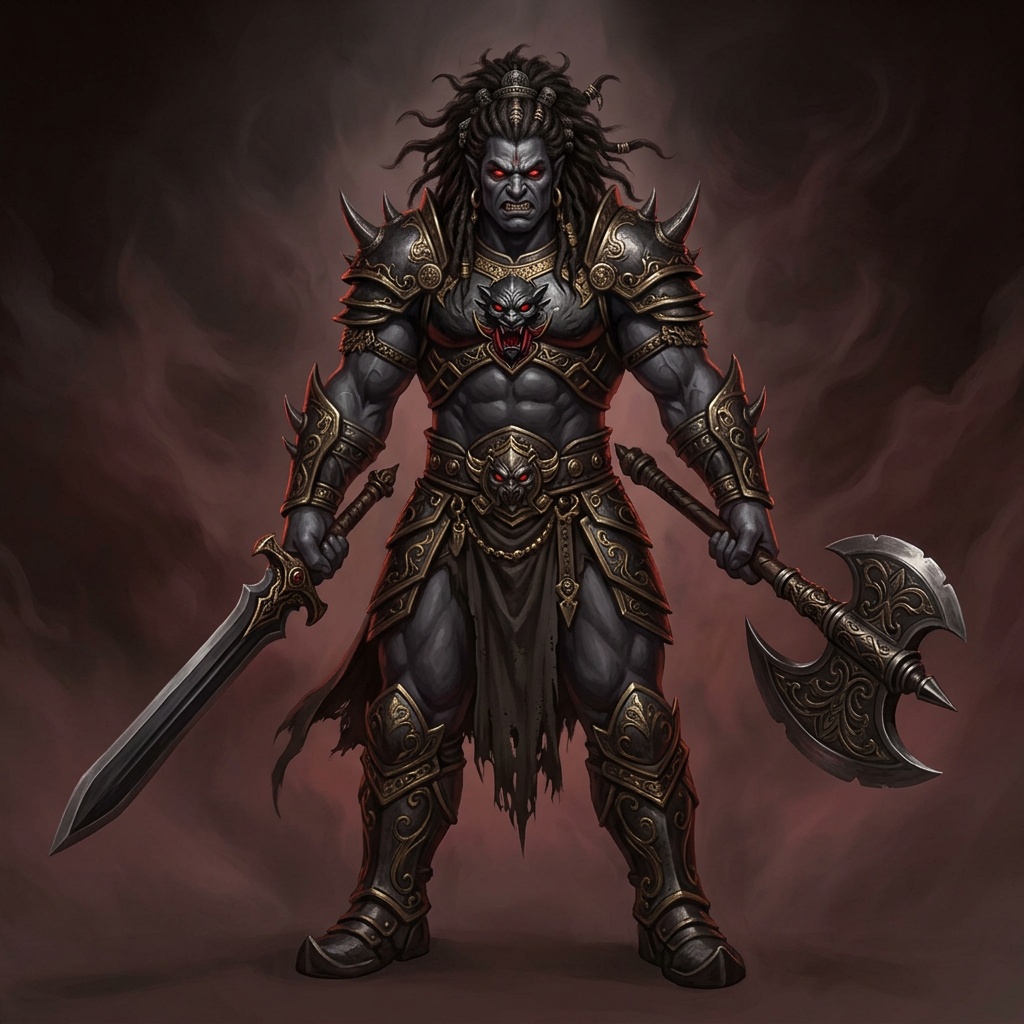
Chikshura
चिक्शुरThe General Who Bowed“A warrior who learned that the greatest victory is surrender — to truth.”
Chikshura
The General Who BowedChikshura was a powerful military commander who served kings with fierce loyalty. When he encountered Jain teachings, he realized that true strength lies not in conquering others but in conquering oneself. He became a follower of non-violence, proving that warriors can find the deepest peace.
In Jain stories, Chikshura's conversion from warrior to devotee is used to teach that ahimsa (non-violence) requires more courage than any battlefield ever could.
Laying down his weapons forever — the hardest act for a warrior
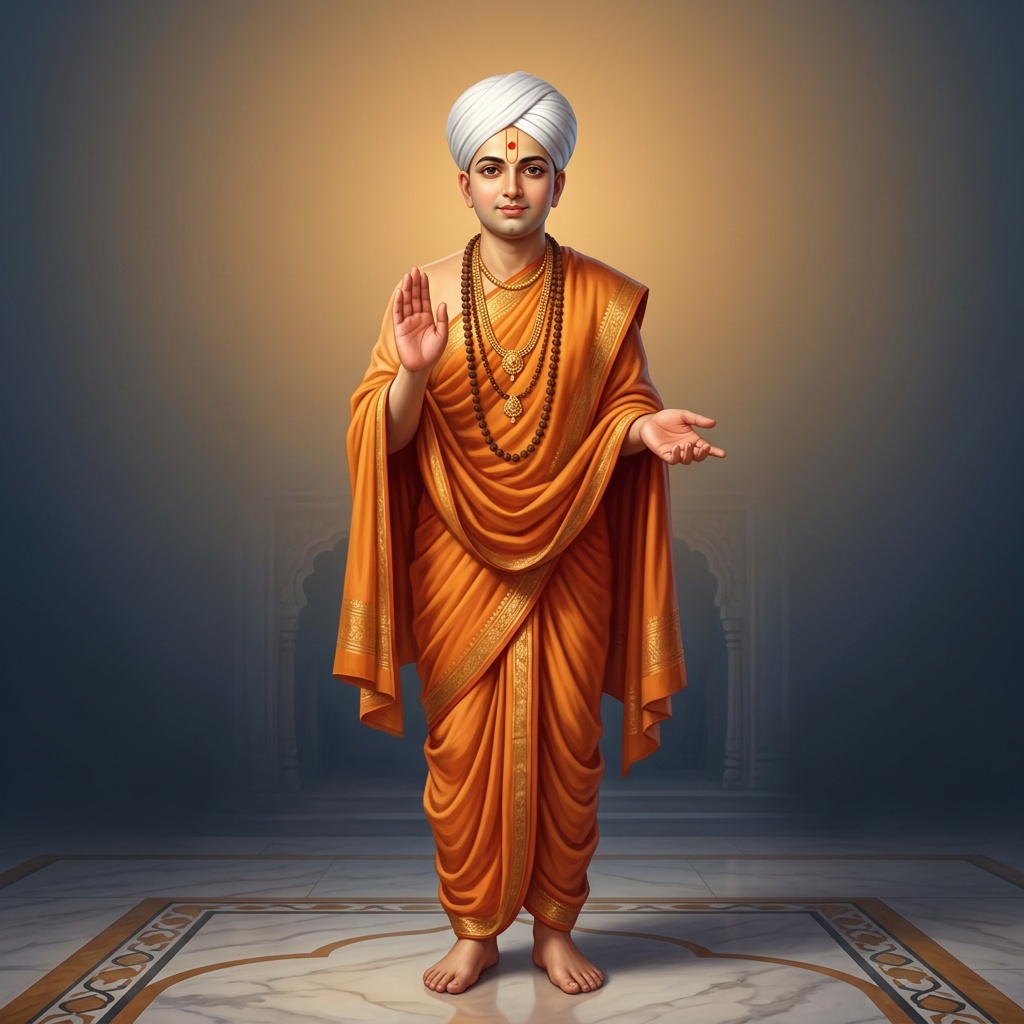
Swaminarayan
स्वामीनारायणThe Supreme Reformer“A boy who walked barefoot across India and reformed millions of lives.”
Swaminarayan
The Supreme ReformerBorn as Ghanshyam, he left home at age eleven and walked barefoot across India for seven years as Neelkanth Varni. He endured freezing mountains, scorching deserts, and wild forests. He emerged as Swaminarayan — a spiritual leader who abolished sati, fought addiction, and built a community that thrives to this day.
Swaminarayan walked over 12,000 kilometers across India barefoot before he was eighteen. He crossed the Himalayas, meditated in the forests of Assam, and reached Gujarat — all as a teenager.
Walking barefoot across India for seven years — and emerging as a light for millions
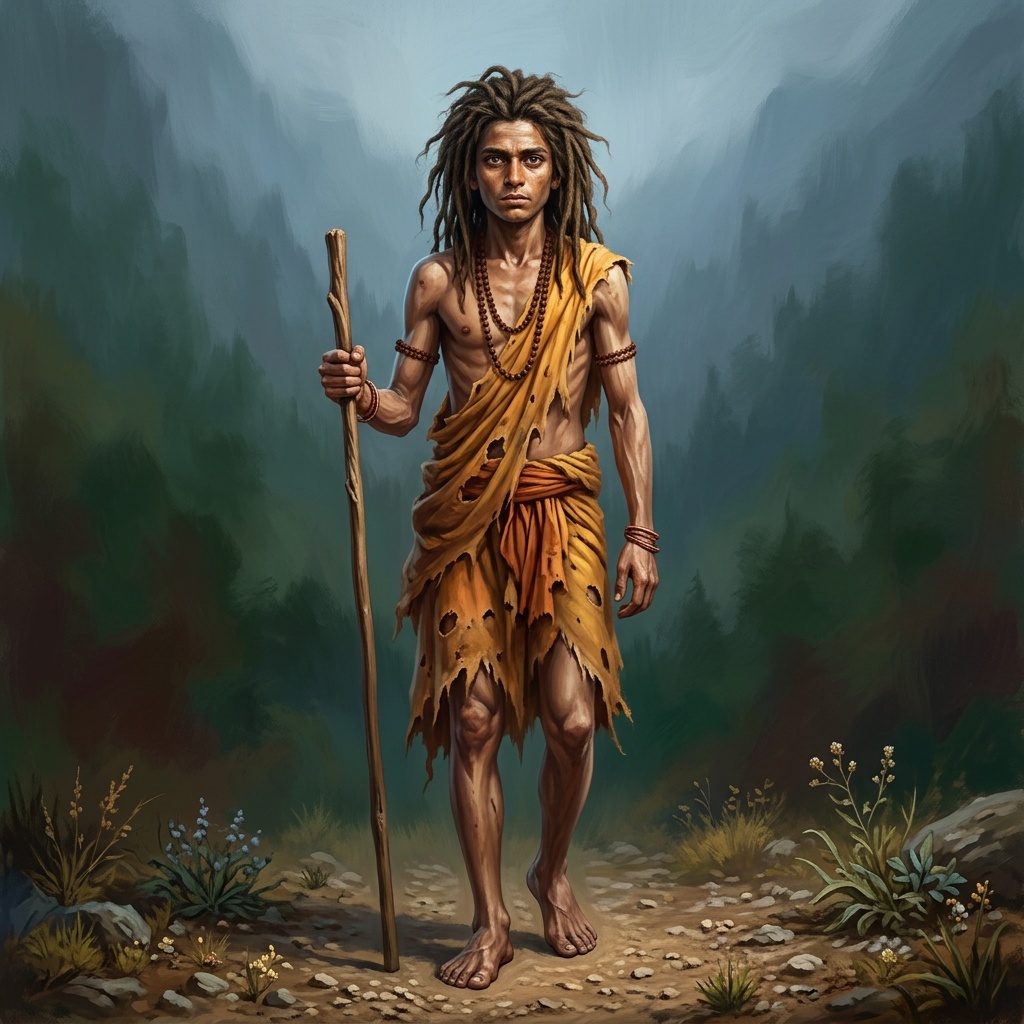
Neelkanth Varni
नीलकंठ वर्णीThe Wandering Child“An eleven-year-old who walked into the wilderness alone — and walked out as a world-changer.”
Neelkanth Varni
The Wandering ChildNeelkanth Varni was the name Ghanshyam took when he left home at eleven to wander India as a child ascetic. Barefoot, owning nothing, surviving on wild berries and the kindness of villagers, he crossed mountains, rivers, and deserts. His seven-year pilgrimage forged the boy who would become Swaminarayan.
During his travels, young Neelkanth once sat in meditation for so long that ants built a mound over him. When he finally opened his eyes, he simply smiled and walked on.
Walking barefoot across the entire Indian subcontinent at age eleven
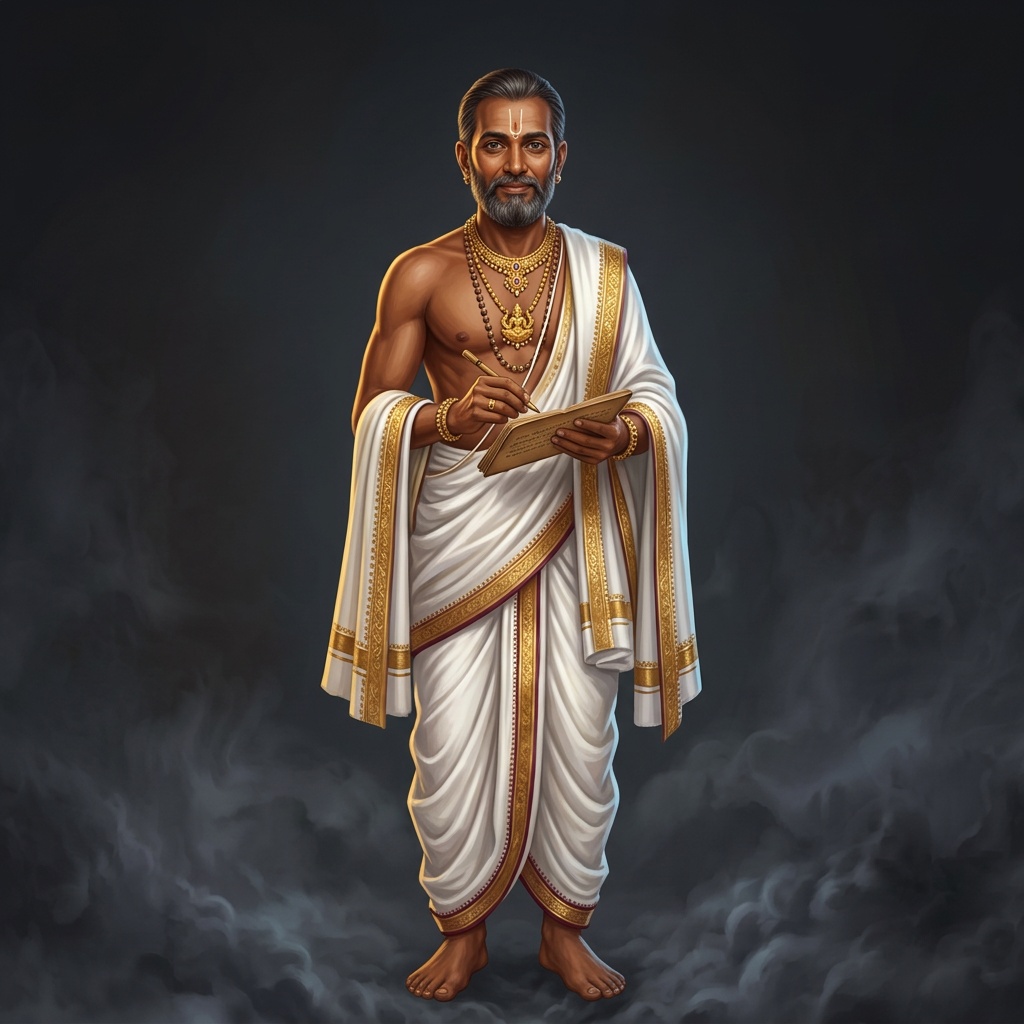
Dharmadev
धर्मदेवThe Pious Father“A humble priest whose greatest creation was not a prayer, but a son.”
Dharmadev
The Pious FatherDharmadev was a brahmin priest in the village of Chhapaiya, Uttar Pradesh. He and his wife Bhaktimata lived a life of simple devotion and prayer. When their son Ghanshyam was born during a thunderstorm with divine signs, Dharmadev recognized that his child was no ordinary boy.
Dharmadev taught young Ghanshyam the scriptures, but was often amazed when his son corrected interpretations that scholars had debated for centuries. The father was teaching the teacher.
Recognizing the divine in his own child and nurturing it with humility
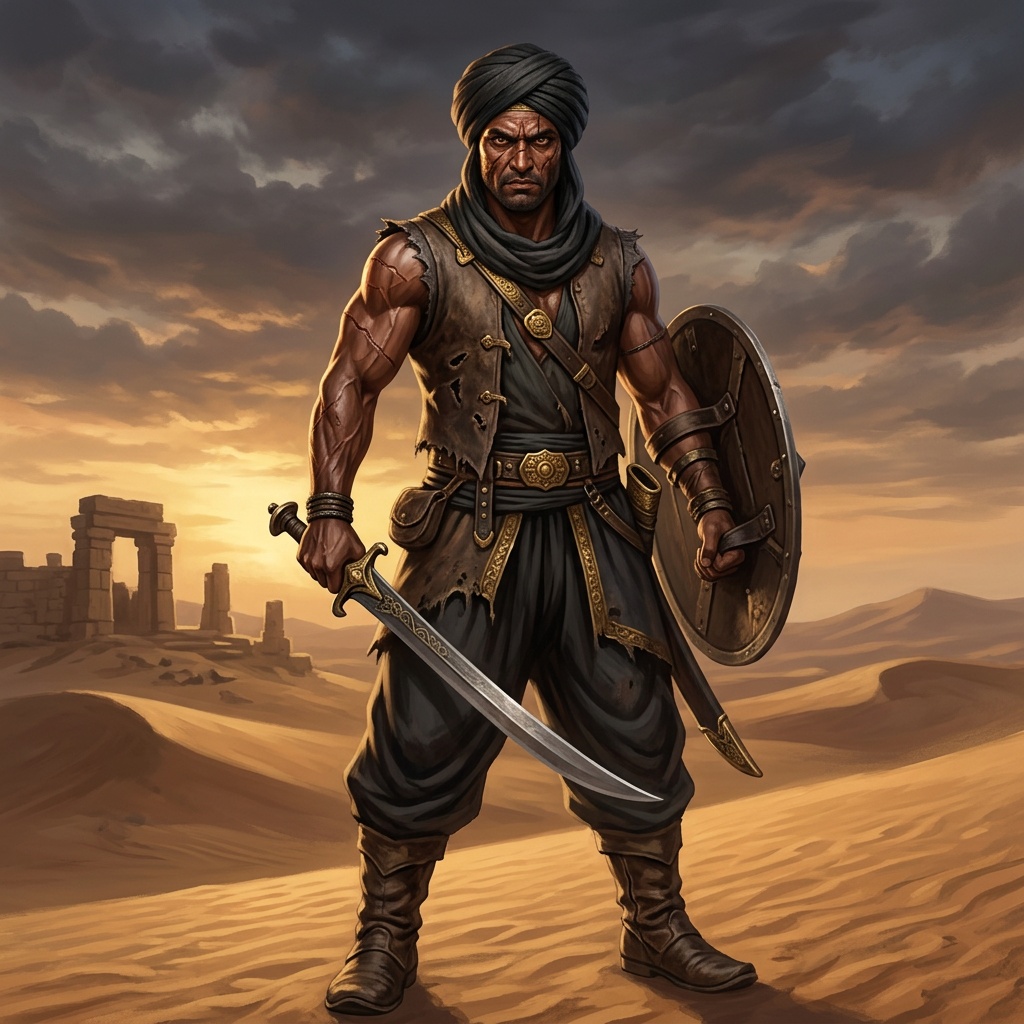
Joban Pagi
जोबन पागीThe Fearless Devotee“A bandit turned protector — reformed by a single meeting.”
Joban Pagi
The Fearless DevoteeJoban Pagi was a feared warrior and bandit in Gujarat who terrorized the countryside. When he met Swaminarayan, something shifted in his soul. He gave up violence entirely, became a devoted follower, and spent the rest of his life protecting pilgrims and serving the community he once terrorized.
Joban Pagi's transformation was so dramatic that the very people who once feared him began to seek his protection. The former bandit became the most trusted guardian in the region.
Transforming from a feared bandit to a beloved protector through devotion
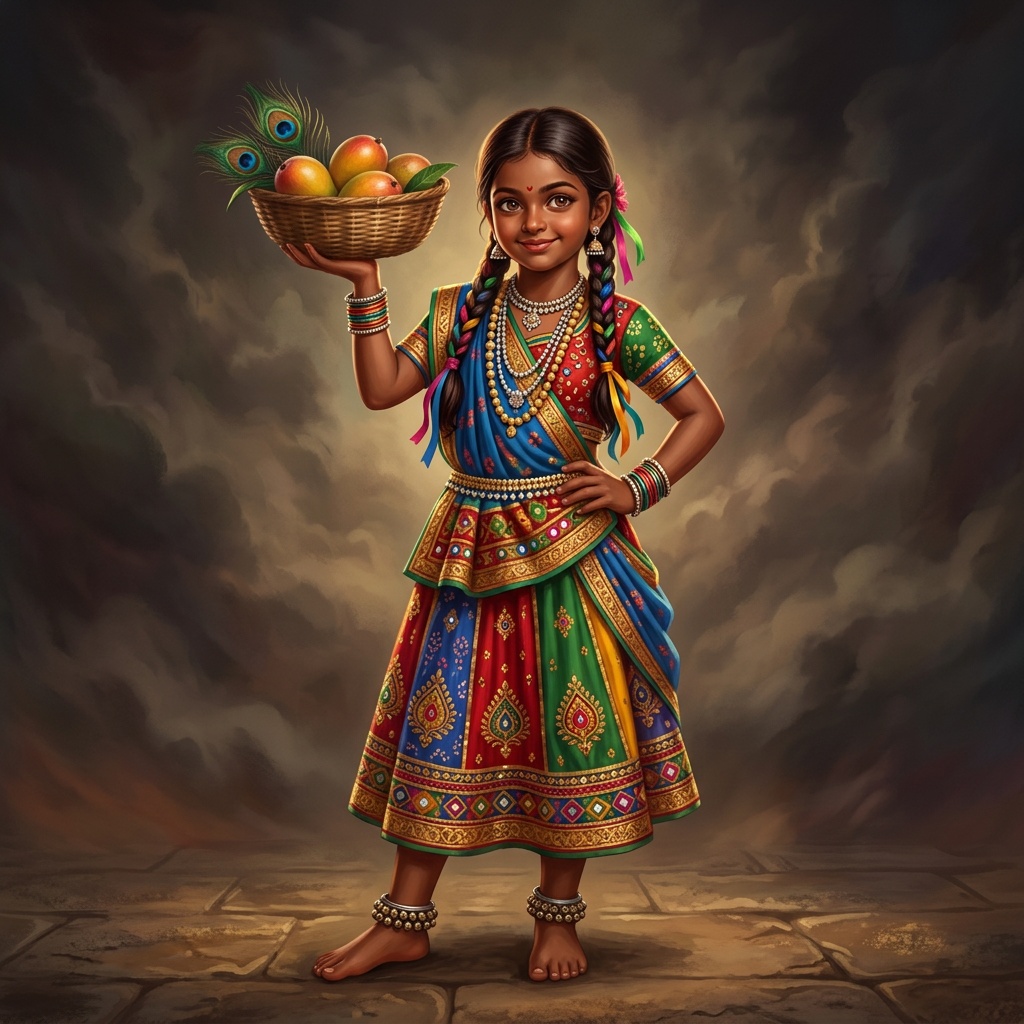
Leela Swami
लीला स्वामीThe Playful Saint“He taught wisdom through joy — because laughter opens hearts that lectures cannot.”
Leela Swami
The Playful SaintLeela Swami was one of Swaminarayan's paramhansas (realized saints) known for his joyful, playful approach to spiritual teaching. While other saints taught through austerity, Leela Swami taught through stories, humor, and the infectious happiness that comes from true inner peace.
Leela Swami believed that genuine spiritual joy is the most convincing proof of God's existence. His laughter was said to be so infectious that even the most skeptical visitors left smiling.
Teaching through joy and laughter — making wisdom feel like play
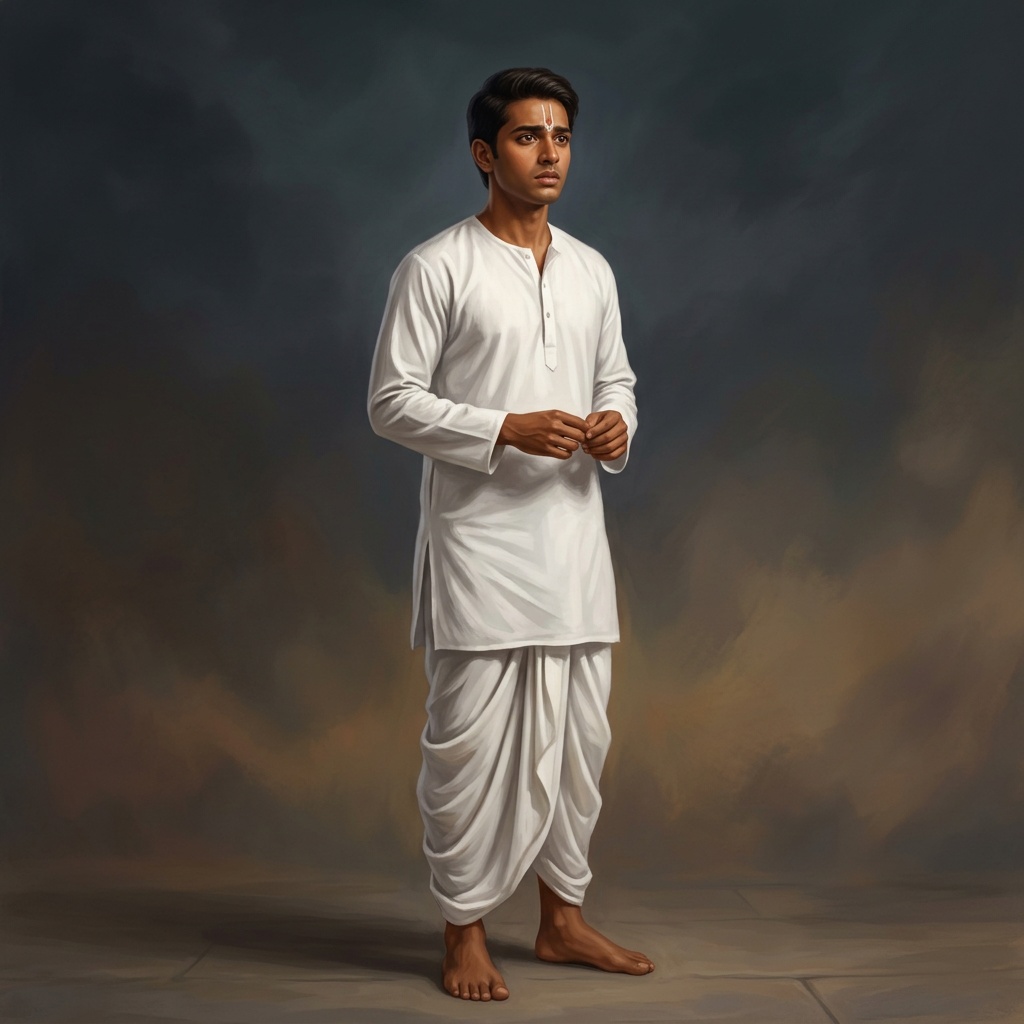
Rampratap
रामप्रतापThe Elder Brother“The steady older brother who kept the family strong.”
Rampratap
The Elder BrotherRampratap was Ghanshyam's elder brother. While Ghanshyam was destined for a spiritual mission, Rampratap held the family together with quiet responsibility. He witnessed his younger brother's miracles and supported the family through the grief of Ghanshyam's departure.
When young Ghanshyam left home to become Neelkanth Varni, Rampratap searched for him for months. The elder brother's love was always the anchor that Ghanshyam carried in his heart.
Holding the family together while his extraordinary brother walked away
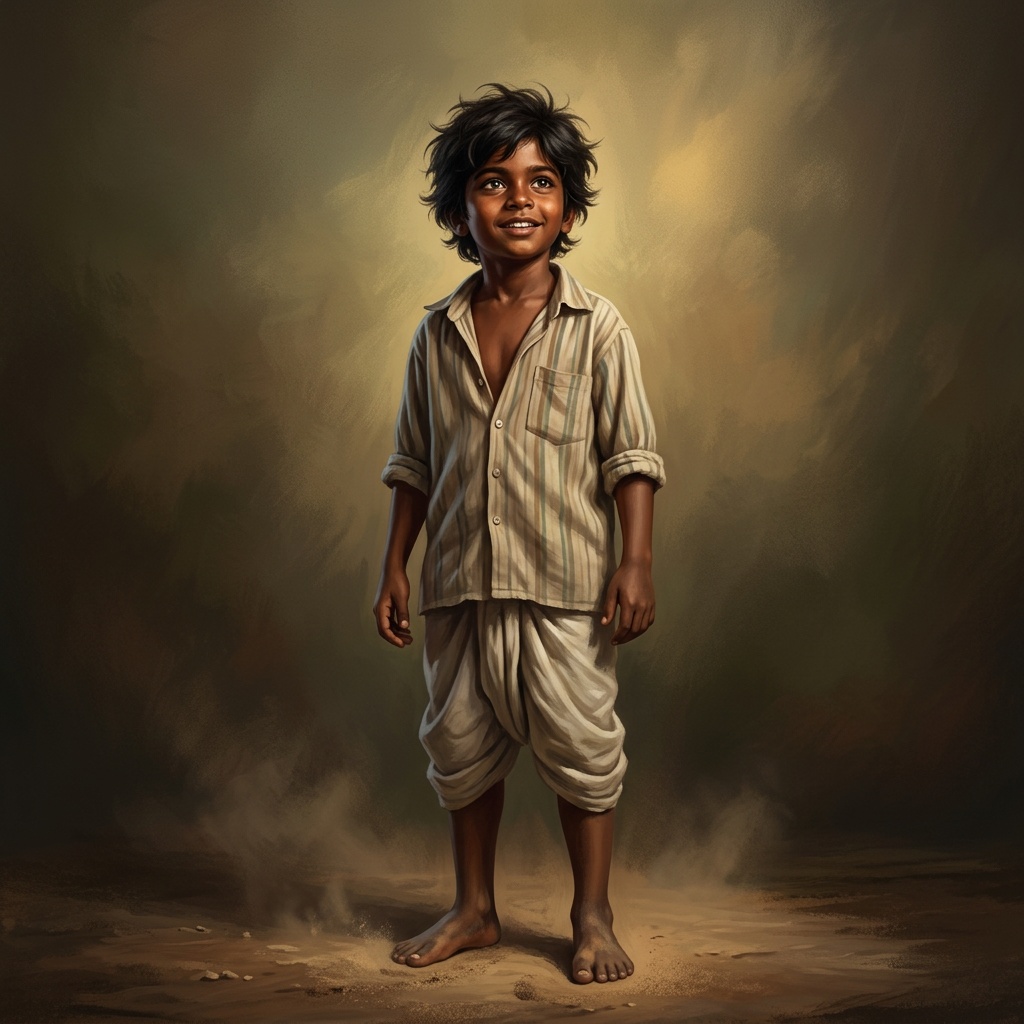
Ramu Swami
रामु स्वामीThe Devoted Servant“Service was his prayer — every task was an offering.”
Ramu Swami
The Devoted ServantRamu Swami was one of the paramhansas in the Swaminarayan fellowship known for his unwavering service. He believed that serving others was the highest form of worship. Whether cooking, cleaning, or nursing the sick, every act was performed as if serving God directly.
Ramu Swami once said that he found more peace in washing dishes for fellow saints than in hours of meditation. His path was karma yoga — service as worship.
Turning every mundane task into an act of devotion
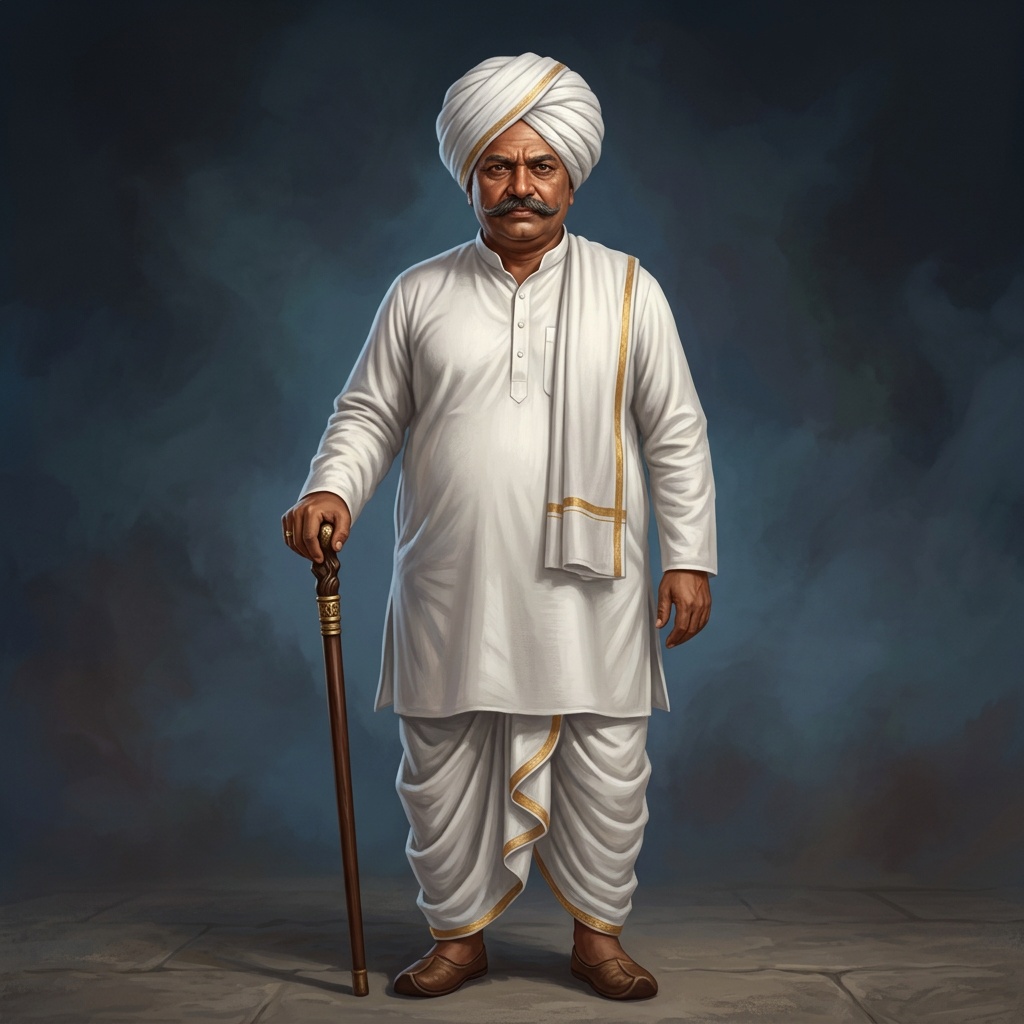
Mukhiya
मुखियाThe Village Leader“The man who kept a village running so the saints could keep teaching.”
Mukhiya
The Village LeaderThe Mukhiya (village headman) represents the devoted laypersons who supported the Swaminarayan community. While the paramhansas focused on spiritual practice, it was people like the Mukhiya who provided food, shelter, and protection — the unsung foundation of every spiritual movement.
In the Swaminarayan tradition, householders who serve saints selflessly are considered to earn as much spiritual merit as the saints themselves.
Building community support for spiritual seekers — the invisible hand that sustains everything
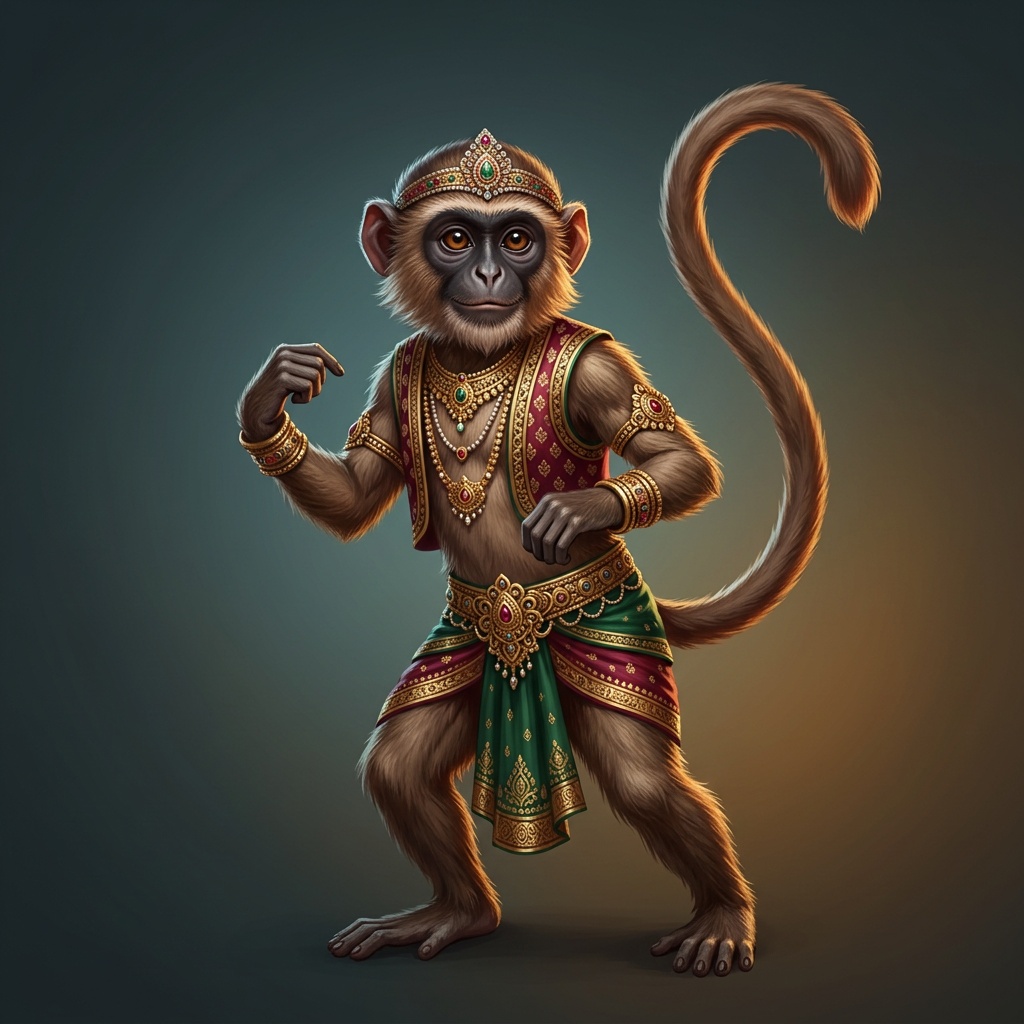
The Monkey
बन्दरThe Clever Trickster“Quick wits, quicker hands — and always one step ahead.”
The Monkey
The Clever TricksterThe Monkey of the Panchatantra represents cleverness and adaptability. In the classic tales, monkeys outsmart crocodiles, trick predators, and survive through intelligence rather than strength. They teach children that a sharp mind is the best tool in any situation.
In the famous Panchatantra story, a monkey tricks a crocodile by claiming his heart is stored in a tree. The crocodile returns him to shore to "get it" — and the monkey swings to safety.
Outsmarting a crocodile by claiming his heart was left behind in a tree
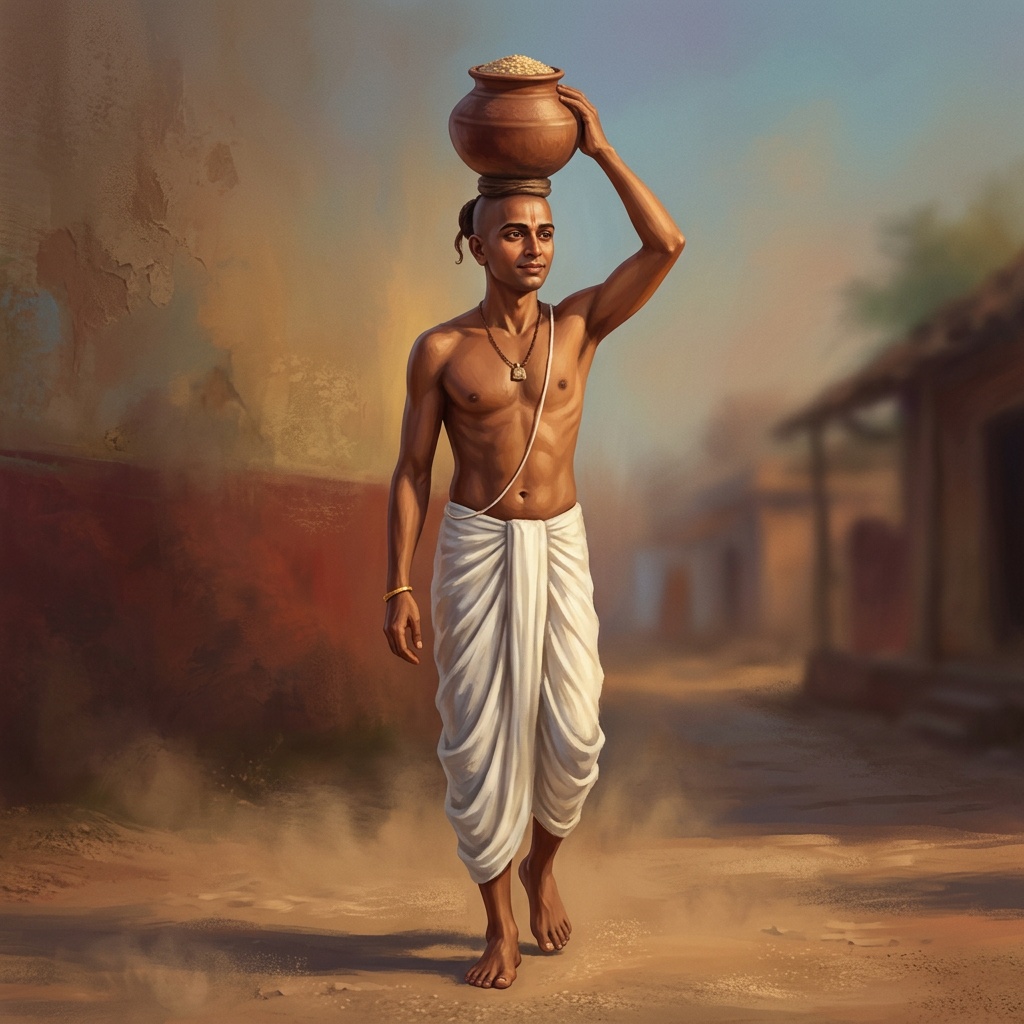
The Brahmin
ब्राह्मणThe Scholarly Traveler“Book-smart but sometimes life-foolish — and that's the lesson.”
The Brahmin
The Scholarly TravelerThe Brahmin characters in the Panchatantra often represent well-educated but impractical people. They know the scriptures but sometimes miss obvious dangers. Their stories teach that wisdom must be paired with common sense — knowledge without street-smarts is like a boat without oars.
In one Panchatantra story, four brahmins use their knowledge to resurrect a dead lion — except for the one practical friend who climbs a tree first. The lion eats the three scholars.
Getting into trouble through overthinking — and teaching us to balance wisdom with common sense
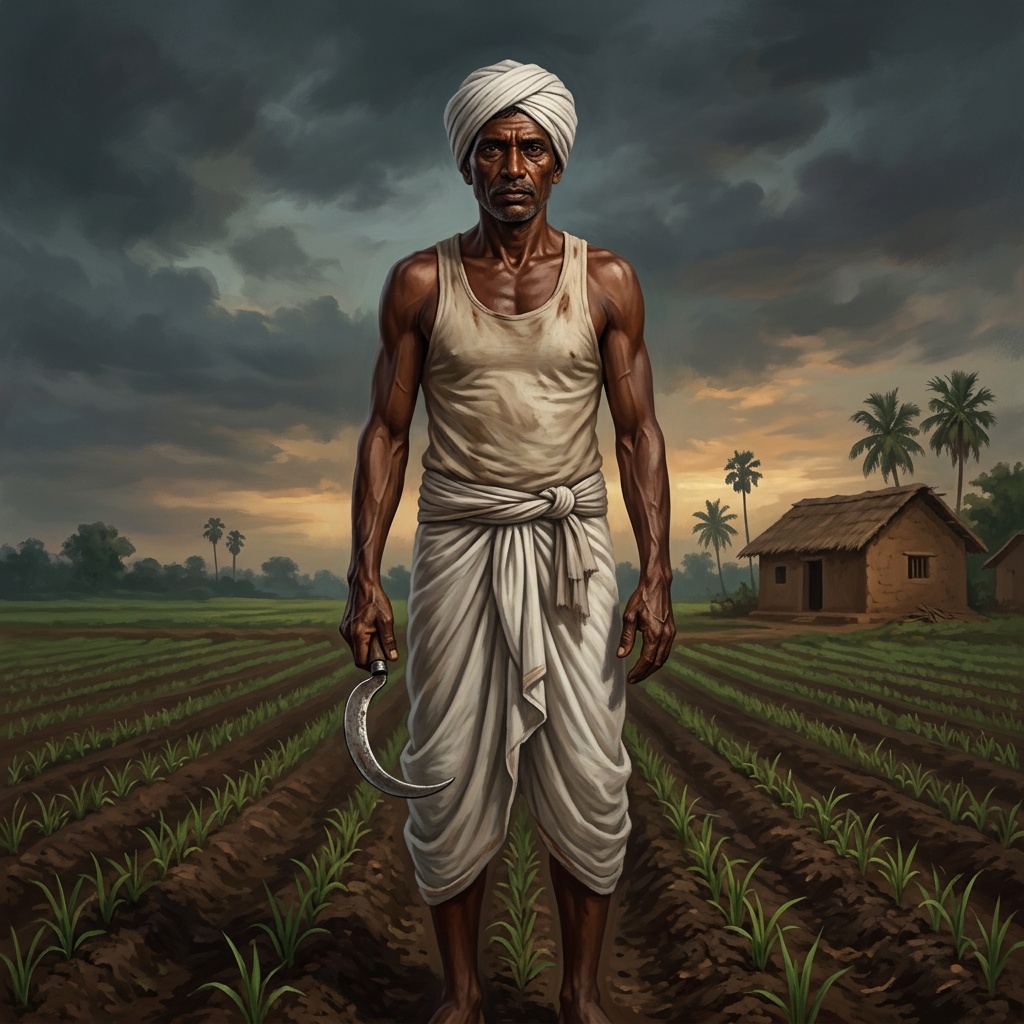
The Farmer
किसानThe Patient Worker“He works while others talk — and his harvest speaks for itself.”
The Farmer
The Patient WorkerThe Farmer in Panchatantra tales represents practical wisdom and patience. While scholars debate and kings strategize, the farmer plants seeds, tends his crops, and feeds the world. His stories teach that steady, honest work beats cleverness every time.
In the Panchatantra, farmers often outsmart brahmins, merchants, and even kings — because their wisdom comes from real experience, not books.
Solving problems with patient practical wisdom that scholars overlook
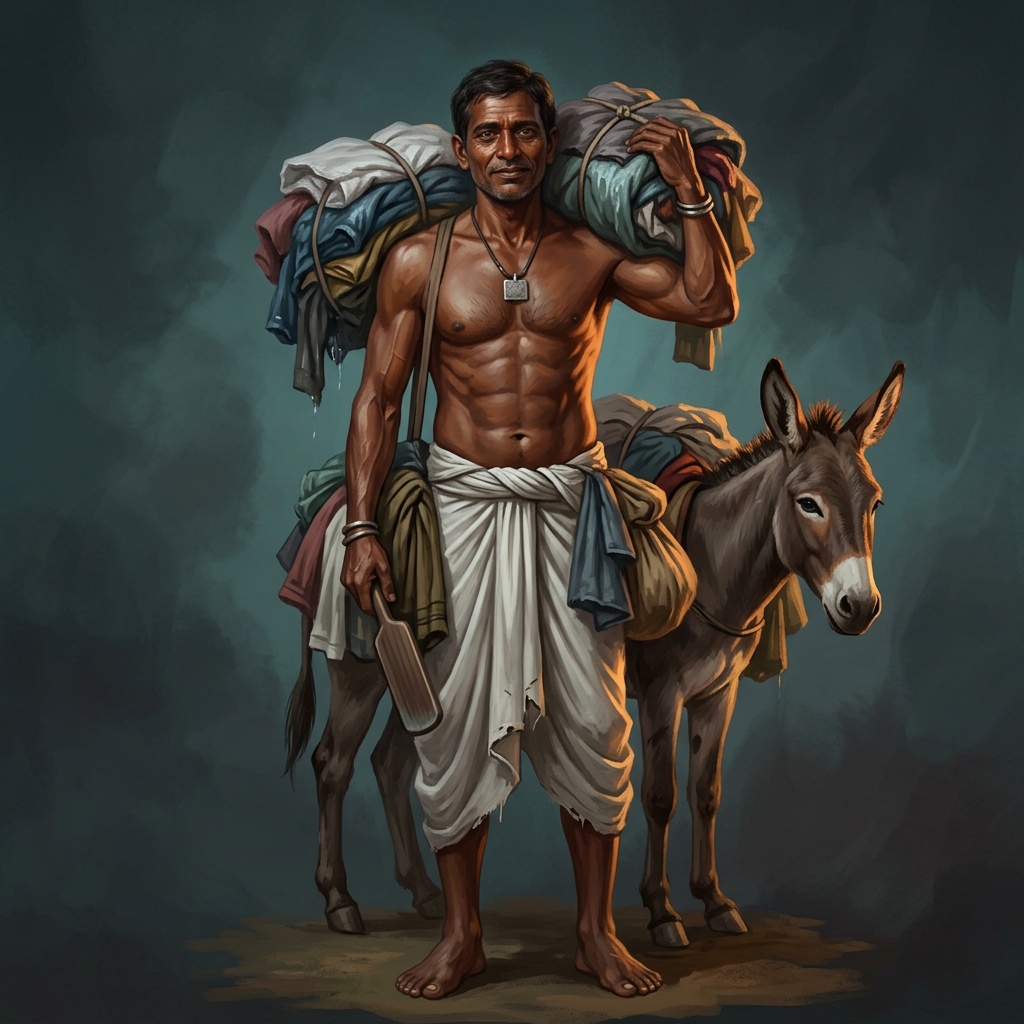
Soma
सोमThe Weaver of Tales“A simple weaver whose imagination was bigger than any kingdom.”
Soma
The Weaver of TalesSoma is a weaver character in Panchatantra tales who represents the common man navigating a world of kings and scholars. Through wit, creativity, and sometimes sheer bluffing, Soma-type characters survive impossible situations — teaching that resourcefulness is the greatest wealth.
In one famous tale, a weaver pretends to be a warrior to impress a princess. When a real battle comes, he accidentally wins — proving that sometimes fake confidence becomes real courage.
Weaving stories and solutions from thin air — making something from nothing

The Hunter
शिकारीThe Patient Stalker“He waits in silence — because patience is the deadliest weapon.”
The Hunter
The Patient StalkerThe Hunter in Panchatantra tales represents the danger that lurks when creatures are distracted by arguments or foolishness. While two birds quarrel, the hunter approaches. While the snake and mongoose fight, the hunter profits. His presence teaches the most important lesson: stay alert, or become prey.
In the Panchatantra, the hunter is rarely the villain — he's the consequence. Animals who are too busy fighting each other fail to notice him, teaching children the cost of unnecessary conflict.
Arriving silently while others are distracted by their own quarrels